Planning Commission

Sylhet waterlogging mitigation project delayed again; sees 44pc cost surge
A project to reduce chronic waterlogging, improve roads, and ensure safe drinking water in Sylhet City Corporation has been delayed again, increasing the cost by nearly 44 per cent.
Waterlogging remains a serious problem in Sylhet city, causing long-term hardship for residents despite repeated attempts to tackle the issue.
Millions of taka have been spent, but results have largely fallen short of expectations.
Officials at Sylhet City Corporation said several plans were drawn up after the devastating 2022 floods to protect residents, but implementation has been limited.
Read more: COMFLOT West project extended by 2 years; cost nearly doubles
The cost of the project titled Alleviation of Waterlogging, Supply of Safe Water and Infrastructure Development of Sylhet City Corporation (Second Revised) has increased mainly due to prolonged implementation delays and an expanded scope of work, according to official documents.
It was originally approved at Tk 1,228.02 crore and it has now stood at Tk 1,766.05 crore, reflecting an increase of about Tk 538 crore.
The Local Government Division is the sponsoring authority while Sylhet City Corporation (SCC) is implementing the project.
According to the Planning Commission documents, the bulk of the revised cost, Tk 1,520.56 crore will come from government funds, with the remaining Tk 245.49 crore to be met from SCC’s own resources.
The project was initially scheduled for implementation between January 2020 and December 2023.
Its timeline was later extended to December 2024 under the first revision, followed by a further extension to June 2025 without any cost escalation.
Under the second revision, the completion deadline has been pushed back again to June 2026, citing the need for additional and more durable works.
Officials said the revised scope reflects Sylhet’s vulnerability to heavy rainfall and upstream hill flows, which frequently cause severe waterlogging and damage to roads.
Read more: Bangladesh Bank to launch Tk 10,000 crore bond for housing, rail projects
To ensure long-term sustainability, the project now places greater emphasis on RCC roads, drains and retaining walls instead of conventional surfacing.
Major components of the project include construction of 269.18 kilometres of roads and 363.92 kilometres of drains, along with 6.73 kilometres of retaining walls.
The plan also covers 22.75 kilometres of road dividers with tree plantation, slope protection works using CC blocks and RCC retaining walls, and construction of boundary walls stretching 12.71 kilometres.
One public toilet and 1.37 kilometres of steel railings along large drains are also included to enhance public safety.
To improve urban services, the project include installation of 236.05 kilometres of water pipelines and 263.50 kilometres of electrical works, including an expanded number of streetlights to ensure safer night-time movement in newly extended city areas.
Besides, 74 units of essential machinery and vehicles will be procured to support regular excavation and maintenance of 13 major canals and streams flowing through the city.
The revision also accounts for increased road repairs including asphalt overlay on roads already showing cracks and potholes, and reconstruction of boundary walls demolished with homeowners’ consent during road widening.
Sylhet’s Gowainghat house fire caused by short circuit, police confirm no communal link
As of June 2025, the project’s cumulative expenditure stands at Tk 2,186.51 crore, with financial progress at 92.09 per cent and physical progress at 92.50 per cent, according to official records.
The Planning Commission, in its recommendation, said successful completion of the project would significantly enhance civic amenities in Sylhet City Corporation by improving roads, drainage, footpaths and the supply of safe drinking water, thereby boosting overall urban resilience in one of the country’s most rain-prone regions.
8 months ago

Govt orders probe into irregularities in Tk 518cr Jute mill project
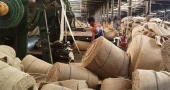
The Planning Commission has ordered the authorities concerned to take punitive measures as it moves to close a controversial jute mill project plagued by irregularities, unauthorised spending and unapproved land development.
The project, now renamed “Jamuna Specialized Jute and Textile Mill (1st Revised),” seeks to wrap up with an estimated cost of Tk 398.28 crore and revised implementation period from July 2018 to December 2025.
But the Commission flagged unauthorised land development, deviation from the approved Development Project Proposal (DPP) and minimal actual progress.
As part of the closure process, it has placed three strict conditions including fixing responsibility for unapproved expenditures and ensuring no misuse of public resources.
"The Commission’s stance sends a clear message — deviations from approved plans will no longer be tolerated,” a senior Planning Commission official told UNB requesting anonymity.
Launched in July 2018 with a 2020 completion target, the project aimed to produce export-quality jute-cotton blended yarn, denim, and garments — with the broader goal of boosting foreign earnings and supporting sustainable development goals.
Planning Adviser Dr Wahiduddin Mahmud criticised the implementation, noting that “barely 2% of the approved cost was used properly and most of the expenditure went into unauthorised land acquisition not included in the original plan.”
“It was an innovative idea with significant export potential, but nothing tangible has been achieved over the years,” he said.
Narsingdi’s Janata Jute Mills shut for indefinite period following workers' violence
He said the Implementation Monitoring and Evaluation Division (IMED) has been tasked with investigating the irregularities and identifying those responsible.
The Ministry of Textiles and Jute sought approval to rename the project as “Jamuna Specialized Jute and Textile Mill (1st revised for termination)” and close it with an expenditure of Tk 39.82 crore, down from the original approved cost of Tk 518.85 crore.
This marks a massive cost reduction of Tk 479.02 crore, or 92.32 percent of the original allocation, as only land development and a few ancillary works were completed before the project was halted.
The Objectives of the project were, according to the official document, to increase additional export earnings by producing and selling yarn, cloth and ready-made garments (especially denim pants, jackets, shirts) etc. at affordable prices using jute and cotton blend.
It also aimed to produce environment-friendly blended yarn and cloth in order to avail three-tier GSP benefits for the garment industry, produce various household textiles and goods using excess yarn after denim production to increase export earnings; and directly and indirectly create employment opportunities and assist the government in achieving the 8th Five Year Plan and sustainable development targets by producing and exporting versatile products.
There is an opportunity to earn foreign exchange by exporting versatile jute products to the domestic and foreign markets. In view of this, the project under discussion was taken up in a meeting held by ECNEC in July 2018 with the aim of setting up a separate unit for the production of versatile jute products in the jute mills under the control of BJMC.
Jute mills workers block Khulna-Jashore highway for dues
Following the closure of 25 jute mills under BJMC in 2020, the Ministry of Textiles and Jute decided to halt all project activities.
A revised proposal (RDPP) was submitted in January 2023, seeking to close the project by June 2026, leaving many components incomplete.
But the Planning Commission, dissatisfied with the irregularities, shortened the timeline to December 2025 and demanded that the Ministry act per government development project guidelines.
The Implementation Monitoring and Evaluation Division (IMED) has been tasked with investigating the project’s mismanagement.A five-member inspection team, following a PEC meeting in May 2025, verified that land development was carried out on 34 acres through soil filling of 548,968.25 cubic meters — but without prior approval.
BTMC’s jute mills incurred loss of Tk 3,168 cr in FY 21: Jute Minister
Following the Delegated Procurement of the project, the EIC of Bangladesh Army was given to complete the soil filling, construction and procurement work.
As per the proposal of the Ministry of Textiles and Jute, work worth Tk 28.28 crore has been done in the project in question in addition to the project resources approved by the Land Development Department.
1 year ago

Worried about slowdown, govt pushes for speeding up ADP implementation
The Planning Commission is sending letters to all ministries and divisions to complete their ongoing projects as quickly as possible to accelerate the implementation rate of the Annual Development Programme (ADP), which is record low right now.
Aiming to expedite the ongoing development projects, the Planning Commission has taken the move after getting green signal from the Planning Adviser Dr Wahiduddin Mahmud.
According to the planning ministry sources, the step has been taken to avert stagnation of the economy as both public and private investment is significantly low after the fall of Awami League government in August last year.
The commission has asked the ministries and divisions to go for a quick implementation of their respective on going projects confirming there will be no corruptions and irregularities.
“This has not been asked in the past, in the past,” a senior official of commission told unb.
He also said that the Planning Adviser himself has sent letters to all advisers regarding this matter.
“After the changeover, the interim government did not get time to look after this matter, now time has come to do that,” the planning commission official said speaking on condition of anonymity as he is not authorised to talk to the media.
According to the Implementation Monitoring and Evaluation Division (IMED), ADP implementation during the July-November period was 17.1% in the last fiscal, 2023-24, and 18.4% in 2022-23. In the current fiscal year (2024-25) the rate of ADP implementation has been 12.3%, official data say.
Interim govt seeks to rationalise health sector funding in ADP
The size of the current ADP is Tk 278,288.90 crore.
After the fall of the Awami League government on August 5 in the face of a student-led uprising, the interim government led by Nobel Laureate Professor Muhammad Yunus was sworn in on August 8.
IMED data shows that ADP spending in the July-November period amounted to Tk34,214.55 crore, compared to Tk46,857.38 crore in the equivalent period of the previous fiscal year.
IMED officials cited delays in the review the interim government had initiated in all ongoing and newly proposed projects, along with increasing delays in the release of funds, as factors contributing to the slowdown in ADP implementation. Additionally, many contractors abandoned projects after the interim government assumed power in early August.
Adviser Wahiduddin Mahmud recently has apprehended that the country may go under economic recession if the current situation prevails with no new private investment and almost stagnant public development expenditure.
ADP set to shrink significantly in interim govt’s revised budget
“On one side the private investors are not injecting new investment and the public development expenditure is not increased on the other. So, it will create an economic recession,” he told in a briefing after ECNEC meeting.
The adviser said that the private sector is not showing any interest in investment and the interest rate has been increased a lot. “As a result the entrepreneurs are not showing any interest regarding new investment,” he said.
The planning ministry officials apprehended that as the private investment is remaining stalled and public investment is experiencing lowest ever, the economy of the country might go through a tough time in the coming days,
1 year ago
.jpg)
Digital platform for risk-informed development launched
The government has launched a web-based platform under the Planning Commission to integrate disaster risk information into development planning and budgeting, policies, and programmes.
It was launched on Wednesday with assistance from the National Resilience Programme (NRP) and technical support from the United Nations Development Programme (UNDP) and financed by the Government of Bangladesh, FCDO of the UK government and SIDA of the government of Sweden.
READ: Digital platform ‘Fabric Lagbe’ formally launched
Planning Minister M A Mannan inaugurated the Digital Risk Information Platform (DRIP) at a launching ceremony held at the commission’s NEC conference room.
“Strengthening risk governance and institutionalisation of resilience is a global and as well as a national commitment of the government of Bangladesh,” the minister said.
He said the economic losses due to disaster need to be minimised, and effective use of public money must be ensured through risk-informed investment.
DRIP will provide data and information for disaster and climate risk and vulnerability assessment and potential climate change adaptation options as well as disaster risk mitigation measures to address identified risks and vulnerabilities caused by the project and in the project implementing areas.
It will allow different government ministries and agencies access to more than 300 maps for risk, hazards, exposure, vulnerability, and climate change on this site.
The future scenario of temperature and climate scenario is also available in its software, UNDP said.
The launching ceremony was addressed by Dr Shamsul Alam, State Minister for Ministry of Planning, Sudipto Mukerjee, Resident Representative of UNDP, Nick Harvey, Senior Humanitarian Adviser, FCDO, Christine Johnsson, Deputy Head of Mission in the Embassy of Sweden, Arif Abdullah Khan, Program Analyst of UNDP and Dr. Nurun Nahar, Project Director of NRP in Programming Division.
Sudipto Mukerjee said National Resilience Programme (NRP) with support from the Programming Division of Bangladesh has taken the initiative to establish tools and database to generate a detailed analysis of disaster and climate change-related risks to inform development projects, plans and programmes of relevant key sectors.
READ: World Bank approves $295 million to enhance Bangladesh’s digital economy
“Through Digital Risk Information Platform (DRIP); the proposed screening system will enable the Programming Division and Sector Divisions of Planning Commission to better understand and validate how the projects approved and endorsed may be affected by climate and disaster risks, and thus be more effective in its tasks. It just started of the journey and need continuous support for mainstreaming, updating and skill-building”.
Representatives from government agencies, diplomatic missions and scientific organisations were present at the event. Pradip Ranjan Chakraborty, Secretary, Planning Division, presided over the session.
Risk information of eleven hazards, including flood, salinity, landslide, earthquake in 64 districts, is available in the DRIP so that government officials can consider the local risks during project formulation to ensure risk-informed development.
The planning division’s secretary pointed out that the commission has introduced Disaster Impact Assessment (DIA) in the feasibility study format, and inclusion of DIA in project formulation is under process, which will be placed in the next meeting of NEC.
4 years ago

Govt to construct 30 modern silos for paddy storage
The Executive Committee of the National Economic Council (Ecnec) on Tuesday approved a Tk 1400-crore project to construct 30 modern silos, aiming to increase the overall paddy storage capacity by 1.5 lakh metric tons in the country.
The approval came from an Ecnec meeting held virtually with its Chairperson and Prime Minister Sheikh Hasina in the chair.
Hasina joined the meeting from Ganobhaban, while ministers and officials concerned attended it from the NEC conference room.
The meeting approved a total of 10 projects involving the overall estimated cost of Tk 6,651.34 crore, said Planning Minister MA Mannan while briefing reporters after the meeting.
“Of the cost, Tk 5,219.81 crore will come from the state coffer while Tk 794.03 crore from the own funds of the organisations concerned and Tk 637.50 crore from foreign sources,” he said.
About the silo project, he said 30 steel silos would be constructed initially and later its number will be increased.
Paddy drying and preservation and other relevant facilities will be there in each 5000-MT modern silo, according to the factsheet provided by the Planning Commission.
Read: Ecnec rejects Tk 17,290-cr primary school meal project
The main objectives of the project are to raise the storage capacity by 1.5 lakh metric tons under the government management, provide farmers with fair prices through direct procurement of their rice, incorporate modern technology in the government’s food management, maintain the nutritious standard of grains for 2-3 years without using pesticide.
The Directorate General of Food under the Food Ministry will implement the project in 30 upazilas under 24 districts at an estimated cost of Tk 1400.22 crore by June 2023.
The selected upazilas or pourashavas where these silos will be constructed are Katiadi, Mirzapur, Tangail Sadar, Faridpur Sadar, Haluaghat, Melandah, Sreebardi, Brahmanbaria Sadar, Noakhali Sadar, Cumilla Sadar, Dinajpur Sadar, Birol, Thakurgaon Sadar, Boda, Hatibandha, Shibpur, Raninagar, Ishwardi, Nandigram, Sherpur, Khetlal, Kanaighat, Shayestaganj, Sunamganj Sadar, Narail Sadar, Kumarkhali, Charfashion, Patuakhali Sadar and Kalapara.
Mannan said the Prime Minister directed the authorities concerned to construct such modern silos in the country’s southern region, especially in Bhola, Patuakhali and Barguna as the production of food grains is high there.
The Prime Minister emphasised the practice of tissue culture in the country on potato seeds, vegetables and other crops to improve the quality of production and thus attain self-sufficiency in food.
Read: Ecnec approves Sasec Dhaka-Sylhet Corridor project
During the approval of the 1st revision of BPATC’s Enhancing Training Capacity with an additional cost of Tk 348.61 crore, the Prime Minister stressed the need for extending the length of foundation (training) courses to 10 months instead of 2 to 3 months.
In reply to a question, the planning minister said the government is likely to conduct a perception survey again to determine the impacts of Covid-19.
Talking about the approval of construction of river port at Chilmari (Ramna, Jorgach, Rajibpur, Roumari and Noyahut) with Tk 235.59 crore, Mannan said the project in Chilmari would ultimately boost trade and commerce with the neighboring countries.
The other approved projects are the construction of Nolua-Baherchar 1.3-km bridge over the Pandab-Paira River on Lakshmipasha-Dumki Road in Barishal with the estimated cost of Tk 1,023.50 crore; Upgrading of Modhupur-Mymensingh national highway with Tk 1,107.17 crore; modernisation and expansion of Bangladesh College of Physicians and Surgeons with around Tk 215.43 crore; and protection of right embankment of the River Jamuna near Brahmangram-Hatpachil and adjacent areas under Shahzadpur upazila in Sirajganj and strengthening of Betil Spur-1 and Enayetpur Spur-2 with Tk 647.49 crore.
The remaining projects are the rehabilitation of Tangon barrage, Buri embankment and Bhulli embankment irrigation project under Thakurgaon district, riverbank protection and integrated water control infrastructure construction with around Tk 296.36 crore; Agriculture seed development and expansion through bio technology with Tk 72.35 crore; and Construction of Bakhrabad-Meghnaghat-Haripur gas transmission pipeline with Tk 1,304.62 crore.
5 years ago
.jpg)
Ecnec clears much-sought 3rd submarine cable project
The Executive Committee of the National Economic Council (Ecnec) on Tuesday cleared four development projects, including Tk 693-crore one to install the third submarine cable.
5 years ago
.jpg)
ADP for new fiscal year likely to be cleared Tuesday with tough challenges ahead
The National Economic Council (NEC) is likely to approve the annual development programme (ADP) for the 2020-21 fiscal on Tuesday amid COVID-19 rampage which threatened its proper implementation.
6 years ago
.jpg)
Planning Commission finalises Tk 205,145 cr ADP
The Planning Commission on Monday finalised the annual development programme (ADP) involving Tk 205,145 crore for the next 2020-21 fiscal year.
6 years ago