Lifestyle
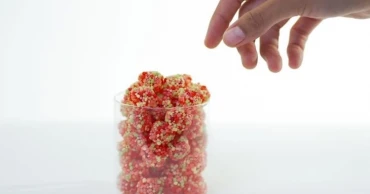
Mouthfeel joins flavor as food makers focus on texture
Crunchy, chewy and creamy textures are becoming increasingly important in the food and beverage industry, with companies paying more attention to how food feels in the mouth, not just how it tastes.
For many consumers, the texture of a snack or drink has become almost as important as its flavor. Industry experts say people may not always realize it, but texture can influence cravings for crispier takeout, foamier coffee and juicier candy.
The focus on “mouthfeel” a food science term describing how food feels in the mouth has led to new products such as Starbucks’ Aerocano, an air-whipped iced espresso; PowerCrunch, a wafer-style protein bar; and Trolli Gummi Popz, which are frozen but remain soft and chewy.
Belgian ingredient maker Puratos says texture has grown from being a secondary feature to an important part of food quality, influencing how consumers judge products and decide what to buy.
The trend is spreading worldwide. Stretchy yogurt is becoming popular in China, while Swedish candy maker Cloetta has introduced Sprinkled Foamies, featuring a crunchy coating and marshmallow center. Parisian bakers are also experimenting with pastries such as the crookie, which combines a crispy croissant with a soft chocolate chip cookie.
“It’s not just about flavor anymore. People are thinking about the whole experience,” said Tana Davila, chief marketing officer at Dutch Bros Coffee.
The US drive-thru chain allows customers to add toppings such as sweet whipped foam and juice-filled balls that burst when bitten.
Texture has long shaped eating habits
Texture is such an important part of eating that people often describe how food feels when asked about its taste, said Patrick Kalotis, executive vice president of texture and healthful solutions at Illinois-based ingredient company Ingredion.
People may say a drink is fizzy or yogurt is creamy, he said, even though they believe they are describing taste. In reality, they are describing texture, which also affects how they experience flavor.
Food makers have experimented with texture for centuries. Japanese mochi and Turkish ice cream are traditional examples of soft and stretchy foods. Bubble tea, with its chewy tapioca pearls, was created in Taiwan in the 1980s. In the 1990s, high-end European restaurants popularized airy foams flavored with ingredients such as truffle oil and lobster broth.
Interest in texture has grown sharply in recent years, said Jenny Zegler, principal strategist for food and drink at market research company Mintel.
The trend can also be seen outside food, including squishy toys and jelly-based beauty products. Mintel data show growing online demand for food described as chewy, soft, gooey and melt-in-the-mouth.
Zegler believes the popularity of the Cronut, a doughnut-shaped pastry combining a crispy fried exterior with a light, buttery croissant-like interior, helped spark greater interest in food textures about a decade ago.
Products with multiple layers, such as Dubai chocolate, and social media videos featuring the sounds of cracking brittle or slurping noodles have further fueled the trend.
“Consumers are gaining new expectations for the experience of a product, and texture is the perfect way to deliver that,” Zegler said.
Pandemic helped drive candy innovation
The coronavirus pandemic also increased interest in texture because many people temporarily lost their sense of taste and smell, said Shannon Weiner, senior director of consumer insights at candy maker Ferrara.
In 2020, the Chicago-based company introduced Nerds Gummy Clusters, a round gummy covered in crunchy Nerds candy.
The product's success encouraged other texture-focused candy products, including crispy freeze-dried Skittles. Gummi Popz, chewy squares filled with fizzy candy, went on sale earlier this year, while Ferrara-owned Brach’s plans to introduce jelly beans with crunchy outer shells for next Easter.
Weiner said combining different textures creates contrast, making people feel that a product is more enjoyable and high-quality. It can also encourage consumers to pay more attention to what they are eating.
In a world where people often snack while scrolling through their phones or doing other activities, texture can provide an extra sensory experience, she said.
Delivery and healthier foods add new challenges
The growing demand for particular textures is creating new challenges for food companies. McDonald’s, which introduced McCrispy chicken strips in May 2025, changed their recipe this year after customers complained that the strips were not crispy enough.
The growth of food delivery has also forced restaurants to find ways to keep food at the right texture during transportation, Kalotis said.
Ingredion has developed potato starch-based coatings that can keep french fries crispy for about 30 minutes and is working to extend that period to 45 minutes.
Food manufacturers are also trying to make products healthier or cheaper without changing the textures customers expect. Ingredion, for example, produces ingredients that help keep reduced-sugar yogurt creamy.
Zegler expects further innovation in food texture, including products designed around the needs of different groups, such as older consumers. She also expects snacks to include increasingly complex layers.
Ferrara introduced Nerds Juicy Gummy Clusters last year, adding a liquid center to the original two-layer candy.
Meanwhile, Kalotis said food companies should do more to show and explain texture on product packaging. Mintel found that 59% of packaged foods introduced in the United States this year did not include any texture-related claims on their labels, even though consumers are actively looking for products with new physical characteristics.
“In a lot of ways, texture is one of the most powerful and yet somehow underrated parts of the food experience,” Kalotis said. “It makes a snack more satisfying.”
5 days ago

Daily glass of fruit juice linked to lower depression scores: study
Drinking a glass of 100% fruit juice or a smoothie every day may help improve mental well-being, particularly among people who eat relatively little fruit and vegetables, according to a study by researchers at Newcastle University.
The four-week randomized trial involved adults who normally consumed two or fewer portions of fruit and vegetables a day. Researchers provided support to help participants increase their intake toward the recommended five portions a day.
Some participants were asked to eat whole fruits and vegetables only, while another group was encouraged to include a daily glass of fruit juice or a smoothie along with whole fruits and vegetables.
After four weeks, both groups had increased their fruit and vegetable intake. However, those who included fruit juice or smoothies also reported lower levels of depression.
The findings, published in the peer-reviewed British Journal of Nutrition, showed that the fruit juice and smoothie group had depression scores 2.52 points lower on a 27-point scale than the control group.
Researchers described the difference as modest but statistically significant.
Dr Courtney Neal, who conducted the study while at Newcastle University and is now at the University of Liverpool, said many people find it difficult to meet the recommended five daily portions of fruit and vegetables.
“Our trial showed that when people with low fruit and vegetable intake were given financial and educational support to overcome common barriers, they were able to make meaningful changes to their diet,” she said.
She said simple and affordable options, such as a small daily glass of 100% fruit juice or a smoothie, could help people reach the recommended intake and potentially support mental well-being.
Fiber intake also increasedDietary records showed that participants in both groups that received dietary support increased their daily fiber intake by an estimated 8 to 10 grams.
This suggested that participants who drank juice or smoothies continued to add other fiber-rich fruits and vegetables to their diets.
The study involved 42 people. Researchers found no harmful changes in metabolic health markers among those who consumed fruit juice or smoothies during the four-week trial, despite concerns about the sugar content of fruit juice.
Dr Oliver Shannon, a lecturer in nutrition and ageing at Newcastle University and one of the study’s senior authors, said the cost of fresh produce can make it difficult for some people to increase their fruit and vegetable intake.
“Drinking a daily glass of fruit juice or a smoothie could be part of the solution and help people reach five-a-day fruit and vegetable targets,” he said.
Shannon said the lower depression scores among those who drank fruit juice were encouraging but required further research, particularly among people experiencing poor mental well-being.
He also pointed to earlier research suggesting that citrus juices may improve blood flow to the brain and support cognitive function.
How the study was conductedThe 42 participants were randomly divided into three groups of 14.
The first group continued with their usual diet and served as the control group.
The second group received financial and educational support to increase their intake to five portions a day using whole fruits and vegetables.
The third group received the same support but was also asked to drink one glass of fruit juice or a smoothie each day.
All participants received £10 a week, while the two groups receiving dietary support were also given educational materials to help them change their eating habits.
Researchers assessed participants’ anxiety and depression levels using standard questionnaires known as GAD-7 and PHQ-9.
The group that included fruit juice or smoothies recorded significantly lower depression scores than the control group. Its adjusted average score was 2.93, compared with 5.45 for the control group.
Participants also completed four dietary records during the study, reporting what they had eaten during the previous 24 hours.
The researchers estimated that both groups receiving dietary support increased their daily fiber intake by 8 to 10 grams.
The study was funded by the Fruit Juice Science Centre.
Source: Science Daily
1 month ago

Fitness coach shares 30-minute treadmill routine for staying active
A treadmill can be a simple way to stay active and support overall fitness. It is easy to use and widely available in gyms.
Regular treadmill exercise can help improve cardiovascular fitness, support heart health, lift mood and keep the body active. A fitness coach has shared a 30-minute treadmill routine that gradually increases and decreases the incline.
According to Usamaa, who uses the name usamaa.fitness on Instagram, following a structured routine can make treadmill workouts easier to maintain.
The workout begins with five minutes at incline 5 as a warm-up. The incline is then increased to 8 for another five minutes, followed by incline 10 for five minutes and incline 12 for the next five minutes.
After reaching the highest incline, the routine gradually becomes easier. The incline is lowered to 8 for five minutes before finishing with another five minutes at incline 5.
The full workout takes 30 minutes.
“It burns calories without wrecking your recovery. You’ll feel it, but you won’t dread coming back tomorrow, and you can actually stay consistent with it,” the trainer said.
The coach recommends maintaining consistency while also allowing enough time for rest and recovery.
For a balanced fitness routine, treadmill workouts can be combined with age-appropriate strength and other physical activities. Eating regular, nutritious meals and getting enough protein and other essential nutrients are also important for supporting an active lifestyle.
Anyone starting a new exercise routine should choose an intensity that feels comfortable and gradually build up as their fitness improves.
Source: NDTV
1 month ago

Cutting daily choices can reduce stress and improve decision-making, experts say
Modern life often encourages people to believe that having more choices leads to better decisions whether it is buying clothes, choosing entertainment or finding the right partner. But psychologists say too many options can have the opposite effect, making people feel overwhelmed, anxious and less satisfied with their decisions.
Barry Schwartz, emeritus professor of psychology at Swarthmore University and author of The Paradox of Choice, said research over the years has consistently shown that too many choices can create mental stress rather than freedom.
"There have been hundreds of studies showing that there can be too much of a good thing," Schwartz said.
He advised people to reduce the number of decisions they make every day, saying it helps lower mental pressure and makes decision-making easier.
Too many options can discourage decisions
Schwartz cited several studies showing that people often avoid making decisions when faced with too many choices.
For example, people were less likely to select a Medicare Part D prescription drug plan in US states offering more plan options. A similar pattern was found with 401(k) retirement savings plans, where employees were less likely to join when employers offered too many investment choices—even when matching contributions were available.
The same trend appears in everyday life. One well-known study found that shoppers bought more jars of jam when offered six flavours than when they had 24 choices. Another study showed students were more likely to complete an extra-credit assignment when they could choose from six topics instead of 30.
According to Schwartz, too many options can leave people feeling stuck.
"Instead of being liberated by all this choice, you're paralyzed," he said.
He added that people may also become less satisfied with their final decision because they keep wondering whether another option would have been better.
This is especially true for people psychologists describe as "maximizers"—those who always want the absolute best choice.
However, Schwartz noted that not everyone reacts the same way. People with a strong interest in a particular subject, such as car enthusiasts, often enjoy comparing many options before making a purchase.
Brain prefers familiar decisions
Daniel Willingham, a psychology professor and neuroscience researcher at the University of Virginia, said the human brain naturally tries to avoid unnecessary thinking because problem-solving requires more energy than relying on habits or memory.
He explained that when people face a task, the brain first searches for familiar solutions before using deeper thinking.
"Another way to put it is that if you're thinking, things are not going well," he said.
This is why many people follow the same daily routines, such as taking the same route to work, even though they have other options.
Schwartz added that social media has made the problem worse by encouraging constant comparisons with other people's choices, increasing expectations that every decision should be perfect.
Aim for "good enough"
Author David Epstein said researching his book Inside the Box: How Constraints Make Us Better changed the way he makes decisions. Instead of endlessly comparing products, he now limits his choices—for example, buying several of the same T-shirt in different colours once he finds one that fits well.
His approach follows the idea of "satisficing," introduced by Nobel Prize-winning economist and psychologist Herbert Simon. The concept encourages people to choose an option that meets their needs instead of searching endlessly for the perfect one.
Epstein said he now sets simple rules before shopping online. Once he finds a product that meets his main purpose, he buys it instead of continuing to compare endless features and reviews.
Both Willingham and Schwartz also recommend relying on trusted advice for some decisions. Instead of researching every available phone, for example, people can simply buy a model recommended by a satisfied friend.
For more important decisions, such as financial planning, Willingham said seeking professional advice often leads to better outcomes than trying to figure everything out alone.
Schwartz acknowledged that changing decision-making habits can be difficult, but said the benefits are significant.
Over time, he said, people become more confident in their decisions, feel happier with their choices and save valuable time each day.
2 months ago

Dubai entrepreneur says she became the ‘rich man’ she once hoped to marry
A Dubai-based nutritionist has sparked discussion on social media after sharing how her idea of success has changed over the past two decades, saying she eventually became the “rich man” she had hoped to marry when she was 21.
Rashi Chowdhary, founder of Nutrition In Sync, reflected on her journey in a recent Instagram post, explaining how her goals and understanding of success evolved with age and experience.
“At 21, I wanted to marry a rich man, be a hot housewife, and have two kids,” she said in a video. “Today, I am 41, I am unmarried, I run two different businesses with more than 40 people in it, and I think somewhere along the way, I became the rich man.”
Chowdhary said her original plans appeared to be on track when she was 25. At the time, she had a wealthy partner, an apartment in Dubai and a lifestyle many people admired.
However, she recalled feeling disconnected from that life despite achieving what she once thought would make her happy.
“The funny thing is the original plan actually worked,” she said. “But I still remember thinking, ‘Why does it not feel like my life?’”
She said many women grow up feeling pressured either to become attractive enough to be chosen by a successful partner or successful enough to not need one.
“We are taught to either be desirable enough so a powerful man can pick you or successful enough so you never need one,” she said.
According to Chowdhary, the biggest change in her life came when she realised that her own wishes and goals mattered more than seeking approval from others.
“You know what? Realising that what I want for myself comes before any of that has changed me more than marriage, divorce, success, or money ever did,” she said.
In the caption accompanying the post, Chowdhary wrote that her life at 41 is neither better nor worse than what she imagined at 21, but simply her own.
“The older I get, the more I realise that freedom isn't about rejecting men, marriage, motherhood, ambition, or success. It's about having the courage to decide what you actually want and letting that answer be enough,” she wrote.
The post received widespread praise online. Actress Mrunal Thakur commented “Best,” while Dubai-based radio presenter Mariyam Kisat described the message as “so freaking inspiring.”
Many social media users also shared supportive comments, saying Chowdhary’s story highlighted how personal goals and definitions of success can change over time.
With inputs from NDTV.
2 months ago

Short-term fasting may help reduce gum disease inflammation, study finds
A short-term low-calorie diet may help reduce inflammation linked to gum disease and improve oral health, according to a new study by researchers at King's College London.
The findings suggest that lifestyle changes, including temporary calorie restriction, could complement regular brushing, plaque removal and other standard treatments for gum disease.
Published in the Journal of Clinical Periodontology, the study is believed to be the first to show a link between fasting and reduced markers of gum disease. Previous research had already indicated that fasting can lower inflammation throughout the body.
Lead researcher Giuseppe Mainas said the results indicate that lifestyle changes could play an important role in managing gum disease alongside good oral hygiene practices.
Periodontitis, a severe form of gum disease, affects millions of people worldwide and has been linked to other health problems, including heart disease and diabetes. Current treatments mainly focus on cleaning infected areas around the teeth and controlling plaque buildup.
To examine whether diet could influence gum health, researchers recruited 28 patients from hospitals in Spain and divided them into two groups. One group followed a calorie-restricted diet for five days at a time, while the other continued their normal eating habits.
Participants in the fasting group consumed about 1,100 calories per day for the first two days and 750 calories per day for the following three days. The cycle was repeated three times over six months.
After the study period, researchers found that participants who followed the fasting plan had lower levels of inflammation-related markers in both their blood and gum tissue compared with those in the control group.
They also showed reduced levels of C-reactive protein, a common indicator of inflammation in the body, as well as lower levels of substances directly linked to gum inflammation.
Senior researcher Luigi Nibali said fasting may help by reducing oxidative stress, a process that can damage cells and trigger inflammation. Limiting high-calorie foods and refined carbohydrates such as cakes and biscuits may also contribute to these benefits.
Researchers believe fasting could also positively affect the body's microbiome, although further studies are needed to confirm this link.
The team said fasting-mimicking diets could eventually become a useful addition to conventional gum disease treatments, including professional dental cleaning and oral health guidance.
However, researchers cautioned that fasting may not be suitable for everyone, particularly people with certain medical conditions such as diabetes. They plan to conduct larger studies to better understand the benefits and identify safe approaches for different patient groups.
The findings add to growing evidence that oral health is closely connected to overall health and that dietary habits may play a greater role in preventing and managing disease than previously thought.
Source: Science Daily
3 months ago
World Food Safety Day: 10 common food myths experts say you should stop believing
As the world observes World Food Safety Day, health experts are urging people to follow safe food handling practices and avoid common misconceptions that can increase the risk of foodborne illnesses.
Food safety plays a crucial role at every stage of the food chain, from production to consumption. However, several myths about storing, preparing and eating food continue to mislead people.
Here are 10 common food safety myths and the facts behind them:
Myth 1: You can tell whether food is safe by its smell or appearance
Fact: Not always. Many harmful bacteria and microorganisms do not change the smell, taste or appearance of food. Food that looks normal can still cause illness.
Myth 2: Leftover food can stay out for several hours
Fact: Cooked food should not be left at room temperature for more than two hours. Leftovers should be stored in airtight containers in the refrigerator and eaten within three to four days. If they will not be eaten soon, they should be frozen.
Myth 3: Food is safe to eat if picked up within five seconds after falling on the floor
Fact: The popular "five-second rule" is a myth. Germs can transfer to food immediately after it touches the floor.
Myth 4: Kitchen cloths and sponges are harmless
Fact: Dishcloths and sponges can carry dangerous bacteria and spread contamination around the kitchen. Experts recommend disinfecting them regularly or boiling them in water.
Myth 5: Raw poultry should be washed before cooking
Fact: Washing raw chicken or other poultry can spread bacteria to hands, kitchen surfaces, utensils and nearby food. Proper cooking is enough to kill harmful microorganisms.
Myth 6: Food poisoning happens only a few hours after eating contaminated food
Fact: Symptoms can appear within hours, days or even weeks, depending on the bacteria, virus or parasite involved.
Myth 7: Frozen food can be safely thawed on the kitchen counter
Fact: Thawing food at room temperature allows bacteria to multiply rapidly. Experts advise thawing food in the refrigerator or in cold water instead.
Myth 8: Organic fruits and vegetables do not need washing
Fact:All fruits and vegetables, including organic produce, should be washed thoroughly with clean water to remove dirt, bacteria and pesticide residues.
Myth 9: Foodborne illness only causes an upset stomach
Fact: While many cases are mild, some foodborne infections can lead to serious complications, hospitalization and even life-threatening conditions.
Myth 10: Hand sanitizer replaces handwashing
Fact: Hand sanitizer can reduce germs, but it is not a substitute for washing hands with soap and water, especially before handling or eating food.
Health experts say following proper hygiene and food safety practices can significantly reduce the risk of foodborne diseases and help protect families from preventable illnesses.
With inputs from NDTV
3 months ago

Why walking is one of the most effective exercises for health
A simple daily walk may be one of the most powerful habits for long-term health, according to a US-based heart specialist.
Jeremy London, a cardiovascular surgeon based in Savannah, Georgia, says walking regularly can strengthen the heart, improve blood circulation, reduce stress and lower the risk of chronic diseases.
In a video shared on Instagram, London explains that even moderate walking can make a meaningful difference to overall health. “It’s super simple, but it’s really powerful,” he says. “It decreases cardiovascular risk, controls blood pressure, controls blood glucose, and helps control weight.”
He notes that the benefits of walking increase with frequency and duration, but even small amounts of daily movement are effective in improving health outcomes.
Key benefits of walking
London highlights several health benefits linked to regular walking:
Longevity: Walking is associated with a lower risk of death from all causes. “More is better, but even modest amounts move the needle,” he says.
Heart and metabolic health:Regular walking helps manage blood pressure, blood sugar levels and body weight, supporting overall heart and metabolic health.
Brain health and mood:Walking is also linked to better mental well-being, including reduced stress, improved mood and a lower risk of cognitive decline.
Beyond physical health:London also points to less measurable benefits, such as spending time outdoors and having space to think. “Some of the best ideas come during a walk,” he notes.
Experts say walking remains one of the easiest and most accessible forms of exercise, offering benefits for both physical and mental health when done consistently.
Source: NDTV
3 months ago

Strawberry pots double as space-saving planters for eye-catching plant displays
Those unusual planters with small openings on their sides often resembling tiny buildings with windows and balconies are more than decorative pieces. While commonly used for growing strawberries, these pots can also be used creatively for a variety of plants.
Usually made of terracotta, strawberry pots are tall and urn-shaped, though shorter and wider versions are also available. The side openings are designed to hold soil and plants, allowing strawberries to grow above the ground and reducing the risk of rotting. However, gardeners can use them for much more than fruit.
These pots are ideal for creating attractive and practical displays. Succulents such as hens and chicks fit well in the side pockets, offering a striking look. In colder climates, the pots can be moved indoors during winter, as long as the plants receive enough sunlight and are not overwatered.
They are also perfect for a compact herb garden. Smaller herbs like parsley, thyme and mint can be planted in the lower openings, while larger ones such as rosemary or basil can be placed at the top, creating a neat and functional display. Adding small flowering plants like marigolds can enhance the look.
Trailing flowers and vines, including petunias and sweet potato vines, can spill out of the openings, creating a colourful effect. Plants like nasturtiums, verbena and ivy also work well, while shade-loving varieties like caladium and coleus are good options for low-light areas.
Watering all plants evenly can be challenging, but placing a perforated PVC pipe in the centre of the pot helps distribute water and nutrients effectively.
Although strawberry pots come in different materials, traditional clay versions can crack in freezing weather. In colder regions, it is best to bring them indoors during winter and care for them as houseplants.
Jessica Damiano is a gardening writer for The Associated Press and publishes the Weekly Dirt Newsletter.
5 months ago

Young people revive ‘grandma hobbies’ from needlepoint to blacksmithing
By 23, Emma MacTaggart noticed her free time was rare and mostly spent on screens. Working long hours in investment banking, she often turned to her phone after logging off. Seeking a break, she and her roommates took up needlepoint, a childhood craft she hadn’t practiced in years. “It was a therapeutic way to distract yourself from work or stress while doing something with your hands instead of doomscrolling,” she said.
MacTaggart is among many young people embracing analog hobbies to escape technology and reconnect with creativity. Knitting, gardening, and needlepoint-sometimes called “grandma hobbies” have gained popularity among Gen-Z and millennials. Other crafts, including pottery, origami, and blacksmithing, are also seeing renewed interest.
Six morning habits can improve mental health, says US psychiatrist
Now 26, MacTaggart has turned her passion into a business, What’s the Stitch, selling needlepoint canvases, accessories, and digital designs online, often adding humor and occasional profanity.
Experts highlight the mental health benefits. Jaime Kurtz, psychology professor at James Madison University, said hobbies reduce stress and offer accomplishment. Clara Sherman, co-founder of So Bam Fun, said playing mahjong creates a “zen state” with friends.
Some use technology to enhance their hobbies. Isaiah Scott, 22, compares birdwatching to “a video game, but in real life,” using eBird to log sightings and support conservation. He founded the nonprofit Rookery and Roots Conservancy and bought land in Georgia to protect habitats.
Other hobbyists, like blacksmith Anna Weare and poet Kristie Landing, have leveraged social media to reach global audiences and create communities. Many say these crafts are not a trend but a deliberate embrace of analog life. MacTaggart, for instance, welcomed the “grandma hobbies” label. “I’ve been a grandma my whole life, so it’s fitting this is now my career,” she said.
6 months ago