Bangladesh agriculture
Bangladesh cabinet clears waiver of up to Tk 10,000 agricultural loans
The cabinet has approved a plan to waive agricultural loans of up to Tk 10,000, including accrued interest, in a move aimed at easing pressure on small-scale farmers and strengthening rural resilience.
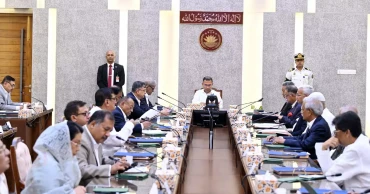
The decision was taken at the first cabinet meeting chaired by Prime Minister Tarique Rahman at the Secretariat on Thursday morning, said Cabinet Secretary Nasimul Gani.
Briefing reporters, Gani said the waiver aligns with the government’s election manifesto and is intended to provide social protection to marginal farmers.
The measure will cover agricultural credit of up to Tk 10,000 taken for crops, fisheries, livestock and other farming activities, along with accumulated interest, he said.
PM Tarique Rahman presides over first cabinet meeting
Data from Bangladesh Bank show that outstanding dues eligible under the scheme, including interest, total about Tk 1,550 crore as of February 25, Gani said, adding, that the loans were disbursed by state-owned commercial banks, specialised banks and private commercial lenders.
The waiver is expected to directly benefit around 1.2 million farmers nationwide once implemented, according to the cabinet secretary.
The initiative comes as policymakers seek to help out vulnerable rural borrowers from mounting repayment pressures and reinforce the agricultural sector, which remains a key pillar of Bangladesh’s economy and employment base.
6 months ago
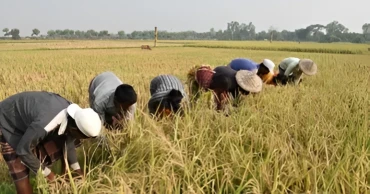
New climate-resilient project aims to create 1,000 new agri-entrepreneurs in Rajshahi division
As climate stress tightens its grip on Bangladesh’s farmlands and cultivable land continues to shrink, the government has rolled out a large-scale agricultural project aimed at securing food production and livelihoods in one of the country’s most important farming belts — Bogura agricultural region.
With an allocation of Tk 251.97 crore, the project, titled Sustainable Agricultural Development of Bogura Agricultural Region, seeks to boost crop output, modernise farming practices and build long-term resilience in four districts of the Rajshahi division.
The project will be implemented by the Department of Agricultural Extension (DAE) under the Ministry of Agriculture from January 2026 to December 2030, fully funded by the government.
Spanning 44 upazilas in Bogura, Joypurhat, Pabna and Sirajganj, the project is among the largest region-based agricultural programmes undertaken in recent years.
Tk 1,300cr GK irrigation rehabilitation project aims to revive southwest agriculture
Officials say it is designed as a response to a convergence of challenges including falling groundwater levels, erratic rainfall, rising temperatures and increasingly unpredictable seasons — all of which have disrupted year-round crop cultivation in the region.
Targets and technologies
At the heart of the project is a production target: a 5 percent increase in crop output, from 41.87 lakh metric tonnes to 43.96 lakh metric tonnes.
This is to be achieved through the application of 24 modern and environment-friendly agricultural technologies, including water-saving methods, improved soil health management and better crop planning.
Cropping intensity is also expected to rise by 5 percent, from 236 percent to 241 percent, reflecting more efficient land use in an area where arable land is steadily being lost to floods, river erosion and expanding infrastructure and industrial establishments.
To address post-harvest losses — a persistent problem for farmers — the project includes the construction of 200 onion storage facilities, each with a capacity of 10 metric tonnes, alongside three storage centres for vegetables, fruits and other produce.
A deputy director’s office-cum-training centre will also be built in Bogura to strengthen local extension services.
Mechanisation is another major pillar. Under the plan, 3,185 agricultural machines will be procured and distributed to farmers to reduce production costs, ease labour shortages and improve efficiency during peak seasons.
Investing in people
Beyond infrastructure and machines, the project places strong emphasis on human resource development.
According to Planning Ministry officials, 4,840 training batches will be conducted to enhance farmers’ skills in modern crop production, seed technologies and agribusiness development.
The initiative aims to create at least 1,000 new agricultural entrepreneurs and develop around 35,000 trained agricultural human resources across the region.
More than 41,800 demonstration plots will showcase improved farming practices, while 700 field days, technical discussion sessions and 70 exposure visit programmes are planned to encourage technology adoption at the grassroots.
A Planning Commission official described the project as a strategic investment in both productivity and people. “Expanding high-yielding and high-value crops, promoting safe fruit and vegetable cultivation and improving post-harvest management can significantly lift farm incomes if done properly,” the official said.
If implemented as planned, the project is expected to contribute to soil health protection, improved nutrition, reduced rural poverty and a gradual transformation of agriculture into a more profitable and sustainable profession in the region.
For thousands of farmers facing an uncertain climate future, the success of this initiative could determine whether Bogura’s fields remain productive — or increasingly precarious — in the years ahead.
7 months ago
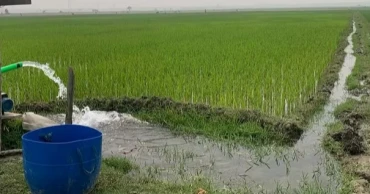
Tk 1,300cr GK irrigation rehabilitation project aims to revive southwest agriculture
The government has taken a rehabilitation and emergency maintenance programme for Ganges–Kobadak (GK) Irrigation Project at a cost of Tk 1,299.96 crore, aiming to restore one of the country’s most important surface irrigation systems and increase food production in the southwest region.
The project taken by the Ministry of Water Resources will be implemented by the Bangladesh Water Development Board (BWDB).
The project will be fully funded by the government and the implementation period has been fixed from January 2026 to June 2029.
Spanning 13 upazilas of Kushtia, Chuadanga, Jhenaidah and Magura districts under Khulna division,it targets a historically vital irrigation network that plays a key role in national food security.
According to Planning Commission assessments, successful implementation of the project will ensure uninterrupted irrigation water supply to about 1.16 lakh hectares of farmland.
This is expected to raise cropping intensity and enable the production of an additional 9.83 lakh tonnes of food grains every year.
Officials said the project has been designed to restore the declining capacity of the GK system which has deteriorated over the past decade due to heavy siltation, ageing infrastructure and reduced water conveyance efficiency.
The rehabilitation programme aims to ensure continuity of irrigation services, increase crop yields, stabilise agricultural production and reduce farmers’ dependence on groundwater extraction, which has been putting growing pressure on underground water reserves.
One of the main objectives is to promote greater use of surface water from the Padma River and cut excessive reliance on groundwater irrigation.
Experts said increased use of surface water will help protect the groundwater table which is expected to rise by 1.0 metre to 3.5 metres in different parts of the project area after completion of the rehabilitation works.
This improvement is expected to benefit not only crop production but also domestic water availability and small-scale irrigation schemes operated by agencies such as BMDA, BADC and LGED.
Under the project, 960.13 kilometres of canals will be re-excavated and restored, including 96.41 kilometres of main canals, 233.13 kilometres of secondary canals, 488.25 kilometres of tertiary canals and 142.34 kilometres of drainage canals.
Two major pumps, each with a capacity of 1,000 cusecs, will be reinstalled to ensure adequate water lifting from the Padma River.
A new pump house will be constructed, along with the installation of five subsidiary pumps, each with a capacity of 5.5 cumecs or 192.5 cusecs.
The project also includes rehabilitation, repair and maintenance of 661 irrigation-related structures, including outlets, siphons, aqueducts, bridges, culverts and water control structures such as regulators and check structures.
A 132/5.5 kV electrical substation of the GK project will also be rehabilitated to ensure uninterrupted power supply to the pumping facilities.
The GK Irrigation Project is Bangladesh’s first and largest modern surface irrigation system.
Conceived during the British period to address chronic irrigation shortages in the southwest the project was initially surveyed in 1951 and approved in 1954.
It was implemented in two phases between 1955 and 1983, with irrigation operations beginning in 1962.
GK Irrigation Project revived, bringing relief to Kushtia and Chuadanga farmers
Designed as a combined irrigation, drainage and flood control system, the project originally covered a gross area of 197,500 hectares, with 116,000 hectares earmarked as irrigable land.
However, rapid urbanisation, infrastructure development and industrial expansion over the decades have reduced the effective irrigable area to around 95,616 hectares.
In recent years, irrigation coverage has declined further due to the poor condition of canals.
During the 2020–21 season, only about 55,616 hectares were irrigated in the monsoon and around 23,000 hectares in the dry season, depending on water availability.
Officials said that despite reduced dry-season flows in the Padma River in some years, the GK system historically supported a much larger irrigated area between 2006 and 2010 than it does now.
They believe that comprehensive rehabilitation of canals and pumping infrastructure will restore and even expand irrigation coverage across the project area.
The region is home to around 40 lakh people with about 2.5 lakh landowners directly dependent on agriculture.
Sand lifting from Meghna riverbanks threatens embankment, irrigation project in Chandpur
By ensuring reliable irrigation, the project is expected to create new employment opportunities, increase farm incomes and improve the overall socio-economic condition of the southwest.
With food demand rising alongside population growth, officials concerned see the GK irrigation rehabilitation as a critical initiative to strengthen domestic food production, stabilise crop output and support Bangladesh’s long-term food security goals.
7 months ago

Govt bets big on agriculture to reshape rural economy
The allocation for the agriculture sector in the upcoming budget is likely to see a significant rise as the government has taken various initiatives for this vital sector to ensure food security, boost the incomes of farmers and create jobs and thus improve the lifestyle of the rural poor.
The total spending in this sector is projected to grow by 10 percent on average annually to Tk 377.07 billion in 2023-24 fiscal, according to a budgetary document obtained by UNB.
The allocation for this sector in the running 2021-22 fiscal is Tk 319.12 billion while the projection for the next 2022-23 fiscal is Tk 344.26 billion.
Read Bangladesh, Tanzania keen to work on blue economy, agriculture
The allocation was Tk 239.17 billion, Tk 219.77 billion and Tk 297.25 billion in 2018-19, 2019-20 and 2020-21 fiscals respectively.
This agriculture sector covers the activities of the Ministry of Agriculture, Ministry of Fisheries and Livestock, Ministry of Environment and Forest, Ministry of Land and Ministry of Water Resources.
The document states that agriculture is one of the top priority sectors of the government, as it plays a leading role in advancing the growth path of the economy by enhancing productivity and employment opportunities.
Read Hasan Mahmud calls for foreign funding to boost use of solar energy in agriculture
"So, addressing the adverse effects of the Covid-19 pandemic on agriculture was considered urgent.
As per the document, the share of agriculture to GDP in Bangladesh is currently more than 13 percent, and it is the main source of generating income and employment for the rural people, particularly the poor segment.
4 years ago
.jpg)
Bangladesh’s agro products: PM for further research to expand market
Prime Minister Sheikh Hasina on Thursday asked agricultural scientists to conduct further research over local fruits and agricultural items to expand the market for those.
5 years ago

Bumper yield, low prices worry Khulna bean farmers
A bumper production of crops usually brings smiles to the faces of producers, but the bean farmers in Dumuria upazila of Khulna are worried as supply glut has pushed down prices to the extent that they fear they won’t be able to get their production cost by selling the vegetable.
5 years ago

Transforming agriculture: Bangladesh moving towards high-value crops
As part of its crop diversification and boosting agricultural output in the country, the government is taking region-based projects to promote the cultivation of new and high-value crops, and bring fallow, char and Haor lands under cultivation.
5 years ago

Bangladesh, India have scope to work together on agriculture: Minister
Agriculture Minister Dr M Abdur Razzaque on Sunday sought cooperation from India for agro-processing and farm mechanisation and said the two neighbours have many opportunities to work together.
6 years ago

JICA to implement Tk 882 cr food value chain dev project in Bangladesh
Japan International Cooperation Agency (JICA) will implement a food value chain development project at a cost of about Tk 882 crore to expand agricultural processing and agribusiness in Bangladesh.
6 years ago

Agricultural curriculum needs to be updated, modern and practical: Minister
Agriculture Minister Dr Muhammad Abdur Razzaque on Saturday said that the curriculum of all the agricultural universities needs to be up to the minute, modern and practical, in order to meet challenges in the agricultural sector.
6 years ago