Feni
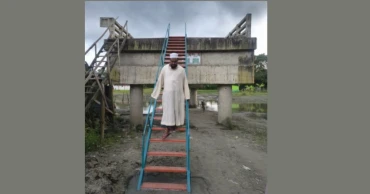
Tk 9.2cr bridge: Lack of approach roads leaves thousands reliant on iron stairs in Feni
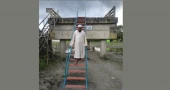
Once, villagers crossed the Chhoto Feni River by boat as there was no bridge or connecting road. Now, although a Tk 9.2 crore bridge stands over the river in Feni’s Daganbhuiyan upazila, there are still no approach roads, forcing thousands of people to use makeshift iron staircases to cross it on foot.
The Local Government Engineering Department (LGED) built the 60-metre bridge on the Matubhuiyan-Bekar Bazar road to improve connectivity between communities on either side of the river.
Although the main bridge has been completed, the connecting roads remain unfinished, leaving the structure largely unusable years after its construction.
The absence of approach roads has made vehicular movement impossible, while the considerable difference in height between the bridge and the existing road levels also makes pedestrian access difficult.
Meanwhile, residents of Momarizpur have alleged that a temporary embankment built across the river during construction obstructs the natural flow of water, causing floodwater to spill into their homes and damage houses, tube wells and toilets.
40 minutes ago
PM Tarique heads to Feni
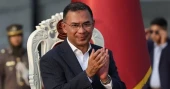
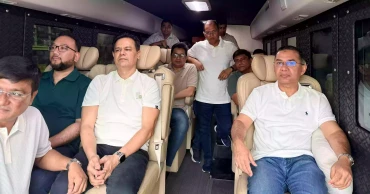
Prime Minister Tarique Rahman on Thursday headed to Feni on his first visit to the district since taking office, with several development and public welfare programmes on his daylong itinerary.
The Prime Minister’s motorcade left his Gulshan residence for Feni by road at around 8:40am, said PM’s Additional Press Secretary Atikur Rahman Rumon.
The Prime Minister is scheduled to return to Dhaka in the evening after completing his daylong programmes in Feni, he said.
The Prime Minister’s maternal grandfather, Eskandar Majumder, hailed from Majumder Bari at Sripur village of Fulgazi upazila in Feni.
Feni-1 is also the constituency represented by former prime minister Khaleda Zia, who was elected to Parliament from the seat several times since 1991.
The constituency therefore holds special significance for local people.
The slogan, “Netri moder Khaleda, gorbo moder alada” (Khaleda is our leader, our pride is unique), is still frequently heard among BNP leaders and activists in the area.
Prime Minister’s programmes
At 12:30pm, Prime Minister Tarique Rahman is scheduled to inaugurate Muhuri-Kohua Flood Control, Drainage and Irrigation Rehabilitation (Phase I) project at Kheya Ghat area near the Muhuri Bridge in Parshuram upazila.
He will inaugurate a tree-planting programme on the premises of Begum Khaleda Zia Women’s College in Fulgazi at 1:30 pm.
Tarique Rahman will inaugurate the supply of electricity to the national grid from the rooftop solar facility installed at the Fulgazi District Council Dak Bungalow at 2 PM.
At 3:30pm, he will attend a programme at Fulgazi Government Pilot High School ground for distributing Family Cards and Farmer Cards and providing honorariums to imams, muezzins and people serving in other religious institutions.
The Prime Minister will offer Zuhr prayers and have lunch at Fulgazi Dak Bungalow.
Earlier, as part of his election campaign, Tarique Rahman addressed an election rally at Feni Pilot High School ground on January 25 while travelling from Chattogram to Dhaka.
13 days ago
PM to inaugurate Tk 1,542cr Muhuri-Kohua Project in Feni Oct 1
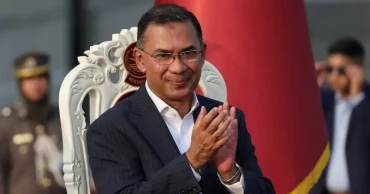
Prime Minister Tarique Rahman is scheduled to inaugurate the rehabilitation of the Muhuri-Kohua Flood Control, Drainage and Irrigation Project (Phase I) in Parshuram upazila of Feni district on October 1.
The prime minister’s visit was originally scheduled for September 17 but was later postponed and rescheduled for October 1.
The project was approved by the Executive Committee of the National Economic Council (ECNEC) on June 16 at an estimated cost of Tk 1,542.16 crore.
Under the project, rivers and water bodies will be re-excavated, flood-control embankments rehabilitated, riverbanks protected and irrigation infrastructure renovated.
State Minister for Water Resources Forhad Hossain Azad visited Feni on Monday morning to inspect preparations for the prime minister’s visit.
During the visit, he inspected Kheyaghat, areas along the Muhuri River and the proposed public meeting venue in Parshuram upazila.
According to the district administration, the prime minister will inaugurate the project at Ghata Ghar area on the bank of the Muhuri River in Parshuram and later address a public rally there.
The prime minister will then travel to Fulgazi and attend several programmes, including a tree-plantation programme at Khaleda Zia Women’s College.
He is also scheduled to inaugurate solar panels with a combined capacity of 962.5 kilowatts installed at government offices in Parshuram, Fulgazi and Chhagalnaiya upazilas.
The prime minister will later rest and offer prayers at the Fulgazi District Council Dak Bungalow.
Between 3:00pm and 3:20pm, he is scheduled to attend a programme at Fulgazi Government Pilot High School ground.
At the programme, jointly organised by three ministries, the prime minister will take part in activities involving Family Cards, allowances for imams and priests, Farmer Cards, and assistance programmes for poor students and distressed people.
He is also scheduled to meet local political leaders and representatives of civil society.
The venues will be divided into three zones—red, yellow and white—as part of the security arrangements.
More than 2,000 police personnel will also be deployed in Parshuram and Fulgazi upazilas to ensure security.
Deputy Commissioner Mohammad Mahbubul Karim, disclosed the information at a meeting held at the deputy commissioner’s conference room on Sunday ahead of the prime minister’s visit to Feni.
Feni Additional Deputy Commissioner (General) Mohammad Al Amin Sarker said a foolproof security measure would be put in place centering the prime minister’s visit.
Besides the SSF, personnel from the police, Special Response Battalion (SRB), Border Guard Bangladesh (BGB), Coast Guard and other law enforcement agencies would be involved in the security arrangements.
However, he could not provide the exact number of personnel to be deployed in total.
Deputy Commissioner Mohammad Mahbubul Karim said those allowed to enter the red zone would be issued special security cards. Separate cards would be issued for the yellow zone, and only those holding the relevant cards would be allowed to enter it.
The area outside the red and yellow zones would be designated as the white zone, where members of the general public would be allowed to enter.
He also said the prime minister was expected to travel to Parshuram by road according to the tentative schedule, while arrangements for his return had not yet been finalised.
Meanwhile, preparations for the prime minister’s visit are nearing completion.
During a field visit, it was seen that preparations were underway to set up the public meeting venue on the bank of the Muhuri River in Ghata Ghar area of Parshuram.
Besides, preparations were also underway to construct a temporary helipad at Parshuram Pilot High School ground. Construction of the stage, inauguration plaque area and other necessary infrastructure at the venue was nearing completion.
Arrangements are being made to provide safe drinking water for people attending the public meeting.
The Department of Public Health Engineering is installing water tanks and portable toilets and making other sanitation arrangements at the venue. Cleaning and other necessary preparatory activities are also underway at and around the event venue.
The Roads and Highways Department is carrying out repair and maintenance work on several important sections of the Feni-Parshuram main road to ensure smooth and safe road communication.
Necessary repair and preparatory work is also being carried out around the public meeting venue along the Parshuram-Subar Bazar road.
Beautification work is similarly underway at Fulgazi Government Pilot High School ground and other important locations.
Meanwhile, local people hope the government will take permanent measures to address flooding and river erosion, establish a medical college and public university in Feni, construct an underpass at Lalpol, create employment opportunities, and improve communication and infrastructure in the district.
15 days ago

Teen domestic help found hanging in Feni
Police recovered the hanging body of a teen domestic help from a schoolteacher's flat in Parshuram upazila of Feni on Thursday night.
The deceased was identified as Farzana Akter Priya, 14, daughter of Saiful Islam of Sebarhat in Noakhali.
Priya had been working as a domestic help at the flat of Zaheda Akter Timu, an assistant teacher at Mohammadpur Govt Primary School, for the past three years.
According to police and locals, the teacher left for school in the morning, leaving Priya alone in the flat. After returning home in the afternoon, she repeatedly knocked on the door but received no response.
She later broke open the door with the help of the building staff and found the girl hanging from a ceiling fan with a scarf tied around her neck before informing police.
Officer-in-Charge (OC) Md Ashraful Islam of Parshuram Police Station said police are initially treating the incident as a suspected case of suicide.
Police recovered the body around 9:00pm and sent it to Feni 250-bed General Hospital morgue for an autopsy, he said.
A note bearing the letters "K+P" was recovered from the scene, and police are investigating all possible aspects to determine the actual cause of death, the OC said.
2 months ago
Man killed in clash over cutting soil in Feni
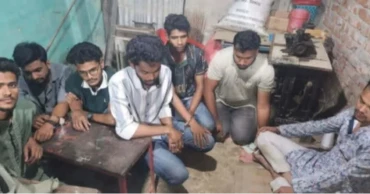
A man was killed in a clash between two groups of villagers over soil cutting in Chhagalnaiya Upazila of Feni District early Sunday.
The deceased was identified as Abu Ahmed alias Hona Mia, 37, son of Abul Kashem of Pathannagar village in the upazila. He used to work as a token agent for vehicles in the area.
Local people said some influential people including one Nur Ahmed Mia was involved in cutting soil from a field and transporting it by pickup vans to sell elsewhere in Kontraktor Mosque area under Pathannagar union of the upazila.
At one stage, Kamrul Hasan Zahid and his associates entered the area and obstructed the workers around 2 am.
Kamrul and Abu Ahmed, cousin of Nur Ahmed Mia, locked into an altercation over going on Facebook Live over the matter, triggering a clash.
Some 10 to 12 people attacked Abu Ahmed during the clash, leaving him critically injured.
Later, he was taken to Sadar Hospital morgue where the doctors declared him dead.
Two people were injured when they tried to save Abu Ahmed during the attack.
Shaheen Mia, officer-in-charge of Chhagalnaiya Police Station, said police arrested seven people with the help of local people.
6 months ago
Teenage boy killed in Feni road crash
A 14-year-old boy was killed and his father was injured when a truck knocked them down on Feni-Noakhali regional highway in Dagonbhuiya upazila of Feni district early Tuesday.
The deceased was identified as Nur Mohammad, son of Nur Alam of Lakshmipur district.
The accident occurred around 5 am when a truck ran over them while they were going to a local mosque for offering fajr prayer, leaving Nur Mohammad dead on the spot and his father injured, said Asadul Islam, officer-in-charge of Mohipal Highway Police Station.
The injured were taken to Chattogram Medical College and Hospital.
On information, police recovered the body and seized the truck.
7 months ago
ACC Trap in Noakhali: Project Implementation Officer held with bribe money
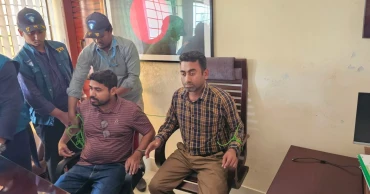
The Anti-Corruption Commission (ACC) on Thursday arrested a Project Implementation Officer (PIO) in Sonagazi upazila of Feni while he was taking bribe of Tk 100,000.
The arrested official is Md Al-Sayeed, Project Implementation Officer of Sonagazi Upazila office. His associate, office assistant Abu Naser, was also arrested during the operation.
According to the complaint, a contractor completed work on five projects under Sonagazi Upazila Project Implementation Office through sub-contract agreements and submitted the bills for payment.
ACC files 2 cases against ex-Jessore-1 MP Sheikh Afil Uddin, wife
As a condition for releasing the bills, Al-Sayeed allegedly demanded Tk 12 Lakh as bribe.
Finding no other option, the complainant agreed to pay part of the bribe money and subsequently filed an application with the ACC’s Noakhali district office seeking a trap operation.
Following approval from the Commission, an ACC team conducted the operation and caught Md Al-Sayeed red-handed while accepting Tk 100,000 in cash.
Abu Naser was arrested at the same time for his involvement.
ACC to file case over Tk 1,325cr loan scam involving Bashundhara Group, National Bank officials
ACC officials said legal proceedings are underway and the accused will be produced before a court after filing a case.
7 months ago
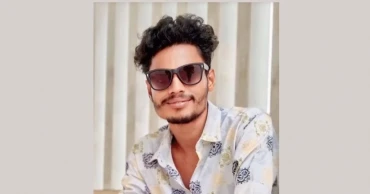
Tanti Dal leader hacked to death in Feni
A local leader of Jatiyatabadi Tanti Dal was hacked to death at Gunak village in Sonagazi upazila of Feni on Wednesday evening.
The deceased was identified as Ayub Nabi Tarek, 26, organisational secretary of Bogadana Union Tati Dal and son of Kamal Uddin of Gunak village.
Tarek’s fsther Kamal Uddin said,Tarek was lured to a house in the same locality by Naru (also known as Nahar), wife of Ohidur Rahman, on the pretext of settling an earlier dispute.
He alleged that Ohidur Rahman’s son Nahid, along with Sayeed, Niloy and Naru, attacked Tarek using sharp weapons and sticks, leaving him dead on the spot.
Local sources said there had been tension for some time over allegations of an extramarital relationship between the victim and the wife of the main accused, Nahid.
Locals said the murder may have been linked to that dispute.
Police from Sonagazi Model Police Station rushed to the spot after receiving information and recovered the body.
It was later sent to the morgue of Feni General Hospital for autopsy , said Officer-in-Charge of Sonagazi Model Police Station Md Kamrul Islam.
7 months ago
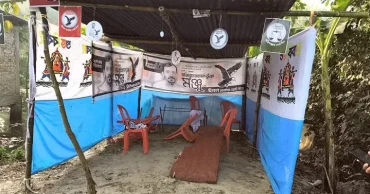
AB Party candidate’s election office vandalised in Feni
Miscreants vandalised the election office of AB Party chairman Mujibur Rahman Manjur, the Eagle-symbol candidate of the 11-party alliance, at Izzatpur in Feni Sadar late Wednesday night.
Local sources said the office, located on Daiyabibi Bazar Road at Izzatpur, was inaugurated by party leaders and supporters on Wednesday morning.
Chairs and tables inside the office were destroyed overnight.
Supporters discovered the damage when they visited the office early Thursday morning.
Feni Sadar Upazila Nirbahi Officer and Assistant Returning Officer Sultana Nasrin Kanta said she heard about the vandalism and assured that legal action would be taken according to the law.
Ctg Port Unrest: Shipping Adviser’s convoy blocked as workers stage protests
Feni district AB Party Secretary Fazlul Haque said, “The attack on our office will not create a favorable environment for the election. People will hold those responsible accountable through the ballot on February 12.”
Mujibur Rahman Manjur they have submitted a written complaint to the authorities.
8 months ago
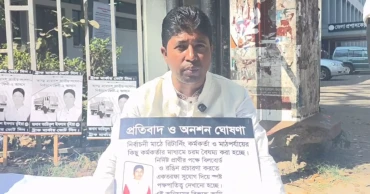
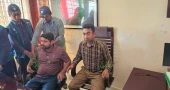
Gono Ohikar Parishad candidate in Feni stages hunger strike
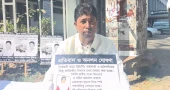
Tariqul Islam Bhuiyan, a candidate of Gono Odhikar Parishad for Feni-2 constituency, staged a hunger strike on Thursday morning outside the office of the Returning Officer demanding the withdrawal of officials accused of administrative bias.
He started the hunger strike at the main gate of the Returning Officer’s office around 8:30am accompanied by a small group of party workers.
The protest caused a brief disruption when several Additional Deputy Commissioner vehicles were temporarily blocked at the main gate and had to take an alternate route to enter the office.
During the protest, Tariqul alleged harassment and threats by Sadar Upazila Assistant Commissioner (Land) Jasim Uddin.
BGB seizes Indian smuggled goods worth over Tk 1 crore in Feni
He claimed that the electoral code of conduct was being severely violated in the Feni-2 constituency yet no effective action was being taken.
He also accused Sadar AC Jasim Uddin of mistreating him and issuing various threats while the Returning Officer allegedly failed to intervene.
He further alleged that billboards and colorful campaign activities are being allowed in a one-sided manner in favour of a particular candidate.
He warned that if Jasim Uddin is not withdrawn within eight hours he would be compelled to announce more stringent protest measures.
8 months ago