Education
Education can drive Bangladesh-China people-to-people ties: Mahdi Amin
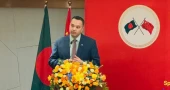
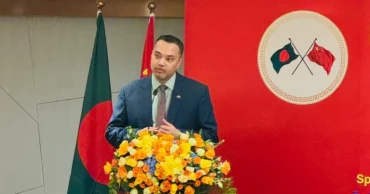
Prime Minister’s Education and Primary and Mass Education Adviser Mahdi Amin on Wednesday said education should become a key driving force in strengthening people-to-people connectivity between Bangladesh and China.
Speaking at a meeting on Bangladesh-China education cooperation in Guangzhou, he called for expanded scholarships, joint research, academic exchanges and stronger cooperation in technical and vocational education between the two countries.
Mahdi said many Chinese universities are now leading in global rankings and scientific research, and Bangladesh wants to benefit from their best practices and advanced research culture, said a press release.
He said Bangladesh is keen to increase scholarship opportunities for talented Bangladeshi students at renowned Chinese universities and undertake joint research projects to improve access to modern laboratories and international academic resources.
The meeting focused on four key areas—study opportunities for Bangladeshi students in China, cooperation between universities, joint research, and technical education and skills development.
Mahdi said Bangladesh’s large working-age population is one of its greatest economic strengths, but the country’s education system has remained overly dependent on theoretical learning for many years.
He said the government is working to make education more practical and employment-oriented and plans to give greater priority to technical and vocational education.
The adviser also said the government is moving to make third-language learning compulsory to help young people compete globally, with Prime Minister Tarique Rahman giving priority to Mandarin.
He stressed the need for stronger industry-academia collaboration and modern employment exchanges to better connect education with the job market.
Mahdi called for regular exchanges of teachers, researchers and students between Bangladesh and China, saying such programmes could create greater opportunities for Bangladeshi students to pursue higher education in China while allowing Chinese students to visit Bangladesh through exchange programmes and summer schools.
24 days ago
Quality education for every student govt's top priority: PM
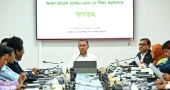
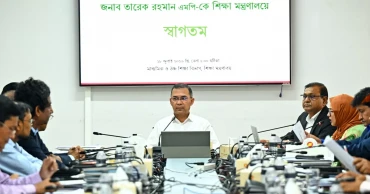
Prime Minister Tarique Rahman on Tuesday reaffirmed the government's commitment to overhauling the country's education system through coordinated reforms, effective monitoring and the timely implementation of plans to bring qualitative improvements at every level of education.
"Ensuring quality education for every student in the country is one of the government's highest priorities. We will continue implementing coordinated initiatives, effective monitoring and timely plans to bring qualitative improvements at every level of the education system," he said.
The Prime Minister made the remarks while visiting the Ministry of Education for the first time since assuming office, said a press release issued by his Press Wing.
During the visit to the ministry at the Bangladesh Secretariat, Tarique Rahman reviewed its overall activities and exchanged views with senior ministry officials, heads of its departments and agencies, and experienced education officers working at the field level.
A detailed presentation was made on the ministry's ongoing activities, development projects, progress in implementing the national education policy and overall administrative performance.
After reviewing the presentation, the Prime Minister provided necessary directives to the officials.
He stressed the need to improve the standard of education, ensure students' regular attendance in classrooms, strengthen effective teaching, provide continuous and up-to-date training for teachers, expand technology-based education and reinforce administrative accountability.
Tarique Rahman also held direct discussions with experienced education officials from the field level, who shared their experiences, highlighted the realities and challenges in the education sector and offered recommendations for improving educational standards.
He listened to their views attentively and emphasised that field-level experience and recommendations should be given due importance in policymaking and implementation.
The Prime Minister said the government's goal is to ensure that every student, regardless of location or background, receives quality education through an efficient, accountable and modern education system.
He urged officials and employees of the ministry to carry out their responsibilities with dedication, professionalism and a strong commitment to public service.
Tarique Rahman also issued necessary directives for the overall development and modernisation of the country's education sector.
1 month ago
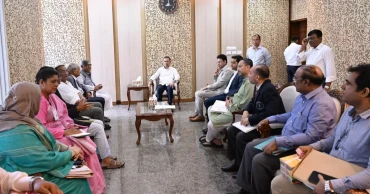
PM orders steps to promote reading habit among students
Prime Minister Tarique Rahman on Thursday directed the authorities concerned to take steps to promote a reading habit among students across the country.
He gave the directive at a meeting with Bishwo Shahitto Kendro and ministers of education, primary and mass education, and cultural affairs at his office in the Secretariat.
According to the Prime Minister’s Press Wing, it was decided that the government will work jointly with Bishwo Shahitto Kendro to promote a reading habit among students.
The Prime Minister held the meeting with Bishwo Shahitto Kendro founder Prof Abdullah Abu Sayeed and the ministers concerned to this end.
The meeting discussed in detail how to expand reading programmes among students nationwide.
Prof Abdullah Abu Sayeed, Education Minister Dr ANM Ehsanul Hoque Milon, Cultural Affairs Minister Nitai Roy Chowdhury, State Minister Ali Newaz Mahmood Khyom, State Minister for Primary and Mass Education Bobby Hajjaj, and Prime Minister’s Advisers Mahdi Amin and Dr Zahed Ur Rahman, among others, were present.
Earlier, on April 7, Prof Abu Sayeed met the Prime Minister, when they discussed working together to expand the reading programmes of Bishwo Shahitto Kendro.
4 months ago
Education Department tells SAVE plan borrowers to prepare for repayment
The U.S. Education Department has said more than seven million student loan borrowers enrolled in the Biden-era SAVE repayment plan will begin receiving notices from Friday, instructing them to select a new plan to repay their debt.
The SAVE plan was recently struck down by a federal court, leaving borrowers in forbearance since July 2024 while legal challenges played out. Starting July 1, loan servicers will give borrowers 90 days to choose a new repayment plan, which for most will mean higher monthly payments.
Alexis Arredondo, a 2024 University of California, Los Angeles graduate with a microbiology degree, said he now faces tough choices. A first-generation college student with about $40,000 in debt, Arredondo joined the SAVE plan after graduation while working part-time and freelancing. He said higher monthly payments would be difficult, but a longer repayment period would increase interest costs.
The SAVE plan, one of several initiatives launched under President Joe Biden, offered more lenient terms than traditional plans, including reduced payments based on discretionary income and forgiveness for borrowers who made payments for at least 10 years and owed $12,000 or less.
Under Secretary of Education Nicholas Kent, citing the Trump administration’s perspective, said borrowers are responsible for repaying their loans. Meanwhile, experts warn that borrowers may face increased debt balances, as interest has accrued since the court blocked the plan last summer.
“The promises about fixing the broken student loan system are now colliding with reality,” said Mike Pierce, executive director of the Student Borrower Protection Center.
Notices from loan servicers will be sent in stages, with those enrolled in the SAVE plan the longest receiving them first. Borrowers will need to resume payments as early as this summer under new repayment options, which calculate the most lenient plan at a minimum of 10% of discretionary income.
5 months ago
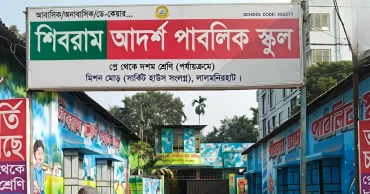
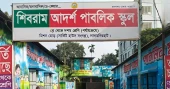
Excellence in Education: Shibram Ideal Public School shines in Lalmonirhat
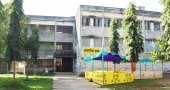
Lalmonirhat’s Shibram Ideal Public School, located near the Circuit House at the heart of the district, has emerged as a bright example in the region’s education sector.
Established in 2015, the unique institution is modelled on the cadet college system, according to its founder and director, Rashedul Islam Rashed.
One of the school’s primary goals is to prepare its younger students for future admission into cadet colleges.
Read more: Dhaka to get state-of-the-art special needs school
A closer look reveals the school’s distinctive approach: students across all classes exhibit remarkably uniform handwriting, imbued with artistic flair.
This meticulous attention to penmanship has consistently amazed parents and visiting officials alike.
Alongside mother tongue education, the school places strong emphasis on English proficiency and provides tailored instruction in students’ respective religious teachings.
This year, the school has distributed copies of the Holy Quran to all 42 students, further strengthening its commitment to holistic learning.
4th International Symposium on Quality Assurance in Engineering Education concludes
The school has also been recognised at the Rangpur divisional level, securing first place in a handwriting competition. In addition, it has ranked among the top schools in the district in private scholarship examinations.
Shibram Ideal Public School attracts students not only from within Lalmonirhat but also from neighbouring districts. For these students, the school offers a child-friendly residential facility.
Local students attend regular daytime classes but often return in the afternoons or evenings to continue their studies in a stimulating and enjoyable environment.
The school’s residential programme provides distant students with nutritious meals, comfortable accommodation, and attentive guidance in academics and character-building.
Govt set to implement new project to digitise medical, nursing education
9 months ago

Century-old Cumilla Victoria College hostel crumbles as students await urgent reconstruction
Once known as the New Hostel of Cumilla Victoria Government College, the century-old residential facility near Tomchom Bridge now stands in ruins, its abandoned wings swallowed by thick vegetation, broken walls and the quiet encroachment of drug users and vagrants.
A major portion of the hostel has remained abandoned for more than a decade, leaving hundreds of students without accommodation.
Once home to nearly 450 students, the complex now houses barely 80 in its only surviving building, students said.
With almost 30,000 students enrolled in the 126-year-old institution, many arriving from distant districts say the reconstruction of the new hostel has become urgent to ease the college’s chronic accommodation crisis.
Attack on principal of Cumilla Victoria College
Founded on 24 September 1899 by Rai Bahadur Anand Chandra Roy, Cumilla Victoria Government College originally built several hostels for students: Nazrul Hall, Faizunnesa Hall, Sher-e-Bangla Hall, and the New Hostel—officially known as Suhrawardy Hall—located beside the Tomchom Bridge area.
Although the four hostels together can accommodate around 1,200 male and female students, the New Hostel remains in the worst condition.
Three of its four buildings became unusable after 2000 and were fully shut down by 2013.
A visit to the site reveals a stark contrast between the surrounding urban landscape and the hostel’s decaying structures.
Read more: Erasmus Mundus Scholarship 2026: How to Apply from Bangladesh
Once arranged around a central pond, the blocks now resemble relics of neglect:
• West block: Collapsed, covered by dense vines and parasitic plants.• East block: Mostly vanished, with only scattered remains.• North block: Barely standing, now a hangout spot for drug users; vagrants have set up makeshift latrines nearby. A fading inscription on the wall still reads: PWD 1947.• South block: A 1990s building, currently housing the remaining 80 students, though its condition is also worsening.
Former residential student Jahangir Alam Tipu, who stayed at the hostel in 1986–87, fondly recalled its vibrant past.
“My home was in Chandpur. Without hostel accommodation, studying would have been very difficult,” he said.
“We used to catch fish from the pond at dawn and cook together. I still miss those days. Seeing the hostel in ruins is heartbreaking. It should be rebuilt,” he added.
Echoing the former resident, current students Arafat Hossain Jihad, Md Rahmat Ullah and Hasan Al Kabir said many learners from distant districts exhaust themselves commuting daily, while others live in poor conditions in messes and lodgings.
Admitting the accommodation crisis, college principal Prof Abul Bashar Bhuiyan said, “We are aware of the accommodation shortage. We have proposed constructing two 10-storey buildings in the New Hostel and Nazrul Hall areas. If approved, they will provide residential facilities for an additional 2,400 students.”
Read more: 3 female BAU students expelled from dormitory over ragging allegations
Students now hope the proposal wins swift approval—so the ‘New Hostel’ may finally live up to its name once again.
9 months ago
Erasmus Mundus Scholarship 2026: How to Apply from Bangladesh
The Erasmus Mundus Joint Masters Scholarship (EMJM) is one of Europe’s most competitive and fully funded master’s scholarships, offering students the chance to study in multiple countries under a single degree programme. In recent years, Bangladeshi applicants have shown remarkable success in securing this scholarship, proving that with proper planning and strong motivation, studying in Europe is not just a dream—it is achievable. Let's dive into the prospects and detailed application process of the 2026 Erasmus Mundus Scholarship for Bangladeshi students.
What is the Erasmus Mundus Scholarship? Why should Bangladeshi students apply?
The Erasmus Mundus Scholarship is awarded for the Erasmus Mundus Joint Master’s Programmes, which are unique not only because they are fully funded but also because of the structure of the degree. Anyone can apply for this—fresh graduates, job holders, and even final-year students (depending on programme requirements).
Students in the programme receive joint, double, or multiple degrees, depending on the chosen course. Unlike traditional master's programmes, Erasmus Mundus requires students to study at least two to four universities across two to four European countries, offering global exposure and diverse academic experience.
Read more: Top 10 International Scholarships for Women to Study Abroad
The benefits are extensive. The scholarship provides:
- €1,400 or TK200,000 monthly stipend - Full tuition fee waiver- Travel support- Insurance coverage- Cultural and academic mobility opportunities.
One of the greatest advantages for Bangladeshi applicants is that Erasmus has no application fee, does not prioritise CGPA, and welcomes students from any university background. Instead, selection focuses on motivation, potential, and programme alignment.
Erasmus promotes diversity, giving equal opportunities to students from public, private, and national universities. Beyond funded study, it offers global networking, internships, post-study work pathways, and long-term European residency—making it a truly life-changing opportunity.
Read more: 10 Affordable European Countries for Bangladeshi Undergraduate Students in 2026
Where to Find Erasmus Mundus Programs
Finding the right Erasmus Mundus program is the first and most important step in the application process. The official Erasmus Mundus Catalogue is the most reliable platform for exploring available programmes, and it can be accessed here:
https://www.eacea.ec.europa.eu/scholarships/erasmus-mundus-catalogue_en
On this website, applicants can search based on field of study, language of instruction, mobility structure, and partner universities. Filters help narrow down options aligned with one’s academic profile and future goals.
After shortlisting, applicants should carefully review the curriculum, university locations, internship or research components, language requirements, and the application deadline. Alongside the official source, shortlisted lists from trusted scholarship platforms—such as those featuring programmes like MIPDaL, NOHA, MARIHE, GEM, PlantHealth, MAGMa, EMABG, and the Journalism track—can offer additional clarity and help cross-check requirements.
Many Erasmus alumni suggest applying to three to five well-matched programmes rather than submitting many unfocused applications. This approach allows candidates to prepare stronger, personalised applications and significantly improves their chances of selection.
Read more: Norway Study 2026: 10 Affordable Universities for Non-EU, Bangladeshi Students
Common Eligibility Requirements
Erasmus Mundus eligibility varies by programme, but most follow similar criteria. Applicants must have a bachelor’s degree of at least 3–4 years in a relevant field, and final-year students may also apply if the programme permits proof of enrolment or expected graduation. English proficiency is required and can be demonstrated through IELTS, TOEFL, or a Medium of Instruction (MOI) certificate—meaning you can apply even without IELTS if the programme accepts MOI.
There is no fixed CGPA requirement, which makes the programme accessible to a wider range of students. Instead, selection committees focus on your motivation, relevant academic or professional background, clarity of goals, research or project experience, and extracurricular involvement. As a result, even applicants with an average CGPA can succeed if they present a strong and compelling overall profile.
Required Application Documents
- Academic transcript and degree certificate: Official academic records are required, and final-year students may submit provisional results or enrolment proof.
- Passport / National ID: This must be valid, as it will be needed later for visa processing.
- Curriculum Vitae (CV): Preferably in Europass format, highlighting relevant academic, professional, and extracurricular experiences.
- Motivation Letter / Statement of Purpose: A personalised and original statement explaining why you are applying and how the programme fits your goals.
- Recommendation letters (2): Two recommendation letters are required, and they should be written by professors or supervisors who can evaluate your academic or professional abilities.
- Proof of English proficiency: IELTS, TOEFL, Duolingo, or Medium of Instruction (MOI), depending on the programme’s requirement.
- Proof of residence / nationality: Sometimes required for scholarship eligibility, residency verification, or administrative purposes.
Read more: How to Use ChatGPT and Other AI Tools to Improve Your IELTS Writing and Speaking Preparation
Application Process
As a Bangladeshi student applying for the Erasmus Mundus application, first you need to explore programmes through the official catalogue and trusted scholarship platforms. After research, shortlist three to five programmes that align with your academic background and long-term goals. Carefully read each programme’s curriculum, mobility path, deadlines, language requirements, and funding details.
Then prepare the necessary core documents. If needed, schedule language tests early. Submit applications through the official portals, ensuring accuracy and completeness. After submission, wait for results, and if shortlisted, attend interviews if required. Once selected, accept the offer and begin the visa and travel preparation process.
Common Deadlines
Most Erasmus Mundus deadlines fall between October and January, though some programmes close earlier in December or extend to February or March. Since documents like recommendation letters, transcripts, and language test results require time, it is best to start preparing 3–4 months earlier for a smoother, stronger application experience.
Read more: Top 10 Countries Offering Post-Study Work Visas for International Students
Important Tips to Strengthen Your Application
- Write a motivation letter that aligns with the specific program’s curriculum and goals
- Highlight any relevant experience — internships, research, volunteering, community work, projects
- Keep your CV concise and focused; do not pad it with irrelevant information
- Connect with alumni or current students via social media or forums — they can give realistic advice
- Prepare well ahead of time — gather documents, schedule language tests, request recommendation letters 2–3 months before the deadline
- Be honest yet confident — show your real passion and clear goals
Final Words
Erasmus Mundus is an incredible opportunity for students who dream of studying abroad with full financial support while gaining exposure across multiple countries. With careful planning, strong motivation, and relevant preparation, applicants from Bangladesh and around the world can build a competitive profile—regardless of CGPA or financial background.
The key is to start early, choose programmes aligned with your interests, and prepare authentic, personalised application materials. From language requirements to documentation, each step brings you closer to a life-changing academic and cultural experience. If studying in Europe has been your dream, Erasmus Mundus is one of the most rewarding pathways to make it a reality.
Read more: How Bangladeshi Students Can Attest Certificates Online Before Going Overseas
9 months ago
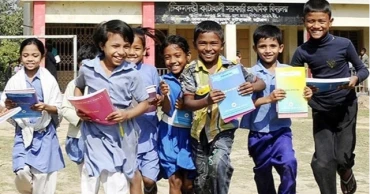
While the world embraces music education, Bangladesh seen stepping backwards
Police blocked a musical procession by Udichi Shilpigoshthi, the cultural collective, on Sunday, organized to demand reconsideration of the government’s decision to cancel recruitment of music and physical education teachers in public primary schools.
The march, which began in front of the National Press Club, was stopped by police near the Shilpakala Academy in Segunbagicha.
Udichi artists said they intended to proceed to the Chief Adviser’s residence at Jamuna Gate to present their songs. After some discussion, police initially allowed the march to continue, but stopped it again two minutes later after it crossed the Dhaka Range DIG office, preventing further progress. During this time, the artists performed songs while sitting on the road.
DU teachers, students protest abolition of music, physical-training teachers’ posts
The amended rules, published on November 2, removed the opportunity for recruitment of music and physical education teachers.
According to the Secretary-level Committee, the Ministry of Primary and Mass Education has stepped back from the plan. The committee noted that recruiting such a small number of teachers would be ineffective at the primary level and could create inequality, given that there are 65,569 primary schools nationwide. Cluster-based deployment would require a single teacher to serve 20 or more schools, making workload management impossible.
Earlier, in late August, the government issued the Government Primary School Teacher Recruitment Rules, which included positions for music and physical education teachers. Just two months later, the rules were amended.
Udichi hosts nationwide event against 'conspiracy centring national anthem'
The revised rules sparked widespread criticism. The Human Rights Forum Bangladesh (HRFB) stated that the decision is not only unreasonable but reflects succumbing to pressure from a small group, removing two important subjects from primary education. The National Rabindra Sangeet Sammilon Parishad also protested.
In a statement Parishad said, "When a small section of society opposes this using a narrow-minded, distorted interpretation of religion, the government abolished assistant teacher posts for music and physical education through a new notification.”
On Saturday afternoon, the cultural organization Chhayanaut also requested reconsideration of the cancellation by performing songs collectively.
Teachers and students of Dhaka University’s Music Department held a protest on campus on Wednesday demanding reinstatement of the posts. The rally took place in front of Aparajeyo Bangla, with participants singing the national anthem and raising placards. Dr. Priyanka Gope, Chairperson of the Music Department, read out a memorandum. Teachers from various departments—including Dance Department’s Laboni Banya and Clinical Psychology Department’s Kamal Uddin Ahmed Chowdhury—along with students, spoke at the event.
Leaders from Dhaka University Central Students’ Union (DUCSU), including the Literary and Cultural Affairs Secretary and cultural secretaries from different halls, expressed solidarity.
Students from Chittagong University protested the decision, stating that it poses a major threat to future artistic practice and cultural development in Bangladesh. Students from Jagannath University protested through music.
Two steps backwards
Globally, music education is emphasized even in countries with large Muslim populations. Saudi Arabia, the spiritual center of Islam, recently hired over 9,000 teachers to introduce music education in public schools as part of Vision 2030 reforms, led by Crown Prince Mohammed bin Salman, promoting arts, entertainment, and education. The kingdom is now qualifying thousands of kindergarten teachers in music skills. In late 2022, over 12,000 female teachers in government and private kindergartens were trained, and the new phase will train about 17,000 female teachers.
Other Muslim-majority countries, including Malaysia, Indonesia, Turkey, and Egypt, also retain music in their national curriculum.
In Malaysia, formal music education became compulsory in all elementary schools in 1983, with primary-level music as an intra-curricular subject since 1982.
In Indonesia, home to over 240 million Muslims, music has been compulsory in primary schools since the 1970s and remains under the 2022 curriculum.
In Turkey, primary school students receive one hour of music lessons from 1st to 8th grade, with additional two-hour elective lessons from 5th to 8th grade.
In Egypt, music has been part of government school curricula, including Arab and Western music, since 1931.
In the United Kingdom, comprising England, Northern Ireland, Scotland, and Wales, music is compulsory with variations in age and enforcement.
In Europe, a meNet study covering 20 countries showed music is compulsory at the primary level; secondary education often offers it optionally. Germany, Japan, Australia, and South Africa also mandate music and dance in primary schools.
In the United States, according to the NCES (January 2025), 73% of public schools require students to take at least one arts course, most commonly music (84%) and visual arts (82%).
In China, music is a compulsory subject during the nine years of mandatory education and part of the quality-oriented education push, with increased curriculum emphasis in recent standards.
But In Bangladesh, despite global trends highlighting the importance of music education, several religious organizations and political parties, including Bangladesh Jamaat-e-Islami and Islami Andolon Bangladesh, oppose music teacher recruitment. They demand religious instructors instead and have threatened street protests if the decision is not reversed, in a seminar held in September at the auditorium of the Institution of Diploma Engineers.
MIT study suggests music education
A new wave of research from the world-renowned Massachusetts Institute of Technology (MIT) scientists suggest that music lessons may do far more to boost brain development and overall intelligence.
The study reveals that learning music-whether through playing an instrument, singing, or reading musical notes, activates and strengthens areas of the brain responsible for memory, attention, problem-solving, and language skills. These neural networks overlap with those used in math and reasoning, giving children a deep cognitive workout that coding lessons can't yet match. Music education engages both hemispheres of the brain simultaneously, forging connections that sharpen focus and enhance long-term learning abilities.
Music combines creativity, pattern recognition, and emotional expression, creating a richer and more versatile mental environment. Children who play instruments or participate in music programs often show stronger academic performance, improved verbal abilities, and better emotional regulation.
Researchers also emphasize the social and emotional benefits of music. Playing in an ensemble or practicing with others fosters teamwork, patience, and communication-skills critical for success in any field, including technology. By developing these qualities early, children gain confidence and adaptability that can help them thrive in a rapidly changing world.
10 months ago
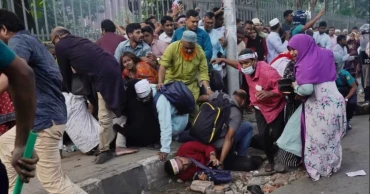
Primary teachers call off strike following govt assurance
Leaders of primary school teachers have called off their work abstention following assurances from the Ministry of Primary and Mass Education that their demands will be communicated to the Finance Ministry and resolved as soon as possible.
The decision was announced by the ministry on Sunday (Nov 9).
Read more: Primary school teachers protest at Shaheed Minar, demand implementation of 10th grade salary scale
A meeting was held between senior officials of the ministry and leaders of the Primary Teachers’ Demand Implementation Council and the Primary Assistant Teachers’ Unity Council, where the teachers’ demands were discussed in detail.
Abu Taher Md Masud Rana, Secretary of the Ministry of Primary and Mass Education chaired the meeting.
The key demands of the teachers include: upgrading the pay scale of assistant teachers from grade 13 to grade 10, resolving complications regarding higher grades after 10 and 16 years of service, and ensuring 100% departmental promotion from assistant teacher to head teacher.
Read more: Primary teachers continue protests for pay upgrade, advisers’ resignation
10 months ago
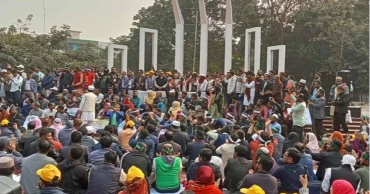
Primary teachers continue protests for pay upgrade, advisers’ resignation
Agitating government primary school teachers continued their protests for the second consecutive day on Sunday (9th November 2025) at the Central Shaheed Minar in the capital, reiterating their three-point demand.
Teachers under the banner of the Primary Teachers’ Demand Implementation Council also called for the resignation of the Advisers to the Ministries of Home Affairs, and Primary and Mass Education, in protest against Saturday’s police action on their demonstration, said Abul Kashem, president of the Bangladesh Primary Teachers’ Association.
A daylong work abstention is being observed at primary schools across the country in protest against the attack by law enforcers, Kashem said.
“Yesterday (Saturday) we went to Shahbagh for a peaceful march titled ‘Kolom Shomarpon’ (pen submission),” he said.
3-point demand: Primary school teachers stage sit-in at Shaheed Minar
“Police attacked us there, arresting five of our colleagues and injuring more than a hundred. Moreover, the Adviser to the Primary and Mass Education Ministry termed our demands irrational. We therefore demand the resignation of both advisers,” Kashem added.
He warned that the teachers would continue their sit-in and work abstention programmes simultaneously until their demands are met.
Their demands are upgrading assistant teachers to the 10th grade pay scale, removing complexities in obtaining higher grades after 10 and 16 years of service, and ensuring 100 percent departmental promotion.
Read more: Police-teacher clash at Shahbagh leaves 120 injured
10 months ago