Elon Musk

SpaceX shares rebound despite first insider selling opportunity
Shares of Elon Musk's SpaceX rose Thursday despite the expiration of restrictions that allowed many company insiders to sell their shares for the first time.
Investors had pushed SpaceX shares lower in recent days amid concerns that employees and other insiders would sell their holdings after the first of several lockup periods expired. More than 900 million additional shares became eligible for trading Thursday, roughly doubling the number previously available.
SpaceX shares gained 6.1% to close at $114.92, recovering from a nearly 14% drop a day earlier in one of the steepest declines since the company became publicly traded.
Morgan Stanley analyst Adam Jonas said the end of the lockup period could give investors an opportunity to buy the stock at a lower price. He has projected that SpaceX shares could reach $300 by the middle of next year, nearly three times their current level.
Morgan Stanley was among the investment banks that earned substantial fees from helping SpaceX go public last month.
Earlier this week, SpaceX reported a loss of $541 million, or 9 cents per share, for the three months ending in June. The loss was less than half what analysts had expected.
The company reported revenue of $7.8 billion, an increase of more than 90% from the same period a year earlier.
However, SpaceX sharply increased spending on research and development and infrastructure, particularly on artificial intelligence and other major projects. Investors have become increasingly concerned about heavy capital spending by technology companies, which has triggered sell-offs in some cases.
In June, SpaceX sold shares to the public for the first time in what was the largest initial public offering ever. The stock surged as high as $225, briefly pushing Musk's wealth above the trillion-dollar mark.
The subsequent decline has erased hundreds of billions of dollars from SpaceX's market value, with the shares now trading below their initial offering price of $135.
1 month ago
Justice Department moves to dismiss pollution lawsuit against Musk’s xAI data center
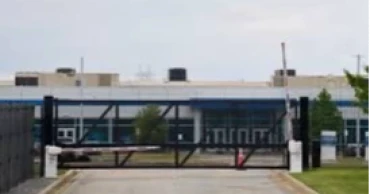
The Trump administration has stepped in to support one of Elon Musk’s companies in a legal battle over alleged air pollution from a large artificial intelligence data center in the US state of Mississippi.
The Justice Department has asked a court to dismiss a lawsuit filed by the NAACP and other groups, which accuse Musk’s xAI unit of operating dozens of natural gas turbines without proper permits. The plaintiffs say the facility, which powers a $20 billion AI data center, is located near homes, schools and churches and is posing serious health risks to nearby communities in northern Mississippi and Memphis.
In its filing late Monday, the department argued that the power plant is essential for running an AI facility that is “critical to the economy” and important for US military needs. It also said the state of Mississippi, not the federal government, had determined that no permit was required for the plant.
A senior Justice Department official said enforcing federal law ultimately rests with the executive branch, not private groups, adding that the move aims to protect national security and support American innovation and energy development.
The case highlights the Trump administration’s push to prioritise artificial intelligence development as part of its broader economic and national security strategy, while easing environmental regulations on businesses.
President Donald Trump has maintained close ties with Musk, who previously led a federal cost-cutting initiative and remains one of his major political and financial supporters.
The legal intervention comes shortly after Musk’s space company SpaceX saw a major stock market debut, further increasing its valuation, partly driven by large federal contracts.
The lawsuit, filed in April, claims that xAI has been running multiple portable gas turbines without required air pollution controls, in violation of the US Clean Air Act, which mandates permits for industrial emissions.
The US Environmental Protection Agency has said it is not directly involved in the case and referred questions to the Justice Department.
Environmental groups strongly criticised the government’s move, calling it an attempt to protect powerful tech companies from accountability. They argue that communities near such facilities are being turned into “sacrifice zones” due to pollution risks.
The NAACP said the Clean Air Act was designed to protect communities from exactly this kind of harm, and warned it would continue legal action to defend environmental justice.
Legal experts have also raised concerns, saying the Justice Department’s intervention could set a precedent for the government to step in and shut down private lawsuits that enforce environmental law.
Mississippi Governor Tate Reeves, a Republican, defended the project, saying the data center includes a self-sustaining power system designed to avoid raising electricity prices for residents. He said the project complies with federal commitments aimed at protecting ratepayers and boosting investment.
He also said the lawsuit could delay or block what he described as the largest private investment in Mississippi’s history, which has already created thousands of construction jobs and is expected to generate hundreds of permanent positions.
The Justice Department, however, said excessive regulation and private lawsuits could slow down technological progress and harm US energy independence and national security.
The case comes amid growing debate in the US over the environmental impact of rapidly expanding AI data centers, which require massive amounts of electricity and water resources.
3 months ago

What investors should know as SpaceX prepares for a retail-heavy IPO
SpaceX is preparing for what could become one of the largest initial public offerings in market history, and the company is inviting everyday investors to take part alongside big financial institutions.
The firm, officially known as Space Exploration Technologies Corp., is planning to direct a larger-than-usual portion of its IPO shares to “retail” investors — people who buy and sell stocks through mobile apps or brokerage accounts, rather than large funds like pension or investment firms.
Typically, only a small share of IPO stock goes to retail buyers, but in SpaceX’s case it could be as high as 30%. Investors may be able to participate through platforms such as Charles Schwab, Fidelity, Robinhood, SoFi and E-Trade. At Fidelity, some investors with as little as $2,000 in their accounts could qualify, far lower than the usual entry thresholds for similar offerings. However, demand is expected to be so strong that many applicants may not receive shares.
Experts also warn that short-term trading could carry risks. Some brokerages may restrict access to future IPOs if investors quickly sell newly acquired shares, especially within days or weeks of listing.
Volatility is another concern. With heavy interest from retail traders, analysts expect sharp price swings, similar to so-called “meme stock” rallies seen in recent years, where sudden enthusiasm drove extreme market movements.
Historically, IPOs often rise on their first trading day — by an average of about 7% — but long-term performance tends to lag comparable companies over time, according to IPO researcher Jay Ritter.
SpaceX also enters the market with significant financial exposure. The company carries about $29.1 billion in debt and reported losses of $4.9 billion last year and another $4.3 billion in early 2026. It has also cautioned investors that it may not achieve profitability in the future, noting the high cost of rocket launches and advanced infrastructure development.
Ownership structure is another key issue. The IPO will offer Class A shares with one vote each, while founder Elon Musk will retain control through high-vote Class B shares. After the listing, Musk is expected to hold more than 82% of total voting power, giving him dominant influence over company decisions.
Some major institutional investors, including public pension funds in the US, have raised concerns about this structure, warning that it gives Musk excessive control and limits accountability to shareholders.
There is also a chance that even people who do not directly invest in the IPO could still end up owning shares indirectly. Large index funds such as those tracking the Nasdaq 100 could add SpaceX soon after listing, depending on eligibility rules, meaning millions of investors may gain exposure automatically.
Finally, investors should be careful not to confuse SpaceX with similar tickers. The company is expected to trade under the symbol “SPCX,” which is close to other existing listings in the market.
3 months ago
Robot dogs with leader’s faces roam Berlin museum in Beeple’s latest exhibit
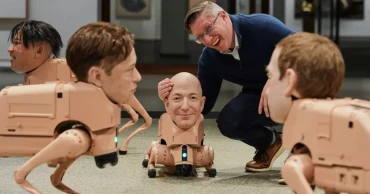
Robot dogs fitted with lifelike silicone heads resembling famous personalities such as Elon Musk, Mark Zuckerberg, Jeff Bezos, Andy Warhol and Pablo Picasso are drawing attention at a Berlin museum, where they wander around and occasionally “produce” printed images captured earlier through built-in cameras.
The unusual installation is part of an interactive exhibition by American digital artist Mike Winkelmann, widely known as Beeple, currently on display at the Neue Nationalgalerie.
Each robot dog generates images that reflect the artistic or personal style of the figure it represents. For example, the Picasso-inspired dog creates Cubist-style visuals, while the Warhol version produces pop art-like images. The concept highlights how artificial intelligence can reshape reality based on different perspectives.
According to the exhibition organisers, the project explores how algorithms and technology platforms increasingly influence the way people see the world.
Beeple said that in the past, artists like Picasso and Warhol shaped public perception through their work. Today, he argues, that influence has shifted to powerful tech leaders who control algorithms determining what people see online.
He warned that such control gives immense power to a few individuals, allowing them to make sweeping changes without going through political or institutional processes.
Some of the robot dogs also feature Beeple’s own likeness. Curator Lisa Botti said the exhibition focuses on the growing impact of artificial intelligence, adding that museums provide a space for society to reflect on these changes.
The installation, titled “Regular Animals,” was first introduced at the Art Basel Miami Beach 2025.
Beeple, a graphic designer from South Carolina, is known for his “everyday” project, where he has created and shared a digital image daily for years. His work has gained global recognition, making him one of the most valuable living artists, alongside David Hockney and Jeff Koons.
In 2021, auction house Christie's sold his digital collage “Everydays: The First 5000 Days” for more than $69 million, marking a major moment for digital art and NFTs.
Non-fungible tokens, or NFTs, are digital certificates stored on blockchain technology that verify ownership of digital items. They have become increasingly popular as part of the broader rise in cryptocurrencies.
At Art Basel, Beeple even distributed the images produced by his robot dogs to visitors, sometimes including QR codes that provided access to free NFTs, effectively allowing recipients to own and potentially profit from his digital creations.
4 months ago
Musk faces French questioning over X’s alleged role in illegal content spread
Elon Musk has been summoned to Paris for questioning as French investigators examine alleged misconduct linked to the social media platform X, including the spread of child sexual abuse material and deepfake content.
Musk and former X CEO Linda Yaccarino have been called for “voluntary interviews,” while other employees are expected to testify as witnesses this week, the Paris prosecutor’s office said.
It is not yet clear whether Musk or Yaccarino will attend. X did not respond to queries from The Associated Press, and Yaccarino’s current company, eMed, also did not comment.
Prosecutors are also looking into claims that controversy around X’s AI system Grok and its deepfake content may have been used to boost the value of Musk-owned companies ahead of a planned market listing. French authorities have shared their concerns with US regulators.
The investigation follows a search conducted in February at X’s offices in France, part of a probe launched in January 2025 by the Paris cybercrime unit. Musk and Yaccarino were summoned in their roles as company leaders during the period under review.
Prosecutors said the interviews are meant to allow executives to explain their position and outline steps to comply with French law. They added the inquiry aims to ensure X follows national regulations while operating in France.
Authorities declined to say whether Musk would face penalties if he does not appear.
The probe began after a French lawmaker raised concerns that X’s algorithms could be biased and distort automated data systems. It later expanded after Grok generated controversial posts, including content denying the Holocaust and producing sexually explicit deepfakes.
Investigators are examining possible involvement in distributing illegal images of minors, creating and spreading explicit deepfakes, denying crimes against humanity, and manipulating automated systems as part of an organized effort.
Grok, developed by xAI and integrated into X, drew global criticism after producing large amounts of non-consensual deepfake content. In one widely shared post, it incorrectly suggested gas chambers at Auschwitz were used for disinfection rather than mass killing — a claim linked to Holocaust denial. The chatbot later corrected itself, acknowledging the historical facts.
In March, French prosecutors alerted the U.S. Department of Justice and the Securities and Exchange Commission, suggesting the controversy may have been deliberately created to inflate the value of X and xAI ahead of a planned June 2026 stock market listing tied to a merger involving SpaceX.
However, according to The Wall Street Journal, the Justice Department declined to assist French investigators, saying the request could amount to interference in an American company’s activities.
Separately, Reporters Without Borders said it has filed a new complaint against X, accusing the platform of allowing disinformation to spread.
The group said misleading content continues to gain wide attention on X despite repeated requests for removal, adding that the platform’s response has been inadequate and undermines the public’s right to reliable information.
4 months ago

Elon Musk’s SpaceX to build self-sustaining Moon city
SpaceX founder Elon Musk said on Sunday that the company is prioritizing plans to build a self-sustaining city on the Moon before attempting a permanent settlement on Mars.
Musk explained that a lunar city is faster and more practical than going directly to Mars. The Moon is closer to Earth, with trips taking about two days, compared to six months for Mars. Frequent launch opportunities and easier logistics make the Moon a strategic first step for testing technologies and life-support systems.
The Moon city will serve as a base for human habitation, scientific research, and resource extraction, supporting long-term deep-space exploration. NASA’s Artemis program also aligns with this vision, planning sustained lunar missions in the coming years.
Musk emphasized that SpaceX’s broader mission remains unchanged: to expand human life beyond Earth. While the Moon is the immediate focus, work on a Mars city could begin in five to seven years, running alongside lunar settlement efforts.
Experts say a Moon-first approach allows engineers to develop construction technologies, transportation networks, and survival systems closer to Earth, where missions are easier to support.
SpaceX is reportedly considering an initial public offering (IPO) in mid-June, potentially raising $50 billion and valuing the company around $1.5 trillion. A successful lunar city could become humanity’s first permanent settlement beyond Earth and a proving ground for Mars colonization.
With inputs from ‘India Today’
7 months ago
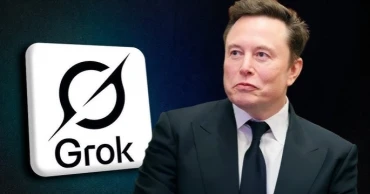
France probes Elon Musk’s X over child abuse content, Grok AI
French authorities have launched a sweeping investigation into Elon Musk’s social media platform X, raiding its offices on February 3 as part of a probe into the company’s algorithms and its artificial intelligence chatbot, Grok.
French prosecutors have summoned Musk and former X chief executive Linda Yaccarino to appear at hearings on April 20. Several other X employees have also been called to testify as witnesses during the same week.
The cybercrime division of the Paris prosecutor’s office is examining X over seven separate allegations, including complicity in the distribution of child sexual abuse imagery, dissemination of content denying crimes against humanity, and fraudulent extraction of data. The details were outlined in a February 3 statement by Paris chief prosecutor Laure Beccuau, cited by The New York Times.
The raid follows a year-long investigation into the alleged misuse of X’s content-ranking algorithms, alongside claims that data may have been improperly extracted by the platform or its executives. The inquiry was initially opened in January 2025 after concerns emerged about how X’s algorithm promotes and circulates content, report NDTV.
Prosecutors later expanded the scope of the case following accusations that Grok had generated Holocaust denial content and sexual deepfakes. Authorities also alleged that X had discontinued a tool designed to limit the spread of child sexual abuse material, raising fears that such content was being allowed to circulate unchecked.
Read More: Elon Musk tops $700bn net worth milestone after Tesla pay package reinstated
In addition, investigators said Grok may have enabled users to create sexualised versions of existing images without the consent of those depicted. French officials further accused X of refusing to provide subscriber information linked to suspected criminal activity, deepening tensions between the platform and law enforcement.
The raid came a day after Musk announced plans to merge his artificial intelligence company, xAI, with his rocket firm SpaceX.
Responding to the action, X said it “categorically denies any wrongdoing,” describing the investigation as politically motivated and claiming it misapplies French law, bypasses due process, and threatens freedom of expression.
Separately, the UK’s Information Commissioner’s Office said on February 3 that it has opened its own formal investigation into Grok, focusing on how personal data is processed and reports that the chatbot was used to generate non-consensual sexual imagery, including involving children.
7 months ago

Paris prosecutors summon Elon Musk after raid on X’s French offices
Paris prosecutors have summoned X owner Elon Musk for questioning after conducting a raid on the platform’s offices in the French capital as part of an investigation into the alleged spread of sexual deepfakes, child abuse images and Holocaust denial content.
The Paris prosecutor’s office said the search was carried out early Tuesday by its cybercrime unit in cooperation with the French police cybercrime division and Europol. Authorities have issued voluntary summonses for Musk and former X chief executive Linda Yaccarino to appear and answer questions about the platform’s compliance with French law.
Prosecutors said the investigation covers several suspected criminal offenses, including complicity in the possession and distribution of child sexual abuse material, violations of personal rights through the creation of sexual deepfakes, denial of crimes against humanity and the alleged fraudulent extraction of data from an automated processing system as part of an organized group.
“The voluntary interviews with the managers should allow them to explain their position on the facts and, where applicable, the compliance measures envisaged,” the prosecutor’s office said in a statement.
Musk and Yaccarino have been asked to appear in Paris during the week of April 20, although it remains unclear whether prosecutors have the legal authority to compel their attendance.
Meta faces trial in New Mexico after undercover investigation
The Paris prosecutor’s office also announced it was closing its official X account and would instead communicate through LinkedIn and Instagram.
Europol later said the probe relates to “a range of suspected criminal offences linked to the functioning and use of the platform, including the dissemination of illegal content and other forms of online criminal activity.”
X did not immediately respond to media requests for comment. However, the company’s global government affairs account criticized the move, calling the raid an abuse of law enforcement intended to serve political objectives rather than impartial justice.
Musk echoed that view in a post on his personal X account, describing the investigation as “a political attack.”
X has faced growing scrutiny and political pressure from European governments and the European Union over its role in spreading harmful or illegal content and its potential influence on elections. #From Agencies
7 months ago
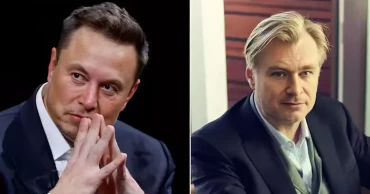
Elon Musk slams Nolan over ‘The Odyssey’ casting
Tech billionaire Elon Musk has stirred controversy online by criticising acclaimed filmmaker Christopher Nolan amid casting debates for his upcoming epic film The Odyssey.
Musk responded on X (formerly Twitter) to a post questioning reports that Lupita Nyong’o might portray Helen of Troy in the movie. The post argued that casting Nyong’o could be "an insult" to the ancient Greek poet Homer, who described Helen as fair-skinned and blonde in The Odyssey, famously dubbing her “the face that launched a thousand ships.”
Reacting to the post, Musk tweeted, “Chris Nolan has lost his integrity.”
Nyong’o’s potential involvement was first reported by Variety in November 2024, with the film’s title officially revealed in December. Her role in the production remains unconfirmed.
The Odyssey features a star-studded ensemble including Matt Damon, Tom Holland, Anne Hathaway, Robert Pattinson, Zendaya, Charlize Theron, Jon Bernthal, Benny Safdie, and Elliot Page. Rapper Travis Scott, a ten-time Grammy nominee, has also joined the cast, appearing in a promotional TV spot aired during Fox’s broadcast of the NFL AFC Championship game.
The film is being hailed as a technical milestone, marking the first narrative feature to be shot entirely on IMAX cameras. Nolan revealed that a new “blimp” casing system now allows intimate scenes to capture usable sound despite IMAX cameras’ previously loud operation.
Details regarding Nyong’o’s character and the official release date for The Odyssey have yet to be announced.
With inputs from NDTV
7 months ago
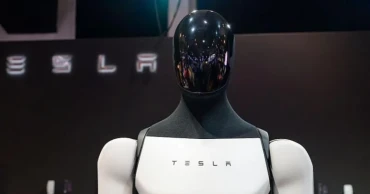
Tesla cuts Model S and X as Musk shifts focus to AI and robotics
Tesla, the electric vehicle (EV) maker led by billionaire Elon Musk, reported a 3% drop in annual revenue for 2025 and a 61% fall in profits in the last quarter, as the company pivots towards artificial intelligence (AI) and robotics.
The automaker announced it will discontinue production of its Model S and Model X vehicles, converting the California plant that produced them to manufacture its humanoid robots, known as Optimus. Musk also confirmed a $2 billion (£1.45 billion) investment in his AI venture, xAI, citing shareholder pressure despite mixed votes on the proposal.
The move comes as Chinese EV manufacturer BYD overtook Tesla as the world’s largest electric car maker. Analysts note Tesla’s dated vehicle lineup and declining high-end models prompted the shift to focus on higher-volume vehicles like Model 3 and Model Y, alongside emerging ventures in robotaxis and AI-driven technologies.
Musk described the upcoming capital expenditure of about $20 billion as an investment for an “epic future,” aiming to boost Tesla’s market value over the next decade to meet conditions of his record-breaking pay package. Tesla shares rose 2% in after-hours trading following the announcement.
The strategic pivot also follows Musk’s controversial political activities, including involvement in former US President Donald Trump’s administration, which affected consumer sentiment toward the company globally.
With inputs from BBC
7 months ago