Development

China studies mouse embryos in space to explore early life development
Scientists in China are studying how life develops in space after mouse embryo samples brought back from the country’s space station returned to Earth, in a step that could help future research on human reproduction during long-term space travel.
The samples were returned aboard the Shenzhou-22 on May 29 after completing experiments on China’s space station. Researchers say the findings may provide important scientific clues about how early life forms behave in a microgravity environment.
The project was carried out by the Shenzhen Institutes of Advanced Technology (SIAT) under the Chinese Academy of Sciences, focusing on how mammalian embryos develop before implantation in space, including possible damage to mitochondria and changes in genetic regulation.
Scientists say the experiment is designed to better understand whether space conditions can support normal early-stage development of life.
During the mission, researchers successfully cultured mouse embryos at different stages inside an onboard biotechnology experiment system. They used a specially designed microfluidic chip that allowed multiple embryo cultures and real-time imaging under limited space and resources.
Lead researcher Lei Xiaohua said the main challenge was developing a system that could handle embryo culture and imaging simultaneously within the constraints of spacecraft conditions.
Another research team led by Men Yongfan helped design the chip-based culture system, which included multiple small chambers to support parallel experiments and was compatible with the station’s automated systems.
After ground testing, scientists confirmed that embryo development, preservation and imaging systems worked successfully in orbit, and that the collected data met research requirements.
Following the return of the samples, they were transported under controlled refrigeration to Beijing for detailed laboratory analysis.
Researchers will now compare the space-grown embryos with control samples kept on Earth. The study will include genetic analysis, protein studies, and high-resolution imaging to examine how space conditions may affect early development.
Scientists say the findings could help determine whether space travel impacts key early biological processes, including genome activation in embryos and the possibility of normal development in microgravity.
China has carried out similar experiments before, including studies on early embryo imaging in space in 2006 and further development experiments aboard satellites in 2016, where mouse embryos were observed progressing to later developmental stages in orbit.
3 months ago
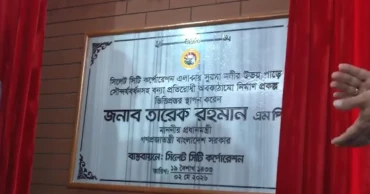
PM inaugurates Surma riverfront development project in Sylhet
Prime Minister Tarique Rahman on Saturday inaugurated a project to develop both banks of the Surma River at Chandni Ghat in Sylhet, including beautification and flood protection infrastructure.
He laid the foundation stone of the project at around 11:00am.
Commerce Minister Khandaker Abdul Muktadir, Expatriates' Welfare and Overseas Employment Minister Ariful Haque Chowdhury, Prime Minister's Adviser Humaiun Kobir and Sylhet City Corporation Administrator Abdul Qayyum Chowdhury were present at the programme.
The Prime Minister's wife, Dr Zubaida Rahman, also attended the event.
Following the inauguration, officials briefed the Prime Minister on different aspects of the project.
He is scheduled to address a civic reception there.
Earlier, after arriving at Osmani International Airport at 10:05am on a domestic flight with his wife, the Prime Minister went straight to the shrine of Hazrat Shahjalal (R), where he offered fateha and recited Darood Sharif.
At noon, he is set to inaugurate the re-excavation of the Baisha River in Kashipur Union under Sylhet Sadar upazila.
After offering Zuhr prayers and having lunch at the Circuit House, he will inaugurate Notun Kuri Sports-2026 at Sylhet District Stadium at 3:00pm.
Later, he is scheduled to attend a meeting with party leaders and workers at the Shilpakala Academy before returning to Dhaka in the evening.
This is Tarique Rahman's first visit to Sylhet as Prime Minister.
4 months ago
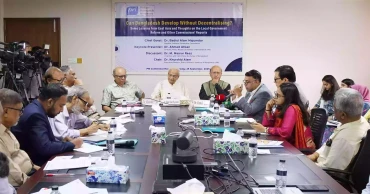
Bangladesh can’t sustain growth without decentralisation: Experts
Experts at a seminar on Thursday said Bangladesh cannot sustain its development journey without meaningful decentralisation and stronger local government institutions.
The Policy Research Institute of Bangladesh (PRI) hosted the event, the second in its two-part series titled “Can Bangladesh Develop Without Decentralising? – Some Lessons from East Asia and Thoughts on the Local Government Reform and Other Commissions’ Reports”.
PRI Executive Director Dr Khurshid Alam called for inclusive dialogue on strengthening local governance as a cornerstone of broader reforms.
Dr Badiul Alam Majumdar, member of the National Consensus Commission, warned that decentralisation must go hand in hand with political reform.
“If politics continues to operate as a business rather than a public service, honest people will remain reluctant to join it,” he said.
He said principle of subsidiarity—resolving issues at the level closest to citizens—as the guiding motto for reform.
Delivering the keynote, PRI Director Ahsan presented evidence that Bangladesh is among the most centralised countries of its size globally.
He said this structure undermines service delivery in education, health, sanitation, and infrastructure.
Citing East Asian experiences, he argued that well-designed decentralisation—anchored in accountability, transparency, and performance monitoring—is essential for sustained growth.
Bangladesh’s leather sector stuck at $1bn; $5bn could be tapped: Experts
Ahsan endorsed many recommendations of the Local Government Reform Commission but criticised proposals for indirect elections of local government representatives and overlapping jurisdictions, warning these could weaken accountability.
He also urged clarity in fiscal and administrative decentralisation to avoid fragmentation.
Dr M. Masrur Reaz, Chairman and CEO of the Policy Exchange of Bangladesh, highlighted that economic activities remain overly concentrated in Dhaka and Chattogram with Dhaka’s traffic congestion alone causing an estimated $4 billion in annual losses.
He stressed stronger coordination between local and central governments to cut waste and improve public services.
The seminar concluded with a question-and-answer session reaffirming that decentralisation is central to building a more inclusive, accountable, and resilient development model for Bangladesh.
The seminar brought together leading policymakers, economists, and governance specialists to examine how decentralisation could improve public services, reduce economic overconcentration, and make development more inclusive.
11 months ago

ADB reaffirms robust support for Bangladesh’s reform drive, sustainable development
The Asian Development Bank (ADB) has reaffirmed its enduring partnership with Bangladesh, pledging continued support for the country’s reform-oriented development agenda and sustainable growth trajectory, particularly as it prepares for graduation from Least Developed Country (LDC) status.
The assurance came during a high-level bilateral meeting between Bangladesh’s Finance Adviser Dr Salehuddin Ahmed and ADB President Masato Kanda, held on the sidelines of the 58th Annual Meeting of the ADB, according to a message received here on Thursday.
During the discussion, Dr Salehuddin Ahmed expressed Bangladesh’s deep appreciation for ADB’s consistent support over the decades, noting the breadth of collaboration spanning infrastructure, energy, education, health, and climate resilience.
He underscored that ADB’s cumulative portfolio in Bangladesh has now reached USD 32.5 billion, with commitments of USD 2.94 billion in the 2023–24 fiscal year alone, a testament to the depth of the development partnership.
As Bangladesh advances toward LDC graduation, Dr Ahmed emphasised the importance of adapting development cooperation to the nation’s evolving needs.
He described this juncture as a pivotal moment—not only in economic terms but also politically—highlighting the emergence of a historic student-led movement and a reform-mandated government driving transformational change.
The Bank of England is expected to cut interest rates in the face of US tariffs threat
In this context, he called upon ADB to align its assistance with Bangladesh’s ambitious reform priorities, focusing particularly on governance, transparency, and efficient public service delivery.
Looking to the future, Dr Ahmed proposed deeper ADB engagement in strategic areas such as integrated river management and the formulation of a Blue Economy Master Plan. He further emphasised the need for investment in digital transformation of the health sector, modernisation of tax administration, and education reforms to build a future-ready workforce.
The Bank of England is expected to cut interest rates in the face of US tariffs threat
He also drew attention to the pressing need for sustainable urban development, calling for ADB’s assistance in building smart, climate-resilient cities, improving municipal services, and supporting regional urban infrastructure. On the energy front, Bangladesh is seeking ADB’s backing to scale up renewable energy generation and enhance regional energy trade.
“Enhanced concessional support from ADB is not only vital for sustaining Bangladesh’s development momentum, but also a strategic investment in regional stability, effective climate action, and inclusive growth,” said Dr Ahmed, urging the Bank to recalibrate its concessional financing mechanisms in line with the unique challenges facing economies in transition.
In response, ADB President Mr Masato Kanda lauded Bangladesh’s economic resilience and progress, reiterating the Bank’s historical commitment to the country.
Weak grid investment slows Asia-Pacific energy transition: ADB
He acknowledged the significance of the issues raised by the Bangladesh delegation, assuring that these would receive due consideration. “ADB has always placed special importance on Bangladesh and will continue to support its journey towards social and economic security,” Kanda said.
1 year ago

Mongla Port Development: Work on Pashur Channel Dredging begins
A project titled "Pashur Channel Maintenance Dredging" has begun at Mongla port to maintain navigability of the channel.
Approved during an ECNEC meeting last week, this project is estimated to cost Tk 1,538.19 crore.
The project taken by the Mongla Port Authority follows the completion of dredging at the Outer Bar of the Pashur Channel, with ongoing work at the Inner Bar.
Khulna farmers reap rewards from mustard cultivation, honey production
Upon completion, ships with drafts of 9.5 to 10 meters will be able to dock directly at Mongla Port’s jetties.
The initiative aims to sustain the port's channel depth and ensure its smooth operation, officials said.
Overcoming Past Challenges
Mongla Port faced severe navigability issues between 2002 and 2007 due to a lack of dredging in the Outer and Inner Bar channels.
The port became nearly inoperative due to the constraints, with a sharp decline in ship arrivals.
After completing a Tk 712 crore Outer Bar dredging project in 2020, the port now accommodates ships with 9-meter drafts.
Naogaon farmers make a fortune on mustard and honey
Later the port authority started dredging the Inner Bar, spanning 23 kilometers from Joymonirgol to the port jetties.
Despite initial projections to complete the Tk 793.72 crore project by June 2022, delays increased costs to Tk 992 crore.
New Maintenance Dredging Project
The newly approved maintenance dredging project for Pashur Channel will be implemented from January 2025 to December 2029.
Of the total project cost, Tk 1,384.37 crore will come from the government, with the remaining Tk 153.82 crore funded by Mongla Port Authority.
Besides, the "Procurement of Supporting Vessels for Mongla Port (1st Revised)" project will now cost Tk 936.56 crore, up from Tk 767.25 crore, and is set to be completed by June 2025.
Boosting Port Capacity
Rear Admiral Shahin Rahman, Chairman of Mongla Port Authority, said there is no alternative of regular dredging to sustain the country’s second-largest seaport.
HMPV in India: Lack of precautionary measures at Hili land port
"The port has proven its growing significance by facilitating key national projects like Rooppur Nuclear Power Plant, Rampal Power Plant, and Metro Rail," he said.
With ongoing and planned projects, Mongla Port aims to overcome navigability challenges, enhance its operational efficiency, and further contribute to the economic growth of Bangladesh’s southwestern region.
"We are implementing a comprehensive master plan to transform Mongla Port into a modern and dynamic facility capable of handling future demands," he said.
1 year ago

China reaffirms continued support for Bangladesh's development
Chinese Ambassador to Bangladesh Yao Wen on Tuesday said China is committed to continuing its utmost support for Bangladesh’s development and deepening cooperation in infrastructure projects including railways.
"We are ready to actively consider all project proposals officially submitted by the Bangladeshi government after a sound feasibility and cost-benefit analysis," he said while speaking at the inaugural ceremony of the Padma Bridge Rail Link Project.
Noting that next year marks the 50th anniversary of diplomatic relations between Bangladesh and China, Ambassador Yao said China is also ready to provide technical support for feasibility studies.
Adviser for the Ministry of Railways, Ministry of Power, Energy and Mineral Resources, and Ministry of Road Transport and Bridges Muhammad Fouzul Kabir Khan, Secretary of the Ministry of Railways Fahim Islam, and Director General of Bangladesh Railway Afzal Hussain were, among others, present.
According to statistics released by Bangladesh, in the fiscal year 2024, he said, the total amount of foreign direct investment (FDI) to Bangladesh declined by 8.8%.
Phone Call: Sullivan lauds Prof Yunus for initiating vital political, election reforms
But the FDI from China experienced a remarkable threefold increase compared to the previous fiscal year, said Ambassador Yao, adding, "So far, more than 20 Chinese companies have set up their South Asian headquarters in Bangladesh."
Since the interim government took office, at least 11 Chinese enterprises have invested a total of $180 million in Bangladesh.
The Ambassador said they will continue to encourage Chinese enterprises to remain deeply engaged in Bangladesh, contributing to the nation’s industrial upgrading and export diversification and further strengthening our comprehensive strategic cooperative partnership to benefit the Bangladeshi people.
"As a key cooperation project under the Belt and Road Initiative, it is also the “Road of Dreams” for the Bangladeshi people," he said, referring to the rail link project.
With today’s entire operation of the project, the travel time between Dhaka and Jessore will be reduced from 10 hours to 2 hours, directly benefiting a population of 80 million and contributing an estimated 1.5 percent to Bangladesh’s GDP growth, he said.
Despite challenges such as the COVID-19 pandemic, both sides overcame difficulties to ensure the project was completed safely, with high quality, and on schedule, said the envoy.
Sullivan, Prof Yunus pledge to protect human rights of all people: White House
Project engineers shared that as the largest infrastructure project undertaken by China in Bangladesh, this project has extensively adopted advanced Chinese technologies and equipment, including ballastless tracks and automated sleeper production lines.
Villagers along the project route also expressed their gratitude, saying that Chinese enterprises are not only builders of projects but also doers of public welfare to local communities.
They helped construct access roads, build bridges, improve flood drainage systems, and donate flood relief, anti-epidemic control, and educational materials.
"The project provided thousands of jobs for local communities and trained thousands of skilled Bangladeshi technicians," said Ambassador Yao, adding that it has successfully driven economic and social development along the route, becoming a model of Bangladesh-China economic and trade cooperation.
"China stands ready to collaborate with Bangladesh to ensure this railway delivers even more significant economic and social benefits," said the Ambassador.
China pursues a policy of friendship and good-neighbourliness for all the people of Bangladesh, and sincerely hopes that the nation could achieve unity, stability, and development, and firmly supports the interim government, he said.
Since the establishment of the interim government, Ambassador Yao said, China has demonstrated its support with concrete actions. "We dispatched a medical team to Bangladesh to assist those injured in the July-August movement."
Screening of the Russian documentary film of the RT Documentary channel "Camera! Motor! Yakutia
Recently, a delegation led by the Vice Chairman of the China International Development Cooperation Agency visited Bangladesh, and had a meeting with Chief Advisor Prof Yunus and other advisors, delivering emergency relief and medical supplies.
In response to Prof Yunus’ request for Chinese enterprises to establish solar panel manufacturing plants in Bangladesh, a delegation of Chinese photovoltaic enterprises from the People’s Government of Yunnan Province of China is currently exploring investment opportunities here.
The envoy said Bangladesh has begun to enjoy zero tariff treatment for 100% of taxable items to China since December 1st this year. China has remained Bangladesh's largest trading partner for 15 consecutive years.
The Chinese enterprises hold a positive outlook on the development prospects of Bangladesh, he said.
1 year ago

Development budget set for major shrink as govt to cut ‘politically motivated’ projects
The development budget for 2024-25 fiscal year, approved by the previous government, is likely to witness a major shrink as the interim government has decided to scale back many of those labeling them ‘politically motivated’.
The interim government that came to power on August 8 following the student-led mass uprising has decided to cut short these ‘unessential’ projects, aiming to prevent wastage of public money.
According to the Planning Ministry sources, the Executive Committee of the National Economic Council (ECNEC) concluded in its meetings that several projects initiated by the Awami League government had not delivered satisfactory results relative to their costs.
“The development budget would be smaller comparing to the previous years,” Planning Adviser Dr Wahiduddin Mahmud recently told in a media briefing after an ECNEC meeting.
Many project directors fled after govt change; new appointments delay progress: Planning Adviser
The first four months of the current fiscal year have seen an exceptionally low 8% implementation rate of the development budget, which also applies to foreign-funded projects.
The Planning Commission data shows that the rate stands at 12-13% for government entities using their own funds to implement projects.
The pace of government development programmes has remained sluggish, with the Annual Development Programme (ADP) recording one of its lowest execution rates in the last five years.
During the first four months of the current fiscal year, from July to October, the ADP implementation rate stood at only around 8%, the lowest figure in recent years, according to the Implementation Monitoring and Evaluation Division (IMED) of the Planning Ministry.
Its data highlights that, in contrast, the same period last year saw an execution rate of 11.54%.
Specifically, for the period from July to October of the current fiscal year, the government managed to implement development projects worth Tk 21,978 crore, according to the IMED.
Dr Yunus- led interim government in its first Ecnec meeting had decided to reduce the development budget.
Dr. Wahiduddin Mahmud said many of the previous projects were politically motivated and unlikely to yield positive results in proportion to their costs.
Planning Adviser apprehends economic recession amid stagnant investment, development spending
“We did not believe these would bring any substantial results, so we have cut them. Typically, the revised development budget shrinks, but this time the reduction will be more significant,” he said.
Planning Ministry sources said the slow pace of project implementation is partly due to the fact that many project directors have fled.
This has created significant challenges for the government in continuing the projects.
Planning Commission sources said the interim government is putting emphasis on the innovative and new type of projects moving away from outdated and politically motivated ones.
The Planning Adviser has instructed relevant officials to carefully design projects ensuring they will deliver multiple positive outcomes relative to their costs, the sources said.
The National Economic Council (NEC) of the Awami League government approved the Annual Development Programme (ADP) for the fiscal year of 2024-2025 with an outlay of Tk 265,000 crores.
Govt prioritising quality over quantity in development spending: Planning Adviser
The transport and communication sector got the highest allocation of Tk 70, 687.75 crore (26. 67pc of allocation) in the ADP.
Besides, the NEC approved some Tk 13,288.91-crore ADP of the autonomous bodies or corporations.
In the new ADP, the total number of projects is 1,321 including 1,133 investment projects, 21 survey projects, 87 technical assistance projects and 80 projects from the autonomous bodies and corporations.
With 13,288.91 crore ADP for autonomous bodies or corporations, the total size of ADP for 2024-2025 stood at Tk 278,288.91 crore.
1 year ago

In another first, PM Hasina opens Ctg-Cox's Bazar railway line
Prime Minister Sheikh Hasina on Saturday (November 11, 2023) inaugurated the much-awaited 102-kilometre Chattogram-Cox's Bazar dual-gauge single railway line setting yet another milestone in the country's communication network.
The southern region wore a festive look as she unveiled the new rail route (from Dohazari in Chattogram to Cox’s Bazar) for train movement at a ceremony at newly constructed Cox’s Bazar Railway Station.
The premier flagged off a train and then travelled by it from Cox’s Bazar Railway Station to Ramu Railway Station.
Read: Oyster-shaped railway station adds greater tourist attraction to Cox’s Bazar
She bought her own ticket from the counter of the railway station. She waved the green flag before boarding the train.
She also blew the whistle signalling the start of the train.
Addressing the inauguration programme, the prime minister said, “Today Cox's Bazar has been linked to the country's railway network. I am really very delighted for being able to attend the inaugural ceremony physically, " she said.
"I have kept my promise by inaugurating the railway. This was a longstanding demand of this region. This is a day of feeling proud," she said.
Read: Railway Minister to inspect Dohazari-Cox's Bazar line before inauguration
Talking to reporters during the train ride, the prime minister said that this train link will contribute a lot to country’s GDP and economy.
“Transportation of goods, people and tourists will be expedited resulting in increase the GDP and more vibrant economy,” she said.
She mentioned that Cox’s Bazar has the longest sandy sea beach in the world.
“But we could not build this tourist spot up to the mark. We have to make sure that tourists can come here comfortably,” she said.
PM Hasina said that apart of tourists conveyance the trade and commerce of this area have been given importance.
“We are building a deep seaport, power station, building an economic zone here,” she said.
She also mentioned that Bangladesh will be linked with trans Asian railway by this rail line.
“This rail line will go to Ghumdhum from Ramu, later from Ghumdhum it will be linked with South and South East countries.”
Read: Chinese-built railway opens via Bangladesh's Padma Bridge
On her arrival at the venue, the prime minister was received by Railways Minister Md Nurul Islam Sujan and local MPs.
Local artists greeted her with traditional songs and dances.
The railways minister presided over the programme.
Asian Development Bank (ADB) country director for Bangladesh Ginting and Railways Ministry secretary Md Humayun Kabir also spoke at the event.
2 years ago

Hasina and Modi jointly inaugurate rail connectivity and power projects
Prime Minister Sheikh Hasina and her Indian counterpart Narendra Modi jointly opened the newly constructed Akhaura-Agartala Dual Gauge Railway Link Project, setting a significant milestone in cross-border connectivity.
The important rail connection would contribute to boosting trade, business and tourism between the two neighbouring countries.The 12.24-km rail connection has linked Gangasagar Railway Station at Akhaura in Brahmanbaria to Nischintapur Railway Station at Agartala in India, connecting the northeastern region of India and Bangladesh.
Israel must stop killing of Palestinian women and children: PM Hasina
The railway link, with 6.78 km in Bangladesh’s part, was constructed under a joint venture of Bangladesh and India. The Akhaura (Bangladesh)-Agartala (India) railway line construction started in July 2018.
The two prime ministers unveiled the Akhaura-Agartala cross-border rail link, joining an event from Ganabhaban in Dhaka and New Delhi through a virtual platform.
We are determined to hold free and fair vote: PM Hasina tells South Asian ECs
The two PMs also inaugurated two other Indian-aided projects --Khulna-Mongla Port Railway Construction Project and Unit-2 of Rampal Maitree Super Thermal Power Plant in Bagerhat.
The 65-km railway from Khulna to Mongla port in Bagerhat would streamline goods transportation to the port. This railway will help transport Mongla port goods affordably within the country and support trade with India, Nepal, and Bhutan, contributing to regional economic growth. The Khulna-Mongla railway project began in September 2016.
The second unit of the Maitree Super Thermal Power Plant Rampal would add 660 megawatt electricity to the national grid.
The Maitree Super Thermal Power Plant-2 and the 65-kilometre Khulna-Mongla Port Railway Link have been implemented under the Indian LoC (Line of Credit) while the Akhaura (Bangladesh) and Agartala (India) Railway Link with Indian grants.
PM Hasina denounces Israeli attacks on Palestine, calls for ending the war
The Maitree Super Thermal Power Plant, known as Rampal thermal power plant, with a total capacity of 1,320 MW in two units was implemented under a joint venture of the two neighbouring countries.
2 years ago

Bangabandhu Tunnel under the Karnaphuli River: All you need to know
Initial work on a tunnel project to build ‘One City, Two Towns’ on the model of Shanghai city of China, on both banks of the Karnaphuli River in Port City Chattogram, began as early as 2017.
This project is jointly funded by the governments of Bangladesh and China (G2G). Though initially estimated to cost some Tk 8400 crore, over time that has ballooned to Tk 10,698 crore. Bangladesh government provided Tk 4,619 crore, while the China Exim Bank contributed over Tk 6,000 crore to support the project.
Motorcade from PMO makes trial crossing through ‘Bangabandhu Tunnel’ in Ctg
The project aims to replicate a 'One City Two Towns' concept, similar to Shanghai in China, on both sides of the Karnaphuli River.
The main tunnel has a length of 3.32 kilometres, with each of the two four-lane tubes measuring 2.45 kilometres.
Additionally, there will be a 5.35 km link road at both the west and east ends of the main tunnel, along with a 727-metre-long flyover at the Anwara end.
BB will release commemorative note of Tk50 to mark launch of Bangabandhu Tunnel
The tunnel is situated at a depth ranging from 18 to 31 metres beneath the Karnaphuli River.
Vehicles will enter the tunnel from Outer Ring Road, Elevated Expressway, Kathgar Road, Airport Road, and Patenga Beach Road through the tunnel’s north side. Vehicles will run at a speed of 80 km per hour through this tunnel.
Despite huge challenges, Bangabandhu Tunnel completed with "high quality, efficiency": Project Manager
According to the project documents, the tunnel will connect the proposed Asian Highway with the Dhaka-Chattogram-Cox's Bazar highway and reduce the distance from Chattogram to Cox's Bazar by 40 km.
2 years ago