employment

Tarique listens to NTRCA job seekers’ grievances on the street
BNP Chairman Tarique Rahman on Thursday (January 15, 2026) stepped out onto the street in front of the party’s Gulshan office to personally hear the grievances of Non-Government Teachers’ Registration and Certification Authority (NTRCA) registered job seekers.
The NTRCA-registered aspirants had been waiting outside the BNP chairman’s political office in Gulshan when Tarique Rahman arrived there around 3:30pm from his residence.
Read more: Civic condolence over Khaleda’s passing on Friday
After entering the office premises, he immediately came back out, crossed the road on foot and exchanged greetings with the demonstrators.
Standing on the street, Tarique Rahman listened attentively as the job seekers outlined their demands and concerns regarding the recruitment process in non-government educational institutions.
The aspirants complained of alleged secret recruitment of unregistered teachers against vacant posts, as well as a range of structural problems in the appointment process of head teachers. They said these irregularities have created widespread dissatisfaction among NTRCA-registered candidates.
Read more: BNP seeks candidates’ names, symbols on postal ballots
8 months ago

WB okays $150.75m for youth, micro-entrepreneur jobs in Bangladesh
The World Bank has approved $150.75 million to help Bangladesh scale up support to create employment, opportunities and better income for low-income youth and micro-entrepreneurs, with a focus on women and those living in climate-vulnerable areas.
The additional financing to the Recovery and Advancement of Informal Sector Employment (RAISE) Project will create employment and income opportunities for about another 176,000 youth across Bangladesh, in addition to the earlier 233,000 project beneficiaries.
Participants will benefit from a comprehensive package of services including skills training, apprenticeships, entrepreneurship development, and access to microfinance to help young people and micro-entrepreneurs overcome barriers to employment and business growth.
It will also introduce innovative approaches for women’s empowerment, including access to quality childcare, and climate resilient livelihoods to help communities adapt to climate shocks.
Read more: China’s K Visa For Bangladeshi Professionals: Eligibility, Application Process, Fees
World Bank Acting Division Director for Bangladesh and Bhutan Gayle Martin said that a good job can transform a life, a family, and a community.
Yet, he said, every year many young Bangladeshis entering the labor market can't find work. The country also faces challenges in job quality, skills shortages and mismatches.
“This additional financing will help more young people from low-income families, especially women and those in vulnerable communities, to access market-relevant skills, resources, and training they need for better employment and livelihood opportunities.”
The financing will help the project expand its coverage beyond urban centers to rural communities, ensuring that marginalized youth and micro-entrepreneurs across the country can benefit from targeted support.
It will pilot quality and affordable home-based childcare services by providing training and start-up grants to women.
Read more: Bangladesh’s external debt crosses $104bn amid rising interest burden: WB
By addressing both demand and supply of childcare needs, these efforts will boost female labor force participation and create new jobs in the care sector, while also enhancing children’s early health and development.
Besides, women will be targeted with life skills training to enhance their confidence and empowerment.
The additional financing will also supplement training with job intermediation efforts by organising job fairs, connecting potential employers with candidates and assisting in marketing and contract negotiations.
Team Leader for the project Aneeka Rahman said that the RAISE project has shown that targeted support can make a real difference for youth and micro-entrepreneurs. “With this new financing, we can scale up proven interventions, expand access to microfinance, and introduce innovative solutions like quality childcare, helping even more young people and women unlock their potential and build resilient futures.”
The project has already shown strong results: over 80 percent of graduated apprentices secured employment within three months of completing the program and the young microentrepreneurs reported better earning and business practices.
With this additional financing, the World Bank’s total support to the RAISE project now stands at $350.75 million.
Read more: Bangladesh sets its own economic policy, not dictated by IMF or WB: BB Governor
8 months ago

Lalmonirhat TTC rebounds to build a new generation skilled workers
With barely a third of its sanctioned workforce, the Lalmonirhat Technical Training Centre (TTC) is pressing ahead—quietly but resolutely—to keep its skill-building mission alive.
Despite having 81 approved posts, only 39 are currently filled. The challenge deepened when 16 officers and staff were transferred following an institutional merger, leaving the centre to operate with just 23 personnel. Yet, training continues without interruption, thanks to determined staff and revived leadership.
A recent UNB visit found the centre bustling once again after years of stagnation. A total of 412 trainees are now enrolled across two shifts, receiving instruction in 13 courses.
Established in 2006 beside the Haribhanga air base, around three kilometres from Lalmonirhat town, the TTC was created to produce skilled manpower under the Bureau of Manpower, Employment and Training (BMET).
Read more: ADB, Bangladesh sign $150m deal to boost technical training for employment creation
Today, it prioritises high-quality technical education tailored to the needs of both domestic industries and overseas labour markets, including the Middle East, Europe and the United States.
Under a new government initiative to boost skill development, the centre is adopting updated programmes designed to prepare competitive workers for international employment.
Trainees are provided with a supportive learning environment, and the centre assists in arranging employment after course completion, an approach that has significantly increased interest among local youth.
The TTC offers courses of two, three and six months, along with a 30-day housekeeping programme for domestic workers heading abroad. There are also specialised training options for SSC graduates to encourage self-reliance.
Read more: Ecnec nods setting up 50 technical training centres
Driving instructor and trade in-charge Kamruzzaman said the centre has evolved into a meaningful platform for producing skilled human resources.
He acknowledged that past leadership was marred by irregularities, which stalled progress and damaged the institution’s reputation.
“Under the new leadership of Principal Engineer Md Ainul Haque, the quality of training has improved considerably,” he said.
Senior Instructor (Electrical) Shri Jageshwar Barman said the TTC is now focused on producing technically competent workers capable of contributing both at home and overseas. Courses such as mobile phone servicing have been modernised and made more practical, he added.
Read more: Crisis of care: Manpower shortage cripples Chuadanga Sadar Hospital
Trainees Saiful Islam and Habibur Rahman, who are preparing for overseas employment, praised the sincerity of the instructors and the harassment-free learning environment.
Principal Engineer Md Ainul Haque, who recently assumed charge, said the centre had long operated in a fragile state but has now regained stability and is conducting regular training programmes.
“With only 23 staff against 81 approved posts, we face limitations. But I am confident that our trainees will acquire the skills necessary for self-employment and overseas work as capable, qualified professionals,” he said.
9 months ago
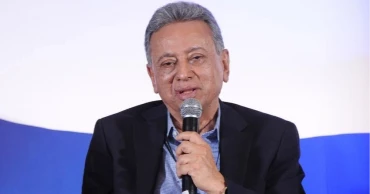
BNP to create 1 crore jobs if voted to power: Khosru
BNP Standing Committee member Amir Khosru Mahmud Chowdhury on Saturday said his party, if voted to power, will create one crore jobs within 18 months.
He made the remarks at a discussion titled ‘Business, Trade and Economy’ at the Zila Parishad auditorium.
Speaking at the event as the chief guest, Khosru said BNP would ensure a democratic economic system so that everyone has equal opportunities to participate in economic activities.
He also criticised the government saying that they are trying to impose their opinions on the public without mandate and accused them of delaying the upcoming election process.
BNP to ensure Bangladesh Bank’s full independence: Khosru
Talking about the country’s trade and business situation, he said it is in a dire state, with investors unable to make new investments. “Why do you wait until February? If possible, hold the election now and free the businessmen,” he said, quoting business leaders.
Former FBCCI director and ex-president of the Rajshahi Chamber of Commerce and Industry Md Lutfor Rahman presided over the event, while BNP Chairperson’s Adviser and former Rajshahi City Corporation mayor Mizanur Rahman Minu attended it as the special guest.
Leaders from the Chapainawabganj, Natore, Naogaon and Joypurhat chambers, along with the presidents of the Hili and Sonamasjid land ports’ CMFFs, also joined the programme, organised by Rajshahi Divisional Business Forum.
Read more: BNP to revoke power sector indemnity provision if voted to power: Rizvi
10 months ago

Employment exists only on ministry’s title: Adviser Sakhawat
Labour and Employment Adviser Brigadier General (Retd) Dr M Sakhawat Hossain has said that while the term "employment" exists in the title of the Labour and Employment Ministry, and there has been no real initiative in that area.
“In the Labour and Employment Ministry, the word ‘employment’ exists only on paper—there is no actual work being done on it,” he said while speaking at a seminar titled ‘365 Days of the Interim Government’, organised by Centre for Policy Dialogue (CPD).
Recounting his own experience, the adviser said, “When I tried to work on employment generation after taking office, I came face to face with the harsh reality of bureaucratic complications. Efforts to make the ministry's employment-related activities more practical were blocked by red tape.”
Criticising the bureaucracy, he said, “To get anything done, you have to send someone along with a file just to ensure it moves. At this pace, it’s impossible to get anything done in a year.”
Expressing frustration over the past year, he revealed that his ministry was changed four times during his tenure as adviser, leaving many tasks incomplete each time.
Referring to his time at the Ministry of Home Affairs after the July mass uprising, Sakhawat said he had to spend days meeting with police officers to bring them back to duty. “The police force still lacks capability, and no structural reforms have been made.”
Labour law to be amended by November: Adviser Sakhawat
About challenges in the Labour and Employment Ministry, he said the collapse of a major company like Beximco, which employed 38,000 workers, posed a significant challenge.
He highlighted the issue of runaway business owners. “One company alone took Tk 48,000 crore in loans from 16 banks-Tk 24,000 crore from Janata Bank alone. No other country has seen such a precedent, where someone takes this much from a state-owned bank and disappears.”
On the visit of the International Labour Organization (ILO), Sakhawat explained, “When ILO visits a country concerning workers' rights, it signals a major threat to that country's export market. We had to take their proposals seriously. A single wrong move could have collapsed the entire market. There was no room for arrogance.”
Speaking on the condition of tea garden workers, he said, “Despite all the talks of major development in the country, not a single step has been taken for the welfare of tea garden workers. There are no toilets for women workers, many suffer from cervical cancer and there isn’t even a single tube well for drinking water in large tea estates.”
“Having metro rails and elevated expressways doesn’t automatically mean the country is progressing. Real development happens when the benefits are distributed across all sections,” the adviser added.
On whether the government has failed over the past year, Sakhawat said, “If the government has failed, the blame lies with others as well. Many who were expected to cooperate chose to remain inactive. Yet, our doors were open to all.”
He also defended the government’s tolerance of criticism.
“Everyone has the right to criticize the government. In the past, labour leaders were abducted, killed, or jailed for speaking against the government or employers. We have released 41 imprisoned labour leaders. Now, people are freely speaking, and the government is taking it all in,” he pointed out.
1 year ago
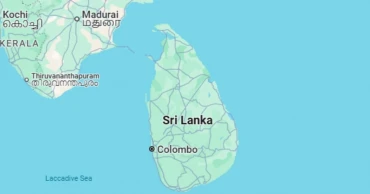
Sri Lanka sees highest record of overseas employment in 2024
The year 2024 has been recorded as the year with the highest number of Sri Lankans migrating abroad for employment in the nation's history, local media reported, quoting statistics from the Sri Lanka Bureau of Foreign Employment (SLBFE).
Data shows that a total of 312,836 Sri Lankans left the country for overseas jobs during the year. Among them, 185,162 were male workers, while 127,674 were female workers, said the report on Wednesday.
Data shows that Kuwait emerged as the top destination, attracting 77,546 Sri Lankan workers.
The United Arab Emirates followed closely, with 51,550 individuals seeking employment there. Additionally, 7,098 Sri Lankans migrated to South Korea, 9,665 to Israel, and 8,665 to Japan over the past year, SLBFE data shows.
The surge in migration has also led to a significant rise in remittances. Central bank data shows that by the end of November 2024, remittances from Sri Lankans working abroad reached 6.46 billion U.S. dollars reflecting a corresponding increase in the number of citizens employed overseas.
1 year ago
'Smart Bangladesh' by 2041: Government undertakes 8 strategic initiatives
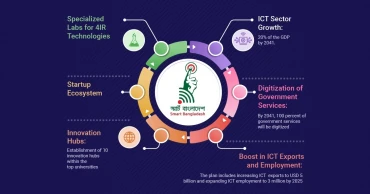
The government of Bangladesh has undertaken eight strategic initiatives aimed at transforming the nation into a cost-effective, sustainable, innovative, intelligent, and knowledge-based 'Smart Bangladesh' by 2041.
These initiatives are designed to enhance the ICT sector's contribution to the GDP, expand digital services, and foster innovation across various domains.
Key Initiatives and Targets
ICT Sector Growth: The government aims for the ICT sector to contribute 20 percent to the GDP by 2041. This ambitious target is part of a broader strategy to diversify the nation's economic foundations.
Digitization of Government Services: By 2041, 100 percent of government services will be digitized, making them more accessible to the populace. This effort seeks to streamline processes and enhance the efficiency of public service delivery.
Boost in ICT Exports and Employment: The plan includes increasing ICT exports to USD 5 billion and expanding ICT employment to 3 million by 2025. Additionally, professional mentorship will be provided to 1,000 Bangladeshi startups by 2025 to nurture emerging entrepreneurs.
Innovation Hubs: Establishment of 10 innovation hubs within the top universities aims to stimulate creativity and technological advancement.
Startup Ecosystem: The goal to build at least 5 unicorns—startups valued at over USD 1 billion—reflects the government's commitment to fostering a robust startup ecosystem.
Specialized Labs for 4IR Technologies: Universities will host specialized labs focusing on cutting-edge technologies such as Robotics, AI, IoT, Big Data, Blockchain, and AR/VR, preparing students for future job markets.
Smart Digital Leadership Academy and 4IR Centre: These institutions will play pivotal roles in cultivating leadership and technical skills necessary for the Fourth Industrial Revolution.
Read more: Govt to include Smart Bangladesh in mid-term dev plan: Official Document
Current Progress and Future Plans
With over two-thirds of Bangladesh's population in the workforce, skill development and employment generation, particularly in the ICT sector, are high priorities. The government is actively transforming its large workforce to meet future market demands, as evidenced by the slight decrease in unemployment from 4.2 percent in FY 2016-17 to 3.6 percent in 2022, according to the Labor Force Survey 2022.
Prime Minister Sheikh Hasina recently highlighted that the unemployment rate is at three percent. Efforts to decrease this further include the Skills for Employment Improvement Program, implemented by the Finance Division, under which over 600,000 individuals have been trained.
Furthermore, the successful implementation of various initiatives has already facilitated employment for about 2 million people in fields ranging from IT freelancing to fintech and e-commerce, according to the official document ‘Medium Term Macroeconomic Policy Statement (2023-24 to 2025-26)’. The Bangladesh Hi-tech Park Authority is also working to convert over 60,000 youths into IT professionals by 2025, with 37,800 already having completed training programs, the document added.
Read more: Join hands in building ‘Smart Bangladesh’ under PM Sheikh Hasina's leadership: Envoy
Looking Ahead
The ICT Division has formulated the "Smart Bangladesh: ICT 2041 Master Plan" centered around four pillars: Smart Citizen, Smart Government, Smart Economy, and Smart Society. These pillars are expected to guide Bangladesh to the next stage of development, leveraging the potential of the 4IR to achieve a smarter and more sustainable future.
The initiatives reflect a comprehensive strategy by the Bangladesh government to harness the power of digital technology and innovation, steering the country toward significant economic transformation and enhanced global competitiveness by 2041.
Read more: Palak delivers speech on Smart Bangladesh in Singapore
2 years ago

Entry-level women's recruitment doubles in banking sector, but board representation still lagging
The women employment in the banking sector increased by 1407 in July-December period of 2023, and the overall perrcentage of women employees at banks stood at 16.37 percent in Bangladesh.
Meanwhile just 13.51% of board members in the banks are women.
Bangladesh Bank’s (BB’s) latest report on gender equality revealed this information. There are 33346 women employees in 61 banks in the country, which is 16.37 percent of the total employees of banks, according to the report.
The BB report shows that among the scheduled banks in 2023, 43 private commercial banks have the highest number of women employees 22,248, which is 16.32 percent of the total employees.
Foreign commercial banks have the highest proportion of female officers, 24.18 percent as compared to other banks.
In the period July-December 2023, the participation of women as board members was only 13.51 percent. Among them, foreign commercial banks have the highest female board member participation rate at 17.54 percent.
Read more: Bangladesh's women empowerment showcased in Myanmar
On the other hand, there is no participation of women board members of specialized commercial banks in the discussed period.
According to the reports submitted by banks during the period July-December 2023 shows that the participation rate of women employees is higher at the entry-level 17.04 percent and mid-level 15.79 percent than at the higher levels 9.36 percent.
Analysis of the obtained data shows that the participation of women in the banking sector is high at the initial stage.
At the same time, the participation rate of female employees under thirty years of age 20.99 percent is more than double that of female officers above 9.58 percent in scheduled banks.
Bangladesh’s place has improved by 12 steps in the gender gap report of the World Economic Forum (WEF) in 2023, as women's employment increased in the country.
The BB report shows that Bangladesh is holding the 59th position in 2023 improving from 71st in 2022 in the gender gap of WEF, among 146 countries in the world.
Read more: PM Hasina keen to create more scopes for women in every sector: Nasrul Hamid
Executive Director of CDP Dr. Fahmida Khatun said that women's employment is usually increasing with the developing socio-economic scenario of the country and decreasing the ratio of women's employment does not match that calculation.
She focused on the need to study why the ratio of women employment has been decreasing in the banking sector.
Bangladesh Bank’s spokesperson Mezbaul Haque told UNB that women's employment has increased in the banking sector following the central bank’s policy to reduce the gender gap in banks and financial institutions.
The central bank prefers women both in employment and entrepreneurship development. Loan disbursement and interest incentives have been given to women encouraging them involved in financial inclusion.
The BB is still working to ensure a sound environment in the workplace of banks. Facilities including maternity leave and daycare opportunities for women’s employees have increased, he said.
Read more: Proven Passive Income Ideas for Women in 2024
2 years ago

Most In-Demand High-Paying Non-Technical Jobs in 2024
There’s a common misconception that all lucrative jobs are technical or IT-related. But the truth couldn’t be further off. While it is true that IT jobs make the most money by 2024 standards, there are other non-tech jobs as well that fetch well over six digits. Here’s what they are and what you’ll need to secure one.
10 Best Careers for Non-Technical Professionals
For the sake of uniformity, the job requirements and the annual payout will be according to the US national standard. While the payout might vary across regions, the skill set and requirements remain more or less the same.
PR Specialist
A public relations specialist is essentially the face of any company. The primary responsibilities of a PR specialist include everything related to the customer side interactions. A PR specialist is also responsible for developing PR strategies and overseeing implementation procedures.
Other key responsibilities include drafting press releases, speeches, and other communication materials. In extraordinary cases, a PR specialist is also responsible for crisis management strategies. These include avoidance of negative publicity.
Read more: How to Make a Video Resume: A Step-by-Step Guide
A PR specialist is expected to have degrees in public relations, communication, or other related fields. An APR certification is an added plus for a specialist role.
The average salary for a PR specialist is around 60,122 USD or around 6,58,6557 BDT per year (1 USD = 109.55 BDT).
Content Manager
A content manager is responsible for curating and executing the content strategy of any business. Additionally, a content manager is expected to create and publish content. The medium includes social networks and media outlets. One of the key responsibilities for this position is to ensure precise consistency in brand messaging. A content manager is also responsible for analyzing different performance metrics.
The position requires a bachelor's in marketing, communication, journalism, or related fields. The annual salary for the content manager position is around 60,634 USD or 6,64,2648 BDT per year.
Read more: Empower Your Tech Career in 2024: Master These In-Demand Skills for Success
Market Research Manager
Market research managers are responsible for analyzing the market. It also encompasses the identification of relevant trends within the organization’s operating industry. The position comes with the stringent responsibility of analyzing and drawing insights from the market. The data output helps to make informed decisions. A market research manager is also expected to develop and implement new research methodologies. The goal is to cater to organizational needs and efficiency. Another key responsibility for this position is to maintain liaison with the management.
A market research manager is expected to have a bachelor’s or master’s in marketing, business, statistics, or business analytics. The gross salary for this position is around 60,442 USD or 6,62,1614 BDT per year.
2 years ago

AI could threaten 40% of global jobs, IMF warns
The International Monetary Fund (IMF) has sounded an alarm, indicating that nearly 40% of global employment could be endangered by the burgeoning influence of artificial intelligence (AI). This stark warning, reported by CNN, underscores the seismic shifts anticipated in the global job market.
IMF Chief Kristalina Georgieva, in a recent blog post, stressed the critical necessity for governments worldwide to fortify social safety nets and roll out comprehensive retraining programmes. This proactive approach aims to mitigate AI's potentially dramatic effects on employment.
Davos 2024: Can AI provide solutions, as Global leaders confront $88.1 trillion debt crisis?
Highlighting a key concern, Georgieva pointed out the potential for AI adoption to aggravate existing inequalities, a trend that requires immediate policy intervention to avert escalating social tensions. This issue is set to be a central theme at the upcoming annual meeting of the World Economic Forum (WEF) in Davos, Switzerland, where AI's role in the economy will be a focal point.
According to the IMF's analysis, advanced economies might witness the most significant impact, with up to 60% of jobs at risk. Although AI promises to enhance productivity in about half of these roles, the remainder faces a stark reality of diminishing demand, lowered wages, and potential unemployment as AI assumes roles traditionally held by humans.
UN chief warns of risks of artificial intelligence
Emerging markets and lower-income countries are not immune to these challenges. Here, 40% and 26% of jobs, respectively, may feel the impact. Georgieva raised concerns about these regions' lack of infrastructure and skilled workforces, factors that intensify the risk of AI deepening existing economic divides.
Georgieva also warned of an escalating risk of social unrest, especially if younger, tech-savvy workers leverage AI for productivity gains, leaving their older counterparts struggling to adapt.
China warns of artificial intelligence risks, calls for beefed-up national security measures
At Davos, the implications of AI on employment are a key discussion topic. Prominent figures, including Sam Altman, CEO of ChatGPT-maker OpenAI, and Microsoft's Satya Nadella, are slated to address the impact of generative AI technologies.
Despite these challenges, Georgieva did not overlook AI's positive potentials, noting its capacity to significantly boost global output and incomes. She argued that with thoughtful planning, AI could be a transformative force for the global economy, stressing the importance of channeling its benefits for the collective good.
Amidst concerns over job displacement, some economists are optimistic, suggesting that AI's widespread adoption may ultimately enhance labor productivity. This could potentially lead to a 7% annual increase in global GDP over the next decade.
2 years ago