Indian election
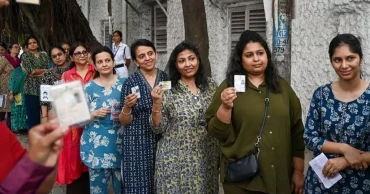
Vote counting begins in key Indian state elections, spotlight on West Bengal showdown
Vote counting is underway across four Indian states—West Bengal, Tamil Nadu, Kerala and Assam—along with the union territory of Puducherry, in a set of elections seen as a crucial political barometer ahead of India’s 2029 general election.
The results are being closely watched as an early test of support for Prime Minister Narendra Modi and his Bharatiya Janata Party (BJP). The party is aiming to retain control in Assam while expanding its presence in southern states, particularly Tamil Nadu and Kerala.
However, the sharpest focus remains on West Bengal, where the BJP is attempting to unseat the ruling Trinamool Congress (TMC) in what is widely seen as a closely contested race. The campaign in the state has been marked by controversy, particularly over revisions to electoral rolls that led to the removal of millions of voters.
Counting is expected to continue throughout the day, with early trends likely to emerge within hours.
For the BJP, West Bengal represents a long-standing political objective dating back to the late 1980s, when leaders such as L. K. Advani and Atal Bihari Vajpayee identified the state as a key ideological frontier. A victory here would not only secure a major eastern stronghold but also signal the party’s transformation into a truly pan-Indian force.
The state holds particular ideological significance due to its legacy of intellectual liberalism, leftist politics and strong regional identity. A win for the BJP would validate years of political mobilisation and organisational expansion, reinforcing Modi’s dominance.
West Bengal has emerged as the central battleground among the states that voted in April. After 15 years in power, Chief Minister Mamata Banerjee and her TMC are facing what is seen as their toughest challenge yet from an ascendant BJP.
The stakes extend beyond the state. A BJP victory could reshape the political landscape in eastern India, while a TMC win would underscore the resilience of regional parties against central authority.
The contest has been further intensified by a controversial voter roll revision that excluded nearly three million potential voters, alongside high turnout, polarised campaigning, strong welfare-focused politics and tightly contested exit polls—factors that have made West Bengal the most closely watched race in the current election cycle.
Source: BBC
5 months ago
.jpg)
Impact of devastating Indian virus surge spreads to politics
As a catastrophic surge of the coronavirus sweeps through India, the leaders of 13 opposition parties urged the government to launch a free vaccination drive and ensure an uninterrupted flow of oxygen to all hospitals.
Several hospital authorities sought court intervention over the weekend to provide oxygen supplies in New Delhi, where a lockdown has been extended by a week in an attempt to contain the wave of infections.
Also read: Bucking anti-incumbency, Mamata scores a hat-trick in Bengal
The New Delhi High Court said it would start punishing government officials if supplies of oxygen allocated to hospitals are not delivered.
“Water has gone above the head. Enough is enough,” it said.
India reported 368,147 new coronavirus cases and 3,417 deaths on Monday — numbers that experts believe are vast undercounts because of a widespread lack of testing and incomplete reporting.
The health ministry says it has confirmed 19.9 million COVID-19 cases since the start of the pandemic, behind only the U.S., which has counted more than 32.4 million. It says more than 218,000 people have died.
On Monday, 24 COVID-19 patients died at a government-run hospital in the southern state of Karnataka amid reports of an oxygen shortage. It was unclear how many died due to a lack of oxygen, but the chief minister ordered an investigation.
Also read: BJP Office set on fire in India’s West Bengal, party blames Trinamool
Prime Minister Narendra Modi’s government has been severely criticized over its handling of the surge, which has pushed India’s already fragile and underfunded health system to the brink. Massive election rallies organized by his Bharatiya Janata Party and other parties as well as a giant Hindu festival on the banks of the Ganges may have exacerbated the spread, experts said, adding that new variants could also be increasing cases.
Modi’s party on Sunday suffered a resounding election defeat in a key state, West Bengal, failing to dislodge its firebrand chief minister, Mamata Banerjee. It retained power in northeastern Assam state but lost in two southern states.
While the four states were already stiff election challenges for Modi’s party apart from the pandemic, analysts said the results weaken Modi’s position as surging infections cripple the already fragile health system.
Meanwhile, the world’s biggest cricket tournament, the Indian Premier League, said Monday’s match between the Royal Challengers Bangalore and Kolkata Knight Riders would be rescheduled after two players tested positive for the coronavirus. The two players have self-isolated and medical personnel were tracing their contacts.
Also read: 7th phase of local elections underway in India's West Bengal amid COVID-19 spike
Despite rising cases, the league has held matches every evening behind closed doors since it kicked off in April.
India opened its vaccination campaign to people ages 18-44 on Saturday, a mammoth task undermined by limited supplies. India is the world’s biggest producer of vaccines, but even the ongoing effort to inoculate people above 45 is stuttering. Since January, 10% of Indians have received one dose but only around 1.5% have received both required doses.
Currently, only those over 45 can receive free vaccines at government inoculation centers. Private hospitals charge for the shots,
5 years ago