school children
Govt reaffirms commitment to distribute school books by January
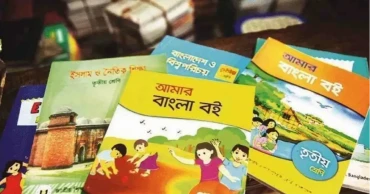
The government on Sunday reaffirmed its commitment to ensure the distribution of all school textbooks by the first month of the next year, despite concerns over irregularities in previous allocations and questions over the quality of books.
After a meeting of the Advisers Council Committee on Government Purchase and the Advisers Council Committee on Economic Affairs, Finance Adviser Dr Salehuddin Ahmed said orders for printing textbooks for certain classes have already been placed.
He said authorities are now reviewing the list of recipient institutions to ensure that no school has received multiple allocations or been involved in irregular practices in the past. “We want to make sure that those who previously got books properly get them again, but we are also reviewing allegations that some institutions took more than their share,” he said.
The meeting was held at the Secretariat with the Finance Adviser in the chair.
He mentioned that the government is determined to finalise the list within the next two weeks so that the books can be distributed on schedule. “Our target is clear—students must receive textbooks on time, by January 1,” the adviser said.
Govt moves to fast track printing of school textbooks for 2026 session
Last year, new textbooks were delivered as late as March, but this year the ministry has brought the process forward to September to prevent delays.
Authorities are also reviewing paper quality and other production features, aiming to avoid past complaints over substandard books.
Dr Salehuddin also said the government has decided to procure vaccines for the Expanded Programme on Immunization (EPI) in two phases, while also trying to negotiate a reduced commission with Unicef.
Speaking to reporters at the meetings, the adviser said Unicef had initially proposed a six-month supply arrangement, but the government opted for a phased approach.
“We have asked Unicef to supply vaccines for three months first. For the next three months, we want to explore competitive bidding and see if international sources can also participate,” he said.
The adviser noted that half of the requirement would be met immediately through Unicef, while the remaining will be finalised later. “We have also requested Unicef to reconsider their commission rate and bring it down,” he added.
Responding to a question, the adviser, however, said details about the source countries for the vaccines have not yet been sought.
Meanwhile, the proposal for printing, binding and supplying free textbooks for the 2026 academic year was withdrawn from the meeting agenda on Sunday.
Procurement delay threatens timely distribution of class 6-8 textbooks in 2026
The withdrawn item covered free textbooks for students of Class IX in the secondary (Bangla and English versions), Dakhil, SSC and Dakhil Vocational Class IX, as well as Technical Trade Classes IX and X.
The proposal had been placed by the Secondary and Higher Education Division and the agenda was dropped following a request from the Division itself.
11 months ago
.jpg)
Dhaka dwellers suffer amid unusual traffic gridlock
The capital city was stuck up for hours in terrible traffic gridlocks on Tuesday, causing untold sufferings to the dwellers, including school children. After a reality check in different parts of the capital including Asadgate, Khilgaon, Moghbazar, Mohammadpur and Dhanmondi areas the UNB reporter found huge tailbacks in many alleys and main roads especially near schools and colleges.
Read: Commuters suffer in gridlock after sudden shower’s relief
4 years ago

7pc Bangladesh families have to borrow to send children to school: UNESCO
Around 7 percent of families in Bangladesh have to borrow to send their children to school, according to a new UNESCO report.
The UNESCO 2021/2 Global Education Monitoring Report was presented at the RewirEd Forum in Dubai recently.
In Bangladesh, the share of urban households paying for private tuition increased from 48 percent in 2000 to 67 percent in 2010 while the corresponding share of rural households doubled from 27 percent to 54 percent; for the poorest quartile it quadrupled from 10 percent to 40 percent.
Overall, the average expenditure increased by 80 percent in real terms, according to the report.
It shows that globally one in six families saves to pay school fees, while 8 percent of families (or one in twelve) in low- and middle-income countries have to borrow money to pay for their children to go to school.
In some countries, such as Uganda, Haiti, Kenya and the Philippines, 30 percent of families have to borrow to afford their children’s education.
The report calls for governments to keep to their promise of providing 1 year of pre-primary and 12 years of primary and secondary education free for all.
New data show that the costs of education are falling on households disproportionately in the poorest countries.
In low- and lower-middle-income countries, households cover 39% of the cost of education with the government covering the remainder, compared to only 16% in high-income countries.
Read: Dipu Moni elected to UNESCO education committee
Almost two-thirds of the total cost of education is picked up by households in Bangladesh, while only one-third is covered by governments - this is the fourth highest % covered by households in the world (after Haiti, Nigeria, and Liberia).
Public education still has many hidden costs. About one third of household education expenditure in low- and middle-income countries comes from households with children in public schools.
An analysis of about 100 low- and middle-income countries between 2009 and 2020 found that, on average, 3.2% of households’ financial outgoings were being spent on education.
In Ghana, the share of education spending is not only the world’s largest but also increased from 8.9% in 2005/06 to 13.1% in 2016/17.
Much of the cost comes from school uniforms and other school supplies; these accounted for almost two-fifths of the amount households were spending on education in 15 low and middle-income countries.
“We’ve underestimated just how much families are still paying for education when according to governments it should be free,” said Manos Antoninis, Director of the Global Education Monitoring Report.
“On top of this, the impact of Covid-19 has squeezed family budgets further. Many simply can’t afford to pay for school costs as a result. Governments must look closer at the amount that families are paying. They must focus on ensuring that education is free at the point of access – and that the poorest aren’t priced out of a good quality education.”
The GEM Report warns that, without better regulations, private education choices, such as private schools, or private supplementary tuition, are pushing up these costs for households.
Read: Covid-19 put future of 800 mn children across Asia at risk: UNICEF, UNESCO
If 3.2% of households’ outgoings are being spent on education globally on average, that rises to 6% in countries with a high percentage of private schools, such as Haiti and Lebanon, and in other sub-Saharan African countries, including Rwanda, Uganda and Zambia.
The costs make some education opportunities inaccessible for the poor. While the poorest households spend practically nothing on education in Argentina, Costa Rica, the Philippines and Zambia, for example, the richest 20% spend between 0.5% and 1.7% of their countries’ GDP.
Many households are also paying for private supplementary tuition, particularly during school closures - something many of the poorest cannot afford.
In Myanmar, 42% of the amount households were spending on education was spent on tutoring. Currently, however, around half of countries do not regulate the practice at all.
Today, less than three-quarters of countries are regulating the amount of fees that are charged by private schools, which contribute to the burden carried by households.
Most private secondary schools receive at least 80% of their revenue from fees in 28 out of 51 upper-middle- and high-income education systems. In low- and lower-middle income countries, poor parents employ a variety of strategies to cope with private school expenses.
The poorest parents in Kenya and other low- and lower-middle-income countries often have to resort to schools that are unregistered and cheaper but likely to have poor facilities and offer lower-quality instruction.
Recommendations:
Increase efforts to guarantee free, publicly funded access to a year of pre-primary and 12 years of primary and secondary education.
Governments need to monitor out-of-pocket education spending with household income and expenditure surveys. Formal payments are often the only ones to which governments pay attention. They often turn their eyes away from other less well documented costs that increase inequality, such as private supplementary tuition. The effectiveness of policies that aim to target resources at disadvantaged learners needs to be evaluated and not assumed.
Strengthen government capacity to monitor and enforce regulations. Governments need to build a relationship of trust with non-state providers, encouraging them to register, eliminating arbitrariness in rules and communicating the right incentives for them to run their schools effectively for learners’ benefit.
END/UNB/MK/SAM
4 years ago