Searched by - RAB
Total - 1847

Saudi Arabia issues aerial threat alerts as Mideast tensions persist
Saudi Arabia warned of a "hostile aerial threat" and issued a series of emergency alerts across the country late Friday and early Saturday, with at least one explosion heard in the capital, Riyadh.
No casualties or damage were reported after the alerts were lifted. Saudi authorities did not say what triggered the warnings or explain the reported explosions. However, they have previously said they intercepted missiles and drones launched by Iran-backed Houthi rebels in Yemen.
The alert in Riyadh was the first reported warning in the Saudi capital since the latest escalation involving the Houthis.
Meanwhile, Iran's state television reported Saturday that a man identified as Hossein Pedram was executed after being convicted of spying for Israel's intelligence agency, Mossad.
According to the report, Pedram passed classified information about sensitive military sites in Iran's Isfahan province to Israel. It did not explain how he obtained the information.
Pedram was reportedly arrested after the sites, including missile bases, were targeted during a 12-day air war between Iran, Israel and the United States in June last year.
The executions have drawn international criticism from human rights groups.
UN Security Council condemns Houthi attacks
The U.N. Security Council on Friday condemned the Houthis' military escalation, including attacks and threats against Saudi Arabia and commercial vessels.
The council said the attacks "risk further expanding the conflict, threatening maritime security and international trade" while undermining regional and international efforts to achieve peace in Yemen.
It also warned that continued escalation could worsen Yemen's already severe humanitarian situation.
The council's 15 members called for "practical cooperation" to prevent the Iran-backed Houthis from obtaining weapons, military training, financing and other support needed to carry out attacks.
They also stressed that all countries must enforce the U.N. arms embargo against the rebel group.Clarify the confusing timeline and scopeRemove the unsupported executions plural
4 hours ago

Crude bomb blast injures autorickshaw driver in Jatrabari
An autorickshaw driver was injured after a crude bomb exploded near a police box in the capital's Jatrabari area on Friday night.
The incident occurred around 8:00 p.m. near the Jatrabari Chaurasta police box.
The victim was identified as Ibadur Rahman,26, son of Lutfur Rahman of Sadulla village in Kurigram's Ulipur upazila. He currently resides in the Manda under Mugda area in Dhaka.
Police Constable Tuhin of Jatrabari Police Station rescued the injured driver and rushed him to the emergency department of Dhaka Medical College Hospital (DMCH) at 8:25 p.m., where he is currently undergoing treatment.
Habibur Rahman, DMCH Police Camp In-Charge Inspector, said the injured driver was brought to the hospital with blast injuries caused by a crude bomb.
18 hours ago
Saudi Arabia calls alleged Houthi attack on Mecca a 'red line'
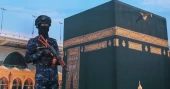
Saudi Arabia has accused Yemen's Iran-backed Houthi rebels of attempting to attack Mecca, Islam's holiest city, prompting condemnation from countries across the region but no immediate offer of military support.
The kingdom, a key US ally, described Mecca as a "red line" as it became increasingly drawn into a new front of the Iran war.
Saudi Arabia, the world's largest oil exporter, is facing attacks from the Houthis, who are backed by its regional rival Iran. The kingdom is seeking secure routes to export its crude as well as military support, but it remains unclear how either objective can be achieved.
A key Saudi oil pipeline has reportedly been out of operation for weeks as the Houthis have targeted infrastructure inside the kingdom and shipping in the Red Sea. Iran continues to target vessels in the Strait of Hormuz, while oil prices remain above $100 a barrel.
The Houthis denied launching drones toward Mecca, which lies about 1,100 kilometres (680 miles) from Yemen's border.
Saudi authorities said they intercepted and destroyed the drone before it could enter the airspace over Mecca, the birthplace of Prophet Muhammad.
Turkey and Pakistan say Saudi Arabia has not sought helpA recently announced defense pact involving Saudi Arabia, NATO member Turkey and nuclear-armed Pakistan has not been activated.
Officials from Turkey and Pakistan told The Associated Press that Saudi Arabia had not requested military support following the latest Houthi escalation.
The Turkish official said efforts to "institutionalize" the alliance must be completed before the pact can become operational.
The officials spoke on condition of anonymity because they were not authorized to discuss the matter publicly.
Pakistani Prime Minister Shehbaz Sharif condemned the alleged attempted attack on Mecca, saying Pakistan and Saudi Arabia stand "unwaveringly, shoulder to shoulder."
The Organization of Islamic Cooperation, which represents more than 57 Muslim countries, also condemned the incident, saying any attempt to target Mecca violates the "sanctity of holy sites."
According to Col. Turki al-Maliki, spokesperson for the Saudi-led military coalition fighting the Houthis, the incident marked the second attempted Houthi attack on Mecca. The rebels previously fired a ballistic missile toward the city in 2017.
US remains outside the conflict for nowTop US officials have indicated in recent days that Washington does not want to become directly involved in the conflict.
"The Houthis called us, and they don't want to fight with us," US President Donald Trump said Saturday, adding that the rebels appeared to be focused on Saudi Arabia.
Vice President JD Vance said Monday that Washington had remained in "constant contact" with Saudi Arabia and had held "direct conversations with the Houthis themselves."
He described the situation as "a very fluid and dynamic thing" that the United States would continue to monitor.
Houthis claim to have shot down Saudi-led coalition jetLater Wednesday, the Houthis claimed, without providing evidence, that they had shot down an F-15 fighter jet operated by the Saudi-led coalition over Yemen's central Marib province.
Houthi military spokesperson Brig. Gen. Yahya Saree did not say when the alleged incident occurred.
The Associated Press could not independently verify the claim.
Spokespersons for the Saudi-led coalition and the Saudi government did not immediately respond to requests for comment.
Meanwhile, Iranian Foreign Minister Abbas Araghchi was visiting China, the biggest buyer of Iranian oil. Talks were expected to focus on the conflict and shipping through the Strait of Hormuz.
Chinese President Xi Jinping again offered Beijing's assistance in efforts to end the Middle East conflict during the BRICS summit in New Delhi over the weekend.
3 days ago

10-year-old girl’s death in Jatrabari shrouded in mystery
A 10-year-old girl died under mysterious circumstances in the capital's Jatrabari area on Monday, with doctors discovering ligature marks on her neck.
The deceased was identified as Riya, a Class-IV student and daughter of Rubel from the Salua Dighi area of Kapasia upazila in Gazipur district. The family currently resides in Shonir Akhra under Jatrabari Police Station.
The victim’s father claimed that Riya went to the bathroom at their house around 1:00pm, complaining of stomach pain, where she collapsed and lost consciousness.
Family members rescued her and rushed her to the emergency department of Dhaka Medical College Hospital (DMCH), where the attending physician declared her dead around 2:25pm.
"After examining her at the hospital, the doctor noticed marks on her neck and mentioned possible hanging," Rubel said, adding that the family is unaware whether the child attempted suicide.
Inspector Md Habibur Rahman, in-charge of the DMCH police camp, said although the girl was brought in after allegedly falling in the bathroom, the injury marks on her neck have made the death suspicious. “The body has been kept in the hospital morgue for an autopsy, and the local police station has been informed.”
4 days ago

Chief Whip Moni leaves for Saudi Arabia to perform Umrah
Chief Whip Nurul Islam Moni left Dhaka for Saudi Arabia on Monday to perform Umrah.
He along with his wife departed from Hazrat Shahjalal International Airport on a Biman Bangladesh Airlines flight at 6:10pm, according to a press release.
Moni is scheduled to return home on September 20.
4 days ago
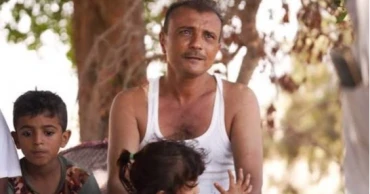
Fighting intensifies in Yemen as Houthis launch more attacks on Saudi Arabia
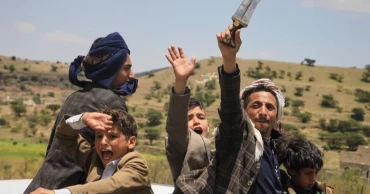
Fighting in Yemen intensified Sunday as government forces launched attacks on Iran-backed Houthi rebels along the Red Sea, while the Houthis fired missiles and drones toward neighboring Saudi Arabia, which supports Yemen’s government.
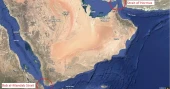
Yemen’s government said it would send more forces to the Red Sea coast after the Houthis captured the port city of Mokha and an island in the Bab el-Mandeb Strait last week. A senior official described the defeat as “painful.”
The Bab el-Mandeb is a key shipping route and an alternative to the Strait of Hormuz.
The escalation, particularly Houthi attacks on Saudi oil facilities and shipping in the Red Sea, is adding pressure on global oil supplies and prices and could give Iran greater leverage in its conflict with the United States.
As Yemen faces the risk of another civil war, the United Nations said more than 82,000 people had been displaced by fighting since the beginning of September.
A woman who fled the Red Sea town of Khawkha in Hodeida province shortly before it fell to the Houthis said a mortar shell landed nearby as she escaped during the night.
“I saw with my own eyes cars and buses burning, and bodies of children and women were lying on the road in a horrific scene,” she said. She spoke anonymously because of concerns for her and her family’s safety.
Houthis claim attacks on Saudi ArabiaSaudi authorities activated warning sirens Sunday afternoon in the southern city of Abha and Khamis Mushait province, urging residents to take shelter from possible incoming attacks. Both areas have been targeted by the Houthis several times in recent weeks.
Houthi military spokesperson Brig. Gen. Yahya Saree said the group had used drones and missiles to attack targets in Saudi Arabia, including a military base near the Yemeni border. He did not provide evidence or specify when the attack took place.
Saudi civil defense authorities said overnight that a projectile landed in another area near the Yemeni border along the Red Sea, injuring two people and damaging a mosque and several other buildings. Saudi authorities blamed the Houthis.
Saudi Arabia did not report any new attacks against Houthi positions.
The Houthis have been targeting Saudi oil facilities and shipping as part of a recently announced blockade. They have said, however, that they do not intend to target commercial shipping from other countries.
Yemen says more than 500 government fighters killedThe National Resistance, a government-allied force that had controlled parts of the western coast, said more than 500 government fighters had been killed there over the past four weeks. It was the group's first comprehensive casualty figure.
The force also claimed that more than 1,000 Houthis had been killed in Hodeida and Taiz provinces. A Houthi spokesperson did not respond to a request for comment.
More than 40 million people live in Yemen, where many fear a return to the civil war that began more than a decade ago. The conflict killed about 150,000 people and pushed millions toward famine. Yemen’s internationally recognized government and Saudi Arabia have fought the Houthis for years, although a ceasefire that began in 2022 largely halted the fighting.
A senior Yemeni government official said government forces would return to the Red Sea coast and fight back. Residents fleeing the Houthi advance told The Associated Press that they saw government forces withdrawing and telling civilians to flee.
Sultan al-Arada, a member of Yemen’s ruling Presidential Leadership Council, described the loss of Mokha and other areas along the western coast as “painful and regrettable.” In a televised interview late Saturday, he said government forces were regrouping and would return to the fighting.
Presidential council leader Rashad al-Alimi sought Sunday to play down the setbacks, calling them “incidental,” according to comments published by the state-run SABA news agency. He said the government remained committed to restoring state institutions and reclaiming sovereignty over all national territory.
The Yemeni military said Sunday that it carried out airstrikes on Houthi positions in Mokha, the coastal town of Dhubab and other areas of Taiz province. The Houthis reported attacks by Saudi-backed forces in Taiz and artillery shelling in Saada province, a Houthi stronghold near the Saudi border.
Houthi advance brings them closer to US base in DjiboutiThe Houthi advance has brought the group to within about 20 miles (32 kilometres) of a US military base in Djibouti, across the Bab el-Mandeb Strait.
The base is the main US military facility in Africa. Djibouti also hosts military bases operated by China, France and Japan.
The small Horn of Africa country is already receiving Yemenis fleeing the fighting across the dangerous waters. More than 2,000 Yemenis have arrived in Djibouti, the International Organization for Migration said Sunday.
Djibouti’s Economy and Finance Minister Ilyas M. Dawaleh said on X that the country’s navy, coast guard and other specialized agencies were carrying out rescue operations and providing emergency assistance.
Displaced Yemenis fear for their futureThe UN migration agency said more than 82,000 people had been displaced across Yemen since the start of September.
“The displaced people are in a very bad condition,” said Ahmad al-Masawi, director of the Al Salam camp in Aden. He appealed to international organizations for help.
“They left their homes quickly without any clothing or anything. They are crammed in camps, houses and even on roads,” he said.
Hussein Haydara sat outside a shelter at the camp while his children waited to be assigned a tent. He said he was worried about the shelter’s distance from schools, hospitals and markets and questioned how his family would survive in the coming weeks and months.
Haydara had previously fled his home in Hodeida when the Houthis took control of the area in 2015. But he said the latest displacement was more difficult.
“With the first displacement, we had time to plan things, but this time we were forced to escape all of a sudden. One could hardly take their children and the lightest stuff possible,” he said.
5 days ago

People once gave land for roads, now govt land is being grabbed: DSCC administrator
In the past, people willingly gave up their own land for roads and other development works in their areas, but a culture of grabbing government land has now emerged, said Dhaka South City Corporation (DSCC) Administrator Abdus Salam on Sunday.
He made the remarks while speaking as the chief guest at the inaugural ceremony of a tree-planting programme in the Japanese Bazar area of Kadamtali police station in the capital.
“We are seeking your cooperation for your own needs. There are problems with roads and electricity here. The State Minister and I were sent to inspect the area and take measures after seeing the situation on the ground. We are making an integrated plan for the development of this area,” Abdus Salam said.
Urging city residents to become more aware, he said canals have been encroached upon in different areas.
“If all the waste from mills and factories is dumped into drains, how will the drains remain functional? Factory waste must be kept at designated places in accordance with specific rules so that sanitation workers can easily remove it,” he said.
“We must save our canals at any cost. We must perform our civic responsibilities ourselves,” he added.
Speaking about social protection, the DSCC administrator said society has become saturated with drugs.
“We have to build a united resistance against them through a social movement,” he said.
Criticising the misrule and policy decisions of the previous government, Abdus Salam said, “Jamaat, NCP and all political parties are saying that massive looting took place in the country in the past and banks were emptied. Although ordinary people deposited money in banks, they are now unable to get it back.”
Regarding the power deal with Indian company Adani, Abdus Salam said, “The Indian company that received a power contract during the previous government has now suddenly stopped supplying electricity in some parts of the country.”
He sought direct cooperation from ordinary people alongside the city corporation and the government to resolve these problems.
Also present at the programme were reserved women’s seat MP for Dhaka-4 Sultana, Dhaka city BNP Member Secretary Tanvir Ahmed Robin, Joint Convener Haji Monir Hossain Chairman, Haji Mir Hossain Mirus and local BNP leaders and activists.
5 days ago
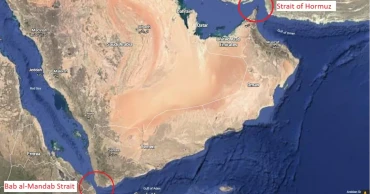
Saudi Arabia, Houthis trade strikes over Bab al-Mandeb
Saudi Arabia and Yemen’s Iran-backed Houthi forces have traded strikes as fighting intensifies around the strategic Bab al-Mandeb chokepoint on Yemen’s Red Sea coast.
The escalation comes as Houthi forces have seized Mayun Island, also known as Perim, giving the group a strategic position in the Bab al-Mandeb Strait and strengthening its control over Yemen’s Red Sea coastline.
US President Donald Trump said the Houthis had contacted Washington and asked it not to intervene in the conflict involving Yemen’s internationally recognized government.
The developments came amid wider regional tensions after Iraq temporarily closed three border crossings with Iran following a drone attack launched from Iraqi territory that targeted Saudi Arabia’s East-West oil pipeline.
Saudi Arabia suspended the pipeline as a precaution and has so far held off on an immediate response.
Meanwhile, Iran is expected to meet Gulf states in Oman on Monday to discuss the Strait of Hormuz and efforts to promote regional security.
Houthis gain strategic foothold
Mayun Island, a 13-square-kilometre volcanic island in the middle of the Bab al-Mandeb Strait, divides the waterway into two channels and overlooks one of the world’s most important maritime routes.
The Houthis also control nearby coastal areas, including the port city of Mocha, strengthening their ability to threaten shipping through the strategic waterway.
Security analyst Wolfgang Pusztai told Al Jazeera that the Houthis now have “the real capability to shut down any maritime traffic through Bab al-Mandeb if they want to”.
However, maintaining control of the island could prove more difficult than capturing it.
Andreas Krieg of King’s College London said the Houthis are in a strong position to defend Mayun in the short term because of their control of nearby territory, but the island could be difficult to defend against an amphibious assault over a longer period.
The Bab al-Mandeb is a major global shipping route connecting the Red Sea with the Gulf of Aden, making control of the waterway strategically important for regional powers and international trade.
6 days ago

Saudi Arabia halts oil pipeline as Houthis capture strategic Red Sea Island
Saudi Arabia announced Friday that it had temporarily suspended operations on a major oil pipeline after it was targeted by drones. The move came a day after Yemen’s Iran-backed Houthi rebels seized a strategically important island near the southern entrance to the Red Sea, according to two officials. The developments have added a new dimension to the ongoing conflict involving Iran.
The Houthis have made their most significant territorial advance in several years near the Bab el-Mandeb Strait, a vital international shipping route. Their growing presence in the area could support Iran’s efforts to push global oil and gas prices higher and increase pressure on the United States.
Saudi Arabia said it stopped the East-West pipeline as a safety precaution following the drone attack. The country’s Ministry of Energy described the decision as a preventive step.
The Saudi Foreign Ministry said several drones involved in the attack had originated from Iraq. In a statement published by the Saudi Press Agency, Riyadh said it would refrain from retaliating to allow the Iraqi government time to take appropriate action. Iraq condemned the attack and announced an investigation.
Saudi Arabia and the United States previously carried out strikes against Iran-backed militias in Iraq in July after accusing them of launching drone attacks on Saudi oil facilities. The Houthi rebels had claimed responsibility for some of those attacks. Regional officials told The Associated Press that the Houthis had assisted Iraqi militias in organizing and carrying out the operations.
East-West Pipeline Has Been Important Since the 1980sConstructed during the 1980s, the East-West pipeline has become increasingly important to Saudi Arabia as the kingdom looks for ways to transport its oil without relying on the Strait of Hormuz, where Iran has attacked ships during the war.
By early June, Saudi oil shipments through the Red Sea port connected to the pipeline had risen to more than 5 million barrels a day, more than twice the previous level, according to the International Energy Agency.
The Houthis also seized Mayun, a small volcanic island located inside the Bab el-Mandeb Strait. The island, also known as Perim, is strategically positioned along one of the world's major maritime routes. The capture was confirmed by a senior official from Yemen's internationally recognized government and a Houthi representative. Both officials spoke anonymously because they were not authorized to speak publicly.
Saudi Arabia, the world's largest oil exporter, has increasingly depended on Red Sea routes to transport crude as an alternative to the Strait of Hormuz. However, Houthi attempts to restrict traffic through the 28-kilometer (17-mile) Bab el-Mandeb passage have complicated those efforts.
In a statement Friday, Houthi forces celebrated their advances along the coast but did not specifically mention Mayun, Mokha or the Bab el-Mandeb Strait. They promised to respond to Saudi actions with further escalation and said maritime traffic would remain safe for all companies except Saudi vessels.
The developments have caused concern in global markets. Analysts consider the Houthis difficult to predict, and oil prices once again climbed above $100 per barrel this week, potentially strengthening Iran's position in future negotiations.
Yemen Government Criticizes Saudi ResponseThe Houthis have attacked Saudi-linked shipping in the Red Sea since announcing a blockade in July. They have also targeted oil facilities inside Saudi Arabia, saying their actions are retaliation for Saudi Arabia's long-running blockade of areas controlled by the Houthis in Yemen.
After the Houthis captured the port city of Mokha on Thursday, Saudi forces reportedly carried out an airstrike on its airport, according to a Houthi media outlet. No casualties or significant damage were immediately reported.
A senior official from Yemen's internationally recognized government told the AP that officials were surprised Saudi aircraft had not prevented the Houthi takeover of Mokha, which lies roughly 80 kilometers (50 miles) from the Bab el-Mandeb Strait. The official suggested Saudi Arabia may not have received approval from Washington to launch a major air campaign.
The official also pointed to poor coordination among Yemen's government forces and allied militias, saying the lack of cooperation gave the Houthis a major strategic advantage.
Shipping traffic through the Bab el-Mandeb Strait has dropped by around 60% since the Houthis began attacking selected vessels in late 2023 in support of Palestinians in Gaza. Traffic increased this year as Saudi Arabia searched for alternatives to the Strait of Hormuz, but renewed Houthi threats have reduced that activity, according to Lloyd's List Intelligence.
Saudi Arabia has therefore been forced to consider another route, transporting oil northward through the Red Sea and then toward the Mediterranean, either through the Suez Canal or via a pipeline crossing Egypt. Both options create a considerably longer journey for Saudi customers in Asia. The Houthis have also threatened these routes and attacked a Saudi ship in the northern Red Sea in late August.
Iran Urges Renewed Saudi-Houthi Negotiations
Iranian authorities on Friday called on Saudi Arabia to end its blockade of Houthi-controlled parts of Yemen, signaling continued support for the Houthis. Tehran also urged both sides to resume negotiations.
The Houthis' significance to Iran was further highlighted Wednesday when a spokesperson for Iran's powerful Revolutionary Guard said any agreement reached between Iran and the United States should also address Yemen. It was the first clear statement from Iran linking Yemen to the negotiations.
Saudi Arabia said it had consistently provided opportunities for dialogue but maintained that it had the right to protect itself. Iranian Foreign Minister Abbas Araghchi said the foreign ministers of Iran and Saudi Arabia spoke Thursday about diplomatic efforts aimed at restoring regional stability.
Escalation Raises Fears of Renewed Civil War
As Houthi fighters advanced along Yemen's Red Sea coast toward the Bab el-Mandeb Strait, the Saudi-backed Yemeni government appealed to the international community for assistance.
In a statement issued Friday following a meeting the previous day, Yemen's National Defense Council said the country was at the forefront of efforts to protect freedom of navigation. It also condemned the Houthis' renewed attacks against Saudi Arabia.
The latest escalation threatens to undermine a fragile truce that has largely kept Yemen's civil war under control since 2022. The conflict has already had devastating consequences for Yemen's population of about 40 million, killing an estimated 150,000 people and leaving millions at risk of famine.
The recent increase in violence has also caused a major displacement crisis. More than 46,000 people fled their homes during the past week, according to the U.N. migration agency.
Abdusattor Esoev, the International Organization for Migration's mission chief in Yemen, said displaced families were leaving with only whatever possessions they could quickly carry. He noted that the number of displaced people had more than doubled during the week and could increase substantially.
“You see the fears in their eyes, and people are scared,” Esoev said.
Medical professionals were among those forced to flee. Lou Cormack, Yemen coordinator for Doctors Without Borders, said the organization was working to keep Mokha's hospital functioning after most of its staff had departed.
The Houthis have been fighting Yemen's internationally recognized government since 2014, when they took control of large parts of northern and central Yemen, including the capital, Sanaa. Saudi Arabia intervened the following year to support the Yemeni government.
7 days ago
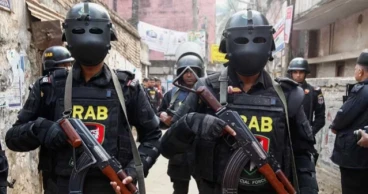
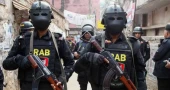
Parliament passes SRB Bill, paving way for abolition of RAB
Parliament on Thursday passed the Special Response Battalion (SRB) Bill, 2026, paving the way for the abolition of the Rapid Action Battalion (RAB) and its replacement with a specialised police unit despite strong objections from opposition lawmakers.
The bill seeks to establish the SRB by removing the provisions relating to RAB from the Armed Police Battalions Ordinance, 2003, which provided the legal basis for the formation of RAB.
Bill proposing creation of SRB replacing RAB placed in parliament
RAB was formed in 2004 under the amended ordinance and has faced criticism over allegations of human rights violations and enforced disappearances.
The government is now repealing the ordinance and enacting separate laws for the SRB and the Armed Police Battalion (APBn).
The SRB Bill was placed in Parliament on September 3. Opposition lawmakers had then objected to its introduction, arguing that RAB was effectively being reconstituted under a new name.
They also submitted notes of dissent on eight issues during scrutiny of the bill by the parliamentary committee.
Home Minister Salahuddin Ahmed moved the bill for immediate consideration. Opposition members called for sending it to a select committee and for public opinion to be sought before its passage.
Leader of the Opposition Shafiqur Rahman, Jamaat-e-Islami lawmakers Md Ruhul Amin, Md Rashedul Islam Rashed, Nurul Islam and Muhammad Nazibur Rahman, and independent MP Sk Mozibur Rahman Iqbal took part in the discussion.
The bill provides for an SRB under the police force. The unit will be formed by deploying or appointing, on deputation, police personnel, members of law enforcement agencies and a specified number of officers, armed personnel or employees, according to government requirements.
The rank structure, recruitment procedures and service conditions of SRB personnel will be determined by rules. The unit will have its own flag, emblem and prescribed uniform.
The director general of the SRB will be a serving police officer holding a rank no lower than additional inspector general of police.
Under the bill, RAB’s manpower, orders, powers, authority, existing facilities, funds, cash and bank balances, liabilities, contracts, movable and immovable property, registers, records and other documents will be transferred to the SRB.
Until rules are framed under the new law, departmental disciplinary proceedings and court proceedings relating to RAB under the 2005 rules will remain in force.
The SRB will have powers to investigate criminal offences, conduct searches, make arrests and seize property. The bill also provides for detention facilities, stores and interrogation rooms under the unit.
It also provides for a complaint redress committee to deal with complaints from citizens and internal grievances of unit members. An additional director general of the unit will chair the committee.
Opposition lawmaker Nurul Islam said people remained fearful of RAB because of allegations of human rights violations and its alleged involvement in enforced disappearances.
He questioned the decision to pass the bill within only four working days without adequate consultation and called for discussions with stakeholders.
The opposition MP also questioned whether the proposed complaint redress committee will have sufficient authority to address allegations and proposed that it be headed by a former judge of the Supreme Court.
He also said the bill did not clearly specify where detained people will be kept and called for all SRB facilities and offices to be gazetted.
Nazibur Rahman referred to the seven murders in Narayanganj in 2014 and said former Prime Minister Khaleda Zia had called for RAB to be abolished after the incident.
He said she later described RAB as a “cancer” and that the BNP formally recommended its abolition in 2024.
Nazibur Rahman said the United Nations human rights mechanism, Human Rights Watch and the Commission of Inquiry into Enforced Disappearances also recommended the abolition of RAB.
He said transferring RAB’s manpower, offices, powers, documents, assets, contracts and liabilities to the SRB meant that “only the signboard is being changed”.
Shafiqur Rahman said the abolition of RAB had been a demand of various political parties and human rights organisations, but nobody had demanded the creation of another force of the same nature.
He said the proposed law appears to retain RAB’s personnel, facilities, logistics and manpower while changing only its name.
The opposition leader urged the government to withdraw the bill and first establish why a specialised force of this nature is necessary.
Replying to the opposition, Home Minister Salahuddin Ahmed said abolishing RAB was a BNP commitment and that delaying the bill will mean allowing RAB to continue to exist.
He said the bill was discussed by the parliamentary committee and has also been available on the ministry’s website for a long period for public feedback.
The minister said the complaint redress committee will deal with departmental complaints against members of the unit.
He said RAB will be abolished once the law is passed and a new battalion called the SRB will subsequently be established.
Salahuddin said the assets and equipment currently held by RAB have to be transferred somewhere because they are state property.
He said transferring them to the new organisation will avoid unnecessary fresh procurement.
APBN Bill also passed
After passing the SRB Bill, Parliament passed the Armed Police Battalions (APBn) Bill, 2026, repealing the Armed Police Battalions Ordinance.
The bill provides for APBn units under the police force, including the Special Security and Protection Battalion, hill battalions, airport battalions and any other battalions specified by the government.
The proposed law gives APBn powers to investigate criminal offences and, subject to the Code of Criminal Procedure and other applicable laws, to enter premises, conduct searches, seize property and make arrests.
The bill also bars APBn members from directly or indirectly publishing, or assisting in publishing, information or documents in electronic media or newspapers without prior approval from the competent authorities.
The APBn Bill was passed by voice vote after opposition proposals for sending it to a select committee and seeking public opinion were disposed of.
8 days ago