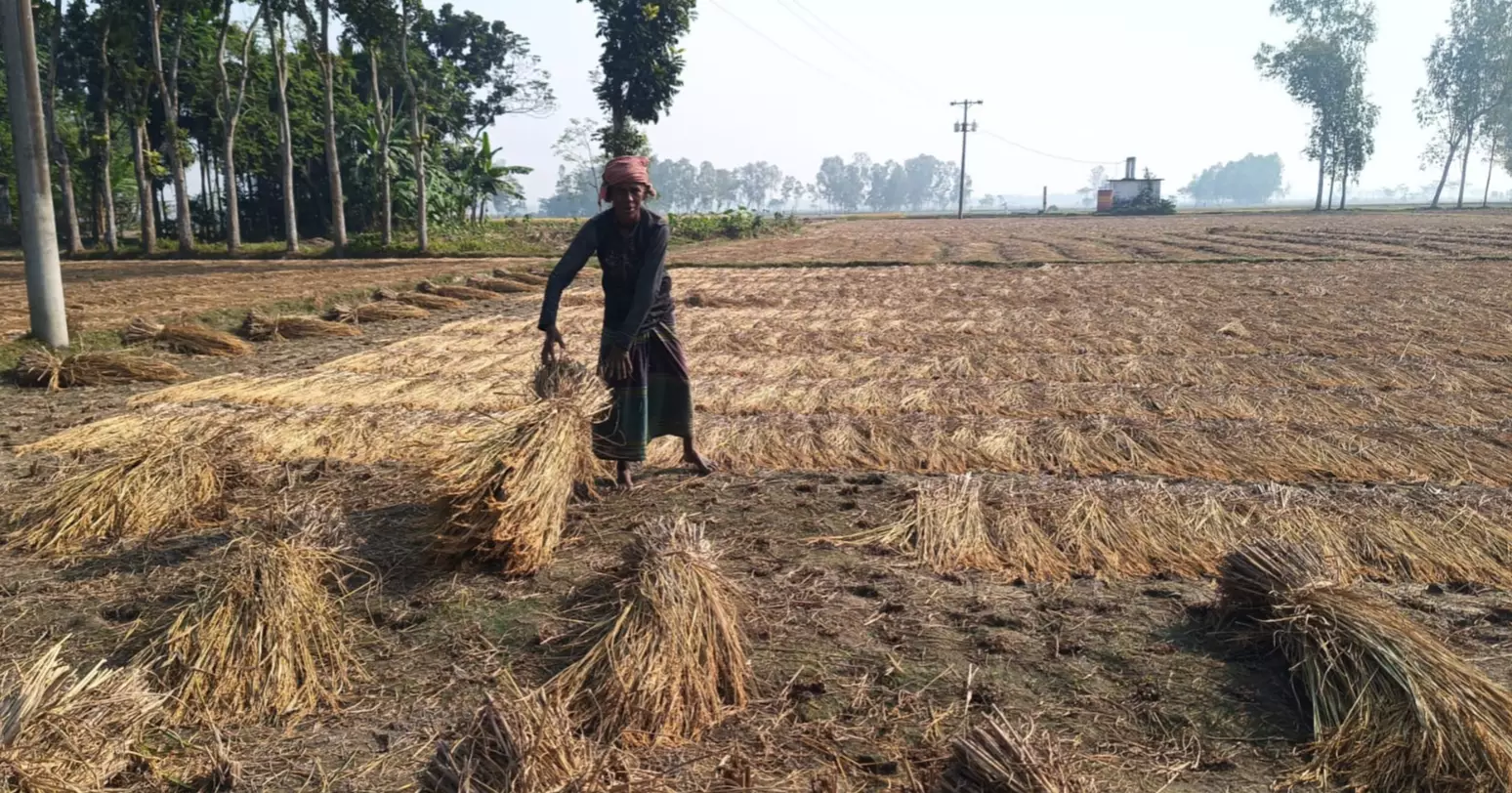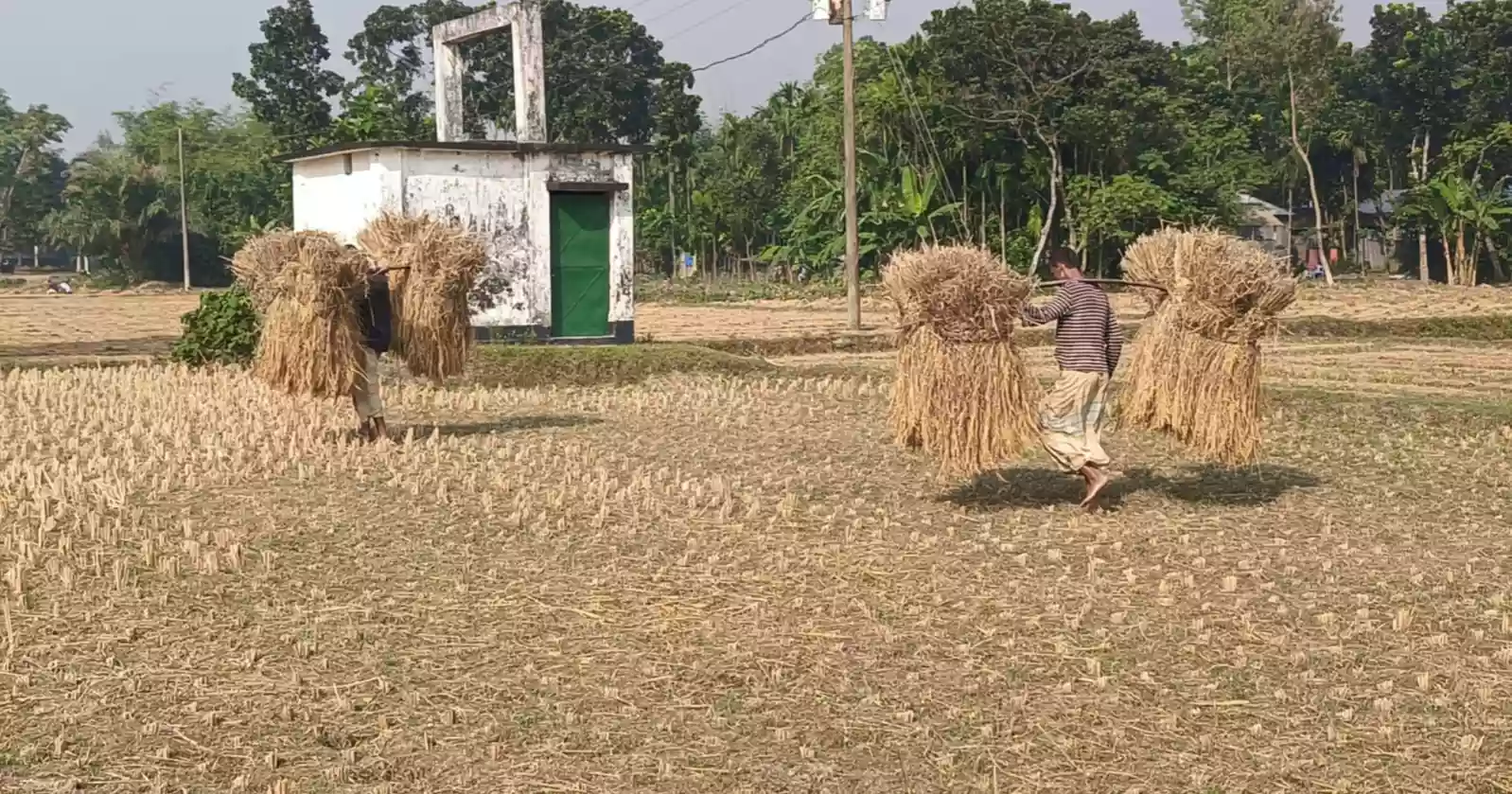
Once a vibrant fixture of rural Bengali culture, the traditional ‘Nabanna Utsab’, the festival celebrating the first harvest, is quietly fading from many villages across Lalmonirhat, according to local residents.
With the end of the Bangla month of Hemanta and the touch of approaching winter, farmers across the district are busy harvesting Aman paddy.
Golden fields still stretch across the horizon, carrying the familiar scent of new grain, yet the festive celebration that once marked this season is rarely seen nowadays.
Villagers said that although the joy of harvesting remains, the communal spirit of sharing the first cooked rice from the new crop—a hallmark of the ‘Nabanna Utsab’ —has largely diminished.
“We heard from our parents how festive the day used to be. People would go to each other’s houses to eat the first rice. But now we hardly see such practices,”said Saiful Islam, an SSC student from Shialkhowa village in Kaliganj upazila.
Recalling the joy and celebrations of the past, 70-year-old farmer from Aditmari upazila, Shafique Mia said they were poorer 30 years ago, but the joy of the new harvest was greater.
“We used to make pitha, polao and share with neighbours after offering the first rice to the imams. Now income has increased, but happiness has decreased. The young generation doesn’t even know what ‘Nabanna’ really means,” he said.
Farmer Jomir Ali, drying paddy in the field, shared a similar memory. “We used to cook rice from the new crop and give the first plate to the imam of the mosque for blessings. We did doa and ate together. That tradition is almost gone now,” he said.
Read more: Continuous rain flattens half-ripe paddy in Lalmonirhat, farmers worried
Saleha Begum, another elderly villager, said people once respected tradition and valued togetherness.