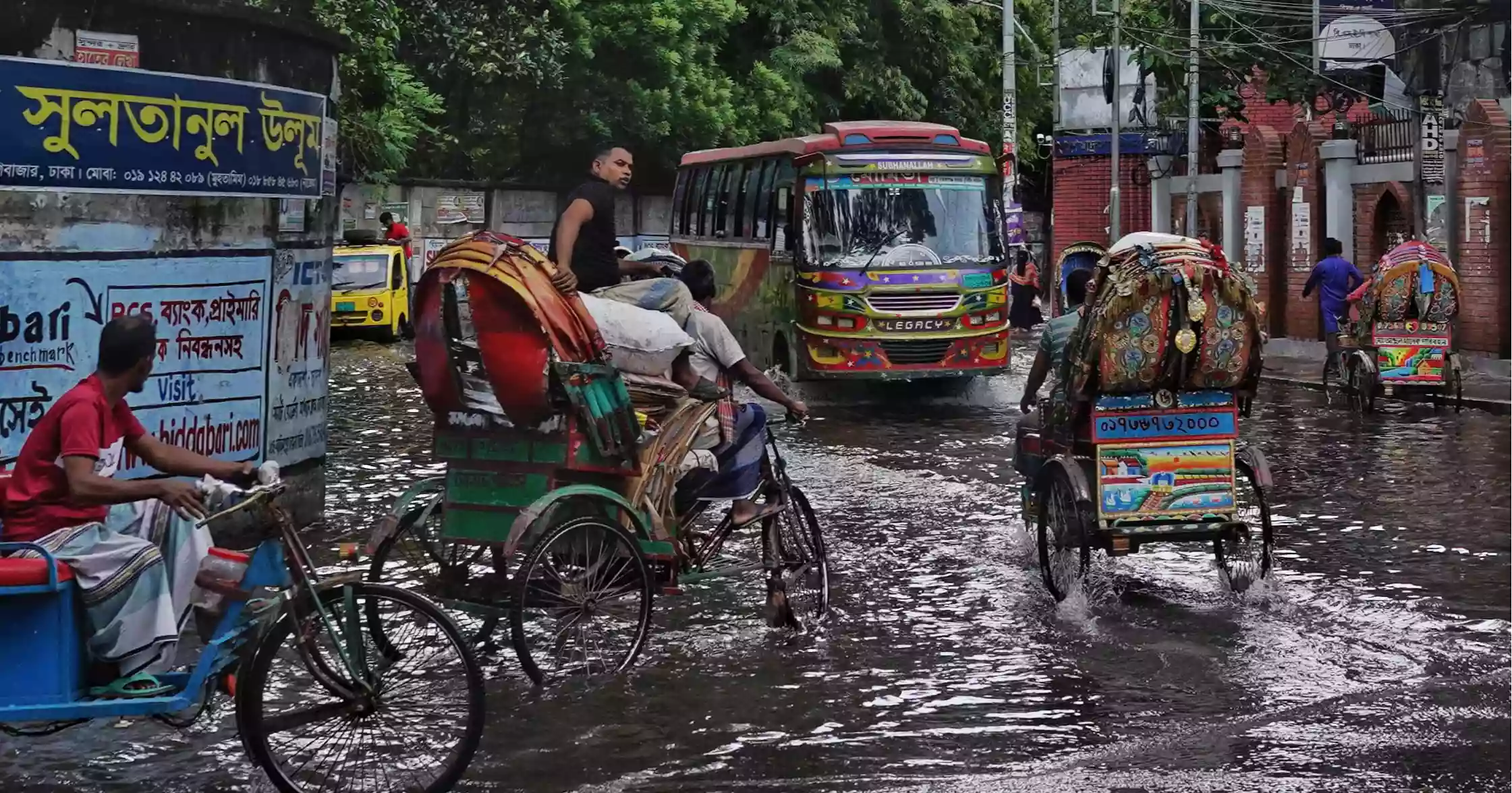
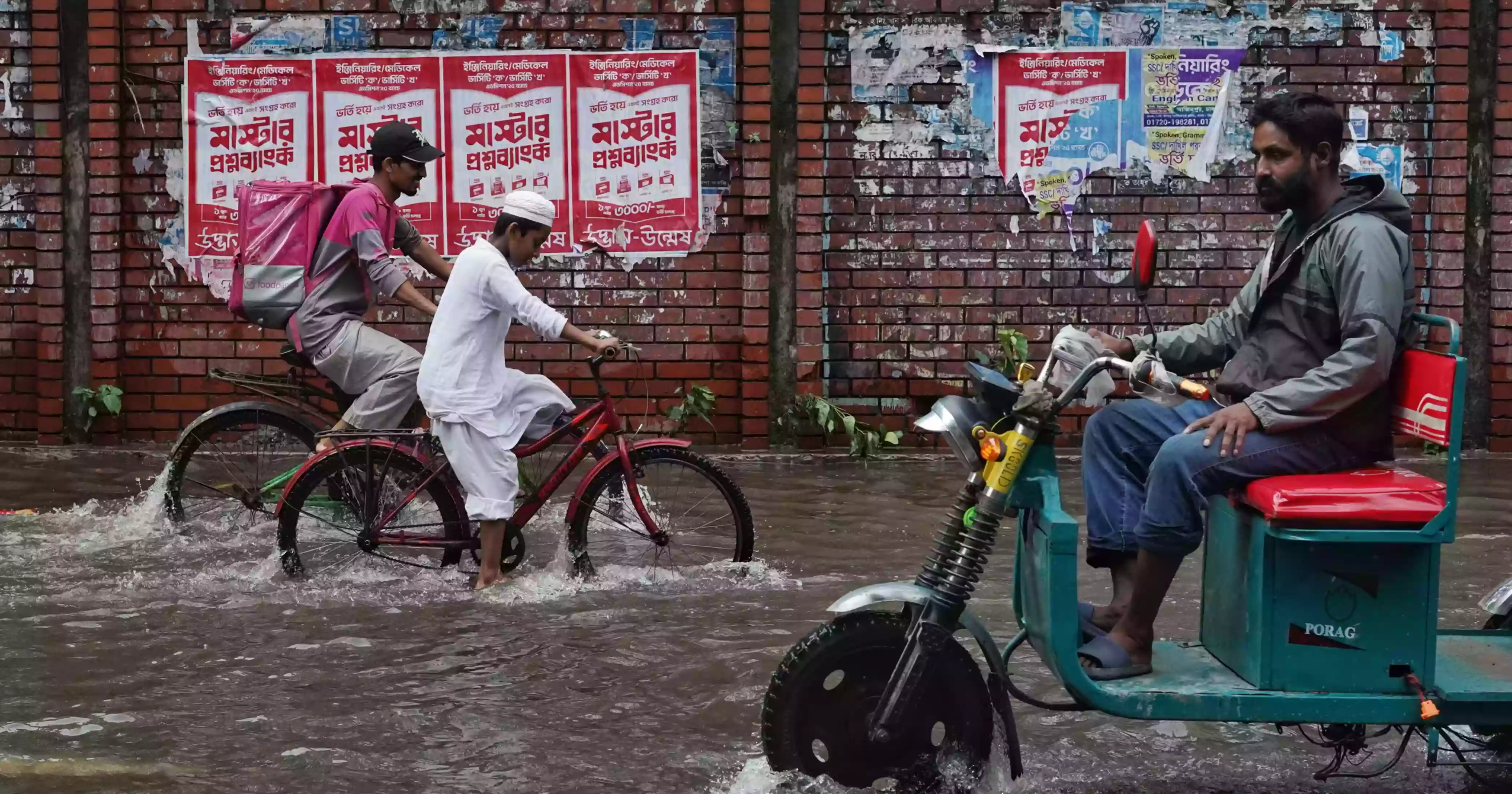
Though long accustomed to monsoon floods, Dhaka has in recent years experienced unprecedented waterlogging that persists for weeks, even after moderate rainfall.
A growing number of studies blame clogged drains from polythene bags and the loss of natural canals due to encroachment as major reasons for the prolonged waterlogging in the city.
A study led by Sarwar Uddin Ahmed and Keinosuke Gotoh, affiliated with Nagasaki University’s Faculty of Engineering and Graduate School of Science and Technology, respectively, has delved into the environmental dynamics of Dhaka’s waterlogging problem.
Their research, combining Contingent Valuation Method (CVM) surveys and satellite remote sensing, highlights the complex interplay between human behaviour, urban development and environmental degradation in exacerbating flood risks.
Polythene Bags: Small Culprits, Big Impact
For decades, Dhaka’s drainage system has struggled to cope with the city’s rapid urbanisation and monsoon rains. But the surge in polythene bag usage has proved to be an especially pernicious problem. These lightweight, durable plastic bags are frequently discarded in the streets, blocking drains and water channels.
Comfort in the rain, discomfort in the streets
As Ahmed and Gotoh point out, polythene bags have jammed the drainage infrastructure, preventing free water flow and causing water to stagnate.
“Waterlogging is no longer just a result of heavy rainfall. Even moderate showers can lead to floods bcause the city’s drainage is clogged by plastic waste, particularly polythene bags,” Ahmed explained.