special

Bangladesh’s medical education overhaul focuses on quality, faculty, clinical training
Bangladesh is undertaking a broad overhaul of medical education focusing on a persistent set of problems including inadequate teaching facilities, shortages of qualified faculty, uneven clinical exposure, limited research opportunities and the need for stronger quality assurance.
The reform agenda comes at a time when the country is producing a growing number of medical graduates but continues to face major weaknesses in its health workforce and medical education system.
According to the World Health Organization (WHO), Bangladesh had only 13 doctors, nurses and midwives per 10,000 population in 2022, compared with a global median of 49.
Health Minister Sardar Md Sakhawat Husain on Monday told parliament that only 30,311 doctors are currently working in government hospitals across Bangladesh, while the country needs around 88,909 physicians to meet the minimum doctor-population ratio in line with international standard.
According to a government-funded study conducted in 2026, Bangladesh will need around 88,909 doctors in 2026 to meet the WHO’s minimum standard of 0.50 doctors per 1,000 population, he said.
The Health Ministry, in a document outlining its medical education initiatives, said the government is therefore working on infrastructure, faculty recruitment and development, curriculum reform, simulation-based education, clinical training, research, postgraduate education and accreditation.
More colleges, but quality remains the challenge
The scale of medical education has expanded considerably over the years.
The expansion has created a parallel challenge: ensuring that physical expansion is matched by adequate teachers, laboratories, hospitals, equipment and opportunities for hands-on learning.
A World Bank review of Bangladesh’s tertiary education sector previously identified a chronic shortage of qualified teachers as a major weakness in medical education. It also pointed to inadequate teaching-learning facilities, including laboratories, equipment, medical research journals and internet connectivity, as factors affecting the quality of medical education.
Old buildings, hostels targeted for upgrade
According to the Health Ministry document, renovation and modernisation of old academic buildings at government medical and dental colleges are underway to improve teaching and learning facilities.
Existing student hostels are also being renovated, while new hostels are planned for institutions where accommodation is not currently available.
Teacher shortage remains a key bottleneck
The government is also trying to address the shortage of medical teachers through recruitment, promotion and professional-development opportunities.
The ministry document said recruitment of new teachers is underway at government medical colleges and that regular subject-based and integrated training is being provided to improve teachers’ teaching skills and professional capacity.
The need is particularly important because medical education requires teachers who combine academic knowledge with clinical experience.
A World Bank assessment found that Bangladesh’s health workforce is characterised by critical shortages and geographical maldistribution. It also noted that the formal health workforce is heavily concentrated in urban areas.
Curriculum review every five years
The government is also revisiting what medical students are taught and how they are trained.
The Health Ministry document said the medical education curriculum is generally reviewed and revised every five years to keep pace with developments in medical science and changing educational requirements.
But curriculum revision alone does not immediately demonstrate better outcomes.
According to the document, the effectiveness and benefits of a revised curriculum can normally be assessed after two to three batches of students have completed their education under the new curriculum.
This means curriculum reform needs to be accompanied by changes in teaching methods, assessment, clinical exposure and faculty development.
From textbooks to simulation laboratories
One of the more significant changes proposed by the government is greater use of simulation-based education.
Modern simulation laboratories are being established in phases at medical colleges where such facilities are not currently available, according to the ministry document.
Simulation allows students to practise clinical procedures in a controlled environment before — and alongside — direct exposure to patients.
The approach can help students develop technical skills and confidence while reducing the pressure of learning new procedures for the first time in real clinical situations.
The reform programme also seeks to make clinical training more effective by giving students greater hands-on exposure and ensuring that clinical education remains relevant to contemporary medical practice.
Research gets greater emphasis
The government is also seeking to strengthen the research component of medical education.
The Research, Publication and Curriculum Development Division of Directorate General of Medical Education (DGME) is providing annual grants to teachers, according to the ministry document.
The stated objectives include generating new knowledge, encouraging innovation and promoting evidence-based approaches to medical treatment.
The government is also modernising postgraduate medical courses and increasing financial support for institutions involved in medical education and training as well as for trainees.
Faculty exchange programmes are being expanded at national and international levels so that teachers can gain exposure to different academic and professional practices.
Bangladesh Medical Education and Accreditation Council is working to ensure the quality of medical education in Bangladesh and bring it in line with international standards, the document said.
The accreditation system is intended to provide a structured mechanism for assessing whether medical education institutions meet the required standards.
The BMEAC was established under the Bangladesh Medical Education Accreditation Act 2023, which came into force in January 2024. The council describes itself as the statutory authority responsible for accreditation of medical education institutions and programmes.
The Health Ministry document said the overall reform programme is being implemented through improvements in physical infrastructure, teacher recruitment and professional development, curriculum revision, simulation laboratories, clinical training, postgraduate education, faculty exchanges and research.
It said these measures are being pursued to improve the quality of medical education and develop medical professionals with the knowledge and practical skills required for modern healthcare.
16 hours ago
Pro-VC post vacant for 2.5 years at Begum Rokeya University, new treasurer yet to join
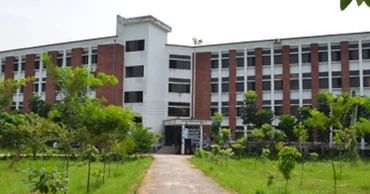
The administrative uncertainty at Begum Rokeya University, Rangpur (BRUR) continues, with the post of pro-vice-chancellor lying vacant for around two and a half years and a newly appointed treasurer yet to assume office more than a month after his appointment.
The prolonged vacancy in the two key administrative positions has raised concerns among teachers, students, officials and employees about the university’s administrative coordination and financial management.
The post of pro-vice-chancellor has remained vacant since March 2024, when the four-year tenure of the university’s first pro-vice-chancellor, Prof Dr Sarifa Salowa Dina, ended.
Meanwhile, the treasurer’s post remained vacant for nearly two years following the resignation of the then treasurer, Prof Dr Mujib Uddin Ahmed, on August 17, 2024.
According to university sources, the Education Ministry appointed Prof Dr Sarifa Salowa Dina, a professor of the Department of Bangla, as BRUR’s first pro-vc on March 10, 2020.
She served in the position until March 2024. No new pro-vice-chancellor has been appointed since the expiry of her tenure.
Teachers and officials said the pro-vice-chancellor plays an important role in coordinating academic and administrative activities and assisting the vice-chancellor in running the university.
The position also has a role in overseeing academic affairs, coordinating various policy-making committees and ensuring coordination in the university’s overall management.
With the position remaining vacant for an extended period, many of these responsibilities have had to be handled by the vice-chancellor and other administrative officials, they said.
Under Section 12(1) of the Begum Rokeya University Act, 2009, the chancellor may appoint a university professor as pro-vice-chancellor for four years under conditions determined by the chancellor, when deemed necessary.
The uncertainty surrounding the treasurer’s post has also continued despite the appointment of a new officeholder.
Prof Dr Mujib Uddin Ahmed, the university’s last treasurer, resigned by submitting his resignation letter to the president on August 17, 2024. The post subsequently remained vacant for nearly two years.
After a prolonged vacancy, the Education Ministry’s Secondary and Higher Education Division appointed Prof Dr Md Abu Hanif Sarker of Jagannath University as BRUR treasurer on July 23.
Speaking about his joining, Prof Abu Hanif said, “I was ready to join. But for various reasons, I have not been able to do so. You may contact the officials concerned at the ministry. They may be able to provide the correct information.”
The reasons behind the delay in his joining have not been officially clarified, fuelling speculation among different sections of the university community.
University officials said the treasurer is responsible for an important part of the university’s financial administration, making the prolonged uncertainty over the post a matter of concern.
Several teachers and officials said the university needs a qualified pro-vice-chancellor as soon as possible and that the newly appointed treasurer should be enabled to assume office without further delay.
BRUR Vice-Chancellor Prof Dr Md Showkat Ali said the appointments were not within his jurisdiction.
“These matters are not within my authority. The pro-vice-chancellor and treasurer of the university are appointed by the chancellor, namely the president. Therefore, the authority to make decisions on these matters also rests with him,” he said.
The VC said the university would provide necessary support and complete the required procedures if there was anything it could do from its side.
19 hours ago

Bridge lies damaged for 5 years, putting thousands at risk in Cumilla
A bridge over a branch canal of the Dhonagoda River in Daudkandi upazila of Cumilla has been lying in a dangerous condition for nearly five years, putting thousands of people at risk as schoolchildren, patients, farmers and others continue to use it for lack of an alternative route.
The bridge, connecting the Harina Bazar-Bhabanipur South Hindu Para area in Panchgachia West Union, was built around 15 to 20 years ago.
According to locals, cracks developed after one of the bridge's central pillars subsided. The pillars have since weakened further, while several sections of the bridge have collapsed.
A visit to the area on Thursday found school and college students, pedestrians, CNG-run auto-rickshaws and motorcyclists continuing to use the damaged structure despite the risk of accidents.
Locals said residents of Guchhagram, Bhabanipur, Thetalia, Tulatali, Nalchak, Nayachar, Panchgachia, Bazarkhola North, Bazarkhola South and Shaithardia regularly use the bridge.
Students, employees, traders, farmers and patients from these villages have to cross the bridge every day as there is no alternative route, they said.
Students are among the worst affected, as they have to risk crossing the bridge to attend schools and colleges. Patients also face difficulties as CNG-run auto-rickshaws carrying them to hospitals have to use the hazardous structure.
Farmers are also suffering as heavy vehicles cannot cross the bridge, making it difficult to transport agricultural produce to markets.
Russel, a student of Durgapur Primary School, said he feels frightened every time he crosses the bridge.
"My heart pounds whenever I step onto the bridge. I feel as though the remaining section could collapse at any moment, sending me into the water below," he said.
1 day ago
Northern region farmers pin hopes on Aman harvest amid favourable weather
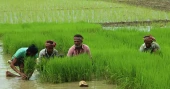
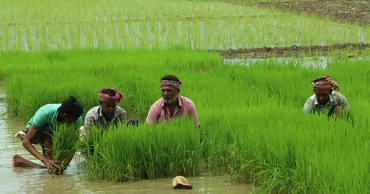
The paddy fields across northern Bangladesh are once again coming alive as farmers work through muddy fields, transplanting Aman seedlings with hopes of recovering from the setbacks of previous seasons.
From preparing land and levelling fields to pulling seedlings from nurseries and planting them in neat rows, farmers and farm workers are busy making the most of the current Aman season.
Unlike some previous years, when inadequate or delayed rainfall made transplantation difficult, this year’s favourable weather and sufficient rainfall have brought some relief to farmers in the region.
Agriculture officials are also hopeful that if the weather remains favourable, farmers will not only meet the cultivation target but may also achieve a good yield and earn a reasonable return.
According to the Department of Agricultural Extension (DAE), a target has been set to cultivate transplanted Aman on 663,714 hectares of land across the eight districts under the Rangpur agricultural region this season.
The production target has been set at 2.633 million tonnes of paddy.
Most of the fields have already been planted, while transplantation on the remaining land is expected to be completed within the next 10 to 15 days, officials said.
During a recent visit to the fields, the scene was one of intense agricultural activity. Tractors and power tillers were being used to prepare land, while some farmers were repairing field embankments with spades and others were levelling the soil with wooden planks.
Groups of farmers were pulling seedlings from nurseries and transplanting them in rows. Some were applying fertiliser, their heads covered with towels to shield themselves from the sun.
Abdul Bari, a farmer from Rangpur Sadar, has cultivated Aman on five bighas of land this season.
He said adequate rainfall has made cultivation easier and reduced his costs.
“Nature has been quite supportive this year. We have received enough rainwater, so we did not have to spend money on irrigation,” he said.
“If everything goes well, we expect a good yield,” he said.
2 days ago
Govt steps up efforts to modernise nursing, midwifery education
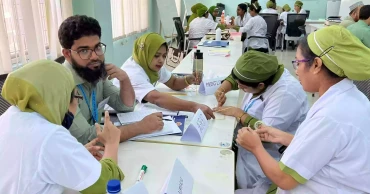
The government has undertaken a series of measures to improve the quality of nursing and midwifery education, including expanding teacher training, modernising laboratories and ensuring adequate clinical practice facilities, according to a Health Ministry document.
The initiatives have been taken as part of the government’s broader plan to develop human resources, protect public health, expand and modernise medical and nursing education and ensure healthcare services at all levels, the document said.
The urgency is underscored by the country’s relatively low nursing workforce density. Bangladesh had only 0.7 nurses and midwives per 1,000 people in 2023, according to World Bank data based on the World Health Organization’s Global Health Workforce Statistics.
A 2025 report citing the Health Sector Reform Commission said Bangladesh required around 310,500 nurses but had only 56,734, representing an estimated 82 percent shortfall under that assessment.
Against this backdrop, the government is putting greater emphasis on the quality of nursing education, particularly the capacity of teachers who train future nurses and midwives.
As part of efforts to expand education and training opportunities for nursing and midwifery teachers, a Nurse Teachers Training Centre was established in Mohakhali, Dhaka, in 2025.
So far, one batch comprising 30 trainees has successfully completed a one-year Teachers Training Certificate Course at the centre, while training of another two batches involving a total of 60 trainees is currently under way, according to the ministry.
The government has also been providing shorter professional development programmes to strengthen the knowledge, skills and work performance of nursing and midwifery teachers.
So far, 1,174 teachers have completed a 28-day Teachers Development Training programme, the document said.
The ministry said further steps have also been taken under the ASSET (Accelerating and Strengthening Skills for Economic Transformation) project to strengthen the professional capacity of teachers working at nursing and midwifery educational institutions.
Under the project, 227 teachers from nursing and midwifery institutions that received Institutional Development Grants (IDG) have already received training in intensive care unit (ICU) care, paediatrics and nursing management.
The government has also taken steps to provide similar training to another 320 teachers by March 2027, it said.
The ministry said the measures are aimed at ensuring that nursing and midwifery teachers remain equipped with updated professional knowledge and practical skills required for modern healthcare delivery.
Infrastructure development is another major component of the government’s efforts to improve nursing education.
Under the ASSET project, funds have been allocated for the modernisation of laboratories at 31 nursing and midwifery educational institutions.
The laboratory modernisation programme is expected to be completed by February 2027, according to the ministry document.
The government has also highlighted the availability of clinical practice facilities for students enrolled in nursing institutions.
There are currently 73 nursing education and training institutions under the Directorate General of Nursing and Midwifery (DGNM), and students at these institutions have access to adequate opportunities for clinical practice, the document said.
The ministry said practical clinical exposure is essential for developing the competence of nursing students and complementing their theoretical education.
It said the existing nursing education curriculum has been designed in line with the requirements of modern, competency-based nursing education.
The curriculum is also largely aligned with internationally recognised standards for nursing education and training, according to the document.
The curriculum places emphasis on developing students’ theoretical knowledge, practical skills, clinical competency and professional capacity, it said.
The ministry said the combined initiatives in teacher training, laboratory modernisation, clinical practice and curriculum development are intended to strengthen the overall quality of nursing and midwifery education and help produce a skilled workforce capable of meeting the country’s growing healthcare needs.
The expansion of training facilities and professional development opportunities is also expected to contribute to improving the quality of healthcare services by strengthening the competencies of nursing and midwifery professionals.
3 days ago
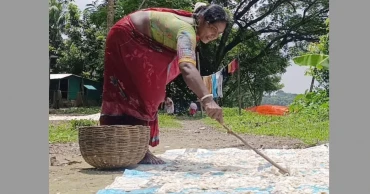
From waste to source of wealth: Fish scales boost Narail families’ income
Once discarded as waste after fish were cut and cleaned, fish scales are now providing a modest but important source of additional income for fishing families in sadar upazila of Narail district.
For the families of Pankabila, the change is already visible. What once ended up in the garbage is now carefully collected, dried in the sun and sold — turning an overlooked byproduct of the fish trade into a small but meaningful addition to the household purse.
Alongside selling fish, many families in the district collect, clean, dry and sell the scales, helping them meet household expenses while turning what was once considered waste into a valuable commodity.
A recent visit to Pankabila Jelepalli in Aouria Union under Sadar upazila of Narail district, tis correspondent found fish scales of different sizes spread out in courtyards and open spaces beside the Chitra River to dry under the sun.
Some were laid out on bamboo mats, some on polythene sheets and others directly on clean ground. Men and women of the families were busy with different stages of the work — cleaning the scales, spreading them out to dry and turning them over from time to time.
There are around 90 to 100 families in Pankabila Jelepalli, of which around 40 to 50 have been involved in collecting and selling fish scales for between five and 16 years.
For these families, selling fish scales has gradually become an important supplementary source of income alongside their traditional fish trade.
A growing market
Fish scales are increasingly being used as raw materials in various industries, particularly in pharmaceutical products and poultry feed. Processed fish scales are also being supplied to overseas markets, with growing export prospects in countries including Japan, China and several European nations.
As a result, a byproduct once thrown away after fish were cut is now contributing both to reducing waste and creating new economic opportunities.
Ticantu Sarker, a fisherman and fish trader from Pankabila, said they used to throw away the scales after cutting fish.
“Now we collect them separately, bring them home, clean them and dry them in the sun for several days. Later, we sell them to traders. It gives us some additional income alongside selling fish,” he said.
Supal Biswas, another fisherman and fish trader, said fish scales currently sell for Tk 70 to Tk 80 per kilogramme, while good-quality scales can fetch up to Tk 100 per kg.
“Traders from Jessore, Nauapara and Dhaka, among other places, come here every three or four months to buy the scales,” he said.
Women join the income-generating work
The trade has also created an opportunity for women in fishing households to contribute directly to family earnings.
Several housewives in the area said that in the past, the scales were simply thrown away with other household waste. Now, they separate, clean, dry and store them before selling them.
The money earned from the sales helps cover daily household expenses, while also allowing families to contribute to the educational costs of their children.
Dayal Shil Shubho, a resident of Pankabila, said many fishing families in his neighbourhood collect scales alongside selling fish.
“Both men and women in the families are involved in this work. The money earned by selling the scales helps them meet household expenses and pay for their children's education,” he said.
Bigger fish, better demand
Local fish traders said the demand and price of scales vary depending on the species and size of the fish.
Scales from larger fish such as rui, catla, grass carp and black carp are in comparatively higher demand. As the scales of these larger fish are bigger, they are also easier to collect, clean and dry.
For families already engaged in the fish trade, the process requires little additional investment, making it a practical way to generate extra earnings from an existing activity.
‘Scales are no longer waste’
Md Saiduzzaman, senior upazila fisheries officer of Narail Sadar, said fish scales should now be viewed as a valuable resource rather than waste.
He said members of the Pankabila fishing community collect scales while preparing fish for cooking, or making them “ready to cook”, at Rupganj Fish Market.
“These scales are being processed and exported abroad, while their demand in various industries is also increasing,” he said.
The fisheries department is raising awareness among fishermen and encouraging them to become more involved in the sector so that fish-scale collection and sales can develop into a sustainable source of income, he added.
3 days ago
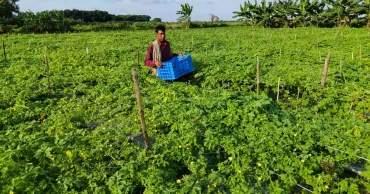
Safe vegetables, but where is the fair price?
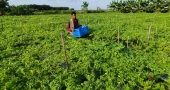
A blue net fence surrounds the field, keeping unwanted insects at bay. Inside, bamboo structures support lush green vines, from which clusters of fresh bitter gourds hang.
At first glance, it looks like an ordinary vegetable field. But there is a crucial difference: no chemical pesticides are being used here.
In Dhalnagar village of Kumarkhali upazila, two farmers have ventured into chemical-free bitter gourd cultivation using the Good Agricultural Practices (GAP) method for the first time in the area.
The harvest has been encouraging. The market, however, has not been as kind.
Farmers Dabir Uddin Farazi and Abdul Bari have cultivated “Alisa” variety bitter gourd on three bighas of land. In just 10 days, they have sold around 2,200 kilogrammes of the vegetable for Tk 65,000-70,000 at wholesale prices ranging from Tk 30 to Tk 55 per kilogramme.
If the weather remains favourable, they expect to harvest another 4,000 kilogrammes or more over the next one and a half months, potentially bringing in more than Tk 2.5 lakh.
Yet, despite producing what they describe as safer and healthier vegetables, the farmers are struggling to secure a premium price.
“We spend more on GAP cultivation because we have to buy nets, traps and organic fertiliser. The yield is good and the vegetables are healthier, but buyers are still unwilling to pay more for chemical-free produce,” said Dabir Uddin.
More cost, little premium
A visit to the Dhalnagar field, around 37 kilometres from Kushtia town, reveals the extra effort involved.
The entire plot is surrounded by blue netting. Farmers have installed pheromone traps and used biological pesticides to control insects. Organic fertiliser has been applied to the soil.
One farmer tends the plants while another carefully picks the bitter gourds.
Dabir said he has spent around Tk 1.8 lakh on land preparation, seeds, materials and cultivation on the three bighas.
The farmers have already sold about 2,200kg of bitter gourd, earning Tk 65,000-70,000. If the weather remains favourable, Dabir expects another 4,400kg to be produced.
They dream of one day sending their chemical-free bitter gourds to major markets in Kushtia and Dhaka, where consumers will be able to identify the produce through proper labelling and farmers will receive a fair price.
“We want a separate corner for chemical-free vegetables in the markets. Then consumers will know what they are buying, and we will also get a fair price,” said Abdul Bari.
5 days ago
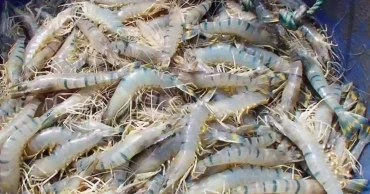
Shrimp exports plunge from billion-dollar heyday: Can new rescue fund reverse slide?
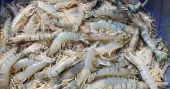
Bangladesh Bank has rolled out a Tk 2,000 crore special fund to revive the country’s struggling frozen fish export sector, but shrimp exporters and processors fear bureaucratic hurdles, high interest rates and restrictive conditions could make the initiative ineffective, as happened with previous rescue efforts.
Frozen shrimp exports, once a billion-dollar earner two decades ago, have collapsed to below $300 million annually, with more than half of factories registered under the Bangladesh Frozen Foods Exporters Association (BFFEA) shutting down in recent years amid power shortages and raw material crises.
Export Promotion Bureau data show shrimp exports exceeded $400 million in fiscal year 2022-23 before sliding below $250 million in FY24. Exports recovered slightly to around $300 million in FY25 but fell again to just over $285 million in FY26, the lowest export volume in four years at roughly 19,000 tonnes, down from more than 25,000 tonnes in FY23.
Bangladesh Bank's three-year fund, announced through a circular on August 30, targets entrepreneurs looking to start new frozen food processing ventures, revive shuttered factories, or expand struggling operations.
But BFFEA President Mohammad Shahjahan Chowdhury, also managing director of Riverain Fish & Food Processing Industries Ltd in Chattogram, said similar funds allocated in the past rarely reached genuine businesses.
"Getting loans under such funds from scheduled banks is quite difficult," he said, adding that non-genuine players often secure the 7 percent interest facility through various means, while actual fish exporters are left bearing interest burdens of 14-15 percent.
"Unless bureaucratic complexities are removed and real businessmen are brought under the facility, this kind of fund will not bring any benefit," Shahjahan said.
Exporters drew parallels with the $240 million Bangladesh-World Bank Sustainable Coastal and Marine Fisheries Project, which ran from 2018 to 2025 with a key objective of boosting shrimp production and exports.
While the World Bank's own assessment rated the project's outcome and performance as satisfactory, coastal shrimp farmers say the money brought little tangible change, pointing to the sharp fall in FY26 export volumes, which industry insiders put even lower, at around 17,000 tonnes – evidence that the funds were not properly utilised.
"Under this project, a few buildings came up, and a few shrimp blocks were built. Nothing more than that happened. Buildings and shrimp blocks alone will not increase production," Shahjahan said, speaking on behalf of Cox's Bazar frozen fish businesses.
Similar concerns of possible fund misuse now surround the new Bangladesh Bank facility, exporters said. The circular allows loans of up to Tk 30 crore over a maximum seven-year term for new frozen food processing factories, even as existing units continue to close for want of raw materials.
Bangladesh's shrimp yield stands at just around 400 kg per hectare, compared to 5,000-6,000 kg per hectare in India, Vietnam and Thailand, industry figures show. Businesses argued that rescuing factories on the verge of closure should take priority over funding new ones.
BFFEA Senior Vice President Tariqul Islam Zaheer, managing director of Achia Sea Foods Limited in Khulna, warned that offering Tk 30 crore loans for new factories could invite embezzlement attempts.
"If Tk 30 crore loans are given for setting up new factories, many will misappropriate the funds or attempt such malpractice under the pretext of factory establishment. The focus here should be on ensuring running factories stay operational and on reopening those that have shut down," he said.
Zaheer also linked the sector's struggles to Bangladesh's continued reliance on traditional shrimp farming, saying the country's inability to export Vannamei shrimp is undercutting profitability.
"European buyers are purchasing Vannamei shrimp from India and Vietnam and want to pay us the same price for our traditionally farmed shrimp. Selling shrimp at $5 per kg, there is no way to turn a profit through the traditional method," he said.
A key condition attached to the new fund requires beneficiaries to source at least 15 percent of their total electricity from solar power within two years, failing which they will be barred from this and any future central bank funds of this kind.
The circular offers an additional loan of up to Tk 5 crore for those willing to install solar infrastructure, but many urban-based factory owners say they simply lack the space for solar panels and cannot afford to relocate or set up separate facilities.
Shrimp businesses are urging authorities to go beyond merely announcing funds, calling for proper utilisation of the money, ensuring scheduled banks lend to genuine entrepreneurs, and using the facility to restructure the entire shrimp sector.
Otherwise, they warned, the fund risks following the same fate as previous financing schemes and projects that failed to meaningfully revive the frozen fish industry.
6 days ago
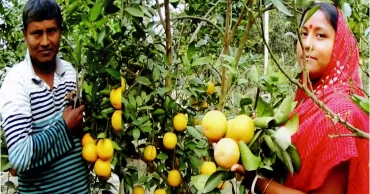
Pirojpur farmer turns citrus farming into a success story
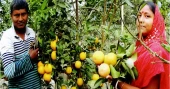
A farmer in Pirojpur has transformed his fortune through malta cultivation, turning a small 10-decimal plot into a thriving orchard and nursery while inspiring others to take up commercial citrus farming.
Rebati Shikdar, 50, of Dakatia village in Sadar upazila, started cultivating malta in 2008 with just 10 decimals of land, encouraged by advice from the Department of Agricultural Extension (DAE) and the potential for a malta farming revolution in the district.
He collected 45 saplings of an Indian variety from the local market and planted and nurtured them following the advice of agricultural officials. Within three years, the orchard began producing a good yield.
Rebati said his wife’s strong interest and dedicated care played the biggest role in developing the orchard.
He initially spent around Tk 25,000 to establish the orchard. His annual expenses, including seasonal workers, were around Tk 20,000, while he earned nearly Tk 1 lakh a year after meeting the family’s needs.
Rebati said malta from his orchard is juicier and tastier than imported varieties, creating strong demand in the market. He sells the fruit at Tk 150 per kilogram at retail and Tk 110-120 wholesale.
Encouraged by the yield and prospects, he expanded his orchard in 2016 by planting BARI Malta-1 saplings on an additional 3.5 acres.
The expansion initially cost him around Tk 8 lakh. His annual expenses, including wages for two permanent workers, are about Tk 3 lakh.
The expanded orchard has around 1,000 malta trees along with other fruit trees.
As malta cultivation expanded in Pirojpur, Rebati also established a nursery alongside his orchard. He produces around 15,000 grafted malta saplings annually and earns about Tk 6 lakh a year by selling the saplings.
6 days ago
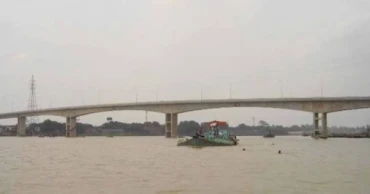
Tk 115.73cr project aims to introduce smart monitoring, maintenance of bridges
The government has taken a Tk 115.73 crore technical assistance project to introduce advanced bridge health monitoring technology and strengthen the maintenance and safety of bridges under the Roads and Highways Department (RHD).
Of the total estimated cost, the project, titled “Capacity Development for Smart Maintenance Technology of Bridges under Roads and Highways Department in Bangladesh,” Tk 7.76 crore will come from the government, while Tk 107.97 crore, equivalent to US$8.85 million, will be provided as a grant by the Korea International Cooperation Agency (KOICA).
The Road Transport and Highways Division under the Ministry of Road Transport and Bridges is the sponsoring division, while the RHD will implement the project by December 2029.
The main objective is to ensure the structural safety and durability of bridges through an advanced Bridge Health Monitoring System, while enabling the RHD to carry out timely and cost-effective bridge management and maintenance.
Under the project, detailed structural inspections will be conducted on three bridges to prepare designs for their repair and rehabilitation.
The bridges are the Kamar Khali Bridge on the Daulatdia-Faridpur (Goalchamot)-Magura-Jhenaidah-Jashore-Khulna-Mongla National Highway (N-7), the Demra Bridge on the Tarabo-Demra Road and the Tora Bridge on the Dhaka (Mirpur)-Uthuli-Paturia-Natakhola-Kashinathpur-Bogura-Rangpur-Beldanga-Banglabandha National Highway (N-5).
The project will also undertake necessary repair and rehabilitation works on the three selected bridges on a pilot basis.
In addition, a Structural Health Monitoring System (SHMS) will be installed on the Madhumati Bridge, Kalna Bridge and Demra Bridge on a pilot basis.
The project also envisages establishing an Integrated Bridge Maintenance Centre at the RHD to support coordinated and smart management of bridges.
According to the project background, four bridges were initially proposed for piloting under the initiative.
Three bridges will eventually receive repair, monitoring and design support, while three bridges will be equipped with smart health monitoring technology, with some bridges serving both purposes.
The use of smart monitoring technology is expected to help identify structural problems in bridges at an early stage, allowing authorities to undertake timely maintenance and thereby extend the service life of the structures.
The project proposal was initially sent to the Planning Commission with an estimated cost of Tk 107.97 crore, fully financed by KOICA, for implementation from January 2025 to December 2028.
Following observations by the Planning Commission and recommendations made at a Special Project Evaluation Committee (SPEC) meeting, the proposal was restructured, increasing the total estimated cost to Tk 115.73 crore with Tk 7.76 crore in government funding and Tk 107.97 crore in KOICA grant assistance.
The implementation period was subsequently revised to July 2026 to December 2029.
The SPEC meeting held at the Physical Infrastructure Division of the Planning Commission on July 3, 2026 recommended the project for approval by the ECNEC at the revised cost.
The project is also expected to contribute to the government’s target of establishing an integrated and smart management framework in the road transport system to improve discipline, safety and efficiency, as outlined in the third chapter of the Election Manifesto 2026, according to the proposal.
The Economic Relations Division has already provided its consent regarding the foreign assistance from KOICA.
7 days ago