Rohingya Crisis
Global community must move beyond expressions of solidarity to resolve Rohingya crisis: Dhaka
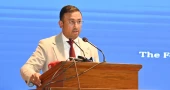
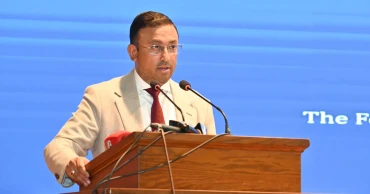
State Minister for Foreign Affairs Humaiun Kobir on Thursday called on the international community to move beyond expressions of solidarity and ensure shared responsibility and sustained political engagement to resolve the Rohingya crisis.
“Nine years of displacement should not make displacement acceptable. It should make finding a solution more urgent than ever on this crisis,” Kobir said while speaking as the chief guest at a conference held at the Foreign Service Academy.
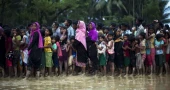
Bangladesh has hosted Rohingya refugees for decades and, particularly since the massive influx in 2017, has provided refuge and protection to more than one million forcibly displaced Myanmar nationals.
“We have done so despite the considerable pressure this has placed on our economy, environment, public services, local communities and national security,” Kobir said.
He said Bangladesh has demonstrated “humanitarian responsibility and humanitarian leadership,” but such responsibility must not be mistaken for unlimited responsibility.
“Let me be clear: this is not a crisis that Bangladesh created, and it cannot be a crisis that Bangladesh resolves alone,” the state minister said.
Humanitarian financing, he said, must remain predictable and consistent, while host communities must receive meaningful support.
Regional cooperation must be structured, and every engagement with Myanmar must remain focused on addressing the conditions that produced this displacement in the very first place,Kobir said.
He also underscored the distinction between humanitarian assistance and a political solution.
“Humanitarian assistance manages the consequences of displacement. Only a political solution can end displacement,” he said.
9 days ago
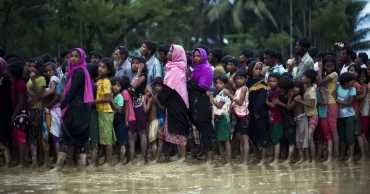
Rohingya Crisis: International community seeks strategic, coordinated, long-term approach
As the Rohingya crisis enters its 10th year, the international community on Tuesday said they must ensure that the Rohingya people are not forgotten.
Creating the conditions for return will require a strategic, coordinated and long-term approach to address the root causes of displacement, build trust between communities, and support greater peace and stability in Myanmar, said the diplomatic missions in a joint statement.
"We will continue to amplify the voices of Rohingya communities, pursue justice and accountability, and work with Bangladesh and international partners to sustain global support," they said.
The diplomatic missions in Dhaka representing Canada, Denmark, the European Union, Finland, France, Germany, Ireland, Italy, Japan, Kosovo, the Netherlands, Norway, Spain, Sweden, Switzerland, and the United Kingdom issued the joint statement to mark the anniversary.
Nine years after the mass displacement of Rohingya from Myanmar, nearly 1.3 million Rohingya refugees remain in Bangladesh.
25 days ago
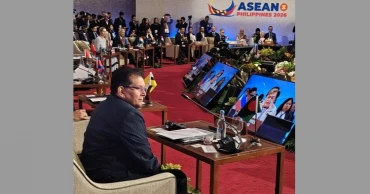
It’s a political failure demanding political solution, says FM about Rohingya crisis
Foreign Minister Dr Khalilur Rahman on Thursday called upon ASEAN Regional Forum (ARF) participants to collectively support efforts to create conducive conditions in Myanmar to facilitate repatriation of more than 1.3 million Rohingyas to their homeland in Rakhine State.
"The Rohingyas are not stateless people by circumstance - they are stateless by design. It is a political failure demanding a political solution,” he said while addressing the 33rd ASEAN Regional Forum (ARF) Ministerial meeting in Manila, Philippines.
Referring to his upcoming Presidency of the 81st Session of the United Nations General Assembly, the Foreign Minister stressed that global challenges must be resolved through dialogue and diplomacy.
Adviser to the Prime Minister Humaiun Kobir was also present at the meeting
Bangladesh is hosting the Rohingyas for nearly a decade that placed significant social, economic, environmental and security burdens on Bangladesh, a senior official told UNB.
The official said Bangladesh keeps urging the international community and key regional actors to intensify diplomatic efforts and engagement to facilitate the early repatriation of the Rohingyas to Myanmar.
Dr Khalilur called on all states to exercise maximum restraint in addressing maritime disputes.
Addressing climate change challenges, the Foreign Minister noted that Bangladesh remains committed to promoting enhanced regional cooperation in disaster preparedness and early warning systems.
Highlighting the opportunities and risks associated with artificial intelligence and emerging technologies, he proposed exploring a regional technology governance framework that reflects the region's unique geopolitical and developmental realities.
The Foreign Minister held bilateral meetings with the Foreign Ministers of Singapore, Sri Lanka and Australia and the Vice President of European Commission.
In the meetings, wide range of bilateral and multilateral issues including trade and investment, tourism, humanitarian assistance, reciprocal support in multilateral fora were discussed.
The ministers congratulated Foreign Minister Dr Khalilur on his election as President of 81st UN General Assembly and assured him of their cooperation during his tenure.
Indian External Affairs Minister Dr S Jaishankar on Thursday met Foreign Minister Dr Khalilur and exchanged pleasantries on the margin of ASEAN Regional Forum Foreign Ministers Meeting.
"Foreign Minister of Bangladesh Dr. Khalilur Rahman and Minister of External Affairs of India Dr. S. Jaishankar greeted each other in Manila on the margin of ASEAN Regional Forum Foreign Ministers Meeting," said an official at the Ministry of Foreign Affairs.
During his meeting with Dr Khalilur, Singapore’s Foreign Minister Vivian Balakrishnan said Singapore and Bangladesh share a longstanding friendship anchored in mutual respect, shared interests, and strong people-to-people ties.
“We discussed how we can deepen bilateral cooperation and work together in ASEAN to create new opportunities for growth and development in Bangladesh and across the wider Indian Ocean region,” he said after the meeting.
Dr Khalilur met with Sri Lanka's Minister of Foreign Affairs, Foreign Employment and Tourism, Vijitha Herath.
The two Ministers discussed strengthening Bangladesh-Sri Lanka bilateral relations, expanding trade and investment, enhancing regional cooperation, and reaffirming their shared commitment to multilateralism, as well as peace, stability, and prosperity in the region.
Dr Khalilur on Wednesday held a series of high-level bilateral engagements with his counterparts from the US, Russia, China and Pakistan on the sidelines of the ASEAN Regional Forum (ARF) Foreign Ministers’ meeting in Manila, highlighting Bangladesh’s continued efforts to strengthen diplomatic relations with key international partners.
During the meetings, the Foreign Minister exchanged views on issues of mutual interest, including economic cooperation, trade and investment opportunities, and matters of shared concern on the global stage, a diplomatic source told UNB.
Dr Khalilur is leading the Bangladesh delegation to the 33rd ASEAN Regional Forum Foreign Ministers’ meeting and the 50th Anniversary of the Treaty of Amity and Cooperation of Southeast Asia.
1 month ago
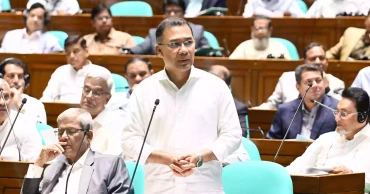
Govt pursuing all-out diplomatic efforts to resolve Rohingya crisis: PM
Prime Minister Tarique Rahman on Wednesday said his government is pursuing vigorous diplomatic efforts at the bilateral, regional and multilateral levels to secure an early and peaceful resolution to the Rohingya crisis.
"The BNP government is carrying out strong diplomatic efforts on all bilateral, regional and multilateral fronts to resolve the Rohingya crisis at the earliest," he said while responding to a starred question from Sirajganj-1 lawmaker Md Selim Reza during the question-and-answer session in Parliament.
Tarique also reiterated his government’s commitment to the safe, voluntary and sustainable repatriation of the displaced people to Myanmar.
The Prime Minister said the government remains firmly committed to a peaceful and speedy solution to the Rohingya crisis.
Recalling the role of former BNP governments, Tarique said the governments led by former President Ziaur Rahman in 1978 and former Prime Minister Khaleda Zia in 1992 successfully resolved earlier Rohingya crises through effective diplomatic initiatives, enabling displaced Rohingyas to return home within a short time.
"We are following the same policy to find a sustainable, peaceful and swift solution," he said.
The Prime Minister said the government is working actively to keep the Rohingya crisis at the centre of the global humanitarian agenda through regular engagement with the United Nations, foreign governments and international donor agencies.
He said soon after the current government assumed office, high-level delegations from UNHCR, UN Women and the World Food Programme visited the Rohingya camps in Cox's Bazar and discussed ways to strengthen humanitarian assistance.
Tarique also referred to the recent visit of the Turkish foreign minister to Bangladesh, including a visit to the Rohingya camps, expressing hope that it would lead to increased humanitarian support from Türkiye.
He said Bangladesh also supported last September's high-level UN conference aimed at accelerating the safe repatriation of displaced Rohingyas and would continue efforts to mobilise international opinion through similar global initiatives.
The Prime Minister said Bangladesh continues its moral support for the case filed by The Gambia at the International Court of Justice, stressing the importance of justice and accountability in addressing the root causes of the crisis.
He reiterated that the only durable solution lies in Myanmar's Rakhine State and said Bangladesh has stepped up diplomatic efforts to increase international pressure on Myanmar to create conditions for the safe, voluntary and sustainable return of the Rohingyas.
Tarique said the government is maintaining contacts not only with Myanmar's military authorities but also with all relevant parties to facilitate repatriation.
Confidence-building measures and the verification of Rohingya identities are also continuing, alongside third-country resettlement efforts.
Describing the crisis as a complex and sensitive international issue, he said its resolution depends largely on the security situation in Rakhine, international pressure and the willingness of the Myanmar authorities.
He also stressed the importance of creating a platform for dialogue between the Myanmar government and the Arakan Army to help restore stability in Rakhine.
On the domestic front, the Prime Minister said the government has adopted practical and coordinated measures to maintain security in the Rohingya camps, preserve harmony with host communities and improve humanitarian assistance.
He said a high-level national committee, led by the home minister, is actively coordinating law enforcement and management of the camps, while a National Task Force comprising relevant ministries, the United Nations and other stakeholders is overseeing humanitarian operations and efforts to accelerate repatriation.
Tarique said the government remains committed to ensuring the dignified return of the forcibly displaced Rohingyas through a realistic and lasting solution.
2 months ago
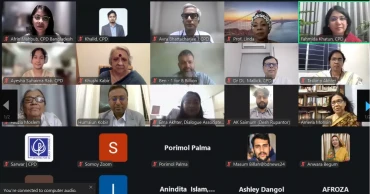
Future UN leadership must protect interests of all countries: Humaiun Kobir
Referring to Bangladesh's experience with the Rohingya crisis, Prime Minister's Adviser on Foreign Affairs Humaiun Kobir on Tuesday emphasised that future UN leadership must be capable of protecting the interests of all countries - large and small, developed and developing alike.
Speaking at a virtual discussion, he said the world is experiencing one of the most complex periods since the establishment of the United Nations.
Bangladesh seeks stronger UN support for peacekeeper, police deployments
The Centre for Policy Dialogue (CPD), in collaboration with Southern Voice and the 1 for 8 Billion campaign, organised the virtual discussion titled "Rethinking UN Leadership in a Fragmented World: A Bangladesh-Centred Perspective."
The panellists included international affairs expert Dr Amena Mohsin; Shaheen Anam, Executive Director of Manusher Jonno Foundation; Taslima Akter Lima, President of Bangladesh Garments Sramik Sanghati; Fauzia Moslem, President of Bangladesh Mahila Parishad; and Khushi Kabir, Member of the CPD Board of Trustees and Coordinator of Nijera Kori. CPD Executive Director Dr Fahmida Khatun chaired the session.
The event called for a more transparent, inclusive and accountable UN leadership selection process capable of responding effectively to the complex challenges of the twenty-first century.
The speakers said the UN Secretary-General selection process should be transparent, merit-based and less influenced by powerful states.
The discussion focused on the qualities, priorities and principles that should shape future UN leadership, particularly ahead of the selection of the next UN Secretary-General.
The Adviser stressed that the next UN Secretary-General must possess integrity, independence, professional excellence, diplomatic skills and moral authority to engage with all Member States while remaining committed to the principles of the UN Charter.
He also underscored the need for an open, merit-based, accountable and participatory selection process to strengthen both the legitimacy of the Secretary-General and the credibility of the United Nations.
The Adviser noted that the current process, under which the Security Council recommends a single candidate to the General Assembly, does not provide sufficient choice or scrutiny.
He suggested that the Security Council prepare a shortlist of candidates for the General Assembly to vote on so that the final selection reflects merit, credibility and experience.
The next UN Secretary-General will inherit a world marked by overlapping crises, including geopolitical fragmentation, armed conflict, climate emergencies, humanitarian displacement, debt distress, technological disruption and declining trust in multilateral institutions.
At this critical juncture, the selection of the next UN leader is not only about choosing an individual; it is also about determining whether the United Nations can become more representative, accountable and responsive to the needs of all countries, particularly those of the Global South.
Dr Fahmida chaired the session and said that although the discussion focused on leadership, the issue was much broader as it concerned the future of multilateralism itself.
She noted that the forthcoming selection of the next UN Secretary-General is not merely about choosing an individual but also about reflecting on how the institution itself can become more representative, accountable and effective.
Dr Fahmida stressed that a transparent and merit-based selection process, stronger accountability, institutional independence and greater responsiveness to vulnerable communities are essential if UN leadership is to deliver meaningful change.
In her keynote presentation, CPD Research Associate Afrin Mahbub noted that the current UN Secretary-General selection process remains heavily influenced by the five permanent members of the Security Council, with limited transparency beyond the publication of candidates' names and vision statements.
She pointed out that no woman has ever served as UN Secretary-General, while women remain underrepresented across the UN system.
Using Bangladesh as an analytical lens, she observed that women's representation remains limited despite the country's long history of female political leadership, and that symbolic representation does not automatically translate into substantive influence.
Drawing on civil society perspectives from Bangladesh, she emphasised that gender representation is necessary but not sufficient; it must be supported by institutional reform, accountability, inclusive governance and genuine decision-making power.
Adviser to the 1 for 8 Billion campaign Ben Donaldson said the nomination phase was nearing completion, but uncertainty remained because of the influence of the permanent members of the Security Council.
He also warned that backroom deals over senior UN appointments undermine transparency across the wider UN leadership system.
During the open-floor discussion, participants raised questions about how the next UN Secretary-General could represent the interests of both major powers and vulnerable developing countries facing climate change, debt, inequality and forced displacement.
The speakers reiterated the need to democratise the United Nations by strengthening the role of the General Assembly and amplifying the voices of Asia, Africa, Latin America and the wider Global South.
Concluding the session, Dr Fahmida said future UN leadership requires not only diplomatic skill but also moral authority, independence and the ability to navigate evolving geopolitical realities.
2 months ago
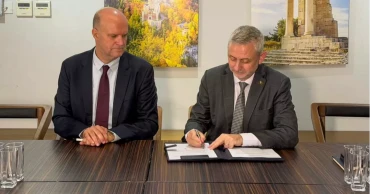
Committed to supporting Rohingyas, host communities: EU Ambassador Miller
Ambassador and Head of the European Union Delegation to Bangladesh Michael Miller on Thursday said the European Union (EU) is committed to supporting Rohingyas and the communities hosting them in Bangladesh.
"As needs remain protracted, we need to transform the response," he said as the European Union (EU) and UNHCR, the UN Refugee Agency, announced a renewal of their partnership with a futher EUR 14 million development grant.
The grant will help sustain lifesaving assistance and strengthen protection for the 1.2 million Rohingya refugees in Cox’s Bazar and support the livelihoods of the host community.
UNHCR works alongside the Government of Bangladesh, humanitarian partners and donors to strengthen refugee protection as part of the 2025–2026 Joint Response Plan (JRP) for the Rohingya humanitarian crisis.
The Plan calls for USD 710 million this year to meet the most critical needs of 1.2 million Rohingya refugees, including new arrivals, and to ensure they can live in dignity until they can return home voluntarily, in safety and with full rights, said the UN Refugee Agency.
The new funding, which complements EU humanitarian funding and an earlier multi-year development policy contribution from the EU, will provide Rohingya refugees and nearly 70,000 members of the Bangladeshi host community with essential support to enhance resilience and self-reliance, including skills development initiatives and access to clean cooking gas.
With a focus on space for more education, skills development and to generate income, the European Union will help Bangladeshi host communities in Cox’s Bazar and, for the Rohingya, will expand options for education, lead to the learning of practical,
portable skills and improve living conditions, said Ambassador Miller.
"This is about preserving dignity, strengthening resilience and giving refugees the tools to rebuild their lives – preparing them for voluntary, safe and dignified return to Myanmar when conditions allow," he said.
“Reliable, steadfast support is fundamental to the well-being of families who have experienced immense hardship for the past nine years,” said Ivo Freijsen, UNHCR Representative in Bangladesh.
“We are grateful to the European Union for standing with the Rohingya in Bangladesh, ensuring that refugees can access vital protection services, meet their basic needs, and maintain hope for a safer and more dignified future.”
Overcrowded living conditions, limited resources, and prolonged displacement leave refugees highly vulnerable.
Comprehensive protection services within the camps, including safe shelters, welllit camp environments, effective community based protection mechanisms, and accessible reporting channels, are critical to safeguarding refugees’ rights and dignity.
This is particularly important for women and children, who face heightened risks of gender-based violence, trafficking, and exploitation, said UNHCR.
Provision of liquid petroleum gas (LPG) protects women and children from the risks of foraging for firewood, while also reducing the household smoke that damages refugee health, and eases pressure on the surrounding forests.
At the same time, expanding livelihood opportunities and skills development is crucial to reduce dependency on aid and help restore a sense of agency and purpose among refugees.
The contribution comes on the eve of World Refugee Day, observed annually on 20 June, which is an opportunity to honour the resilience and strength of people forced to flee their homes because of violence and persecution, reiterate support for those living in displacement and also recognise the contribution of host communities.
The European Union is a key global supporter of humanitarian and development programmes, with a focus on resilience-building and sustainable solutions.
Generous international support remains vital to ensuring access to essential services.
3 months ago
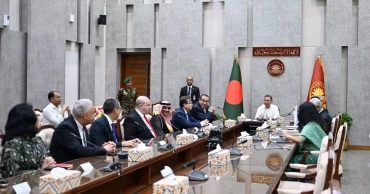
PM seeks OIC support in resolving Rohingya crisis
Prime Minister Tarique Rahman on Tuesday sought stronger support from the Organisation of Islamic Cooperation (OIC) member states in resolving the Rohingya crisis, stressing the need for greater cooperation from the Muslim world on the issue.
He made the call when ambassadors and high commissioners of OIC member countries stationed in Dhaka met him at his office at the Bangladesh Secretariat.
“The Prime Minister sought the support of OIC member countries in resolving the Rohingya crisis,” said a release issued by the PM’s Press Wing.
During the meeting, the diplomats congratulated Tarique Rahman on assuming office as the Prime Minister and reaffirmed their countries’ commitment to strengthening ties with Bangladesh in areas, including investment, trade, education, healthcare, textiles and the pharmaceutical sector.
They also reaffirmed their unwavering support for Bangladesh on various bilateral and international issues.
PM seeks students’ cooperation to maintain stability for nation-building
Welcoming their remarks, the Prime Minister thanked the OIC countries on behalf of the government and the people of Bangladesh for their cooperation and support.
Recalling the brotherly relations established with OIC member states during the tenure of late President Ziaur Rahman, he expressed hope that the ties will grow even stronger in the days ahead.
Tarique Rahman, also the Chairman of the ruling BNP, underscored the importance of enhancing people-to-people contact among the member nations.
The meeting was attended by envoys from Saudi Arabia, Türkiye, Palestine, Algeria, Brunei, Egypt, Indonesia, Kuwait, Malaysia, the Maldives, Morocco, Oman, Pakistan, Qatar and the United Arab Emirates, along with heads of mission from Iran, Iraq and Libya.
Prime Minister’s Foreign Affairs Adviser Humaiun Kobir, Secretary at the Ministry of Foreign Affairs (Intergovernmental Organisations) M Forhadul Islam and PM’s Additional Press Secretary Atikur Rahman Rumon were also present at the meeting.
4 months ago
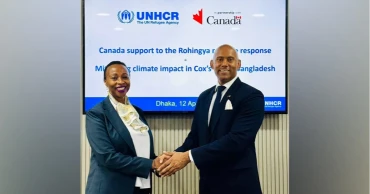
Canada supports Rohingya response for environmental protection, clean cooking fuel
Canadian High Commissioner to Bangladesh Ajit Singh on Sunday said Canada remains a ‘longstanding and steadfast partner’ in the Rohingya crisis response and accounted CAD 10 million contributions to provide clean, safe and sustainable cooking fuel for the Rohingyas in Cox’s Bazar.
“This climate-responsive humanitarian contribution will reduce deforestation and carbon emissions in an environmentally fragile district that will benefit refugees, Bangladeshis, and the wider population,” said the High Commissioner.
He said it will also lower the risks to vulnerable people, especially women, girls, and children, including those that stem from gathering firewood.
“Canada is pleased to provide this $10 million contribution to UNHCR and IOM to strengthen environmental protection that benefits us all, as well as advance the wellbeing of vulnerable Rohingya refugees,” said the High Commissioner.
The funding to UNHCR, the UN Refugee Agency, and IOM, the International Organization for Migration, will ensure the continued provision of liquefied petroleum gas (LPG) to the Rohingya, essential for them to cook, while helping to preserve the fragile environment surrounding the camps and improve safety, health and dignity for refugees, particularly women and children, said the UN agency.
Cox’s Bazar, one of the most climate-vulnerable regions of Bangladesh, faces recurrent flooding, landslides, cyclones, fires and environmental degradation.
Since the start of LPG distribution to Rohingya refugees, the programme has reduced firewood use by 80% among refugee households, preventing an estimated 407,000t of CO₂ emissions every year.
“Nine years on, Rohingya refugees are navigating one of the world’s most difficult displacement situations – protracted crisis compounded by climate vulnerability,” said UNHCR Deputy Representative in Bangladesh Juliette Murekeyisoni.
“Canada’s support comes at a crucial time, and I am deeply grateful for it. Sustained international solidarity remains critical to ensuring that refugees can live in dignity while we work toward conditions for their voluntary, safe, and dignified return.”
Chief of Mission for IOM in Bangladesh Giuseppe Loprete said safe, reliable energy is fundamental to the well-being of families who have experienced immense hardship for the past nine years.
“We thank Canada for their generous support, which ensures that refugees can avoid dangerous firewood collection and live in healthier environments, while also protecting local forests and biodiversity.”
The provision of LPG has been central to the response since 2018. Studies have shown it has dramatically improved indoor air quality in the densely populated camps and lowered household spending on cooking fuel.
The UN refugee agency said Canada’s contribution will support LPG access for some 243,500 refugee households and help conserve up to 10,700 hectares of protected forest in Cox’s Bazar.
It also strengthens community resilience by stabilizing slopes, reducing landslide risks, and lowering human wildlife conflict around ecologically sensitive areas.
5 months ago
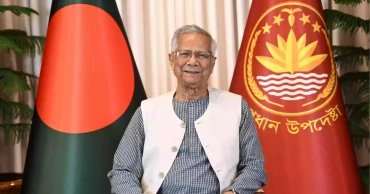
Prof Yunus sees vast economic prospects in wider regional cooperation
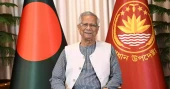
Chief Adviser Prof Muhammad Yunus on Monday renewed his emphasis on the economic opportunities in the region, underscoring the vast growth potential of a broader regional cooperation encompassing Nepal, Bhutan and northeastern India.
In a televised address to the nation ahead of Tuesday’s handover of power, Prof Yunus outlined Bangladesh’s maritime access as a strategic asset.
“Our open sea is not merely a geographical boundary; it is a gateway to the global economy,” he said, highlighting connectivity as central to the country’s next phase of development.
Prof Yunus said through economic zones, trade agreements and access to duty-free markets, a strong foundation will be established for this region to become a global manufacturing hub.
“We have come a long way in signing agreements with the best international port management companies to take the efficiency of our ports to the international level. If we cannot increase its efficiency, we will lag behind in economic achievements,” he said.
The Chief Adviser said they have been able to firmly restore these three fundamental foundations of Bangladesh's sovereignty, national interests, and the country's dignity in foreign policy.
“Bangladesh is no longer a country with submissive foreign policy or dependent on the instructions and advice of other countries, today's Bangladesh is confident, active and responsible in protecting its independent interests,” he said.
Prof Yunus said they are committed to building relations with all countries of the world based on mutual respect and interests.
At the same time, he said, Bangladesh has established itself today as a state capable of taking necessary strategic decisions for the future while maintaining balance.
Prof Yunus said the Rohingya crisis has created a serious and long-term strain on the national security, regional stability and economy.
CA Prof Yunus thanks NCP for signing July Charter
Unfortunately, he said, for a long time, no effective and coordinated international initiative was visible to resolve this crisis. “Since assuming office, we have been able to bring this issue, which was moribund in the international arena, back to the center of global attention.”
Realising the importance of this crisis, he said, the United Nations has stood by Bangladesh.
The UN Secretary-General himself has visited Bangladesh and pledged to help find a sustainable solution to the problem, he said, adding that at his request, a special conference on the Rohingya issue was held at the UN.
7 months ago
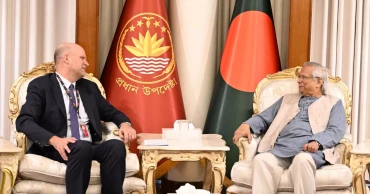
Rohingya crisis not receiving due attention, repatriation only solution: Prof Yunus
Chief Adviser Prof Muhammad Yunus has said the Rohingya crisis is still not receiving the global attention it deserves, despite the interim government’s efforts over the past year to spotlight the issue through a series of high-profile initiatives, including a visit by the UN Secretary-General to the camps during Ramadan.
He said the prolonged stay of the Rohingyas in the camps could never be a solution, as it had already created tensions with host communities, and called for renewed international efforts to ensure repatriation.
“The problem began in Myanmar, and the solution must also come from there. A frustrated and angry young generation is growing up in the camps, with access to technology. This is not good news for anyone. Our job is to make sure they return to their homeland in peace and dignity,” the Chief Adviser said.
7 months ago