Nepal

Nepal remains open, tourists can continue travelling: Ambassador
Nepalese Ambassador to Bangladesh Ghanashyam Bhandari on Thursday highlighted the resilience of Nepal’s tourism industry in the wake of recent flash floods in Nepal.
Speaking as a special guest at the inaugural ceremony of the 13th Asian Tourism Fair (ATF), being held in Dhaka from September 17-19, Ambassador Bhandari emphasised that Nepal is open to tourists.
He said Nepal’s tourism industry remains largely operational and encouraged visitors to continue travelling to Nepal.
The Ambassador also stressed the importance of strengthening tourism cooperation and promoting greater people-to-people exchanges between Bangladesh and Nepal.
A 10-member delegation comprising representatives from Nepali tour operators and travel agencies is participating in the 13th ATF.
The three-day 13th Asian Tourism Fair (ATF) 2026, showcasing travel and tourism offerings from home and abroad, began in Dhaka on Thursday at the International Convention City Bashundhara (ICCB).
2 days ago
Nepal steps up relief and recovery efforts after deadly floods: UN
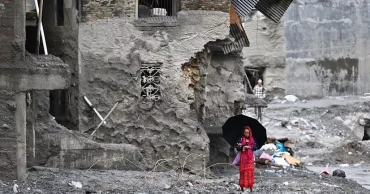
Nepal is stepping up relief and recovery efforts following last week's devastating flash floods along the Nepal-Tibet border, while rescue teams continue searching for survivors, the United Nations said.
For thousands of affected people, the immediate priorities are receiving emergency aid, finding missing family members, recovering the bodies of loved ones and reuniting children separated from their families, a spokesperson for UN Secretary-General said.
Nepal's disaster management agency said at least 1,200 people have been killed and more than 4,200 remain missing. On the Tibetan side, at least 21 people have died and more than 540 are still unaccounted for, according to Chinese state media.
Rescue teams are also working to reach potentially hundreds of workers believed to be trapped inside hydropower tunnels in Nepal.
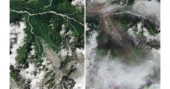
The disaster occurred last Wednesday when a massive flash flood, believed to have been triggered by a glacial collapse, swept through a Himalayan valley and destroyed villages in its path.
Nepal's disaster management agency said nearly 12,000 people have been rescued since the floods.
However, thousands of people remain missing, including hundreds of foreign nationals from countries such as India, the United Kingdom, Australia, the United States and Malaysia.
With a week having passed since the disaster, concerns are growing that the death toll could rise further as rescue teams reach more remote and severely affected areas.
With inputs from BBC
16 days ago
Symbolic funerals held in Nepal as some missing tourists contact authorities
Some tourists previously reported missing after Nepal's devastating floods have made contact with authorities, offering a glimmer of hope, while families of locals who remain unaccounted for are holding symbolic funerals for loved ones feared dead.
Nepal's Foreign Ministry said 324 foreign nationals have been rescued, while 590 people from 39 countries are still missing following the Aug. 26 disaster. The country's disaster management agency said at least 1,204 people have been killed and more than 4,200 remain missing.
Australian Prime Minister Anthony Albanese said the number of Australians reported missing had dropped from 43 to 38 after five people were confirmed safe overnight.
“Amidst all of this tragedy, we are seeing some positive news,” Albanese said while attending a regional summit in Palau, adding that efforts were continuing to locate others.
Australia said Thursday it would send a team of drone operators to Nepal within days to support search and rescue operations.
Nepal Tourism Board spokesperson Sunil Sharma said at least five other tourists previously listed as missing had contacted authorities by phone or email in recent days.
The disaster is believed to have been triggered by a glacial collapse in the Himalayas, sending huge amounts of rock, ice and meltwater into valleys and causing rivers in Tibet and Nepal to rise rapidly. Floodwaters swept away homes, roads, bridges and other infrastructure.
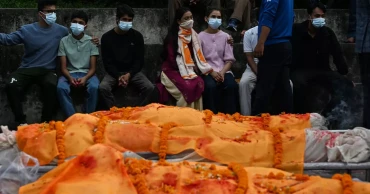
Families hold symbolic funeralsIn Nuwakot, one of the hardest-hit districts, some families have held symbolic funerals for relatives who remain missing and are feared dead.
For Hindu families, cremation is an important final rite. Performing the ceremony without recovering the bodies can offer families a sense of spiritual closure.
Mukunda Rijal said several of his cousins and their daughters were still missing, prompting the family to carry out symbolic funeral rites.
Along the banks of the Trishuli River, a priest placed straw effigies representing the missing relatives on funeral pyres and set them alight as family members gathered with traditional offerings.
Authorities have also been burying recovered bodies in temporary graves until they can be identified. DNA samples are being preserved, while photographs and other identifying details are being recorded to help match the bodies with missing people and eventually return them to their families.
China opens access route for rescue teamsAcross the border in China, rescue workers have completed a temporary road to reach the disaster-hit area near Gyirong Port, state broadcaster CCTV reported Wednesday.
The route will allow heavy machinery to reach the border crossing area, which was severely damaged by the floods and buried under water, mud and rocks.
China's state news agency Xinhua said at least 21 people had been killed and 541 others remained missing on the Chinese side of the disaster zone.
Survivors seek shelter in KathmanduMeanwhile, hundreds of flood survivors have fled to Kathmandu in search of shelter.
About 400 people, most of them from the town of Timure, around 110 kilometers west of the capital, are staying at the Yellow Gumba monastery. Local residents, relatives and charity groups are providing food and other relief supplies.
Among them is 21-year-old Riya Tamang, who escaped with her 10-month-old baby as floodwaters approached her home. She said she lost her grandparents in the disaster.
“I was the last one to leave the house. It was so difficult to escape,” she said.
Her husband, who works as a cook in Gyirong on the Chinese side of the border, also survived. The couple are now staying in contact through video calls.
16 days ago
Nepal-China flood death toll rises to 691, more than 3,000 missing
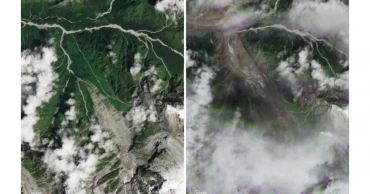
The death toll from catastrophic flash floods along the Nepal-China border has risen to 691, with more than 3,000 people still missing as rescue teams continue searching devastated communities for survivors.
China reported 16 deaths and 546 people missing, while Nepal’s disaster agency said late Saturday that 675 people had died and 2,498 remained missing.
More than 3,700 people have so far been rescued in Nepal.
In Nuwakot, one of the worst-hit districts, helicopters arrived carrying relief supplies, including clothes, instant noodles, crackers and rice, while others evacuated survivors from flood-affected areas.
Many survivors arrived with little more than the clothes they were wearing. Soldiers helped elderly people off helicopters and carried others to medical tents. Several babies were also among those evacuated from the nearby community of Trishuli.
While many residents continued to leave Trishuli, some returned to their devastated homes to look for belongings that could be salvaged.
One resident, Shoba Shretha, returned to find her dog, Sweetie, which she had been forced to leave behind when the floods struck. She was later seen sitting on the ground, petting the dog and giving it water.
At the same time, families in Kathmandu continued searching desperately for missing relatives at the main government hospital.
Many checked help desks and hospital notice boards while carrying photographs of their loved ones. Posters showing photographs and contact numbers of missing people covered hospital walls in the hope of finding information.
In Nuwakot, military personnel posted lists of missing and dead people at a relief centre, drawing crowds of anxious relatives.
Rajesh Kumar Ram, who was searching for his son, said he still hoped he would be found alive.
“I’m hopeful, by chance, that my son is somewhere,” he said through tears.
Priti Kharel was also searching for her brother, Milan Kharel, an engineering geologist working for Doosan Enerbility. She believes he may be among those trapped inside a tunnel at a hydropower construction site.
“We want the government to rescue him as soon as possible,” she said.
Search and rescue operations continued at several locations in Nepal and Tibet, including the Upper Trishuli-1 Hydropower Project in Rasuwa and the badly damaged Gyirong border crossing on the Chinese side.
Nepali Army spokesperson Brig. Gen. Raja Ram Basnet said authorities believe more than 100 people could be trapped inside a tunnel at the hydropower project, where thick mud has made rescue operations extremely difficult.
Rescuers have also remained alert to the possibility of further flooding from a newly formed lake high in the Himalayas. The lake emerged after a glacier collapse triggered the initial floods on Wednesday.
Data from China’s Ministry of Water Resources showed that the lake had decreased in size, with its water level falling by about 10 metres from its peak on Thursday morning, according to state broadcaster CCTV.
Chinese state media also showed rescuers reaching the devastated Gyirong Port and searching the area for survivors. It remains unclear how many people were inside the border checkpoint when the floods struck.
Hundreds of those still missing are foreigners who were in the region for work, trekking or pilgrimage. Chinese state media said 261 foreigners were among the missing, including 104 Nepalis, 49 Indians, 33 Latvians, 18 Americans and 15 Britons.
Nepalese Foreign Minister Shisir Khanal said the government had mobilised all available resources, with international assistance, to locate those still missing and conduct rescue and relief operations.
He said the rugged terrain, steep mountains and narrow gorges were making rescue efforts particularly challenging.
Nepal has sought specialised assistance from neighbouring countries for tunnel rescue operations, survivor-detection technology, rapid forensic and DNA analysis and morgue refrigeration facilities.
An 11-member tunnel rescue reconnaissance team from India has already been deployed, while a similar team from China is expected to arrive soon.
Khanal said Nepal had received more than 57 metric tons of relief supplies from India, while China, Japan, Australia and other countries were also providing assistance. Further international support would be sought based on ongoing assessments of needs.
20 days ago
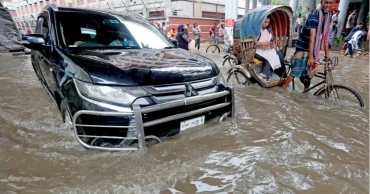
Bangladesh, India, Nepal, Pakistan among hardest-hit by monsoon disasters: ICIMOD
Bangladesh, India, Nepal and Pakistan were among the countries repeatedly battered by monsoon-triggered floods and landslides in 2025, as disaster risks continued to intensify across the Hindu Kush Himalaya (HKH) region, according to an analysis by the International Centre for Integrated Mountain Development (ICIMOD).
Four of the eight countries in the Hindu Kush Himalaya (HKH) region experienced more than 10 major disasters in 2025, according to data from ICIMOD analysis, highlighting the region’s growing exposure to hazard-related risks.
Asia accounted for a large share of disasters globally in 2025, a trend reflected in the HKH, which spans parts of South and East Asia.
Analysis of EM-Data (Emergency Events Database) shows that countries in the HKH region experienced economic losses of more than USD $6 billion in 2024 alone from these events, with most damage linked to water-related hazards such as floods, landslides and storms, said the HKH, noting that the situation continued into 2025.
Other hazards, such as glacial lake outburst floods, were also reported in select locations. Across the region, about 1.2 million people were displaced or directly affected by disasters during the year.
Globally, disaster-related economic losses in 2025 were estimated at more than USD $169 billion. In comparison, losses recorded across the HKH highlight how extreme events translate into disproportionate impacts in a region characterised by complex terrain and high exposure.
Data also shows that Myanmar, Pakistan, and China experienced a series of monsoon-induced floods in 2025, causing widespread damage to infrastructure and livelihoods.
Researchers link the increasing impact of disasters in the HKH to the growing prevalence of multi-hazard events.
Multi-hazards occur when more than one type of hazard, such as floods, landslides, or droughts, happen at the same time or when one hazard triggers another. Past examples in the region include the Kedarnath floods in Uttarakhand in 2013, and the South Lhonak glacial lake outburst flood in Sikkim in 2023, India, as well as the Melamchi flood in Nepal in 2021.
“Recent years show how floods, landslides, and other hazards are increasingly overlapping in mountain regions, amplifying damages to homes, infrastructure, and essential services,” said Pema Gyamtsho, Director General at ICIMOD, commenting on the regional trend.
Long-term data covering the period from 1975 to 2024 shows a decline in death rates and the number of people affected by disasters in the HKH after 2013.
Analysts caution that data gaps may influence this trend, but improvements in preparedness and early warning systems may also be contributing factors.
“The numbers are still worrying, but the post-2013 trend suggests fewer lives are being affected year on year, which may reflect better climate services and preparedness in parts of the region,” said Manish Shrestha, a hydrologist at ICIMOD. “Sustained investment in preparedness and planning remains critical as risks continue to rise.”
Early warning systems have been credited with reducing losses in some flood-prone areas. In eastern Nepal, alerts issued from a flood early warning system along the Khando River in 2024 helped inform and evacuate around 60,000 people living downstream.
Analysts note that reducing future disaster losses in the HKH will also depend on risk‑informed investments, where development and infrastructure planning take multi‑hazard risks into account.
Without integrating hazard and vulnerability data into investment decisions, exposed communities risk locking in higher losses as climate‑driven extremes intensify.
Experts warn that multi‑hazard risks are likely to intensify in the coming years as climate change alters weather patterns and increases the frequency and severity of extreme events, leaving exposed communities across the HKH vulnerable to escalating losses.
4 months ago
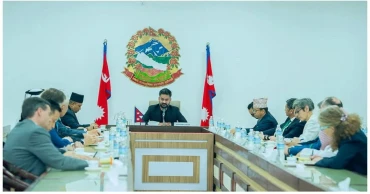
Bangladesh envoy joins Nepal PM’s meeting, emphasises bilateral ties
Bangladesh Ambassador to Nepal Md Shafiqur Rahman joined a joint meeting with Prime Minister of Nepal Balendra Shah, along with other ambassadors based in Kathmandu.
Taking the floor during the interaction, the Bangladesh envoy extended warm greetings and felicitations to the Prime Minister on the assumption of his responsibilities, on behalf of Prime Minister Tarique Rahman and the people of Bangladesh.
He emphasised the excellent relationship between Bangladesh and Nepal, premised on mutual respect, trust, and shared collaboration in various areas, stemming from common cultural and societal values, beliefs, and long-standing civilisational links marked by strong people-to-people contact.
5 months ago

Nepal expresses interest in deepening ties with Bangladesh
Nepal has expressed interest in working with the new government in Bangladesh to take the bilateral relations between the two countries to a new height.
Bangladesh Ambassador to Nepal Md Shafiqur Rahman on Monday paid a courtesy call on with Ram Sahaya Prasad Yadav, Vice-President of Nepal, in his office to extend the invitation to the celebration of the 55th anniversary of the National Day of Bangladesh.
The Vice-President kindly accepted the invitation to grace the event as the chief guest.
During the call on, they exchanged views on issues of mutual interests pertaining to the long-standing bilateral relations between Bangladesh and Nepal.
The Vice-President congratulated Bangladesh for successfully holding the elections and expressed interests to work with the new government to take the bilateral relations between the two countries to a new height.
In response, Bangladesh Ambassador conveyed the keenness of the new government of Bangladesh to work closely with the new government of Nepal, which is on the process to be formed very soon.
5 months ago

Bhutan, Nepal discuss ways to strengthen ties with Bangladesh
Bangladesh and Nepal on Sunday reaffirmed their commitment to deepening bilateral cooperation across various sectors and strengthening the longstanding friendly relations between the two countries.
State Minister for Foreign Affairs Shama Obaed Islam congratulated the government and people of Nepal on the successful conduct of the recent parliamentary elections.
Ambassador of Nepal to Bangladesh Ghanshyam Bhandari met the State Minister on Sunday and both sides discussed a range of issues of mutual interest including trade and commerce, energy cooperation, connectivity, education, tourism, cultural exchange and people-to-people contacts.
Ambassador of Bhutan to Bangladesh Dasho Karma Hamu Dorjee also called on the State Minister.
During the meetings, views were also exchanged on enhancing regional cooperation, said the Ministry of Foreign Affairs.
6 months ago

Nepal PM congratulates Tarique, eyes stronger ties
Prime Minister of Nepal Sushila Karki on Friday congratulated BNP Chairman Tarique Rahman, stating that her country eyes strong ties with Bangladesh.
"Warm congratulations to the Government and the people of Bangladesh on the successful conduct of the 13th parliamentary elections," she said in a message.
The Nepalese Prime Minister extended her heartiest congratulations to Tarique Rahman on leading the Bangladesh Nationalist Party (BNP) to a remarkable victory in Thursday’s elections.
Nepal’s Ambassador meets Tarique Rahman
"I look forward to working closely with you to strengthen our neighbourly ties and consolidate cooperation in areas of mutual interest," she said.
7 months ago

Italy stun Nepal for maiden T20 World Cup win; India, Sri Lanka unbeaten
Italy celebrated a landmark moment in its cricket history by registering its first-ever win at a T20 World Cup, thrashing Nepal by 10 wickets on Thursday, while India and Sri Lanka maintained their perfect starts to the tournament.
At the Wankhede Stadium in Mumbai, brothers Anthony and Justin Mosca powered Italy to victory with an unbeaten 124-run opening stand after Nepal were bowled out for 123. Anthony smashed 62 off 32 balls and Justin added 60 off 44 as Italy chased down the target in just 12.4 overs. It was Italy’s first win at a global cricket event and only the second 10-wicket victory by an associate nation in T20 World Cup history.
Messi suffers hamstring strain, doubtful for Inter Miami’s MLS opener
Earlier, Crishan Kalugamage claimed 3-18 and Ben Manenti took 2-9 as Nepal collapsed, losing seven wickets for 30 runs.
In New Delhi, defending champion and co-host India defeated Namibia by 93 runs. Ishan Kishan struck 61 off 24 balls, while Hardik Pandya shone with 52 off 28 deliveries and 2-21 with the ball. Spinner Varun Chakravarthy triggered Namibia’s collapse with 3-7.
Meanwhile, in Pallekele, Sri Lanka crushed Oman by 105 runs. Captain Dasun Shanaka blasted a 19-ball half-century as Sri Lanka posted 225-5, the highest total of the tournament so far. Oman managed 120-9 in reply.
India top Group A, while Sri Lanka have two wins from two matches.
7 months ago