Bangladesh and India have discussed measures to remove trade barriers and further expand bilateral commerce, with the two sides focusing on reopening closed border haats, fully operationalising land ports and easing restrictions on yarn imports through land routes.
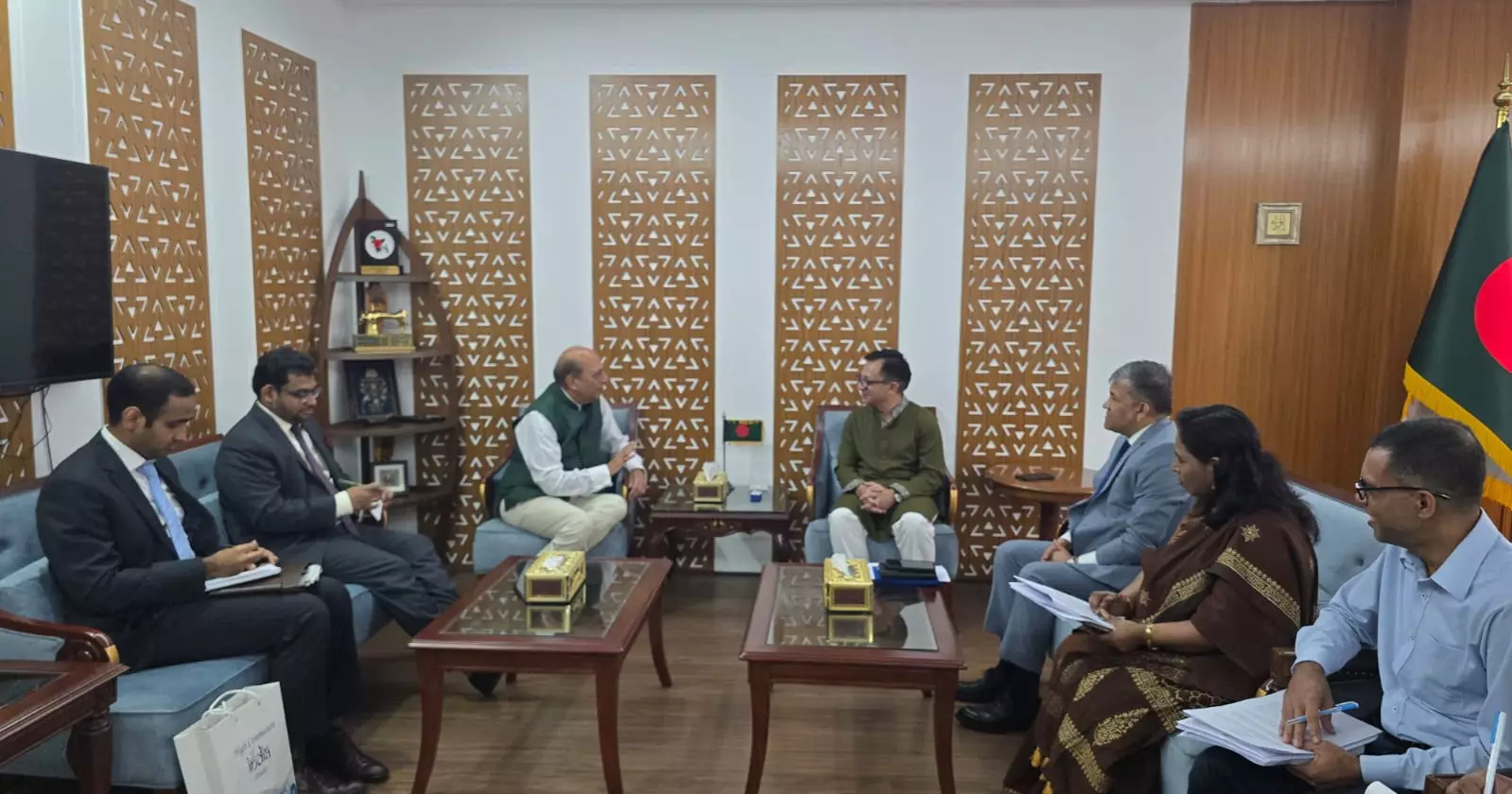
Commerce Minister Khanadkar Abdul Muktadir said bilateral trade between Bangladesh and India currently stands at around $13 billion but trade activities have slowed somewhat over the past one and a half years due to several obstacles, he told reporters after a meeting with Indian High Commissioner to Bangladesh Dinesh Trivedi at Secretariat on Monday.
“We discussed the problems and how trade relations between the two countries can be made easier and more effective in the future,” the minister said.
He said India is Bangladesh’s second-largest trading partner after China and noted that the two countries have longstanding economic ties.
The minister also said a proposal was made to form a joint task force involving businesses from the two countries to enhance cooperation.
Improving digital infrastructure was also discussed as a way to create new investment opportunities, expand business ties and accelerate bilateral trade, he said.
Muktadir expressed hope that the Indian High Commissioner’s initiative would help strengthen Bangladesh-India relations and give a new dimension to economic cooperation.
High Commissioner Dinesh Trivedi said despite some differences between the two countries on political and economic issues people in both countries want development and progress.
“Both countries need to work together, particularly for the future of the younger generation,” he said.
Bangladesh and India are two independent and sovereign countries and neither is bigger or smaller than the other, Trivedi said, stressing that cooperation should be based on equality.
He said economic cooperation is the most important area for improving bilateral relations and that stronger economic ties would help expand cooperation in other sectors as well.
Trivedi stressed the need for joint investment and production, saying Bangladesh’s readymade garment sector has achieved remarkable success globally.
India can support the sector by supplying zippers, machinery, buttons and other accessories, he said, adding that such cooperation would increase mutual interdependence between the two countries.
Trivedi said he feels proud when he sees garments marked “Made in Bangladesh” in international markets.
Bangladesh’s garment sector could expand further through joint initiatives between the two countries, he said.