
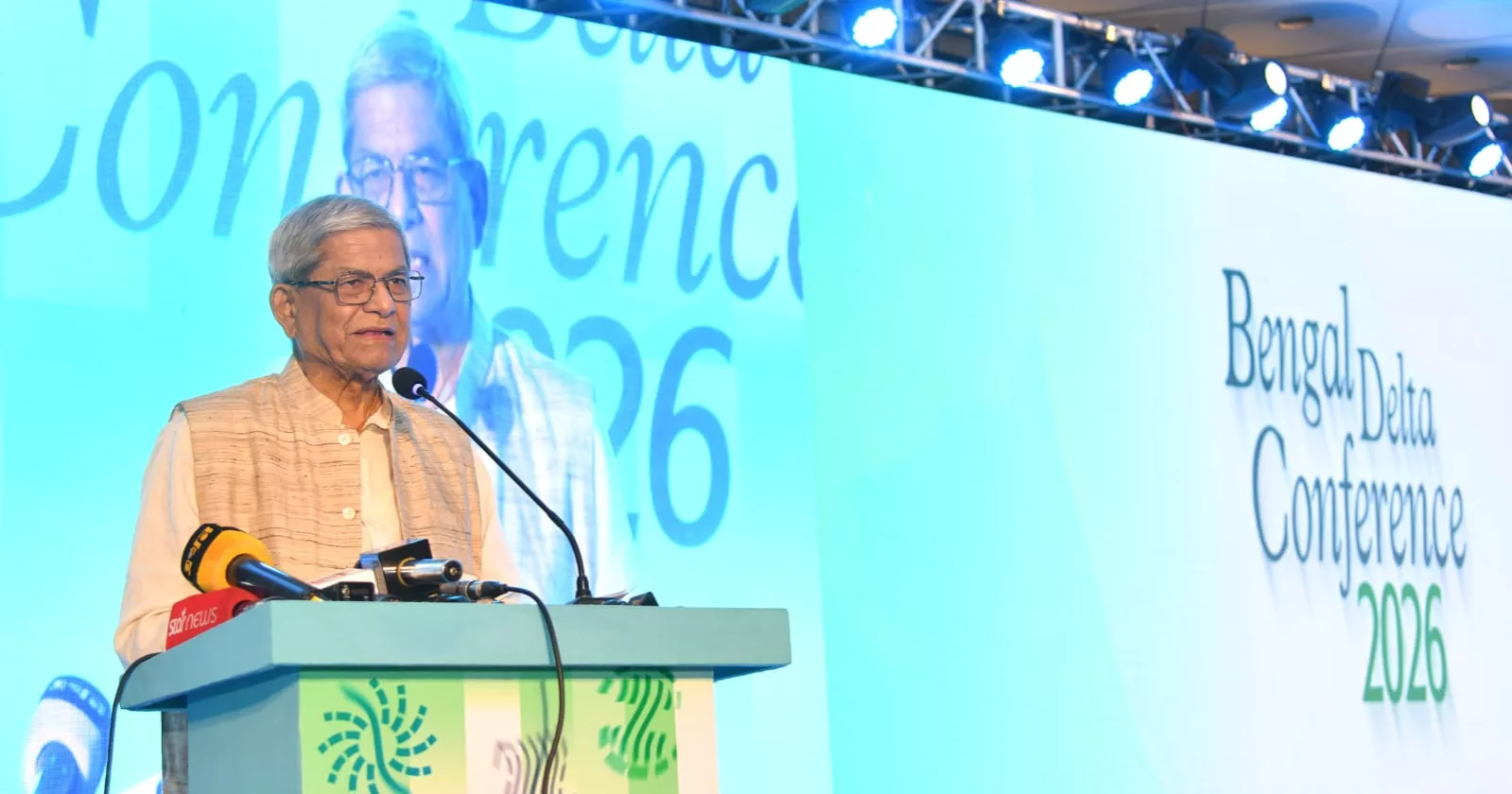
Local Government, Rural Development and Co-operatives Minister Mirza Fakhrul Islam Alamgir on Friday said the government is committed to restoring democratic institutions, rebuilding the economy and implementing the commitments outlined in the July National Charter.
"Democracy is under pressure across the world, and Bangladesh is no exception. Our responsibility is to practise democracy, nurture democratic values and build a liberal, non-communal and humane society," he said.
Speaking at the inaugural session of the two-day Bengal Delta Conference 2026 organised by the Dacca Institute of Research and Analytics (DAIRA) at a city hotel, Fakhrul paid tribute to the martyrs of the 1971 War of Liberation and those who lost their lives during the 2024 student-led mass uprising, describing their sacrifices as the foundation for a democratic and inclusive Bangladesh.
"I salute the young people who created history through their movement and made it possible to remove fascism," he said, also remembering those who sacrificed their lives for democracy.
Describing himself as "a political activist" rather than an academic, Fakhrul, also BNP secretary general, said his experience in movements against dictatorship and authoritarianism shaped his belief in democratic governance.
He said Bangladesh is passing through a critical period marked by economic and political challenges, aggravated by global conflicts, including the Russia-Ukraine war and tensions in the Middle East, as well as the impacts of economic mismanagement and money laundering.
"We are fighting for a comeback," the minister said, adding that the government inherited a difficult economic situation characterised by unemployment, weak investment and a fragile banking sector.
He said the current government is working to restore economic stability while rebuilding democratic institutions, noting that political parties had reached broad consensus on constitutional reforms through the July Charter, aimed at creating a more stable and development-oriented political framework.
"Our leader Tarique Rahman is committed to implementing the July Charter, and we are equally committed to fulfilling the promises made to the people through our election manifesto," Fakhrul said.
Highlighting the government's priorities, he said programmes such as Family Card, Farmers’ Card, social safety allowances, support for religious leaders, canal excavation projects and incentives for agriculture are beginning to generate positive economic impacts.
The BNP leader also said the latest national budget reduced taxes and tariffs in several sectors to encourage industrial growth, while giving greater emphasis to agriculture and the creative economy by integrating ethnic communities and local innovators into mainstream economic development.
On political reforms, he said a parliamentary committee has already been formed to work on constitutional amendments, reaffirming the government's commitment to strengthening democratic institutions.
Fakhrul also stressed the government's commitment to inclusivity, noting that members of ethnic communities, including the Santal, Marma and Chakma, have been nominated to Parliament.
He further emphasised regional cooperation, saying Prime Minister Tarique Rahman has pledged to attract greater international participation in Bangladesh's economic development.
Expressing optimism about the country's future, the minister said Bangladesh's resilient people will overcome current challenges and build "a new Bangladesh free from exploitation, where people will enjoy a better life."
The Bengal Delta Conference under the theme "Bangladesh and a Changing World: Uncharted Times, Emerging Orders, and the Politics of Care" brings together scholars, policymakers, diplomats, civil society representatives and young researchers to discuss governance, the economy, regional affairs and Bangladesh's evolving role in a rapidly changing global order.
The two-day conference will conclude on Saturday.