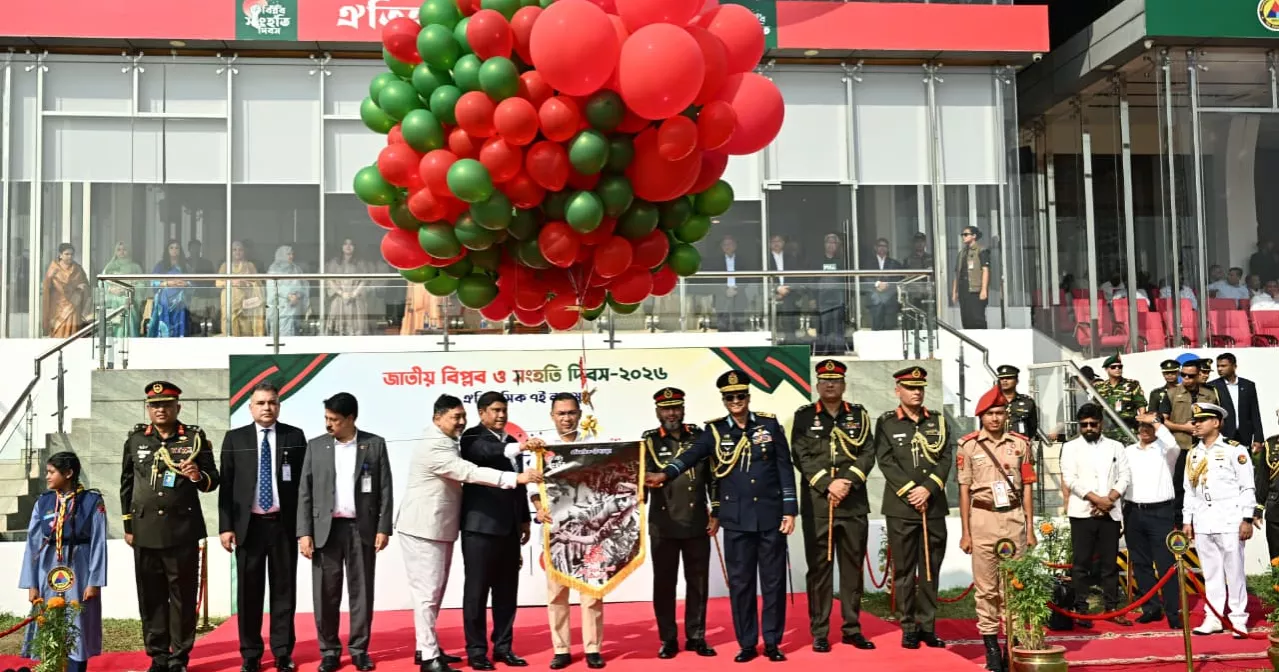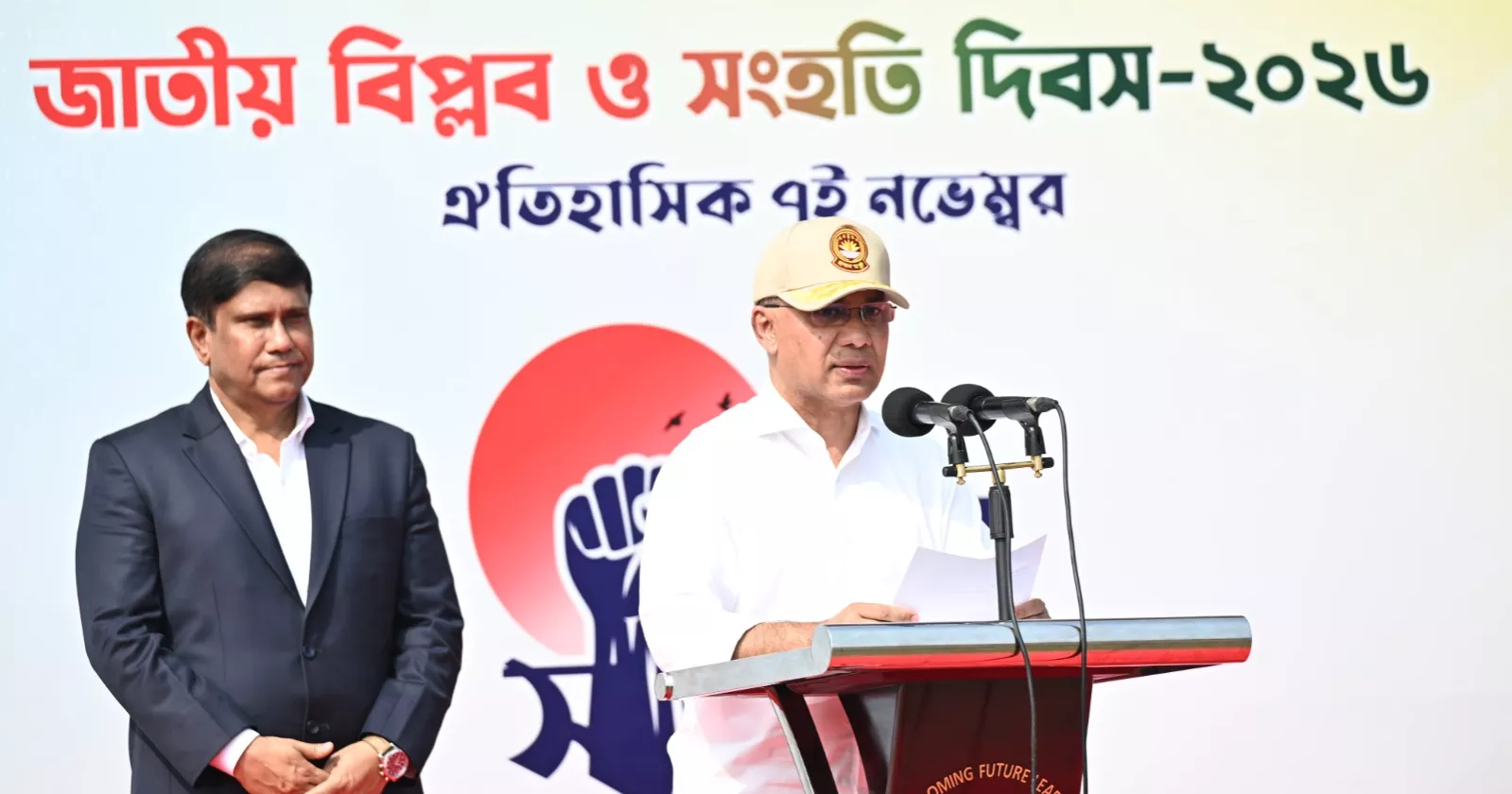
Prime Minister Tarique Rahman on Saturday called for national unity to ensure that no one can again deprive people of their rights or turn Bangladesh into a subservient state.
“Let this be our main pledge on this November 7 that no one will ever again be able to take away the rights of the country and its people or turn Bangladesh into a subservient state,” he said.
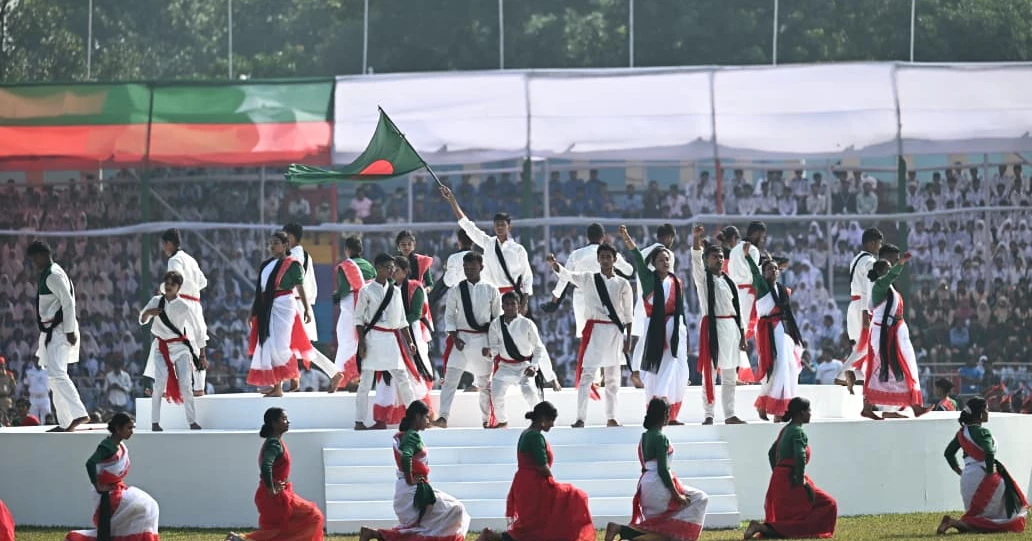
Addressing a special display programme at the Army Stadium in the capital's Banani, marking the National Revolution and Solidarity Day, the Prime Minister said national unity was essential to fulfil this pledge.
He termed the November 7 revolution of soldiers and people as a guiding force for national unity.
The Prime Minister said the spirit of the November 7 revolution of soldiers and people must be upheld to maintain national unity, considering Bangladesh's socioeconomic, geographical and political realities.
He said the country's youth had demonstrated at every major historical turning point that they never compromised on Bangladesh's interests.
Referring to the Liberation War of 1971, the November 7 revolution of 1975, the anti-autocracy movement of 1990 and the mass uprising of 2024, Tarique said the younger generation had always stood up for the country.
He said achieving independence was a matter of historic pride, but preserving its honour and making it meaningful was the responsibility of every generation, particularly the younger generation.
“The responsibility of the young generation is to uphold the spirit of independence and devote themselves to building a safe, prosperous, humane and dignified Bangladesh,” the Prime Minister said.
He said the responsibility of guardians was to ensure an appropriate environment for young people to develop their full potential.
Tarique said the government was firmly committed to building a prosperous future for the country.
“History bears witness that whenever there has been a conspiracy against Bangladesh or its democracy has been threatened, the country has risen again with the spirit of unity and revolution of November 7,” he said.
The Prime Minister thanked the National Revolution and Solidarity Day 2026 Celebration Committee, the Ministry of Defence, the Armed Forces Division, the Bangladesh Army, BNCC, Bangladesh Scouts and the patriotic, democratic people for organising the programme.
Addressing the young participants, he said the historic day should inspire them to uphold the country's interests.
“Let the voice of the patriotic and democracy-loving people on this historic day of the revolution of soldiers and people be: ‘ Not Dilli, not Pindi, nor any other country. Bangladesh first’, Tarique said.
Recalling the events of November 1975, he said patriotic soldiers and civilians had united to foil conspiracies against Bangladesh's independence and sovereignty.
The Prime Minister said the then army chief, Lieutenant General Ziaur Rahman, was placed under house arrest with his family in the early hours of November 3, 1975, as part of what he described as a conspiracy against the country's interests.
The people and patriotic soldiers united to resist that conspiracy, making November 7 a symbol of national unity for nationalist and democracy-loving people, he said.
Tarique alleged that the forces defeated on November 7 had continued their conspiracies and later, under the banner of the Grand Alliance, turned Bangladesh into a subservient state again.
He also accused them of undermining the armed forces through the planned killings at the BDR headquarters at Pilkhana and depriving people of their democratic and political rights by establishing fascist rule.
The Prime Minister said those forces were defeated again through the mass uprising of 2024, in which students and people made sacrifices to free the country from fascism.
He paid tribute to those killed and injured during the long anti-fascist movement and the 2024 uprising.
Comparing the major turning points in the country's history, Tarique said the 1971 Liberation War was fought to achieve independence, while the 2024 uprising was aimed at protecting the freedom of the country and its people.
He said people from all walks of life had taken to the streets on August 5, 2024, to protect the country's freedom, just as soldiers and civilians had united on November 7, 1975, to resist threats to independence and sovereignty.
“Time has proved that November 7, 1975 was the day that determined Bangladesh's future course,” Tarique said, adding that whenever the country deviated from that path, its sovereignty and the people's interests came under threat.
Describing November 7 as the “Magna Carta” of independent Bangladesh's history, he said its significance would remain relevant as long as the country existed.