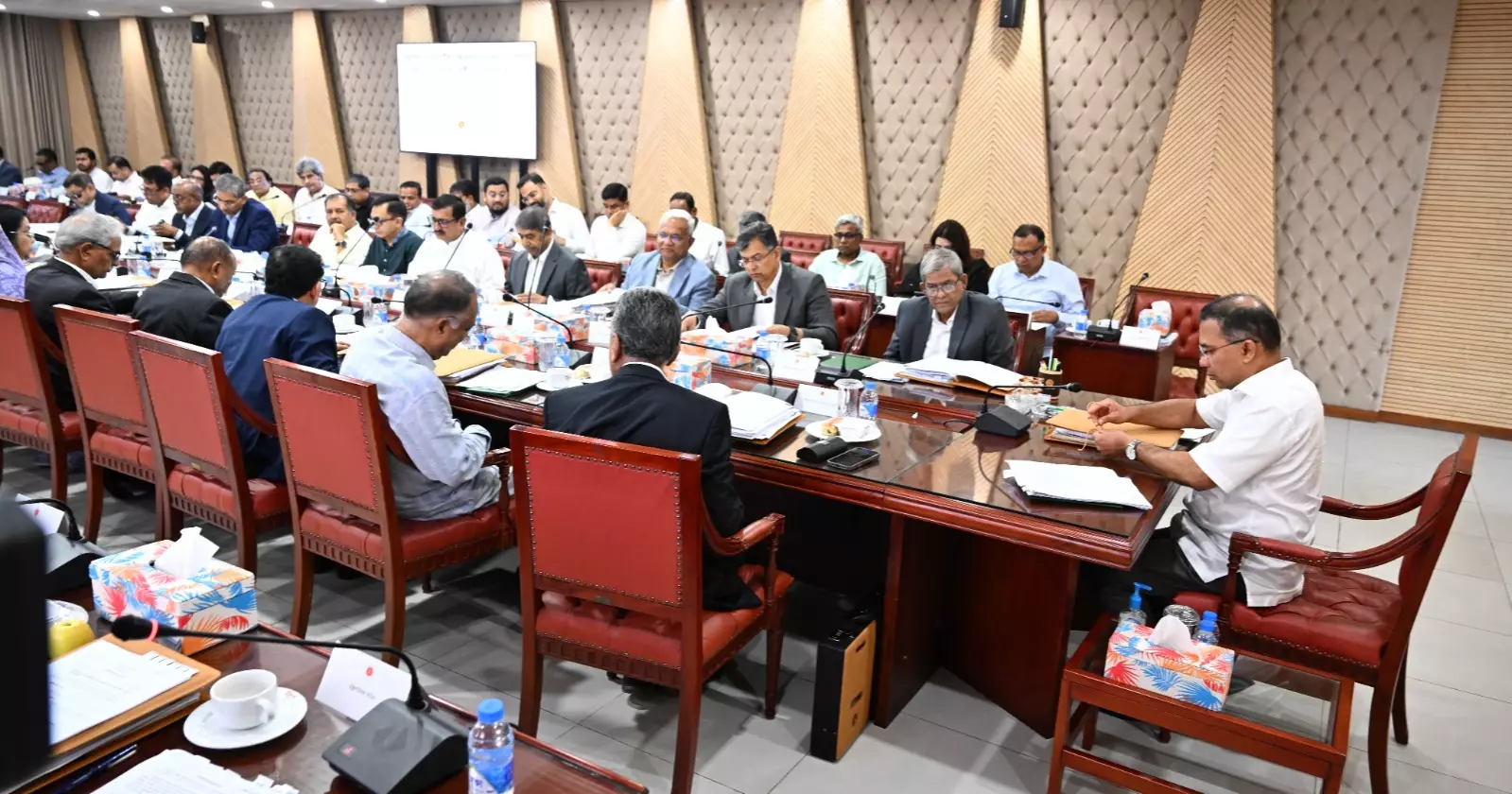
The Cabinet on Monday cleared the draft of a law to abolish the Rapid Action Battalion (RAB) and establish a new specialised unit, the Special Response Battalion (SRB), under Bangladesh Police, while also approving a shift in the country’s fiscal year from July-June to April-March from FY2028-29.
The decisions were taken at a Cabinet meeting chaired by Prime Minister Tarique Rahman at the Secretariat.
The draft of the Special Response Battalion (SRB) Act, 2026 was approved in principle and also given final approval subject to vetting by the Legislative and Parliamentary Affairs Division, according to a Cabinet Division press release.
According to the draft law placed by the Ministry of Home Affairs, the existing RAB will be abolished and the SRB will be established as a specialised unit under Bangladesh Police.
The proposed law also provides for the formation of a multi-stakeholder grievance redress committee to address complaints from citizens as well as internal grievances of SRB members.
It further provides for the transfer of RAB-related manpower, powers, authority, benefits, funds, property, accounts, records and other assets to the SRB.
Until new rules are framed, the existing rules governing departmental proceedings concerning RAB will remain in force, with necessary adaptations, according to the draft law.
The Cabinet also decided to shift Bangladesh’s fiscal year from the existing July-June cycle to April-March from FY2028-29, with FY2027-28 to serve as a nine-month transition period.
Bangladesh’s fiscal year runs from July 1 to June 30. The government has decided to introduce the new fiscal year cycle to facilitate the completion of infrastructure development activities before the monsoon season.
Under the existing fiscal cycle, infrastructure development activities continue during July and August, when heavy monsoon rains often delay projects, affect the quality of work and cause widespread public suffering.
The Cabinet considered April-March as a more appropriate fiscal year, as it will allow infrastructure development activities to be completed before the monsoon.
A committee comprising representatives from the Cabinet Division, Bangladesh Bank, National Board of Revenue, Legislative and Parliamentary Affairs Division, Finance Division and other relevant stakeholders will determine the next course of action.
Necessary amendments will have to be made to the Constitution of Bangladesh and the General Clauses Act, 1897, to bring change in the fiscal cycle.
Besides, technological changes will also be required in various systems involved in the government’s financial management.
The Cabinet decided to treat fiscal year 2027-28 as a transitional fiscal year, ending after nine months from July to March.
From fiscal year 2028-29, all government activities will be conducted according to the new April-March fiscal year cycle.
The Cabinet also approved a proposal to sharply reduce the tax burden on imports of green chilli and tomato to ensure uninterrupted supply and keep their prices affordable in the domestic market.
Under the approved proposal, the existing total tax burden on the two items will be reduced from 61% to 20.5% for the first month after issuance of the relevant notification and to 31% in the following month, according to a press release issued by the Cabinet Division.
The reduced duty-tax rates will apply to imports of green chilli (HS Code 0709.60.19) and tomato (HS Code 0702.00.19) for the specified period.
The proposal was placed by the Internal Resources Division.
According to the proposal, the government takes policy measures from time to time to ensure food security, stabilise prices of essential commodities and protect consumers’ purchasing power.
Prices of green chilli and tomato often rise sharply due to seasonal production patterns, natural disasters, adverse weather, supply-chain disruptions and production shortages, it said.
The Cabinet approved the draft National Strategy and Multi-Year Action Plan for a Lead-Free Bangladesh (2026-2035), aiming to reduce lead exposure and protect public health, particularly children and other vulnerable groups.
The draft was placed by the Ministry of Environment, Forest and Climate Change.
The strategy aims to increase public awareness about the risks of lead poisoning, protect vulnerable groups, including children, pregnant women and workers, and strengthen measures to identify, control and eliminate lead pollution.
Lead is a highly toxic substance that can damage the nervous system and brain and is associated with problems including reduced cognitive function, behavioural difficulties, anaemia, kidney and cardiovascular diseases, high blood pressure and reproductive and pregnancy-related complications, according to the proposal.
The strategy has set a target of reducing blood lead levels among children by 50% from the baseline by 2030 and by 95% by 2035. The baseline is based on findings from the Multiple Indicator Cluster Survey (MICS) 2025, according to the proposal.
Meanwhile, 80 of the 108 decisions taken at 17 Cabinet meetings since the present government assumed office have been implemented, while 28 others are under implementation, according to a report placed before the Cabinet.
According to the report, 74% of the decisions have been implemented, and the remaining 26% are under implementation.
During the period from February 17 to July 31, a total of 43 inter-ministerial meetings were held at the initiative of the Cabinet Division to expedite implementation of Cabinet decisions.
During the same period, the Cabinet approved seven policies, strategies and action plans.
It also approved proposals for the signing or ratification of three international agreements or protocols. Of these, one has been signed while two are under implementation.
A total of 104 laws have been passed by Parliament during the tenure of the present government, according to the report.
Besides, the Cabinet congratulated the Bangladesh national cricket team on its historic nine-wicket victory over Australia in the first Test of the two-match series in Darwin.
The Cabinet described the victory as more than just a match win, saying it demonstrated Bangladesh’s growing capabilities, confidence, discipline, team unity and competitive spirit in international Test cricket.
It said the achievement will inspire the country’s young and emerging generation to become more involved in sports and further strengthen Bangladesh’s image and standing internationally.
The Cabinet conveyed its sincere congratulations and best wishes to the Bangladesh team, its captain, players, coaches, support staff, Bangladesh Cricket Board and all others involved in the historic achievement.