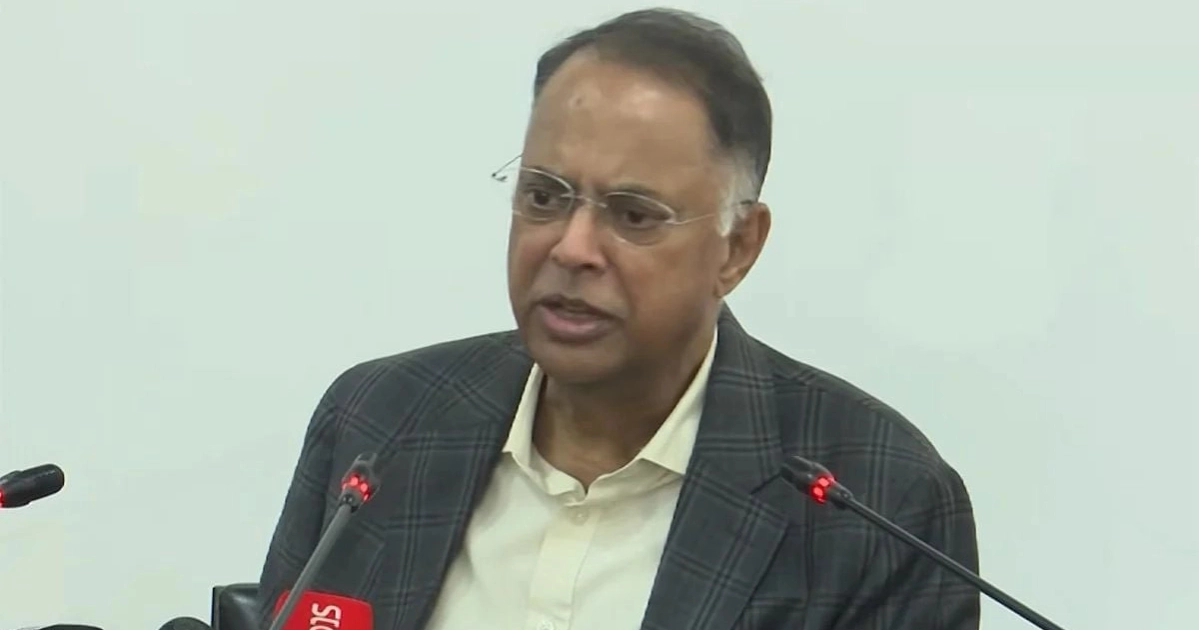
Power, Energy and Mineral Resources Minister Iqbal Hassan Mahmood on Thursday said the government has decided to set up three more Floating Storage and Regasification Units (FSRUs) by 2029 to find a lasting solution to the country's energy crisis.
“A decision has been made to set up three more FSRUs at Payra, Mongla and Hiron Point. The process of finding investors has already begun,” the minister said joining virtually a seminar organised by the Centre for Policy Dialogue (CPD) at BRAC Centre.
Iqbal said gas supply across the country is currently being disrupted following a fire incident at the Maheshkhali FSRU, adding that engineers are continuously working to resolve the problem and operations are being run by synchronising boilers.
“The accident could have been much bigger. But since that did not happen, we have been spared from permanent damage. All-out efforts are being made to repair the FSRU,” the minister said.
He said LNG procurement has not been halted despite the damage to the FSRU with sufficient cargo LNG being purchased so that gas supply can resume as soon as the problem is fixed. “We ordered four cargoes of LNG just yesterday.”
Outlining plans to expand the Maheshkhali FSRU pipeline network, the minister said a pipeline would be extended from Chattogram to Bakhrabad to ease gas supply, adding that there are also plans to set up a land-based LNG terminal through single mooring in the future.
On plans for gas exploration through well drilling, the minister said the country has been brought to its current state due to 17 years of neglect in gas exploration. “The government is giving top priority to gas exploration through well drilling, and two new rigs have been procured to strengthen BAPEX.”
Regarding supplying gas from Bhola without a pipeline, he said technical discussions have been held with Malaysia, adding that if Bhola's gas could be brought without a pipeline, it would greatly benefit industrial factories.
On the prospect of handing over fuel oil import to private companies, Iqbal said a certain percentage is being considered for private companies, but no policy has yet been finalised in this regard, dismissing various rumours on the issue as baseless.
The minister said battery-run rickshaws are putting enormous pressure on the power grid, noting that peak hours have shifted because of them. “Earlier, peak hours were from 7 pm to midnight, but now we are seeing power demand of 18,000 megawatts even after midnight. This pressure is being created because of battery charging for these rickshaws.”
The energy minister said the battery-run rickshaws have become impossible to control in any way, as most of them draw power through illegal lines. “Since they are in the majority, power department personnel are being beaten up when they try to cut these lines. It is becoming difficult to manage them.”
The minister said the government is making all-out efforts to overcome the power crisis and is working seriously to resolve the problem, with the Prime Minister Tarique Rahman personally monitoring the situation.
He added that the Prime Minister would present the full energy policy in detail to the nation in parliament.