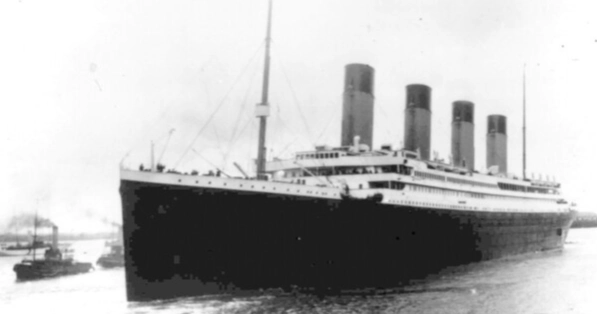
A plan to auction more than 100 artifacts recovered from the wreck of the Titanic has drawn opposition from the U.S. government, according to newly unsealed court documents.
The items include personal belongings, currency, kitchenware and decorative objects salvaged from the famous shipwreck in the North Atlantic.
RMS Titanic Inc., the company that holds exclusive salvage rights to the Titanic site, is seeking to sell the artifacts for the first time. The company had previously agreed that recovered items would only be displayed in museums and traveling exhibitions.
Court filings show the Georgia-based firm also proposed a global touring exhibition in four cities, though the locations have not been disclosed. Among the items listed for possible sale are a bronze cherub, a gold nugget necklace and a heart-shaped pendant.
The U.S. National Oceanic and Atmospheric Administration (NOAA), which represents American oversight of the wreck site, argued in court documents that the proposed auction would violate legal obligations tied to the salvage agreement. A judge unsealed the filings earlier this month.
The government said the company “does not seek the Court’s approval, does not believe that approval is required, and asserts that it is not restricted in its ability to sell” the artifacts.
RMS Titanic Inc. did not respond to media requests for comment on Monday. In earlier court submissions, its lawyers argued that the proposed sale would not breach existing agreements or court orders.
The dispute marks another chapter in long-running efforts to sell Titanic artifacts. Since 1987, salvage teams have recovered thousands of objects, including sections of the ship’s hull. The company earns revenue mainly by exhibiting them.
Over the years, attempts to sell parts of the collection have repeatedly faced opposition from U.S. courts, preservation groups and relatives of victims, especially when items are linked to passengers.
However, some artifacts not directly tied to the wreck or recovered by survivors have been sold at high prices in recent years. A life jacket worn by a passenger sold for more than $900,000 in April, while a gold pocket watch linked to the ship’s rescue operations fetched nearly $2 million in 2024.
Auction houses say demand remains strong due to the global fascination with the Titanic, which sank in 1912 after striking an iceberg on its maiden voyage from Europe to New York, killing more than 1,500 people.
The case also reflects a trans-Atlantic legal dispute over ownership and control of the artifacts. Some of the earliest recovered items were taken to France, where authorities granted ownership rights to the salvaging company. French research institute IFREMER worked with Woods Hole Oceanographic Institution during the wreck’s discovery.
Later recoveries were handled under a U.S. District Court in Norfolk, Virginia, which oversees the broader salvage agreement.
NOAA argues that all roughly 5,000 recovered items—regardless of where they were initially claimed—should remain part of a single preserved collection under U.S. court conditions. It also says French court terms required the artifacts to remain together and not be sold individually.
The company, meanwhile, has argued that the U.S. court does not have jurisdiction over items claimed in France.
Experts and ocean explorers have also expressed concern over the proposed auction, saying Titanic artifacts should remain publicly accessible.
Ocean scientist Greg Stone said recovery is acceptable if done carefully and with proper archaeological methods, but added he would prefer a nonprofit approach.
Law professor Richard Daynard of Northeastern University said the rules are meant to protect the artifacts for public benefit, warning against turning them into private luxury items.
“If it’s something where someone can walk through their house and say ‘Yes, I bought this for $5 million and it’s original from the Titanic,’ that’s not a good thing,” he said.