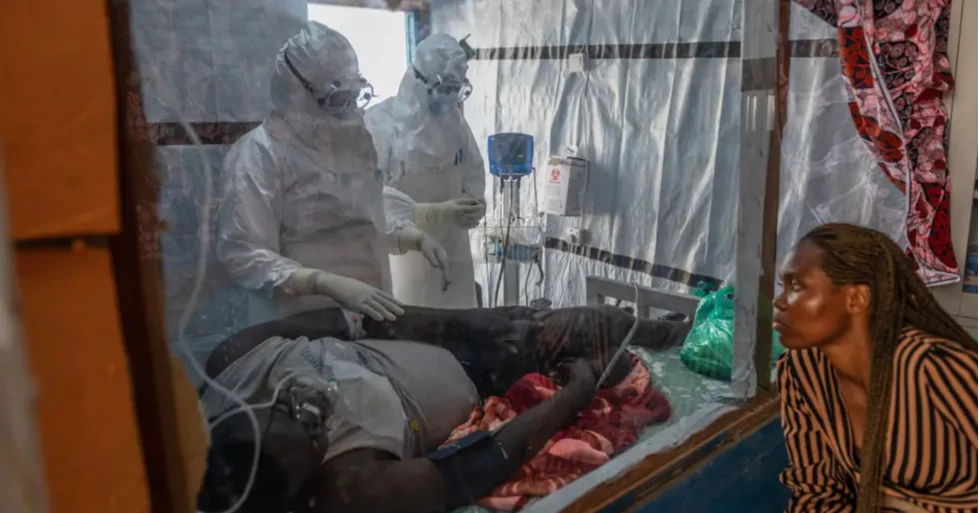
The Ebola outbreak spreading rapidly in Congo has yet to reach its peak and could be several times larger than currently reported, according to data from Congolese health authorities and the Africa Centres for Disease Control and Prevention (Africa CDC).
The World Health Organization says the outbreak is advancing at an unprecedented pace and could eventually surpass the 2014-2016 Ebola epidemic in West Africa, which killed more than 11,000 people.
The latest outbreak has so far resulted in 2,516 deaths among 5,290 confirmed cases in Congo’s vast eastern region. The spread has been fueled by a highly mobile population, including people displaced by armed conflict, as well as widespread mistrust of health authorities.
Only about 10% of current cases are linked to known contacts, far below the 90%-95% level considered necessary to bring an outbreak under control, according to Yap Boum, head of emergency preparedness and response at the Africa CDC.
Boum told reporters Thursday that authorities may be detecting only 30%-40% of the actual cases.
Rapid spread raises alarm
By the 13th week after the outbreak was officially declared, Congo had recorded about 10 times as many cases and seven times as many deaths as the West African Ebola outbreak had recorded at a comparable stage, according to Africa CDC data.
The 2014-2016 outbreak eventually caused more than 28,000 cases and over 11,000 deaths.
Congo’s previous deadliest Ebola outbreak, from 2018 to 2020, recorded about 3,400 cases and more than 2,200 deaths. The current outbreak is progressing much faster, with confirmed cases increasing at roughly 18 times the previous rate and deaths at about 13 times the rate.
Experts are particularly concerned that the outbreak may have started in the mining town of Mongbwalu as early as February, months before authorities officially declared it on May 15.
Contact tracing remains limited
Africa CDC data from the past three weeks shows that health workers have traced 82% of the 19,630 contacts already identified.
However, the agency estimates that nearly 100,000 contacts should have been identified based on an average of 60 contacts per confirmed case. That means the actual contact-tracing rate is only about 16% of what was expected.
The outbreak is caused by the Bundibugyo virus, a strain for which there are no approved vaccines or treatments. Its symptoms can also be milder than those associated with the more common Ebola virus, potentially leading some patients to delay seeking medical help.
Outbreak reaches new province
The number of affected health zones has expanded from three at the beginning of the outbreak to 56 across six provinces.
Bas-Uele province, which had previously reported no cases, has recorded two cases in separate locations during the past week and a half, according to government data.
There are signs of improvement in some areas, however. South Kivu province, for example, has gone 79 days without reporting a new case.
Most deaths occur outside treatment centers
Community deaths, meaning those occurring outside Ebola treatment centers, have increased steadily. They accounted for 97% of reported deaths on Aug. 17, according to Africa CDC figures.
Yet only about 20% of health alerts are coming from communities, highlighting the challenge of persuading people to report suspected cases.
The overall case fatality rate stands at 46.7%, but it is considerably higher in some areas. In North Kivu, one of the country's most populous provinces, the fatality rate has reached 68.2%.
Health officials say people are often delaying or avoiding treatment because of misinformation, reliance on traditional remedies, fears of isolation and concerns about being quarantined for symptoms that may turn out to be caused by other illnesses. The relatively mild early symptoms of the Bundibugyo strain may also discourage people from seeking care quickly.