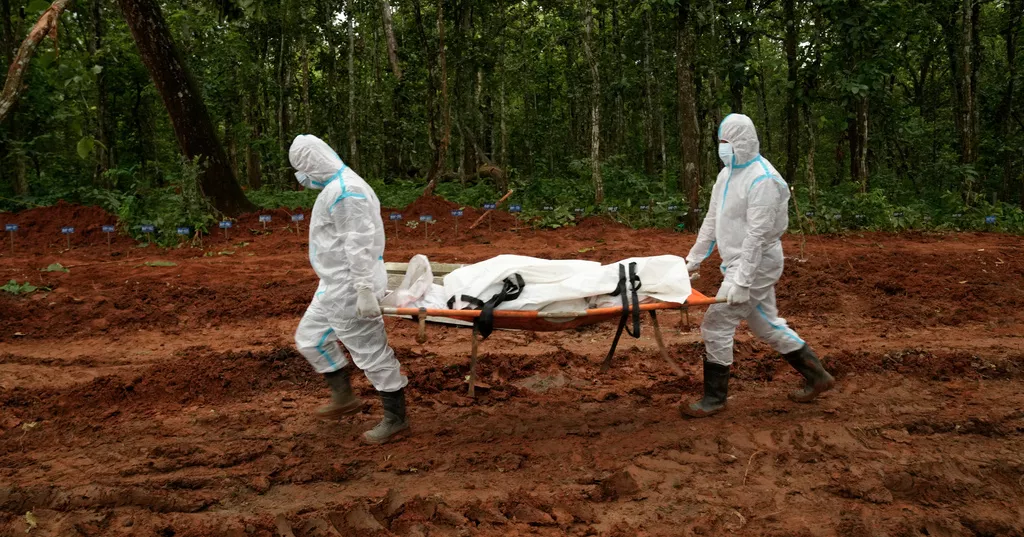
Rescue teams on Monday stepped up efforts to reach hundreds of workers believed to be trapped inside hydropower tunnels buried under mud following catastrophic flooding along the Nepal-China border, as the death toll continued to rise and families desperately searched for missing relatives.
The combined death toll in Nepal and China has exceeded 950, while more than 4,400 people remain missing.
The Independent Power Producers’ Association, Nepal (IPPAN), a private-sector body representing power companies, said at least 900 workers were missing from 12 hydropower projects hit by flash floods in Nepal’s Rasuwa and Nuwakot districts.
Around 500 of the missing workers were believed to be trapped inside tunnels. While an expert said some of them might still have access to oxygen, others cautioned that the possibility of finding survivors was rapidly declining.
Nepal’s army said four bodies were recovered from three mud-filled tunnels as rescue operations intensified.
Some workers were able to make calls for help when the disaster struck last Wednesday, while others who escaped said many of their colleagues remained inside the tunnels, according to IPPAN President Mohan Kumar Dangi.
It remained unclear whether rescuers had been able to establish contact with the trapped workers after their initial calls for help.
Six days after the disaster, concerns were increasing that some of the workers may have suffocated, Dangi said.
Large tunnels built to control water flow
Rescue operations were concentrated on the huge tunnels constructed to regulate water flow at the hydropower facilities.
“These tunnels are big enough to drive trucks through,” said Jakob Steiner, a geoscientist at Austria’s University of Graz who is based in Dhaka, Bangladesh.
He said authorities understood that oxygen had reached some of those trapped inside and that efforts were underway to bring them out.
“But it’s a race for time, though, as people need food and water,” Steiner said.
At the Upper Trishuli-1 Hydropower Project in the badly affected Rasuwa district, at least 576 people were reported missing, Dangi said. Around 300 of them were believed to be trapped inside the project’s tunnel.
At the Trishuli-3 Hydropower Project, rescue teams were working to dig down about 15 meters (50 feet) into a tunnel to reach those believed to be trapped there, said Brig. Gen. Raja Ram Basnet, a spokesman for the Nepalese army.
In Dhading, workers clearing mud from a flood-damaged power station told The Associated Press that the facility is an important link in supplying electricity to more than 20,000 people in the area.
China focuses on rebuilding border roads
On the Chinese side of the border, rescue and recovery operations included efforts to restore the road leading to Gyirong Port, an important crossing point for travel between China and Nepal.
China’s state broadcaster CCTV showed trucks transporting large rocks Monday as workers attempted to rebuild a section of the road beside rapidly flowing floodwaters intensified by days of rain.
The road was submerged under 2 to 3 meters (6.6 to 9.8 feet) of water, CCTV reported, adding that the reconstruction work was being carried out just over a kilometer (0.62 miles) from the border.
Although some rescue teams have reached the border area, they represented only part of the overall response force.
Chinese state media coverage has largely focused on the government’s response, including the deployment of firefighters and members of the People’s Liberation Army, as well as directives issued by the country’s top leaders.
Relatively little information has emerged about the victims on the Chinese side.
Families desperately seek missing relatives
Nepal’s disaster management agency said Monday that 939 deaths had been recorded in the country, while 3,925 people remained missing, including 592 foreigners.
Chinese authorities had reported 16 deaths and 546 missing people as of Sunday. Chinese state media said 261 of those missing were foreigners, including more than 100 Nepalis.
The U.S. State Department said 80 Americans were missing, while 13 had been confirmed safe.
Two days after the disaster, Indian travel company owner Maraval Nagappan traveled to Nepal to search for his missing son. He visited rescue centers and morgues and traveled as far as 40 kilometers (25 miles) from the area where his son was believed to have been, but found no trace of him.
His son, Sathya Narayan, had been leading a group of 49 Indian pilgrims returning from Mount Kailash in Tibet. The group has been missing since floodwaters swept through a Chinese immigration facility where they were waiting to cross into Nepal.
Nagappan’s Chennai-based company had organized the pilgrimage. He said the group was expected to complete immigration procedures and cross into Nepal within about two hours, but instead they were caught in the floodwaters.
The pilgrimage had begun on Aug. 14.
“I haven’t heard from my son since then. I don’t know whether he is alive or dead,” Nagappan told AP.
Surveillance video showed floodwaters rushing through the immigration facility at the border as people tried to escape.
Nagappan said some of those fleeing appeared to be members of his son’s group, whom he identified by the clothes they were wearing.
Glacial collapse triggered devastating floods
The flash floods on Wednesday began after a glacial collapse high in the Himalayan region.
Scientists studying satellite imagery said bedrock beneath a glacier collapsed, bringing part of the glacier down with it. The massive rockfall generated a seismic event measured at magnitude 5.2.
The falling rocks and melting ice then caused rivers in the valleys below to swell, producing a powerful, muddy torrent that swept away buildings, bridges and huge amounts of earth downstream across Tibet and Nepal.
UN says tens of thousands need emergency assistance
Nearly a week after the disaster, around 65,000 people were in need of emergency water, sanitation and hygiene supplies, the United Nations said Monday.
UN spokesman Stephane Dujarric told reporters that more than 22,000 children required protection, while about 2,600 children under five were expected to need treatment for severe wasting.
Around 10,500 pregnant and breastfeeding women were also in need of nutritional assistance, he said.
Dujarric said schools had either been damaged or destroyed, while some were being used as shelters for people displaced by the floods.
“More than 10,000 school-age children need psychosocial support, and preliminary reports indicate that 107 children may have been separated from their parents or caregivers,” he said.