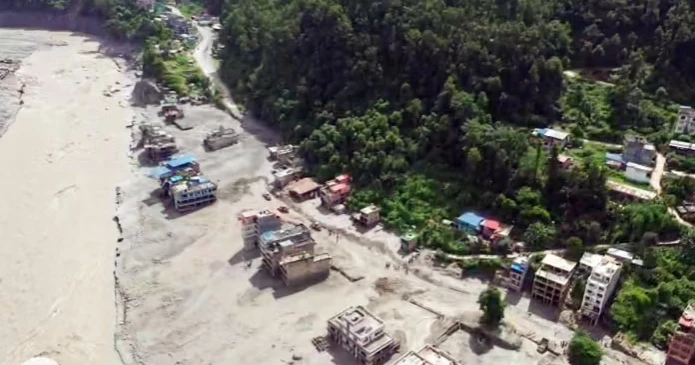
Nepal has launched a diplomatic campaign seeking climate compensation from major greenhouse gas emitters for the devastation caused by recent deadly flash floods, saying assistance to climate-vulnerable countries should be seen as a matter of responsibility rather than charity.
Foreign Minister Shisir Khanal said Nepal contributes virtually negligible greenhouse gas emissions but is facing disproportionate impacts of global warming, including rapid glacier melting and increasingly severe mountain disasters.
“We are paying the ultimate price for a global crisis we did not create,” Khanal said in an interview with Kantipur TV, excerpts of which were published by The Kathmandu Post on Tuesday.
He said Nepal was changing its diplomatic approach from seeking “aid” to demanding “justice and compensation” for climate-related losses.
“This is not a matter of charity; it is a matter of legal and moral liability,” Khanal said, adding that Nepal would raise the issue firmly at international forums.
He identified China, the United States and India as the world's three largest greenhouse gas emitters and said they have a historical responsibility to compensate vulnerable countries such as Nepal.
Khanal also warned that the disappearance of Himalayan glaciers could threaten the water security of more than two billion people in South Asia who depend on rivers originating in the region.
The minister said Nepal's Finance Ministry has already sent a formal climate compensation claim to its international partners.
Meanwhile, Nepal has formally approached the board of the Fund for Responding to Loss and Damage, seeking urgent financial assistance following the devastating flash flood in the Bhotekoshi River basin on Aug 26, The Kathmandu Post reported.
The fund was established at the UN climate conference COP27 in 2022 and operationalised at COP28.
A joint letter from Finance Minister Swarnim Wagle and Forests and Agriculture Minister Geeta Chaudhary called for an urgent response to the disaster, which caused deaths, displacement and extensive damage to homes and critical infrastructure.
The ministers said the full extent of the economic and non-economic losses had yet to be assessed, but preliminary information indicated that the damage was extensive and beyond Nepal's immediate capacity to respond.
India has long advocated climate equity, saying countries' obligations should reflect differences in historical emissions, development needs and capacities. New Delhi has also supported efforts to address climate-related loss and damage while calling on developed countries to provide financial resources to vulnerable developing nations.