
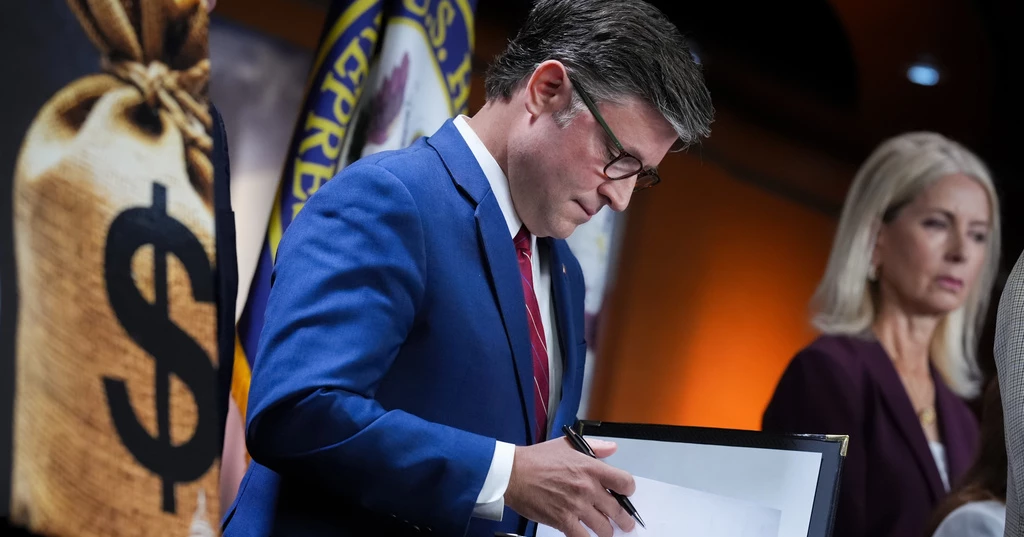
The US House of Representatives on Wednesday approved a war powers resolution aimed at halting US military operations against Iran, marking a rare bipartisan rebuke of President Donald Trump as several Republicans joined Democrats in the vote.
The measure passed by a narrow 215-208 margin and reflects growing political opposition in Congress to the ongoing conflict, which has reshaped domestic and international politics over the past three months.
House Speaker Mike Johnson had previously attempted to block the measure, briefly halting floor proceedings two weeks ago when it was close to passing. However, support for the resolution increased amid rising dissatisfaction with the prolonged conflict.
Democratic Representative Gregory Meeks of New York, the ranking member of the House Foreign Affairs Committee, led the push for the resolution.
“Enough is enough,” Meeks said, adding, “It is time for the president to do the right thing. The people are tired of suffering because of his war of choice — suffering at the gas pump, suffering at the supermarkets.”
Although the resolution passed the House, its future remains uncertain. President Trump is expected to reject any congressional effort that limits his authority as commander-in-chief. Nonetheless, the vote was seen as a significant political setback, drawing applause in the chamber.
Opposition to the conflict has been gradually increasing, with this marking the fourth attempt by the House to limit US military involvement in Iran. The Senate also advanced a similar measure last month, with some Republican senators breaking ranks with the administration.
The conflict began after US forces joined Israel in launching strikes on Iran on February 28. Since then, tensions have persisted, with intermittent military exchanges continuing despite a declared ceasefire in April that remains fragile.
House Speaker Johnson said he had recently met President Trump and that the administration is focused on restoring stability in the Strait of Hormuz, a key global shipping route disrupted by the conflict.
He added that reopening the waterway is a priority due to its importance for global energy supplies.
The prolonged conflict has contributed to rising fuel prices and broader inflationary pressures in the United States, according to lawmakers.
Secretary of State Marco Rubio warned lawmakers that restricting presidential authority could weaken diplomatic leverage, arguing that Iran might interpret congressional action as a sign that Washington’s response options are limited.
While the House also advanced other foreign policy-related measures, including support for Ukraine and a potential resolution concerning Lebanon, none have yet been finalised.
Under the US Constitution, Congress holds the authority to declare war, while the president serves as commander-in-chief, creating ongoing legal and political tensions over war powers. The White House has argued that a declared ceasefire means active hostilities have ended, complicating the applicability of the War Powers Act timeline.