The US military struck targets in Iran on Tuesday as Tehran responded with missiles and drones against several locations across the region, marking another escalation in an intermittent war that has continued for more than six months.
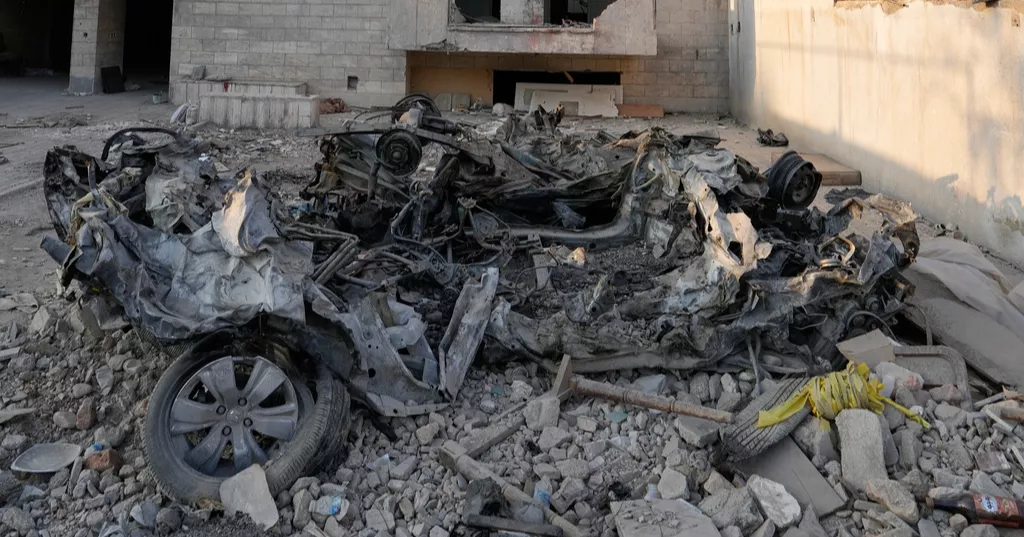
One of the US strikes hit a home where a wedding ceremony was taking place, killing five people and injuring dozens, according to local officials.
US Central Command said Tuesday evening that it had completed its latest round of strikes against Iranian military targets, including air defense positions, radar systems and maritime assets.
The attacks followed US strikes on Sunday that ended a month-long pause in military action and raised fears that the conflict could escalate again. The war has contributed to a rise in global oil prices and created political challenges for Republicans ahead of November's midterm congressional elections.
US President Donald Trump said late Tuesday that he would not pressure Iran into returning to the negotiating table.
"I couldn't care less if they sign a worthless, to them, agreement. I like our position now much better, with almost total control of the Hormuz Strait, and their economy totally collapsing. They are just playing out the inevitable. When are the Iranian people going to rise up and fight?" Trump wrote on social media.
Trump had earlier appeared to shift toward pressuring Iran through economic sanctions. He warned that any Iranian retaliation against the latest US strikes would result in an even stronger response.
"If they retaliate, they will be hit again at a much harder and higher level," Trump said.
US Central Command said the latest strikes were carried out in response to Iranian attempts to target commercial vessels and US forces in the Middle East.
Trump gave an additional explanation in a phone interview with Fox News, saying US forces had targeted Iranian radar systems.
"They tried to rebuild their radar because they can't see anything," Trump said. "We waited until it was almost built and then we hit it."
Following the US attacks, Iran launched ballistic missiles toward Jordan. Iran's Revolutionary Guard claimed the missiles were aimed at a US base on Jordan's Gulf of Aqaba coast, according to Iranian state television.
Jordan's military said it intercepted 10 of the missiles, while the other three landed in unpopulated areas. Explosions believed to be interceptions of incoming attacks were seen over Aqaba.
Iranian state media reported that US strikes had hit civilian locations along Iran's southern coast, including a civilian airport.
A US strike also hit a house in Kuhestak in southern Iran where a wedding was being held, killing five people, including a child, and injuring at least 68 others, Ahmad Nafisi, deputy governor of Hormozgan province, told Iranian state television by phone.
"Make no mistake: these crimes will not go unpunished," Ebrahim Azizi, chairman of the Iranian parliament's National Security and Foreign Policy Committee, said on X.
US Central Command was aware of reports of civilian casualties, Capt. Tim Hawkins, a spokesperson, said. He noted that the reports "originated from Iranian state media."
"The US military never targets civilians, unlike the IRGC," Hawkins said.
The Kuwaiti Army said on X that its air defenses intercepted drone attacks following what it called "the criminal Iranian aggression."
Iran also said it launched a drone attack against US forces in Bahrain, but Bahraini authorities said all the attacks had been intercepted.