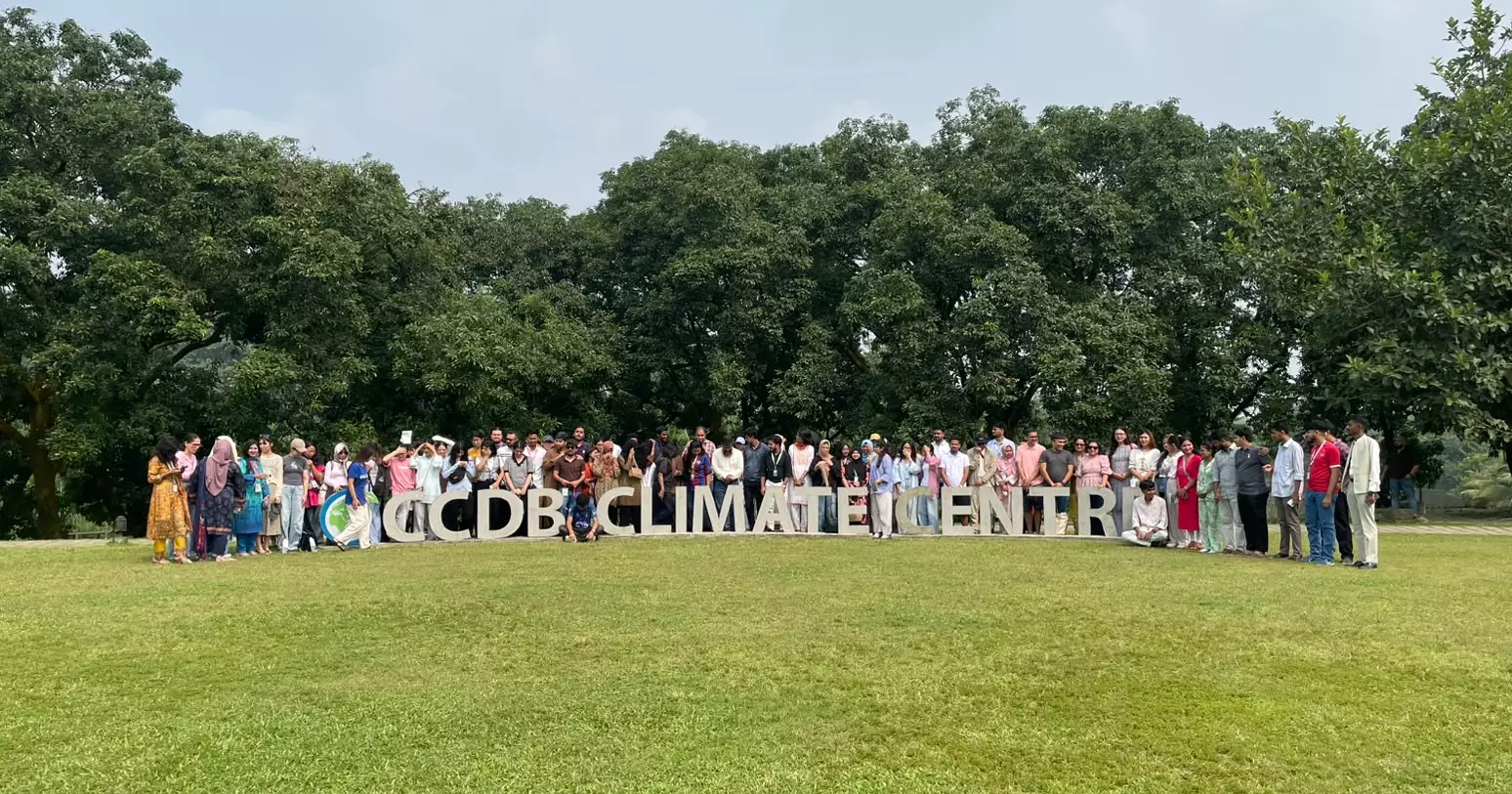
Regional Conference of Youth Asia-Pacific (RCOY APAC) 2026 concluded Tuesday with a final day field programme at the CCDB Climate Centre in Gazipur, with a Regional Youth Statement carrying the priorities of young people across the Asia-Pacific region set to be taken to COY21 and COP31.
The conference, held from Oct 3 to 5, brought together more than 500 young leaders from 28 countries, including around 100 international delegates, for discussions, workshops and COP-style simulations on climate change, climate transition, climate finance and youth-led climate action, said a press release issued on Tuesday.
Hosted in Bangladesh for the first time, the conference is recognised under YOUNGO, the Official Children and Youth Constituency of the United Nations Framework Convention on Climate Change (UNFCCC).
Participants represented 28 countries, including more than 500 young leaders, around 100 of them international delegates. Government and UN representatives, researchers, policymakers, innovators, development partners, academics and youth-led organisations also took part.
Discussions focused on climate action, climate justice, resilience, youth leadership, regional cooperation, knowledge exchange and youth-led solutions.
Experts and climate leaders, including Khondkar Morshed Millat, Tahmina Zaman Khan, Selina Shelley Khan, Sumaiya Binte Selim Sudha, Kamrul Hasan Shawon and Roufa Khanum, contributed to sessions on youth-led climate action, sustainability and climate finance.
Alongside dialogues, workshops, networking, exhibitions and side events, participants contributed to the Regional Youth Statement, which is meant to reflect the priorities and demands of young people across Asia-Pacific. The priorities will be taken forward to COY21 and COP31.
Chief guest AKM Sohel, UN Wing Chief at the Economic Relations Division (ERD), Ministry of Finance, spoke about the place of young people in decisions on climate and development.
“Every dollar we take a loan, the youth have to pay back in the future. If you have the stake in the dollar, you should have the voice. Every single utterance has to be based on evidence, data and science,” he said.
Miguel Mateos Muñoz, Chief, Communication and Advocacy, UNICEF in Bangladesh, urged the young delegates to look beyond those present.
“As you take the Regional Youth Statement to COP31, ask yourselves: whose voice is still missing? Bangladesh’s NDC 3.0 puts children and young people at the centre of climate action. Now comes the real test: implementation. As you step onto the global stage, carry with you the realities, demands and hopes of those who cannot be in the room, and make sure no child is invisible in the decisions shaping their future,” he said.
Dr Ainun Nishat, Emeritus Professor and noted scientist associated with the Centre for Climate Change and Environmental Research (C3ER), encouraged young people to build their own capacity, understand policy processes and ground their work in evidence.
“Learn the language of policy. Youth advocacy needs to be evidence based and data driven,” he said.
The final day gave those messages a practical setting. Nearly 150 national and international delegates gathered at the CCDB Climate Centre for a field-based learning and reflection programme that tied the discussions, panel sessions and key lessons of the previous three days to real-world climate action.
Participants looked at how climate commitments, climate finance, climate transition and climate solutions translate into practice, and the programme also served as a simulation-based preparation for COP31, bringing together dialogue, negotiation, learning and practical experience.
Held under the motto “From Mountains to Sea: United for Climate Justice”, RCOY APAC 2026 was jointly organised by youth-led organisations from across Asia-Pacific, with Seecto Bangladesh as the host country organisation.
As the Regional Youth Statement now heads to COP31, those delegates leave better prepared to take part in shaping a more just, resilient and sustainable climate future.