Barrister Zaima Rahman has an identity of her own beyond her family’s distinguished legacy, with her education, legal training, professional experience and personal struggles forming a distinct chapter of her life, Ambassador Mushfiqul Fazal Ansarey said on Tuesday.
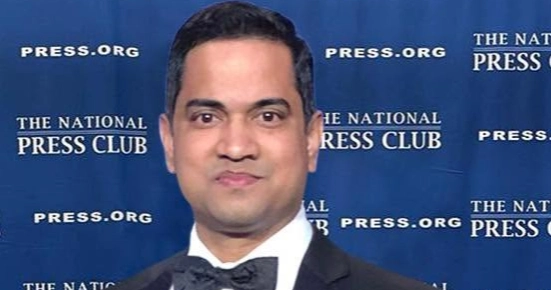
He made the remarks in a Facebook post about Zaima Rahman, who was recently appointed as a Legal Officer in the Office of the President of the United Nations General Assembly (UNGA).
In his Facebook post, Ansarey said Zaima Rahman’s paternal grandfather was President of Bangladesh, her paternal grandmother was the country’s first female Prime Minister, her maternal grandfather was a former Chief of Naval Staff and minister, her father currently serves as Prime Minister with a mandate from the people, and her mother is a respected physician.
“It is only natural that a member of such a family would attract interest from the public, the international community and the media,” he said, referring to Barrister Zaima Rahman.
Noting that news stories, reports and interviews about her are to be expected, Ansarey said, “Her workplace, the nature of her work, her professional interactions and her role may all be subjects of discussion and criticism. Such interest is hardly unexpected for someone in the public eye. Yet her personal achievements must also receive their due recognition in that discussion.”
“Beyond her family’s distinguished legacy, Zaima Rahman has an identity of her own. Her education, legal training, journey to becoming a barrister, professional experience and personal struggles form a distinct chapter of her life,” he said.
Zaima Rahman holds a degree in Law and Politics from Queen Mary University of London and qualified as a barrister in England and Wales through the Inner Temple. “It would be deeply unfair to allow these accomplishments to be overshadowed entirely by her family background,” the ambassador said.
It is hardly an unreasonable aspiration for someone to put her education, ability and relevant experience to work in a P-3 position at the United Nations, he said. “Treating family identity as the ultimate proof of either competence or incompetence does an injustice to the individual.”
Ansarey said it is also necessary to understand the staffing structure of the Office of the President of the UNGA.
Of its 40 staff members, eight have their salaries and allowances funded by the UN’s regular budget; four are seconded from other UN entities or departments; 20 are seconded by Member States and observers; and eight are funded through the office’s trust fund, he added.
The Legal Officer position Zaima Rahman has joined is at the P-3 level and is funded by the UN’s regular budget, the ambassador said. “In other words, it is not listed as a secondment financed by the government of Bangladesh.”
Citing that the United Nations has established institutional procedures for recruitment, he said, “Alongside my work as a permanent correspondent covering the UN, I also served for a period as a consultant to an affiliated organisation. I drew on my professional contacts in that context. Having connections is not a sign of incompetence; rather, professional networks can themselves be regarded as an asset and a reflection of one’s capabilities.”
Ansarey said salaries and allowances also follow an established framework. “Pay for UN professional positions is determined by grade and step, with adjustments reflecting living costs. The base salary is supplemented by a post adjustment linked to the cost of living at the duty station. Any discussion of salary figures must therefore take account of the relevant grade, duty station and rules governing applicable benefits,” he said.
The UNGA President’s own salary, accommodation, car and other benefits, for example, are not covered by UN funds, he said. “In this case, those expenses must be borne by the government of Bangladesh as the Member State concerned.”
Official travel and activities associated with the President’s responsibilities, however, are financed through the office’s budget and trust fund, the ambassador said.
“Let there be interest in Barrister Zaima Rahman, let there be questions, and let her work be evaluated. But that evaluation should give due weight to her preparation, hard work, ability and professional identity,” he said.
“Just as her family’s distinguished legacy provides a legitimate reason for public interest, the opportunity she has earned through her own qualifications should be protected from unreasonable controversy and one-sided judgment,” Ansarey said, wishing Zaima Rahman every success.