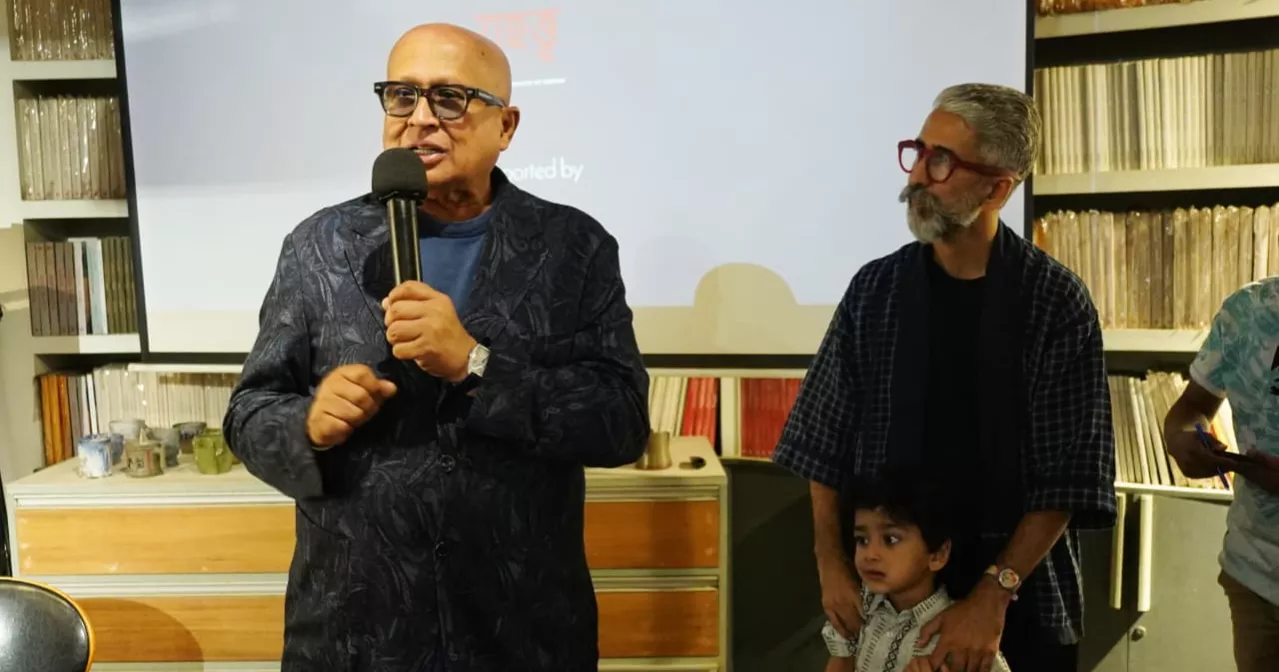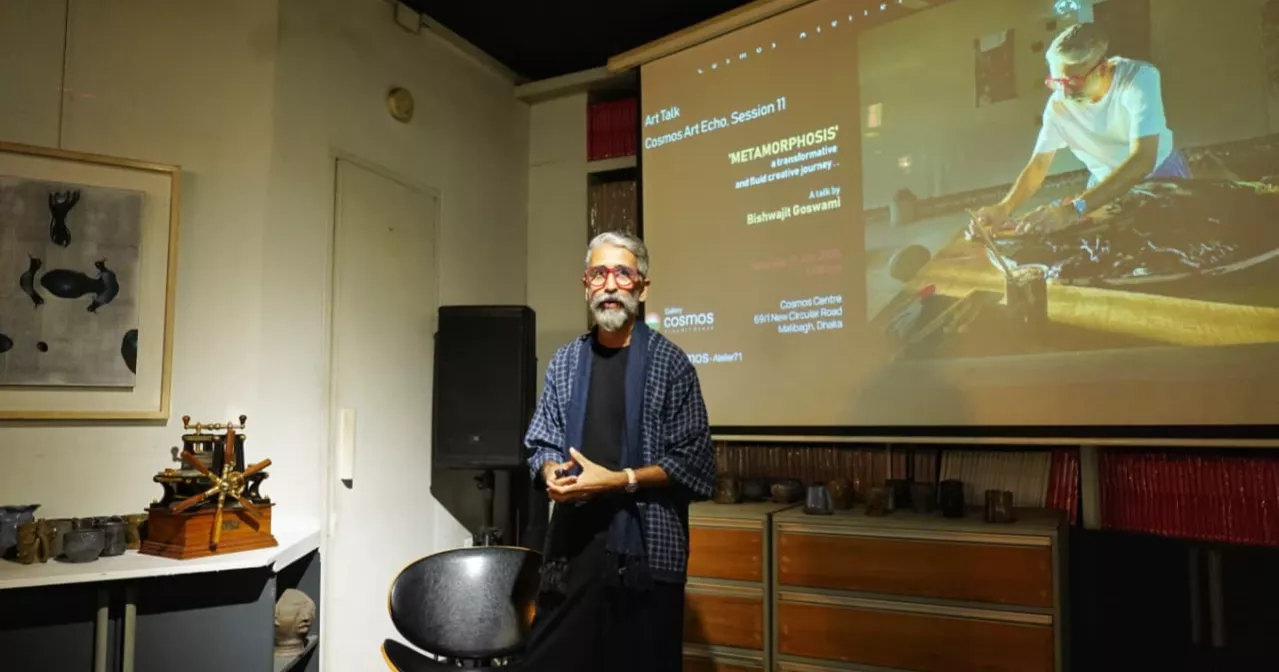
Gallery Cosmos and Cosmos Atelier71 hosted the 11th session of its artist talk series, Cosmos Art Echo, on Saturday, featuring the artistic transformation of distinguished Bangladeshi artist, art educator, curator and researcher Bishwajit Goswami.
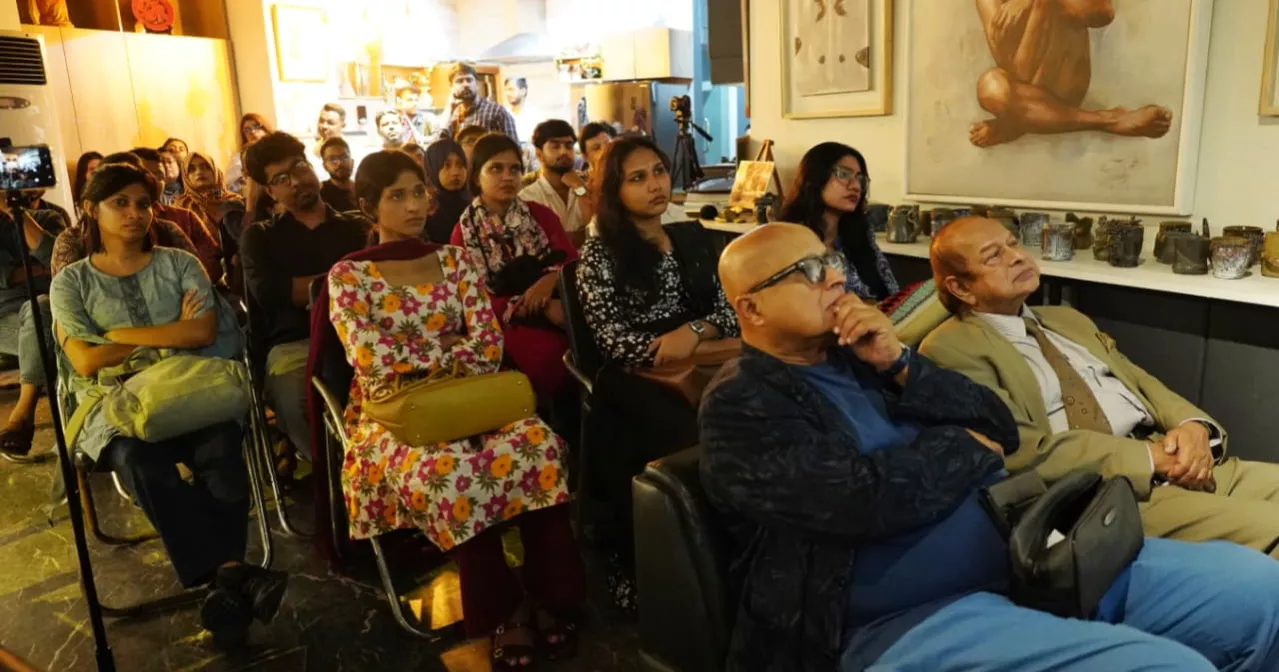
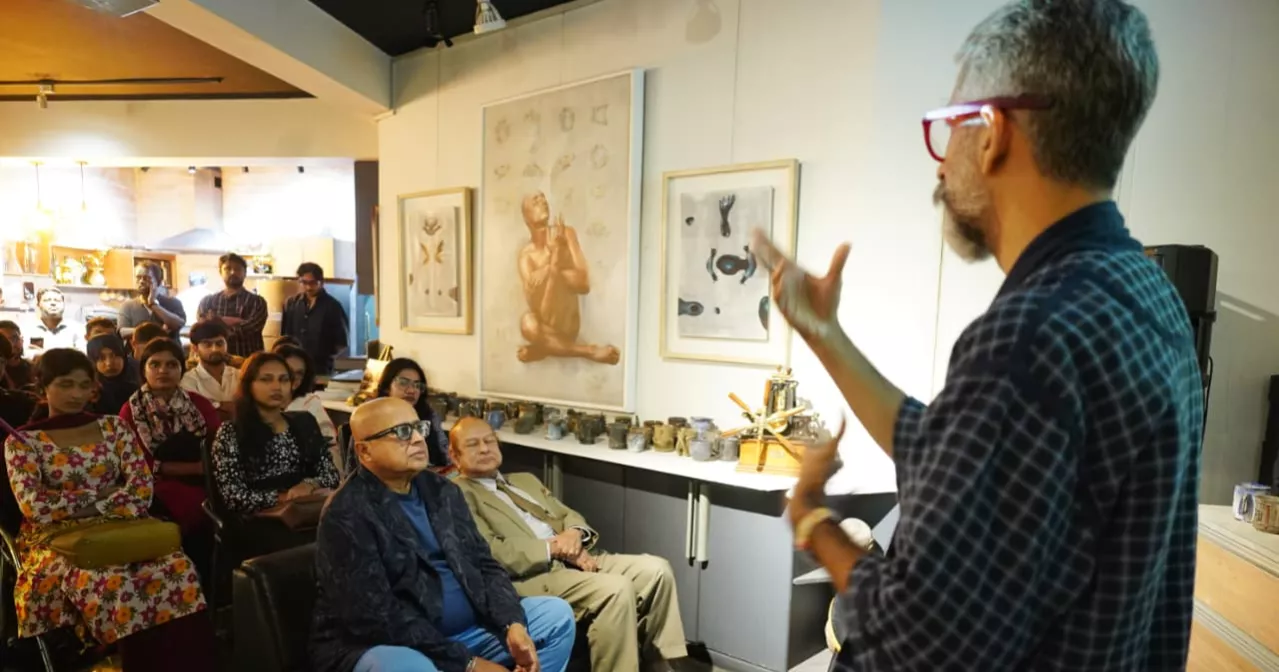
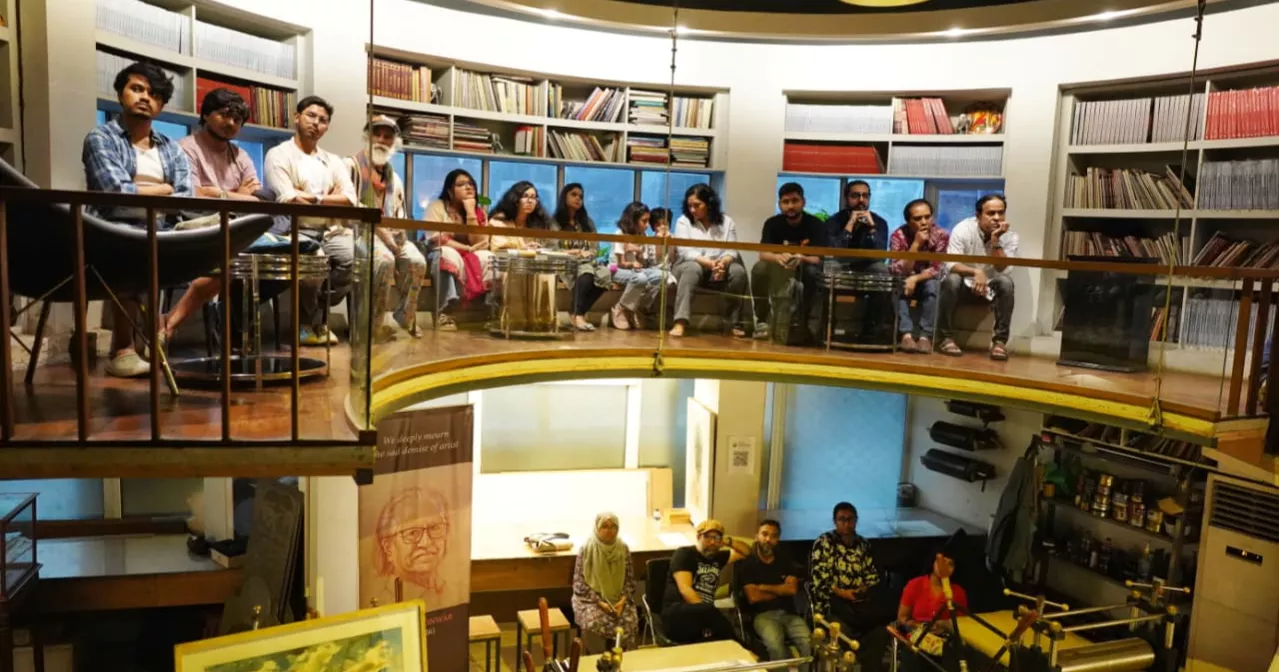
The session, titled "Metamorphosis," was held at the Cosmos Atelier71 Studio at Cosmos Centre in Malibagh, bringing together artists, students, art educators and cultural enthusiasts for an in-depth discussion on transformation in artistic practice, cultural identity and contemporary visual language.
Through his multidisciplinary and research-based practice, Bishwajit reflected on his lifelong artistic evolution, saying nothing had been able to stand in the way of his journey of transformation.
Bishwajit Goswami’s practice centers on six foundational elements—Ma, Mati, Manush, Bhasha, Swadesh and Prokriti—representing mother, soil, people, language, motherland, and nature.
Through multidisciplinary approaches, he investigates how these interconnected elements shape collective identity. His practice emphasizes collaboration, site-responsive methodologies, and sustained dialogue with artisans and communities across local and international contexts.
Both his artistic and curatorial works advocate shared authorship, repositioning traditional forms within contemporary frameworks through processes of exchange.
Goswami said his creative practice is deeply rooted in nature, drawing inspiration from natural phenomena such as the tides, the roar of the sea and the first light of day entering his studio.
Reflecting on his role as an educator at the Faculty of Fine Arts, he described teaching as a continuous learning process, saying the enthusiasm and energy of young students, including watching them paint on large canvases, remain one of his greatest sources of inspiration.
He stressed that art should communicate with everyone- from rickshaw pullers to schoolchildren- and said he was proud that his wall-paintings were protected following the July movement because ordinary people felt connected to them.
Speaking about his curatorial works, Bishwajit said he focused on presenting the richness and strength of Bangladeshi culture to international audiences, citing his work with the Victoria and Albert Museum as an example.