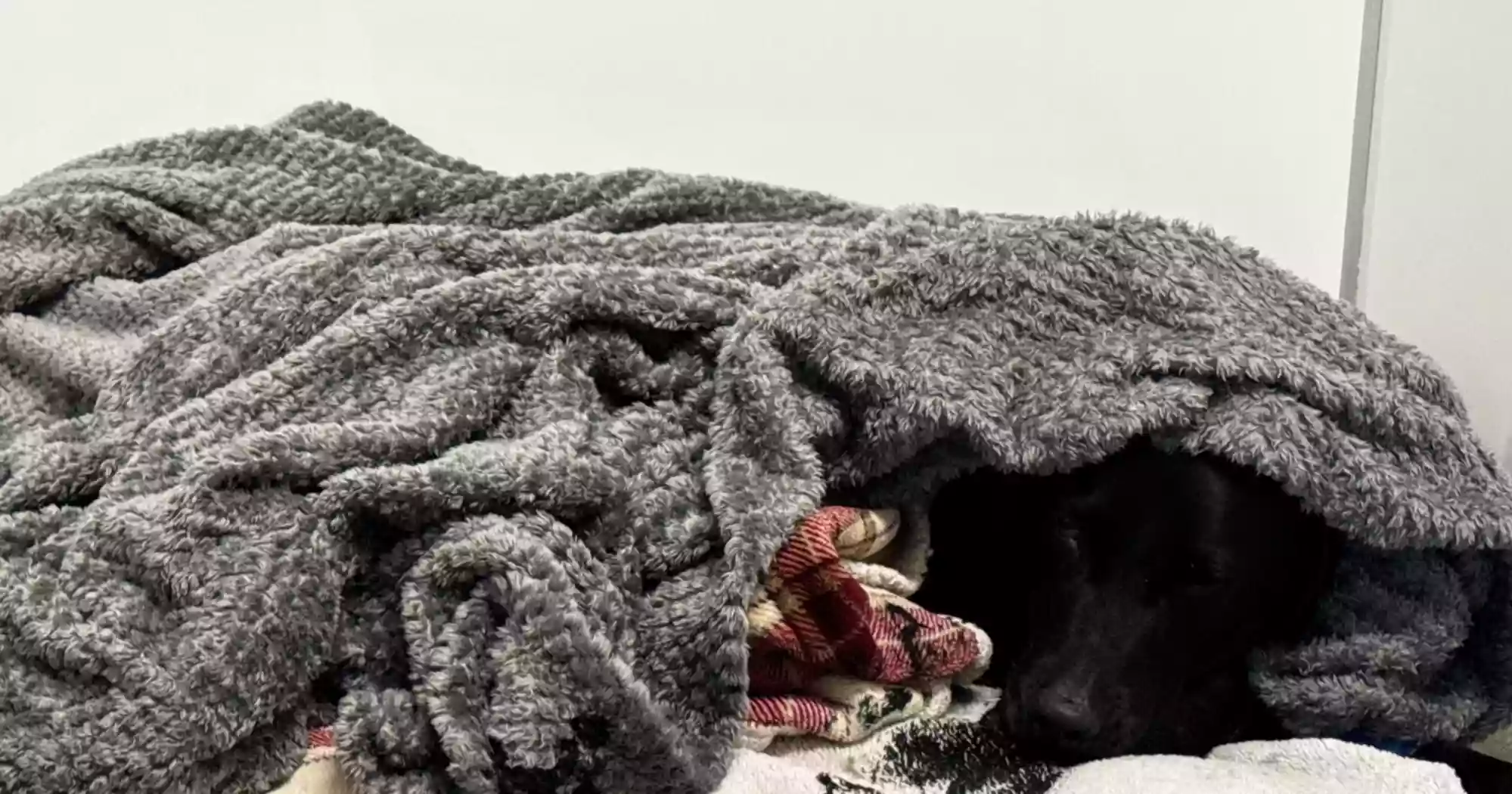
A dog owner has thanked a volunteer mountain rescue team after her Labrador was carried down Britain's highest mountain when it apparently became ill after ingesting cannabis during a hike.
Christina Bluhme was climbing Ben Nevis in the Scottish Highlands with her 5-year-old black Labrador, Tokyo, and another dog on July 5 when Tokyo suddenly began staggering, appearing disoriented before losing the ability to walk.
"It was a very frightening experience," Bluhme said on Monday. "She had a very bad reaction."
Bluhme, who has worked as a dog trainer for 25 years, said she had no idea at the time that cannabis might have caused the dog's condition.
The incident comes as cases of cannabis poisoning in pets continue to rise in the UK. The problem is even more common in the United States, where marijuana is legal for recreational use in many states and available for medical purposes in others. The American Society for the Prevention of Cruelty to Animals (ASPCA) added marijuana and other drugs to its list of the top 10 pet toxins for the first time in 2023. Its poison control centre reported a 10% increase in calls related to suspected marijuana ingestion compared with the previous year and nearly a threefold rise over the past five years.
When Tokyo collapsed, Bluhme, her son Magnus and the two dogs had been climbing for more than three hours and were close to the 1,345-metre (4,413-foot) summit of Ben Nevis. By then, the weather had deteriorated, with rain setting in and temperatures dropping to around 5 degrees Celsius.
Realising something was seriously wrong, Bluhme abandoned plans to reach the summit.
"I told my son we had to turn back and get her down because something was clearly wrong," she said.
Her son called for emergency assistance, but police initially said they were unsure whether a rescue team could be sent.
Fortunately, members of the volunteer Lochaber Mountain Rescue Team were already descending the mountain after helping with the helicopter evacuation of an injured hiker. The rescuers placed the 25-kilogram Labrador on a stretcher and carried her quickly down the steep, slippery trail, reaching the base in about an hour.
"They were almost running," Bluhme recalled. "I was holding onto the stretcher while they moved so quickly. It was amazing."
Police alerted Crown Vets in nearby Fort William, where a veterinarian was waiting when the group arrived.
Vets first suspected a spinal problem, but a senior veterinarian later concluded Tokyo had likely been exposed to a neurotoxin after she repeatedly drifted in and out of consciousness. Following consultation with a poison control centre, they determined her symptoms were consistent with cannabis intoxication.
Tokyo was treated with activated charcoal and made a full recovery overnight.
Although the veterinary treatment cost about 1,000 pounds (around $1,335), Bluhme said she was simply grateful her dog survived.
"By the next day, it was as if nothing had happened," she said. "She recovered very quickly, and I'm probably the one who's still recovering from the experience."