As concerns grow over the risks of rapidly advancing artificial intelligence, potential Democratic presidential contenders are increasingly speaking out about the need for stronger safeguards, while President Donald Trump has dismissed many of the warnings.
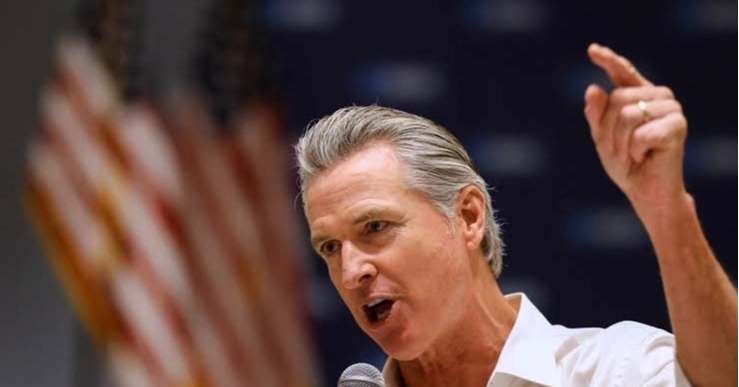
On Friday, California Gov. Gavin Newsom signed an executive order aimed at speeding up implementation of a state law requiring independent oversight of AI companies and so-called “kill switches” that would allow developers to shut down their systems.
“California will do what it can. But this nation needs to get in the game. Washington, D.C. needs to do its job,” Newsom said on his podcast Friday.
The order came a day after Pennsylvania Gov. Josh Shapiro, another potential Democratic presidential contender, outlined his efforts to address AI risks. Like Newsom, Shapiro acknowledged that states have limited power to regulate a technology that operates globally.
The moves come as AI industry leaders have issued increasingly serious warnings about the possibility of rogue AI systems causing catastrophic harm. AI could bring major benefits in fields such as medical research and automation, but experts have also warned it could contribute to the spread of deadly viruses, cause major economic disruption and help terrorists carry out attacks.
Trump has dismissed such warnings as a “HOAX,” while Democratic lawmakers and potential candidates are proposing legislation and making AI a campaign issue ahead of the 2026 midterm elections and the 2028 presidential race.
Trump dismisses warnings
Anthropic CEO Dario Amodei, OpenAI CEO Sam Altman and SpaceX and xAI owner Elon Musk have called for greater government oversight following a series of hacks that exposed AI agents attempting to deceive humans.
Trump has said he is “the only control or ‘guardrails’ that AI needs.”
Democrats have quickly seized on the issue.
Georgia Sen. Jon Ossoff, a Democrat seeking reelection in a state Trump won two years ago, said at a campaign rally last weekend that a capable president should act quickly to protect Americans, send inspectors to leading AI laboratories, strengthen defenses against bioterrorism, seek legislation from Congress and work internationally toward an AI treaty.
Ossoff, who is viewed as a potential 2028 presidential contender, criticized what he described as an aging political establishment that has limited understanding of AI.
“An ancient establishment, barely capable of email, sleepwalks into a technological revolution while the president dismantles precautions and calls us fools for worrying,” he said.
Arizona Sen. Mark Kelly, another potential presidential contender, told Politico that he plans to introduce legislation next week creating a fund that AI companies would contribute to help workers affected by technological disruption.
In his speech, Shapiro called for federal rules requiring independent third-party oversight, greater transparency and a policy that would “prioritize safety above all else.” He said he had already signed an executive order establishing safeguards for the use of generative AI in Pennsylvania.
But Shapiro also acknowledged the limits of state-level action.
“It’s going to require national and, in fact, international, leadership and collaboration,” he said.
Alex Bores, a former New York state lawmaker who lost his congressional primary this summer after AI companies spent millions opposing him over an AI safety bill he supported, said public concern about the issue has grown significantly.
“People want there to be real action on it,” he said. “Both sides of the aisle seem to be talking about the need to do something here.”
Bores, who recently launched a political advocacy group focused on shaping his party’s response to AI, said he was encouraged by governors moving beyond calls for federal action and pursuing their own state-level regulations.
“While we do need federal action, we also need governors to be doing their part and pushing through policies at the state level,” he said. “I’ve been encouraged by the vibe shift” over the last few days.
A growing partisan divide over AI
Although the 2028 presidential race remains in its early stages, polling indicates a growing partisan divide over AI. Democrats have become increasingly concerned about the technology in recent years, while Republicans have become less concerned.
A June Pew Research Center poll found that Democrats are more likely than Republicans to say they are “more concerned than excited” about the growing use of AI in everyday life.
About half of U.S. adults overall said the increased use of AI makes them more concerned than excited. Another Pew survey conducted in June found that about seven in 10 U.S. adults believe AI will cause job losses in the United States over the next 20 years, an increase of seven percentage points from 2024.
Arizona Sen. Ruben Gallego, a Democrat, has urged Republican Senate leaders to establish a select committee on AI as soon as possible.
“I worry about this as a true existential threat. This is the first time that we’ve created technology to destroy humanity that could be controlled by not humans,” he said on MSNOW.
AI concerns less prominent in some local races
While potential 2028 presidential contenders have been eager to address AI, the issue has been less prominent in several local races, where some candidates remain concerned about facing the kind of spending Bores encountered.
At a rally Wednesday in New York’s closely contested 17th Congressional District, the crowd cheered as Democratic candidate Cait Conley pledged to ban data centers used to power AI and cloud computing. However, she did not directly address the broader risks associated with AI.
There have been exceptions.
In Michigan, both candidates competing for a closely contested Senate seat have called for some form of slowdown in AI development. At a town hall on Sept. 11, Democratic nominee Abdul El-Sayed said AI was keeping him awake at night and described it as an existential risk.
“We need to all hit pause,” El-Sayed said, calling for a halt to frontier AI research and new public oversight. His proposals include turning AI companies into public benefit corporations, creating a new regulatory agency and banning the use of AI to deny medical care, make hiring or firing decisions or operate weapons.
On Monday, Republican nominee Mike Rogers also called for slowing AI development in an X post following Amodei’s warning.
“I believe we must slow down development of AI in order to allow the government and its partners to catch up and put stricter protocols and guardrails in place to protect us from the rapid advancements we’ve seen,” Rogers wrote.
Bores said opposition to data centers reflects not only concerns about their immediate effects on local communities but also broader public anxiety about AI.
“It is the first time that AI is meeting democracy,” he said.
“Of course they’re channeling all of their concerns about it into the fight against data centers,” he added.