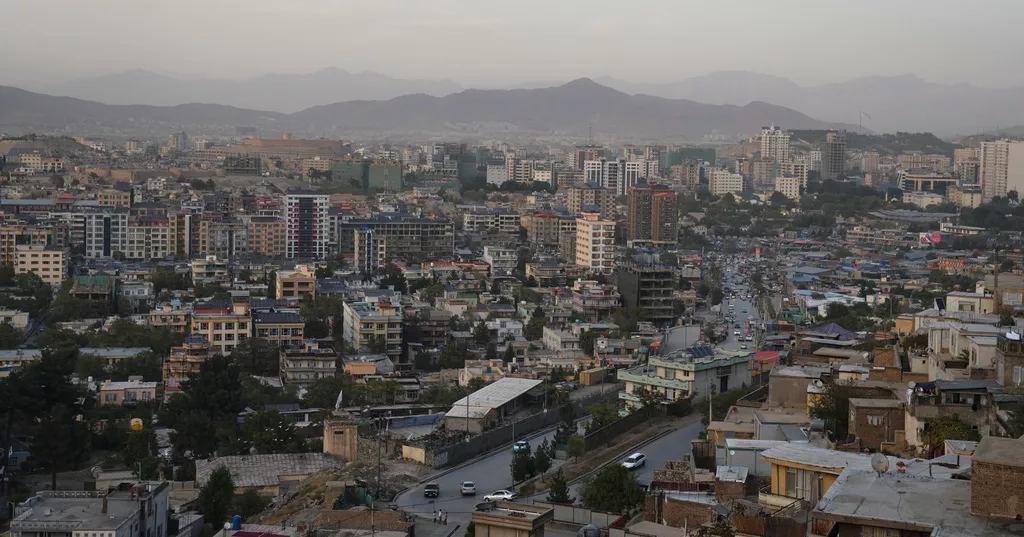
Twenty-five years after the US-led invasion of Afghanistan, the country continues to live with the consequences of a two-decade war that brought some expanded freedoms but also widespread corruption, heavy military operations and ultimately the return of the Taliban to power.
Dr Nigar Nangrahari was working a night shift at a Kabul hospital when the invasion began in October 2001. Walking home the following morning, she witnessed Kabul residents attacking Taliban members as the Islamist group’s harsh rule began to collapse.
“Along the way, I saw ordinary people killing anyone they caught who was a Taliban member,” said Nangrahari, now 58. She recalled seeing Taliban fighters captured and killed, with some attempting to hide in trees.
Nangrahari and her family remained at home for about a month before she returned to the hospital as an obstetrician-gynecologist. She also no longer had to wear a burqa in public.
“They granted us freedom — but not the kind that Afghans could truly benefit from,” she said, arguing that Afghanistan needs a balance between unrestricted lifestyles and the severe restrictions imposed by the Taliban.
A costly war
The US-led coalition launched Operation Enduring Freedom under then-President George W. Bush with the stated aim of dismantling al-Qaida, whose leader Osama bin Laden had orchestrated the Sept. 11 attacks from his base in Afghanistan.
The invasion on Oct. 7, 2001, began a 20-year conflict that killed tens of thousands of Afghans, along with thousands of coalition troops, US contractors, aid workers and journalists.
The war also left a complex political and social legacy.
Muin Gul Chamkanai, a former doctor who now heads the Shkula Charitable Foundation and works as a political analyst, said the US-backed governments had promised better governance and action against narcotics and terrorism.
“The reality turned out to be the exact opposite,” he said.
The international presence nevertheless expanded some freedoms, particularly in media, and opened greater opportunities for women and girls in education and employment.
But widespread corruption and aggressive military tactics increasingly fueled public resentment.
Chamkanai recalled watching the invasion on television on Oct. 7, 2001, and becoming angry at the sight of his country being attacked.
“Had I been struck by their bombs, I would have considered martyrdom far preferable. I was not afraid,” he said, adding that he wanted to resist the US presence through both writing and armed struggle.
Taliban back in control
Five years after the chaotic US withdrawal and 25 years after the invasion, the Taliban remain firmly in control of Afghanistan.
The group has not restored all the restrictions of its 1996-2001 rule, but it has brought back numerous severe measures, particularly affecting women and girls.
Security has improved significantly since the Taliban seized power in August 2021. Major bombings and attacks that marked much of the previous two decades have largely disappeared, most of them carried out by the Taliban during the war.
Deputy government spokesman Hamdullah Fitrat, in a statement marking the invasion anniversary, said Afghans had never accepted foreign occupation.
He described Oct. 7, 2001, as a “dark day” in Afghanistan’s history that left thousands dead, wounded, imprisoned, displaced or homeless.
But the changes under Taliban rule have been especially difficult for Afghans who grew up under the US-supported governments, particularly women who have faced restrictions on education, employment, movement and dress.
Tahmina Mangal, 33, said the closure of high schools and universities to girls and women ended her hopes of continuing her education.
“Gradually … restrictions were imposed, and the normal life we had known was taken away. Things became very difficult for us,” she said.
Concerns over women’s future
Mangal now runs a shop selling traditional Afghan women’s clothing. She said the Commerce Ministry still issues business licences to women, making entrepreneurship one of the few options available to them amid restrictions on employment.
However, she is deeply concerned about Afghanistan’s future as women remain excluded from education and governance.
“If this situation persists, Afghanistan’s future is perilous,” she said, warning that denying women education would leave the country short of doctors, teachers and educated mothers.
Nangrahari welcomed improvements in infrastructure under the Taliban, including better roads and new high-rise buildings, but criticised the emphasis on religious education for boys and the continued ban on higher education for girls.
“Indeed, infrastructure is the foundation of the economy, and we acknowledge all of this,” she said. “But a society lacking education is zero.”
Despite the restrictions, Mangal urged Afghan women not to abandon their ambitions.
She encouraged them to continue studying, including through online education, and to pursue professional training.
“Governments inevitably come and go, collapses happen, and no government lasts forever,” she said. “Remain hopeful for the future. Study, pursue professional training alongside your regular schooling, and seek higher education.”