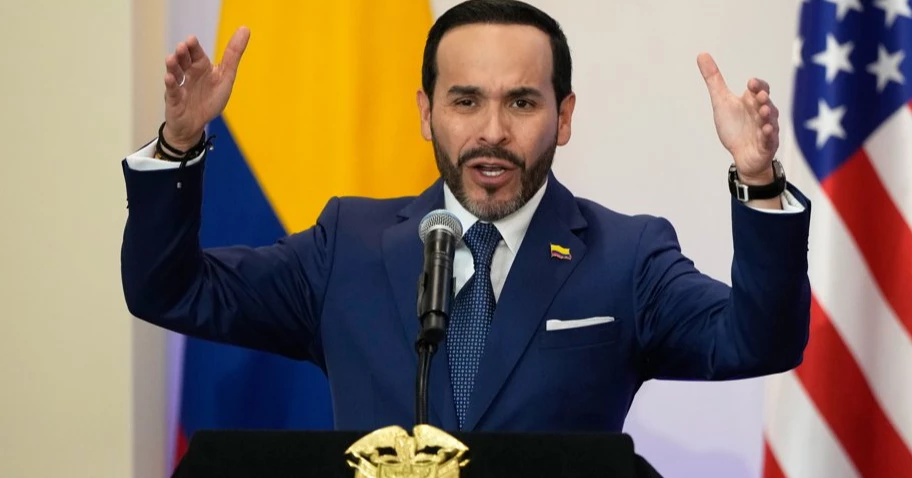
Colombian President Abelardo de la Espriella on Monday launched a joint task force to combat rebel groups and drug gangs in the country's northeast, signaling a shift toward military operations after the government ended peace negotiations with armed groups.
The newly formed Task Force Urano will focus on disrupting activities by the National Liberation Army, or ELN, Colombia's largest remaining rebel organization, particularly its alleged theft of gasoline and diesel from a pipeline linking the Caribbean coast to a refinery in Barrancabermeja.
De la Espriella accused the ELN of using stolen fuel to finance criminal activities, including cocaine production, illegal mining and what he described as terrorist operations.
"They use it to make cocaine, to power illegal mines and to generate income for terrorist activities," he said at a ceremony in Valledupar.
For nearly two decades, Colombia's armed forces used joint task forces involving the army, navy and air force to combat rebel groups in rural areas. Directly supervised by commanders in Bogota, the units helped the military secure major victories over the Revolutionary Armed Forces of Colombia, or FARC, before the group signed a peace agreement with the government in 2016.
The strategy was abandoned two years ago under former President Gustavo Petro, whose administration sought to give regional military commanders greater authority over operations. Critics argued that the move weakened the country's military response.
De la Espriella, a conservative who took office in August, has ended peace talks with the remaining rebel groups.
He said restoring joint task forces would allow security forces to confront rebels and drug gangs more forcefully. Police officers will also be part of Task Force Urano.
"There will be no negotiations or empathy with terrorism," he said.