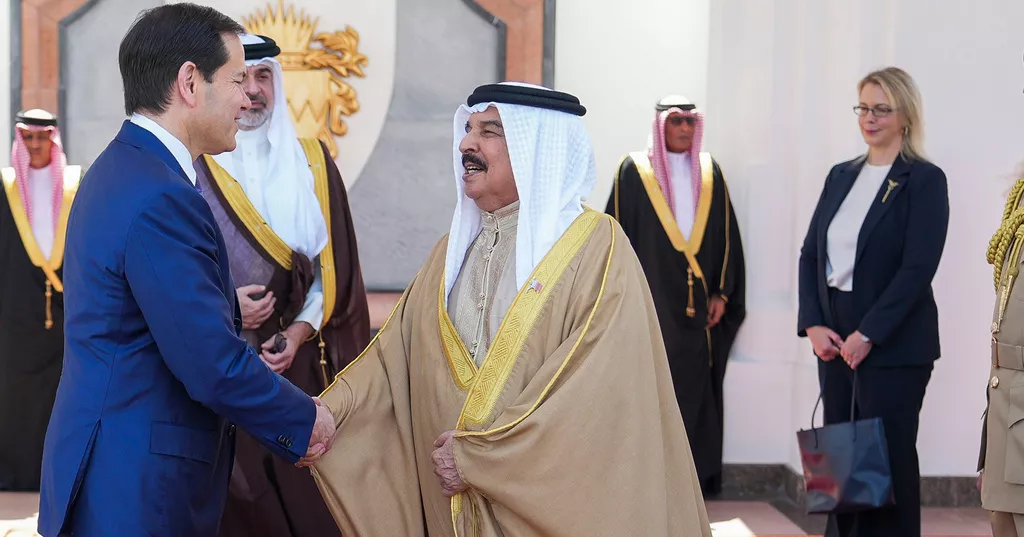
US Secretary of State Marco Rubio has sought to reassure Gulf Arab allies that Washington remains committed to their security, despite concerns among regional partners about being sidelined in negotiations aimed at ending the conflict with Iran.
Speaking in Bahrain on Thursday at the end of a three-day tour of the United Arab Emirates, Kuwait and Bahrain, Rubio said the United States wants Gulf Cooperation Council (GCC) members to be fully informed and involved as negotiations with Iran progress.
Rubio said Gulf leaders had shared "concrete concerns and ideas," adding that their main demand is to remain informed at every stage of both technical and political negotiations.
"We want them to be involved and we want the views of all these countries to be reflected," he said, stressing that Washington would not make decisions that undermine the security or stability of its Gulf partners.
The trip comes amid regional unease following the war launched by the United States and Israel against Iran on February 28, a conflict that disrupted oil exports and exposed several Gulf states to Iranian missile and drone attacks.
Following the meeting, the United States and the six-member GCC—Bahrain, Kuwait, Oman, Qatar, Saudi Arabia and the United Arab Emirates—issued a joint statement reaffirming their shared objective of preventing Iran from obtaining a nuclear weapon and maintaining unity as negotiations move toward a permanent end to hostilities.
The statement also rejected any Iranian attempt to impose fees or assert control over the Strait of Hormuz, while welcoming Oman's initiative to establish a safe maritime corridor for stranded sailors. It noted that any economic benefits for Iran would depend on its compliance with both the temporary agreement and a future final deal.
Despite the optimistic tone of the joint statement, comments from GCC Secretary-General Jasem Mohamed Albudaiwi suggested that concerns persist within the bloc. He stressed that any future arrangements involving Iran must address the security interests of Gulf states and adhere to principles of sovereignty, good neighbourliness and non-interference.
Bahraini Foreign Minister Abdullatif bin Rashid Al Zayani also welcomed recent diplomatic progress but said many questions remained unresolved. He underscored the need for Iran to fully meet its obligations, including preventing nuclear proliferation, ensuring freedom of navigation, ending missile and drone attacks, halting support for proxy groups and refraining from interference in neighbouring countries.
The remarks highlight continuing Gulf concerns over the direction of US-Iran diplomacy and the long-term security implications for the region.