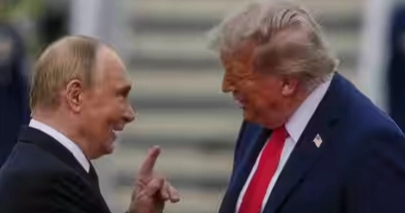
US President Donald Trump has announced an agreement with Russian President Vladimir Putin to secure diesel supplies from Russia, marking a major shift in Washington’s longstanding policy of pressuring Moscow over its war against Ukraine. The move comes as the administration faces rising fuel prices ahead of the US midterm elections.
Trump announced the agreement on social media Friday following a phone conversation with Putin, which was reportedly expected to focus on a suspected plague case in Russia. Instead, Trump said Russia would immediately provide more than 300,000 tonnes of diesel, followed by another 500,000 tonnes in November and 1 million tonnes shortly afterward. An additional 3 million tonnes would be delivered within a relatively short period, he added.
The announcement appears to contradict a comprehensive Russia sanctions law Trump signed last month, which seeks to restrict Moscow’s oil and gas revenues that help finance its war against Ukraine.
Ukrainian President Volodymyr Zelenskyy criticized the decision, describing it as a “weak decision by strong partners,” according to a statement issued by the Ukrainian Embassy in Washington.
Trump revealed the deal while his special envoy, Steve Witkoff, and son-in-law, Jared Kushner, were meeting Ukrainian officials in Miami to discuss a possible plan to end the Russia-Ukraine war.
Zelenskyy questioned the purpose of the discussions, suggesting that Ukraine’s negotiating team was being used as a distraction. He said such treatment was unfair and inconsistent with the conduct expected between partners.
The agreement has also raised questions about whether the White House will introduce further sanctions against Russia. Legislation passed by Congress with overwhelming support directs the administration to target countries that purchase Russian oil and natural gas. US lawmakers had recently urged the administration to use its available powers to support Ukraine.
Senate Democratic Leader Chuck Schumer, Senator Jeanne Shaheen, the top Democrat on the Senate Foreign Relations Committee, and Senator Elizabeth Warren, the leading Democrat on the Senate Banking Committee, condemned the agreement. They described it as a betrayal of Ukraine, European allies and US national security.
The senators called on Trump to end the war involving Iran rather than provide financial support to Russia’s war effort.
Global fuel prices have climbed as the conflict in Iran disrupts energy markets. Although diesel futures fell following Trump’s announcement on Friday, the average US retail price remained elevated at $6.28 per gallon, according to AAA. The price had reached a record $6.52 on September 22.
Trump did not directly address Russia’s sanctions or its war against Ukraine. Instead, he said lowering costs for Americans, particularly farmers, ranchers and truck drivers, remained his highest priority.
Later, as he departed the White House for a campaign rally, Trump expressed gratitude to Putin for the arrangement, saying substantial quantities of diesel were expected to enter the United States. He did not respond to questions about Zelenskyy’s criticism.
Washington and Moscow provide limited details
The White House did not immediately clarify who would pay for the Russian diesel or when the supplies would become available.
According to a Kremlin statement issued Friday, Putin said the two leaders devoted considerable attention to prospects for resolving the Ukraine conflict. They also discussed the situation surrounding Iran and several aspects of bilateral relations.
Putin confirmed Russia’s willingness to supply oil and petroleum products to the US and international markets, expressing confidence that the arrangement would benefit the global economy.
However, Russian presidential aide Yuri Ushakov declined to say whether Washington had offered concessions or made other commitments in exchange for the fuel supplies.
Agreement sparks criticism from US and Ukrainian officials
In a lengthy online statement, Zelenskyy warned that Russia would respond to the agreement with further aggression and deception. He argued that the deal could strengthen Moscow’s ability to continue its military campaign.
According to the Ukrainian president, the arrangement would benefit Russia by allowing it to prolong the war, inflict further casualties and damage, and show less regard for the United States.
Democratic Senator Richard Blumenthal, a co-sponsor of the Russia sanctions legislation, said the decision made the United States complicit in Putin’s war against Ukraine. Referring to the bipartisan legislation named after Republican Senator Lindsey Graham, a Trump ally known for his tough stance on Russia, Blumenthal called the agreement an embarrassment to the country and contrary to Congress’s intentions.
Representative Don Beyer, the senior Democrat on the House Joint Economic Committee, also condemned Trump’s announcement, saying the decision reinforced concerns about the president’s reliability on Russia-related issues.
The sanctions law signed last month provides for penalties against Russian officials, banks and a network of tankers used to transport Russian oil. It also prohibits new US investment in Russia and restricts dealings involving Russian sovereign debt.
Additionally, the legislation authorizes tariffs of up to 100% on the five largest importers of Russian oil or natural gas, with an exception for countries that import less than 15% of Russia’s natural gas exports and have made significant efforts to reduce those purchases.
The United States stopped importing Russian oil and gas in 2022 after the Biden administration imposed a ban following Russia’s invasion of Ukraine, according to the US Energy Information Administration.
Treasury grants six-month relief from diesel sanctions
Shortly after Trump announced the agreement, the US Treasury Department issued a temporary licence permitting Russian diesel to be supplied to the global market.
The authorization is the latest US measure concerning Russian fuel shipments since the Iran war began earlier this year. However, it marks the first extension of diesel-related sanctions relief beyond the usual 30-day period since Russia launched its full-scale invasion of Ukraine in February 2022.
Under the licence, US sanctions will not apply until April 2027 to Russian diesel shipments loaded onto tankers by Friday.
The decision highlights how disruptions caused by the Iran conflict have created additional opportunities for Moscow to earn revenue from its energy exports.
Experts question the impact on fuel prices
Energy specialists remain uncertain whether the arrangement will significantly reduce fuel prices.
Clayton Seigle, an energy strategist and expert at the Center for Strategic and International Studies, said the agreement was unlikely to have a substantial effect on prices. Nevertheless, he noted that it would benefit Russia and Putin, particularly as Moscow seeks to sell its summer-grade diesel before shifting to heavier winter and Arctic fuel grades needed in the coming months.
Michael Lynch of the Energy Policy Research Foundation offered a similar assessment, suggesting that the arrangement would mainly redistribute existing supplies rather than increase the overall availability of diesel.
He explained that if Russian diesel were redirected to the United States, Russia’s existing customers would have to find alternative suppliers. That could leave global prices largely unchanged.
Russia, previously a major diesel exporter, suspended exports in July as domestic demand became difficult to meet amid repeated Ukrainian attacks on Russian oil refineries. The International Energy Agency estimates that Russian diesel production has declined by approximately 30%.
Russian Deputy Prime Minister Alexander Novak told the state-run news agency TASS that Moscow was beginning to lift restrictions on diesel exports earlier than planned. He said deliveries to the United States could begin this month while ensuring that Russia’s domestic market remained adequately supplied.