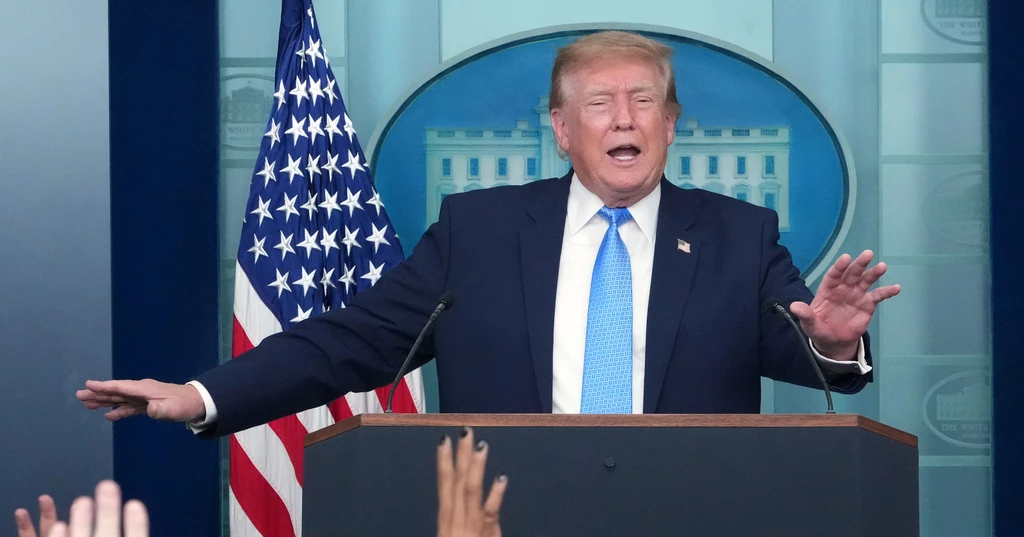
US President Donald Trump on Monday said he believes the war with Iran is “militarily effectively over”, signalling that he is not currently inclined to resume the bombardment that has devastated the Islamic Republic and sent shockwaves through the global economy.
Trump made the remarks during an unexpected appearance in the White House briefing room after meeting with Qatari Prime Minister Sheikh Mohammed bin Abdulrahman bin Jassim Al Thani earlier in the day.
“Iran militarily is effectively over,” Trump told reporters, adding, “We're just keeping it the status quo.”
He said Iran's leadership had been “decapitated”, but stressed that he still wanted a long-term solution to ensure the country's nuclear programme was neutralised.
The comments were among Trump's clearest indications yet that he was stepping back from his threats to resume strikes against Iran following last week's US midterm elections.
Trump's Republican Party lost control of both chambers of Congress to the Democrats in the elections, which were marked by public dissatisfaction over the eight-month-old war. The conflict has driven up fuel prices and affected almost every sector of the global economy.
Throughout the conflict, Trump has repeatedly threatened to intensify US military attacks unless Iran's leaders quickly accepted Washington's terms for ending the war, but has repeatedly pulled back from taking such action.
On previous occasions, he has stepped away from the brink of escalation, sometimes following appeals from Gulf allies, saying he would allow more time for diplomatic efforts.
In a social media post shortly before addressing reporters, Trump again claimed that Middle Eastern allies, including Qatar, Saudi Arabia, the United Arab Emirates, Bahrain and Kuwait, preferred maintaining the current situation.
Speaking to reporters, he said there was “positive momentum” and a “good chance” that the war could come to an end.
“They're talking to us, and they're talking very politely, And we'll see what happens,” Trump said.
He added that further military action did not appear necessary at the moment, although US forces remained prepared to respond if circumstances changed.
“The military action doesn't seem to be a very necessary thing, but we're locked and loaded, ready to go for any reason that changes,” he said.
However, Trump gave no indication that the United States planned to withdraw thousands of troops deployed to waters off Iran or end the naval blockade aimed at restricting Iranian oil exports to the global market.
“We're keeping it going. We have the greatest military blockade ever,” he said.
Two Middle Eastern government officials familiar with the matter said Qatari officials presented proposals concerning Iran's nuclear programme last week. They spoke on condition of anonymity.
The White House declined to comment on the proposals, although Trump last week acknowledged that indirect talks with Tehran were continuing.
Iran, meanwhile, continues to demand several concessions from Washington before entering nuclear negotiations. Its key demands include an end to the US blockade of Iranian ports, the lifting of sanctions, the unfreezing of its assets, compensation for war-related damage and an end to hostilities across the region, including Israeli military operations in Lebanon.
Earlier on Monday, US Defense Secretary Pete Hegseth, who has faced criticism over the conflict, said the next steps would be determined by Trump.
He suggested the president could tell Iran that Washington was ending the war but would continue monitoring its nuclear material, warning Tehran against moving it.
Hegseth has been among the administration's most vocal defenders of the war. Critics have accused the administration of launching the conflict without proper authorisation, violating the War Powers Resolution and undermining Congress's constitutional authority to declare war.
Republican Representative Thomas Massie of Kentucky on Monday moved to force a vote on impeaching Hegseth, largely over his handling of the war.
In a telephone interview with CNN on Sunday, Trump said resuming strikes was “highly unlikely” if Washington continued to see progress in negotiations and Iran agreed to a “strong agreement”.
However, he said the United States had identified infrastructure targets, including 38 bridges, that could be attacked if military operations resumed.
Despite Trump's remarks, the US military has continued limited strikes against Iran, including attacks on its air defences at least twice over the past week.
US forces also fired on and disabled a commercial vessel on Saturday, alleging that it had attempted to breach the naval blockade on Iranian ports.