
U.S. and Iranian negotiators held separate meetings in Qatar on Wednesday through Qatari and Pakistani mediators, making what Qatar described as "positive progress" and agreeing to continue discussions.
Qatar's Foreign Ministry spokesperson Majed al-Ansari said on X that the next round of talks would be held "at the earliest possible time" after the funeral of Iran's former supreme leader, the late Ayatollah Ali Khamenei. The funeral is scheduled to begin Saturday in Tehran.
The U.S. delegation included Middle East envoy Steve Witkoff and Jared Kushner, the son-in-law of U.S. President Donald Trump. Iran was represented by its chief negotiator Kazem Gharibabadi.
The discussions are aimed at working out details that could pave the way for a broader agreement between senior leaders. However, major differences remain, particularly over the Strait of Hormuz and Lebanon.
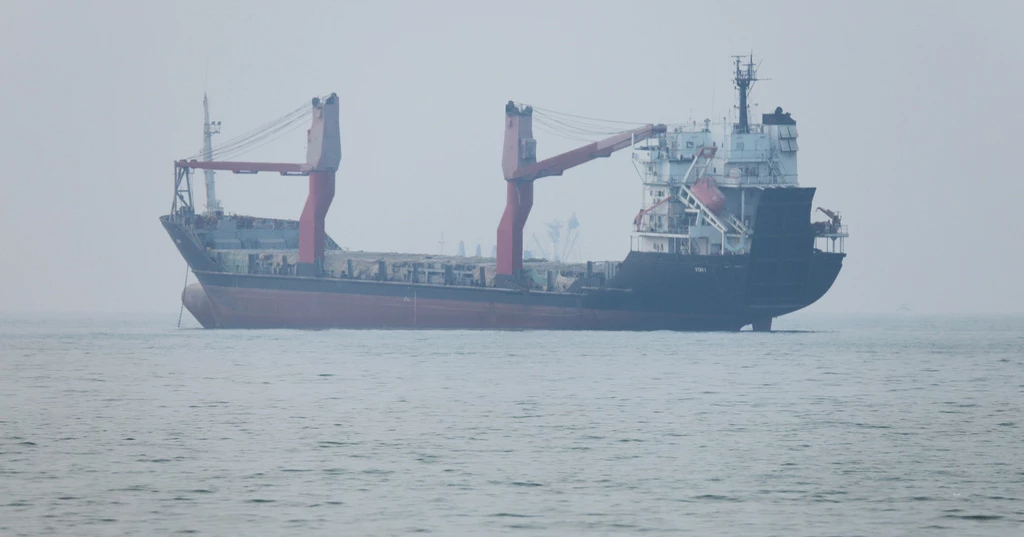
Meanwhile, Iranian state television reported that a foreign container ship ran aground in the Strait of Hormuz after using a route not approved by Iran. No further details about the vessel were released.
The report appeared intended to reinforce Tehran's claim of authority over the strategic waterway, which has long been regarded internationally as an international shipping route. During peacetime, about one-fifth of the world's oil and natural gas supplies pass through the strait.
Since the United States and Israel launched military operations against Iran on Feb. 28, Tehran has repeatedly used its ability to disrupt shipping through the Strait of Hormuz as a source of leverage, affecting global energy markets and trade.
The strait remains one of the biggest obstacles in the negotiations.
Under an interim arrangement, Iran and the United States agreed to allow ships to pass through the waterway without charges for 60 days. However, Tehran later insisted that it should control shipping routes and eventually collect transit fees, challenging long-established international practice.
The United States and several Gulf Arab countries have rejected the proposal. Efforts by Oman and a U.N. agency to establish an alternative route closer to Omani waters were followed by attacks across the Middle East last weekend, highlighting ongoing tensions.
Iranian state television said the stranded vessel became stuck because it had chosen a route with shallow waters and failed to follow approved navigation instructions. It said ships should comply with directions issued by Iran's paramilitary Revolutionary Guard in the strait.
The Guard's navy has repeatedly warned that vessels using routes other than what it called the "Route of Authority" in the Persian Gulf risk "irreparable incidents."
The report made no mention of two ships recently attacked by Iran after attempting to leave the strait without Tehran's approval, including one carrying crude oil from Qatar.
On Wednesday, Witkoff and Kushner also met Qatar's Emir Sheikh Tamim bin Hamad Al Thani and Prime Minister and Foreign Minister Sheikh Mohammed bin Abdulrahman Al Thani, according to a statement from the Qatari government.
U.S. Vice President JD Vance said discussions included shipping through the Strait of Hormuz.
"Obviously, we're worried about the nuclear issue," Vance told reporters. "We're going to start talking about that."
Sheikh Mohammed separately met Gharibabadi and other Iranian officials, with Pakistani mediators also participating. According to Iranian state media, Gharibabadi said there were no direct talks with the U.S. delegation and that discussions with mediators focused on Lebanon and plans to return some of Iran's frozen assets.
Lebanon continues to be another major point of disagreement. Iran has demanded an end to fighting between the Iranian-backed Hezbollah group and Israeli forces, while also calling on Israel to withdraw from southern Lebanon.
Israel, however, insists it must retain control of the territory and preserve its ability to strike Hezbollah, which has continued attacks into northern Israel.
Despite a sharp decline in shipping through the Strait of Hormuz after last weekend's attacks, more countries say their vessels have safely exited the area.
Thailand's Foreign Ministry said Tuesday that 10 of its 11 flagged or chartered vessels had safely passed through the strait. South Korean officials also said all but two of the country's 26 stranded vessels had departed safely.
In a separate development, the U.S. Navy said one crew member was missing after an MH-60S Sea Hawk helicopter made an emergency water landing in the Arabian Sea early Wednesday.
The Navy's 5th Fleet said there was "no indication the emergency was caused by hostile action." Three of the helicopter's four crew members were rescued, while search efforts for the missing crew member continued.
The Navy did not say whether the helicopter had been recovered. The aircraft was assigned to the USS George H.W. Bush, one of two U.S. aircraft carriers operating in waters near Iran.