Lifestyle
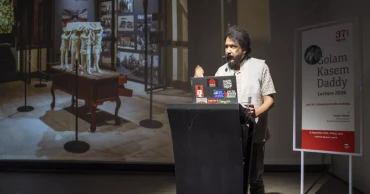
Drik hosts Golam Kasem Daddy Lecture 2026: Tanzim Wahab on our July Museum
Drik Picture Library organised the Golam Kasem Daddy Lecture 2026 at DrikPath Bhaban in the capital earlier Friday evening, with Bangladesh National Museum Director General Tanzim Wahab delivering the lecture titled ‘July 36: A museum in the making’.
The lecture was organised as part of Drik’s 37th anniversary celebrations and focused on the transformation of the former prime minister’s residence, Ganabhaban, into the July Mass Uprising Memorial Museum.
At the beginning of the event, photographer, activist and Drik Managing Director Shahidul Alam paid tribute to Golam Kasem Daddy, highlighting his contribution to the history of photography in Bangladesh.
Shahidul said Drik has been organising the lecture series annually since 2009 as part of its anniversary celebrations to honour Daddy’s memory and legacy. He described Daddy as not only a pioneering photographer but also a writer and lifelong learner, recalling that he continued to embrace new technologies even at the age of 101.
1 day ago

‘Dhora Taru Kabyo’ at Chhayanaut: Tagore’s ode to nature gets new life in Pooja Sengupta's choreography
The Indira Gandhi Cultural Centre (IGCC) of the High Commission of India in Dhaka organised a special dance theatre performance, ‘Dhora Taru Kabyo - Nature’s Tale’, inspired by Kobi Guru Rabindranath Tagore’s celebrated poem ‘Brikkho Bondona’ (Ode to Trees), at the Chhayanaut Auditorium on Thursday.
Led by acclaimed dance exponent and choreographer Pooja Sengupta, Turongomi Repertory Dance Theatre presented the production, which explored the enduring relationship between nature, humanity and the environment through dance and theatre.
The event was attended by Cultural Affairs Minister Nitai Roy Chowdhury, senior officials of the Ministry of Culture and Ministry of Foreign Affairs, eminent personalities from the field of Rabindra Sangeet, renowned dancers, cultural enthusiasts, students and young professionals.
1 day ago
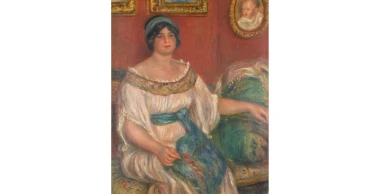
Stolen Renoir paintings worth millions could be nearly impossible to sell
Two paintings by Pierre-Auguste Renoir stolen from a small museum in southern France remain missing, but experts say the thieves are unlikely to make much money from the high-profile artworks because selling them openly would be nearly impossible.
The paintings were among four Renoir works taken Tuesday from the Renoir Museum in Cagnes-sur-Mer, the last home of the French Impressionist painter on the French Riviera.
Cagnes-sur-Mer Mayor Bryan Masson said a group of “well-equipped” burglars carried out the theft. Two of the paintings — “Portrait of Madame Pichon” and “Coco Reading” — were abandoned in the museum garden as the thieves fled, according to prosecutors.
The two remaining works, “Portrait of Madame Colonna Romano” and “Young Woman at the Well,” are still missing.
Masson estimated the combined value of the four stolen paintings at 9 million euros ($10.5 million).
However, art crime experts say the thieves would struggle to find buyers willing to take the legal and financial risks associated with stolen artwork.
“People always think that there is this kind of ‘Dr. No’ type from the James Bond movie,” said Arthur Brand, a Netherlands-based private art detective who has investigated art crimes for about two decades. “But that’s Hollywood. In the real world, there are no collectors like that.”
Brand said stolen works, particularly famous paintings, often become virtually worthless once removed from their legitimate owners because “nobody will touch” them.
Erin Thompson, an art crime professor at John Jay College of Criminal Justice in New York, said the chances of the thieves profiting from the Renoir theft were “extremely low.”
She said criminals sometimes try other ways to benefit from stolen art, including demanding ransom or seeking insurance payments. But many museums do not insure their collections because of the high cost, making such schemes difficult.
If the works are not recovered or voluntarily returned, stolen paintings may remain hidden for years. In some cases, Thompson said, criminals may eventually destroy them to eliminate evidence.
Brand said he has encountered limited cases in which stolen paintings circulated in criminal networks, including being used as partial payment for illegal goods such as drugs.
He also noted that, depending on local laws, criminals have sometimes used the promise of returning stolen artwork to seek reduced sentences for other offences.
Christopher Marinello, a lawyer and founder of Art Recovery International, said stolen artworks can also become bargaining chips for criminals facing prosecution.
Paintings harder to profit from than jewels
Experts say stolen paintings are more difficult to monetize than valuable jewelry because they cannot easily be broken down and sold in pieces without losing most or all of their value.
Jewelry and other objects made of precious metals can potentially be melted down or dismantled and incorporated into new pieces, although experts warn that gems and other components can sometimes still be identified.
Paintings do not offer the same opportunity.
“It’s a canvas with some old oil paint on it,” said James Ratcliffe of the Art Loss Register. “You can’t touch it up. You can’t resell it other than for what it is.”
The comparison comes as museums around the world face continued theft risks. Last year, experts warned that jewels stolen during a high-profile heist at Paris’ Louvre Museum could potentially be dismantled and resold in different forms.
Apart from an emerald-set imperial crown recovered outside the Louvre on the day of the October 2025 robbery, the stolen jewels remain missing.
Security concerns at smaller museums
The Renoir theft is the latest in a series of high-profile art crimes involving museums and collections.
Earlier this year, three paintings by Renoir, Paul Cézanne and Henri Matisse, worth millions of euros, were stolen in Italy. They were recovered last month.
Ratcliffe said smaller museums can be particularly vulnerable because they often lack the resources to install sophisticated security systems. Historic buildings can also make it more difficult and expensive to introduce modern security measures.
Experts warn that such vulnerabilities could lead to more art thefts unless museums improve their security.
“We need to change the way we treat small and country house museums before we lose our cultural heritage permanently,” Marinello said, calling for stronger security and enforcement.
“We’re supposed to be preserving our cultural heritage, not allowing criminals to take what they want and using them as shopping malls,” he said.
2 days ago

Symphony of Life’: Shilpo Bangla’s 8th group art exhibition begins Thursday
Shilpo Bangla is set to organise its 8th group art exhibition titled ‘Symphony of Life’ at Zainul Gallery of the Faculty of Fine Arts, Dhaka University, from September 10 to 16.
The exhibition will bring together 160 artists, presenting diverse artistic perspectives and visual expressions centred on different dimensions of life and society.
The opening ceremony will be held at 5 pm on Thursday at the Osman Jamal Auditorium of the Faculty of Fine Arts.
Eminent artist and Ekushey Padak-winning Professor Dr Abdus Sattar, honorary teacher of the Department of Oriental Art at the Faculty of Fine Arts, Dhaka University, will attend the opening ceremony as the chief guest.
Professor Kawsar Hasan Togor of the Department of Sculpture at the Faculty of Fine Arts, Channel i Chief Executive Producer Shanto Mahmud, and Associate Professor Habiba Akter Papia of the Department of Fashion Design at Shanto-Mariam University of Creative Technology will attend as special guests.
Professor Dr Azharul Islam Sheikh Chanchal, Dean of the Faculty of Fine Arts and Chairman of its Department of Ceramics, will preside over the ceremony.
According to the organisers, the exhibition has been conceived as a platform for artists to share their individual visions while contributing to a collective artistic experience.
Through their works, participating artists explore different dimensions of life and society, encouraging viewers to observe, reflect and engage with the stories embedded in the artworks.
Shilpo Bangla said it views art not only as an aesthetic experience but also as a means of connecting people, ideas and emotions. The exhibition aims to create an opportunity for audiences to experience the richness and diversity of visual art while providing artists with a platform to present their creative practices.
Minne Art Gallery and Mahfuz Canvas are supporting partners of the exhibition.
3 days ago
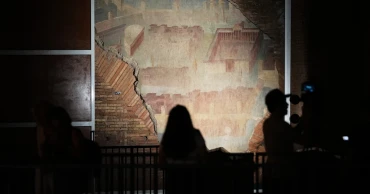
Ancient Rome's largest fresco and mosaic complex opens to public
One of the largest known fresco and mosaic complexes from ancient Rome has been opened to the public for the first time, nearly three decades after its discovery beneath the remains of the Baths of Trajan.
Rome Mayor Roberto Gualtieri on Tuesday unveiled the recently restored “Painted City” fresco and “Great Mosaic,” which were found in an underground gallery during archaeological excavations in the 1990s on Oppio Hill near the Colosseum.
The fresco, dating to the first century AD, portrays a walled maritime city from an aerial perspective and is believed to be the largest surviving wall fresco of its kind from ancient Rome.
Its vivid blue and terracotta shades remain visible despite centuries underground, although the colours have faded over time.
Gualtieri described the works as exceptional both for their artistic value and their historical significance.
The cultural superintendent of Rome, Claudio Parisi Presicce, said the fresco is particularly well preserved, showing buildings, a theatre, temple, public squares and towers.
“We don’t know what city it refers to, but it must have been a particularly well-known one,” he said.
The restoration involved removing accumulated surface deposits, strengthening the mortar and using conservation techniques to improve the visibility of the decorated surfaces while protecting them from further deterioration.
The site is initially being opened under a limited trial programme, with groups of up to 15 visitors allowed in on weekends. Authorities will monitor the impact of increased humidity and other environmental conditions on the fragile artworks before expanding public access.
The accompanying mosaic stands about 15 metres high and contains elaborate columns, architectural features and human figures arranged across four levels.
The upper sections feature detailed figures and scenes resembling theatrical performances, while the lower portions provide an overhead view of the layout of a port city.
The Baths of Trajan were inaugurated by Emperor Trajan in 109 AD and covered around six hectares, making them the largest bathing complex in the ancient world at the time.
The vast complex incorporated an earlier bathing facility associated with the Domus Aurea. Its design was altered to make better use of varying water temperatures and enhance the bathing experience.
The area now accessible to visitors also includes a large semicircular upper-level structure believed by archaeologists to have served as a library.
The baths were not only a place for bathing and physical exercise but also provided space for cultural and intellectual activities.
3 days ago

Jakarta flights resume after volcanic ash disrupts air travel for two days
Air travel in and around Indonesia’s capital returned to normal Tuesday after volcanic ash from an eruption led to the closure of several airports for two days, disrupting almost 3,000 flights.
Soekarno-Hatta International Airport and Halim Perdanakusuma Airport in Jakarta, along with three other airports in nearby areas, reopened shortly after midnight, Transportation Minister Dudy Purwagandhi said. By Tuesday morning, two of the facilities had returned to regular operations, while another had already reopened a day earlier.
Purwagandhi said flights were permitted to restart only after aviation officials confirmed that conditions posed no danger to aircraft. Airlines and airport operators were also instructed to examine planes carefully before allowing them to fly.
Flight crews were warned to remain alert to temporary restricted airspace established over areas affected by volcanic ash. Aviation authorities commonly impose such restrictions because ash particles can enter aircraft engines and cause serious damage to engines and other vital components.
The intense eruption of Anak Krakatau, which produced lava fountains and powerful explosions, subsided Sunday. However, the volcano was still showing signs of activity Tuesday morning. Officials recorded eruptions at 5:08 a.m. and 5:34 a.m., although poor visibility caused by fog and weather prevented them from determining the height of the ash plume.
The airport shutdowns on Sunday and Monday affected approximately 2,961 flights, including 622 international flights, and disrupted travel plans for an estimated 341,000 passengers.
Authorities also gave schools in communities covered by volcanic ash permission to temporarily conduct classes online. The move was intended to limit students’ exposure to potentially harmful volcanic particles.
Anak Krakatau, meaning “child of Krakatau,” sits in the Sunda Strait between Java and Sumatra. It emerged from the remains of the historic Krakatau volcano, whose massive 1883 eruption had worldwide climatic effects and contributed to a period of global cooling.
Anak Krakatau was also responsible for a deadly disaster in 2018, when an eruption triggered a tsunami that struck parts of Sumatra and Java, killing at least 430 people. Scientists believe volcanic activity caused an underwater landslide, resulting in the collapse of part of the volcano’s southwestern flank and the displacement of a huge amount of seawater.
The volcano has remained under Indonesia’s second-highest warning level since July. Officials have urged residents, tourists and fishermen to keep a minimum distance of 3 kilometers (1.9 miles) from the active crater.
4 days ago

Wildlife, biodiversity conservation take centre stage at soft launch of ‘The Bangladesh Sundarban’
The conservation of the Sundarbans and its rich natural heritage took centre stage at the soft launch of the second edition of Enayetullah Khan’s ‘The Bangladesh Sundarban’ at the Cosmos Centre Auditorium in the capital on Monday.
The event brought together conservationists, wildlife experts and photographers with Dr Yanan Wu, Chairman and CEO of Surfin Meta Digital Technology Pte. Ltd, a Singapore-headquartered financial technology solutions provider for the underserved, attending as the chief guest.
Published by WildTeam and supported by Surfin, the second edition of the book features two new chapters, adding to its documentation of the Sundarban’s wildlife, biodiversity, natural history and the lives and livelihoods of communities closely connected with the mangrove forest.
All proceeds from its sale will go towards tiger conservation.
The programme began with a short video showcasing the activities of WildTeam.
Enayetullah Khan, Founder of WildTeam, Prof Dr Md Anwarul Islam, CEO and General Secretary of WildTeam, renowned ornithologist, wildlife photographer and also Chairman of WildTeam Enam Ul Haque addressed the gathering before prominent global investment and fintech executive Dr Wu spoke as the chief guest.
Dr Wu said he was honoured to be associated with the project and described the conservation of the Sundarbans as a meaningful contribution to Bangladesh and humanity.
"It is my honour and privilege to be part of such a great project, such a meaningful contribution to our great nation, especially to a UNESCO World Heritage Site," he said.
5 days ago

For New York's Haitian community, annual West Indian Day Parade means more in trying times
Brooklyn’s Eastern Parkway is set to come alive Monday with steel drums, colorful floats draped in flags and the aroma of jerk chicken as hundreds of thousands of people gather for the West Indian Day Parade, one of the largest celebrations of Caribbean culture in the United States.
For Haitians, however, this year’s parade carries a more serious tone. Federal immigration enforcement has increased pressure on Caribbean and other Black immigrant communities over the past year, while Haitians have lost a major immigration protection known as temporary protected status, or TPS. The program had allowed hundreds of thousands of Haitians to remain legally in the US.
Organizers say the parade is therefore both a celebration of Haitian pride and a welcome moment of joy during a difficult year.
“There’s a somber cloud over it with everything that has happened from last year to this year with TPS,” said Natalie Lafontant, a Brooklyn native who organizes Lespri Ayiti, or “Spirit of Haiti,” the largest Haitian marching community, known as a “mas,” in Monday’s parade. She pointed to conditions at detention centers and the deportation of Haitians who may have no reliable means of supporting themselves after returning home.
Still, Lafontant said hardship has never stopped Caribbean people, particularly Haitians, from expressing themselves through culture.
She said Haitians rely on music, dance and art to keep moving forward despite difficult circumstances.
Keeping the parade alive amid immigration pressuresIn June, the US Supreme Court ruled 6-3 in Mullin v. Doe that federal courts could not review the Trump administration’s decision to end TPS for Haitian and Syrian immigrants. The ruling cleared the way for about 350,000 Haitians to lose the protection.
A federal judge finalized the order in early August, while work permits linked to Haitian TPS expired on July 27.
Lafontant’s Lespri Ayiti group, which includes about 180 artists, designers, musicians and community members, is taking part in the parade for the second consecutive year. The group faced difficulties securing sponsors for its float this year.
Organizing the parade is expensive, she said, with costs including insurance, costumes, designers and arrangements for participants. Despite the financial burden, the group continues because of its love for Haiti.
Haitians have deep roots in New YorkLafontant is part of a Haitian community of about 163,000 people in the New York metropolitan area, according to the Migration Policy Institute. It is the second-largest Haitian population in the US after the Miami metropolitan area.
Many Haitian immigrants settled in Brooklyn neighborhoods such as Flatbush, East Flatbush and Crown Heights.
Haitian migration to New York grew in waves beginning during the dictatorship of Jean-Claude “Baby Doc” Duvalier. Political repression and economic collapse pushed many Haitians to leave the country during the 1970s and 1980s. The migration continued after Duvalier was ousted in 1986.
Haiti’s tradition of resistance goes back even further to the Haitian Revolution, when enslaved and free Black people defeated French colonial rule in what is widely considered the only successful slave revolt in modern history. The struggle culminated in the 1803 Battle of Vertières and paved the way for Haiti’s independence in 1804.
That history remains an important source of pride for Haitians around the world, including generations who have established new lives outside the country.
Edwina Paul, founder of SPM, or “Fanm Se Poto Mitan,” meaning “Women Are the Pillar of Society,” left Haiti in 1993 and moved with her husband to Brooklyn’s Canarsie neighborhood.
Paul’s coalition of Haitian women leaders and organizers will also participate in Monday’s parade. She said insecurity and instability in Haiti have been major reasons people leave the country.
“It's not safe there. Coming here is like an umbrella for us to be safe from that,” she said, referring to Haitians fleeing gang violence and instability.
She stressed that Haitian migrants come to the US seeking work, education and a safer life, not to commit crimes.
Haitian music and fashion take center stageSPM is highlighting Haitian resilience through its parade costumes this year.
Fashion designer Clara Poteau, a Fashion Institute of Technology alumna, created royal blue emperor robes inspired by Jean-Jacques Dessalines, a leader of the Haitian Revolution and the first leader of independent Haiti.
Six designers and one painter spent a month creating and hand-painting costumes celebrating Haitian achievements. Their work continued through the weekend before the parade.
The costumes include dresses decorated with miniature Haitian flags and skirts featuring national football players Duckens Nazon and Emmanuel Sanon, who hold Haiti’s international scoring records with 44 and 47 goals, respectively.
An orange T-shirt called the “Freedom” tee features the flags of countries whose independence Haitian revolutionary leaders supported with shelter, money, weapons and troops. The countries include Venezuela, Colombia, Ecuador, Peru, Bolivia, Panama, Mexico and Greece.
Music will also play a major role in the Haitian “mas.” Jesus Luc, a Harlem native and Lespri Ayiti’s band manager, organized a lineup featuring Raboday, a popular contemporary Haitian and Caribbean music style, along with Kompa, Haiti’s signature dance music.
DJ Comix of Team Madada will headline the musical lineup. Luc described the group as one of the most popular in Haiti and said its sound represents a new generation of Haitian youth culture.
“It’s electrifying. It’s music that will touch your soul,” Luc said, adding that the combination of music and costumes would bring the spirit and heart of the Haitian people to the parade.
5 days ago

Endometriosis Can Go Undiagnosed for Years, but New Tests Offer Hope
When Zoë Armstrong received an ultrasound report showing signs of endometriosis, she broke down in tears while speaking with her mother. After years of pain and repeated visits to doctors, she finally had an explanation for what she had been experiencing.
Seeing the diagnosis in writing made her feel validated.
Armstrong's experience reflects a wider problem. According to the American College of Obstetricians and Gynecologists, many patients wait 10 years or even longer after their symptoms begin before receiving a diagnosis of endometriosis.
The condition affects about one in 10 women worldwide. It occurs when tissue similar to the lining of the uterus grows elsewhere in the body, often causing severe pain and other health problems.
Severe pain and other symptomsEndometriosis is believed to be a chronic inflammatory disease, although its exact cause remains unclear. Experts say genetic factors may also play a role.
The symptoms can vary depending on where the tissue grows and how severe the condition is. It commonly affects the ovaries, bladder and bowel, though in rare cases it can occur outside the pelvic area.
Common symptoms include severe pain during menstruation, sexual intercourse or bowel movements. Patients may also experience bloating, fatigue and infertility.
Dr. Drorit Or of Mount Sinai West in New York said the pain can be so severe that some patients are unable to attend school or work and may remain in bed for days.
Armstrong began experiencing symptoms when she was 11. She suffered stabbing pain on the left side of her body and frequently had to visit the school nurse. Later, she developed severe pain, nausea, heavy menstrual bleeding, acne and ruptured ovarian cysts.
After getting married, her pain became even more intense and frequent.
Why diagnosis often takes so longArmstrong was eventually diagnosed at the age of 29 by a doctor who also had endometriosis.
An ultrasound detected an endometrioma, a cyst associated with the disease. After searching for the term online, Armstrong finally began to understand what could be causing her long-standing health problems. Surgery later confirmed the diagnosis.
Experts say delayed diagnosis can happen for several reasons. Menstrual pain is often considered normal by both patients and doctors. In addition, the symptoms can resemble those of other medical conditions.
Dr. Megan Billow of the Cleveland Clinic said not all health care providers have sufficient experience or expertise in identifying endometriosis.
Doctors suggest that patients keep a record of their symptoms, including when pain occurs, where it is felt and how severe it becomes. This information can help doctors better understand the patient's condition.
Patients should also feel comfortable asking their doctors whether endometriosis could be a possible cause of their symptoms.
New diagnostic tests raise hopesNew tests designed to help detect endometriosis are already being used in some countries, although they have not yet received approval from the U.S. Food and Drug Administration.
One test, called EndoSure, takes about 30 minutes. It measures electrical signals in the gut using sensors placed on the abdomen, and the results are provided to the doctor afterward.
Another test, known as Endotest, analyzes saliva samples for microRNAs that may indicate the presence of endometriosis. Results are generally available within two to three weeks.
In the United Kingdom, health advisers have issued draft guidance recommending that both tests be used by the National Health Service for three years while more evidence is gathered about their effectiveness. The aim is to help speed up diagnosis, particularly in primary care.
Dr. Mark Noar, founder of Maryland-based EndoSure, said the company is preparing its application to the FDA to seek approval for the test as a tool to assist doctors in diagnosing the disease.
Meanwhile, French company Ziwig is working to make Endotest available to patients in the United States through a pathway that allows certain laboratory-developed tests to be offered through certified laboratories without FDA approval.
Dr. Andrew Spiers of Ziwig said such tests should be considered an important starting point rather than a replacement for other diagnostic methods. Once doctors identify the possibility of endometriosis, further imaging and examinations may still be necessary.
U.S. doctors agree that these new tests could become useful additions to existing diagnostic methods, but they are unlikely to provide a complete solution. They also will not address the long-standing tendency to dismiss or normalize severe menstrual pain.
Treatment options are availableOnce diagnosed, patients can work with doctors to develop a treatment plan based on their symptoms and individual needs.
Treatment options include painkillers such as ibuprofen and prescription medicines designed specifically for endometriosis. Hormonal treatments, including birth control pills, progestin therapy and medicines that temporarily stop menstruation, may also help manage symptoms.
Surgery can be another option in some cases. Severe cases may require more extensive procedures, including hysterectomy.
Armstrong underwent excision surgery to remove endometriosis lesions and scar tissue. She still receives regular care, including pelvic floor therapy and treatment for other related health problems.
She now visits middle and high schools across New York City with the Endometriosis Foundation to raise awareness about the disease and other women's health conditions.
Armstrong believes young people need better information about the warning signs and when to seek medical help.
Dr. Or said that while endometriosis can be difficult to diagnose and manage, patients should know that treatment and support are available.
Women do not have to simply accept severe pain as a normal part of life, she said, adding that many people with endometriosis can manage the condition and live healthy, fulfilling lives.
6 days ago
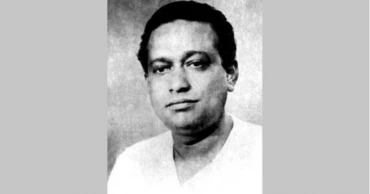
Abdul Alim: The immortal voice of Bengal’s folk heritage
Few voices in the region's folk music have carried the soul of rural Bengal quite like Abdul Alim, whose deeply moving songs turned the experiences of ordinary people into an enduring musical legacy.
The legendary folk singer died on this day 52 years ago (September 5, 1974) at the erstwhile PG Hospital in Dhaka, aged 43. He has been dead longer than he lived, yet songs including 'Naiya Rey Nayer Badaam Tuila', 'Holudia Pakhi Shonar Boron', 'Porer Jaiga Porer Jomi' and 'Shorbonasha Padma Nodi' continue to resonate across generations.
Born on July 27, 1931, in Talibpur village of Murshidabad, Alim developed an interest in music during childhood. His first two recorded songs, 'Tor Mostafa-ke De Na Mago' and 'Aftab Ai Baslo Pate', were recorded in 1943, when he was only 12.
After Partition, he settled in Dhaka, where he became associated with radio and television while continuing his training under noted musicians including Ustad Mohammad Hossain Khasru and Momtaz Ali Khan.
Alim recorded more than 300 gramophone records and lent his voice to over 100 films. He was also among the singers associated with Mukh O Mukhosh, the first feature film produced in the then East Pakistan.
His repertoire covered diverse folk traditions, including bhatiali, murshidi, marfati, jari and sari. His distinctive voice and emotional delivery brought songs of love, separation, devotion, rivers and rural life to a much wider audience.
His reputation extended beyond Bengal. At the All Pakistan Music Conference in Lahore, he received five gold medals for his performances and contribution to music.
He received the Ekushey Padak posthumously in 1977 and the Independence Award in 1997. He also received the National Film Award for Best Male Playback Singer posthumously for his performance in Khan Ataur Rahman’s Sujan Sakhi.
Yet preserving his musical legacy remains a concern. His family has said that of more than 500 songs associated with him, only around 250 to 300 have been documented, while some recordings held in archives outside Bangladesh remain difficult to recover.
The preservation challenge makes Alim’s legacy more than a story of remembering a legendary singer. Every lost recording potentially means the loss of a unique musical interpretation and performance tradition.
Despite the gaps, his voice continues to live through younger performers, his children and cultural organisations working to preserve his repertoire.
More than five decades after his final journey, Abdul Alim’s songs are still travelling, keeping his unmistakable voice alive in Bangladesh’s musical heritage.
7 days ago