Environment
Rain, thundershowers likely over 8 divisions
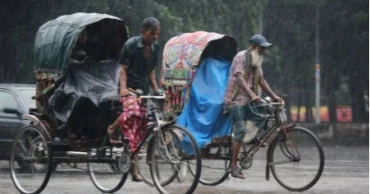
Bangladesh Meteorological Department (BMD) has forecast rain or thundershowers in all divisions of the country including Dhaka in 24 hours commencing 9am on Saturday.
“Light to moderate rain or thunder showers accompanied by temporary gusty wind is likely to occur at many places over Rangpur, Mymensingh, Khulna and Sylhet divisions and at a few places over Rajshahi, Dhaka, Barishal and Chattogram divisions with moderately heavy to heavy falls at places over the country,” Met office said.
Day and night temperatures may fall slightly over the country.
The Low over coastal areas of Odisha-Andhra Pradesh now lies over South Chhattisgarh and adjoining area.
The axis of monsoon troughs runs through Rajasthan, Uttar Pradesh, the center of the low, Bihar, Gangetic West Bengal to Assam across southern part of Bangladesh.
Monsoon is fairly active over Bangladesh and moderate over North Bay.
16 hours ago
No cleanup seen along Buriganga bank despite HC order
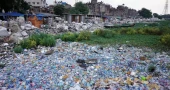
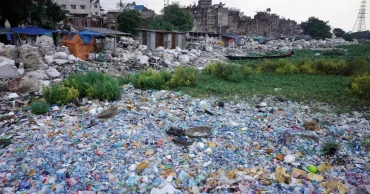
No visible cleanup activity has begun in Islampur along the Buriganga River, nine days after the High Court ordered the removal of plastic and other waste from the riverbank within 15 days.
A visit to Islampur, under Lalbagh and Kamrangirchar police stations, on Thursday found large piles of polythene, plastic bottles, packets and other solid waste scattered along different stretches of the riverbank. In some places, plastic waste was also seen floating in the river.
1 day ago
Dhaka’s air quality turns moderate
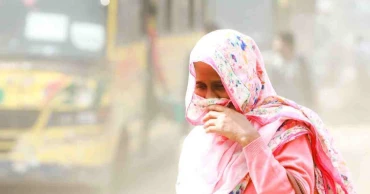
Dhaka’s air quality turned ‘moderate’ on Friday morning, with the city recording an Air Quality Index (AQI) score of 79 at 9:35am.
Dhaka ranked 23rd among cities worldwide with the worst air quality at the time.
According to the AQI scale, a score of 51-100 indicates ‘moderate’ air quality. At this level, air quality is generally acceptable, although unusually sensitive people may experience some health effects.
Malaysia’s Kuching, Ethiopia’s Addis Ababa and Indonesia’s Jakarta topped the list of cities with the worst air quality, recording AQI scores of 182, 179 and 167, respectively.
Earlier, at 9:20am on Thursday, Dhaka ranked third among cities worldwide with the worst air quality, with an AQI score of 169.
An AQI score of 101-150 is considered ‘unhealthy for sensitive groups’, while 151-200 is ‘unhealthy’. A score of 201-300 is classified as ‘very unhealthy’, and 301 or above is considered ‘hazardous’, posing serious health risks.
The AQI is an index used to report daily air quality and inform people about how clean or polluted the air is and the associated health risks.
Bangladesh’s AQI is based on five pollutants: particulate matter (PM10 and PM2.5), nitrogen dioxide (NO2), carbon monoxide (CO), sulphur dioxide (SO2) and ozone.
Dhaka has long been grappling with air pollution. Its air quality generally deteriorates during winter and improves during the monsoon.
According to the World Health Organisation (WHO), air pollution causes an estimated seven million deaths worldwide every year, mainly due to increased mortality from stroke, heart disease, chronic obstructive pulmonary disease, lung cancer and acute respiratory infections.
1 day ago
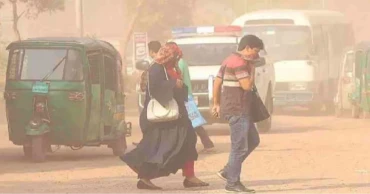
Dhaka’s air remains unhealthy this morning
Dhaka ranked third on the list of cities with the worst air quality in the world on Thursday morning, recording an Air Quality Index (AQI) score of 169 at 9:20 am.
The air quality was classified as ‘unhealthy’, meaning the concentration of pollutants in the air had reached a level that could pose health risks to the general population, according to the AQI scale.
Pakistan’s Lahore topped the list with an AQI score of 180, followed by Malaysia’s Kuching with 170. India’s Delhi ranked fourth with an AQI score of 168.
An AQI score between 101 and 150 is considered ‘unhealthy for sensitive groups’, while readings between 151 and 200 are classified as ‘unhealthy’.
Scores ranging from 201 to 300 are considered ‘very unhealthy’, while readings above 301 are classified as ‘hazardous’, posing serious health risks.
The AQI is a daily measure of air quality that indicates the level of pollution in the air and its potential health impacts on people.
In Bangladesh, AQI measurements are based on five major pollutants: particulate matter (PM₁₀ and PM₂.₅), nitrogen dioxide (NO₂), carbon monoxide (CO), sulphur dioxide (SO₂) and ozone.
According to the World Health Organization, air pollution causes an estimated seven million deaths globally each year, mainly from stroke, heart disease, chronic obstructive pulmonary disease, lung cancer and acute respiratory infections.
2 days ago
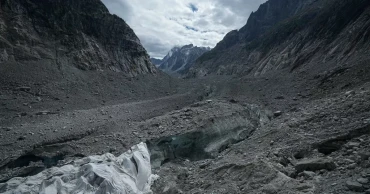
Climate change raises risks on Mont Blanc as glaciers retreat
Climate change is rapidly transforming the landscape around Mont Blanc, Western Europe’s highest peak, as retreating glaciers, melting snow and thawing permafrost increase the risks of rockfalls and other hazards.
Communities and researchers on both the French and Italian sides of the mountain say this summer’s record heat has accelerated changes that are already reshaping the Alpine environment.
At 4,805 meters, Mont Blanc has long been known for its glaciers and snow. But rising temperatures have weakened permafrost that has helped hold steep mountain slopes together for thousands of years.
Stéphane Bozon, deputy mayor of Chamonix-Mont-Blanc and responsible for safety, said rockfalls increased from mid-July, while glacier retreat and snowmelt created more crevasses and made some areas difficult to access.
At Aiguille du Midi, which rises to 3,842 meters in the Mont Blanc range, the average temperature this July reached 3.3 degrees Celsius, the highest July average on record, according to Meteo France. The previous figure was 1.6 C in July 1994.
Bozon said the unusual heat had left the mountain exceptionally dry and raised concerns about future glacier or rock collapses affecting populated areas.
Himalayan disaster highlights wider risks
The changes in the Alps have drawn renewed attention following devastating floods in Nepal and China on Aug. 26, triggered by the collapse of bedrock and glacier ice that sent water and debris through Himalayan rivers.
Scientists have said climate change likely contributed to the conditions that made the Himalayan disaster possible, with warming temperatures increasing the risk of similar events.
Researchers in the Alps are observing comparable climate-related changes, although the hazards and circumstances differ.
In Italy’s Lombardy region, Alpine glaciers have lost more than 40% of their surface area since 1991, according to the regional glacier service.
Vanda Bonardo, head of the Italian branch of the International Commission for the Protection of the Alps, said rain is increasingly replacing snowfall at high elevations, affecting the stability of mountain terrain.
Rockfalls surge
Ludovic Ravanel, a Savoie Mont Blanc University researcher who studies the effects of climate change on mountain snow, glaciers and permafrost, said thawing ice is weakening rock faces that were previously stabilized by frozen ground.
He expects around 400 major rock collapses in the Mont Blanc massif this year, roughly 10 times the number recorded two decades ago. A major collapse is defined as involving more than 100 cubic meters of rock.
The previous particularly severe year was 2022, when nearly 300 such collapses were recorded, Ravanel said.
He described the sharp increase in rockfalls as one of the defining features of the summer of 2026.
Climbers face growing dangers
Chamonix-based mountain guide Stuart MacDonald said the rapid retreat of glaciers has been striking, with some routes changing dramatically within just a few years.
Melting ice and falling rocks made guiding particularly difficult this summer, forcing him to cancel plans to take a group to the summit of Mont Blanc last week.
MacDonald said climbers can sometimes hear rocks falling before seeing large cascades rushing down slopes. Some routes that were regularly used in July and August in previous years have now become too dangerous or inaccessible.
Bozon said Chamonix must prepare quickly for potentially serious scenarios as the effects of glacier retreat continue to intensify.
“We have to move quite quickly,” he said, noting that each summer has brought new warnings about the changing mountain environment.
3 days ago

Dhaka ranks third among world's most polluted cities
Dhaka ranked third among the world's most polluted cities on Wednesday morning, recording an Air Quality Index (AQI) score of 161 at 9:50 am.
The city's air quality was classified as 'unhealthy', meaning people may experience health effects due to elevated levels of air pollutants.
According to the AQI ranking, Malaysia's Kuching topped the list with a score of 184, followed by Kuala Lumpur with 179. Kinshasa, the capital of the Democratic Republic of the Congo, ranked fourth with an AQI of 158.
An AQI score between 101 and 150 is considered 'unhealthy for sensitive groups', while readings between 151 and 200 are classified as 'unhealthy'. Scores from 201 to 300 are considered 'very unhealthy', and readings above 301 are categorized as 'hazardous'.
The AQI is used to measure daily air quality and indicate the level of pollution in the atmosphere and its potential health impacts.
In Bangladesh, air quality is assessed based on five major pollutants: particulate matter (PM10 and PM2.5), nitrogen dioxide (NO2), carbon monoxide (CO), sulphur dioxide (SO2) and ozone.
The World Health Organization estimates that air pollution causes around seven million deaths worldwide every year, mainly from stroke, heart disease, chronic obstructive pulmonary disease, lung cancer and acute respiratory infections.
3 days ago
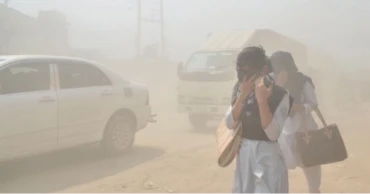
Dhaka ranks 4th among world's most polluted cities with 'unhealthy' air
Dhaka ranked fourth on the list of the world's most polluted cities on Monday morning, recording an Air Quality Index (AQI) score of 152 at 9:50am.
The city's air quality was classified as “unhealthy,” indicating that exposure to the polluted air may pose health risks to the general population, according to the AQI scale.
Kuching of Malaysia topped the list with an AQI score of 192, followed by Delhi, the capital of India, with 175, and Kuala Lumpur of Malaysia with 170.
An AQI reading between 101 and 150 is considered 'unhealthy for sensitive groups', while a score between 151 and 200 is classified as 'unhealthy'. Readings between 201 and 300 are deemed 'very unhealthy', and levels above 301 are considered 'hazardous', posing serious health risks.
The AQI, an index that tracks daily air quality, indicates how polluted the air is and the potential health effects on residents.
In Bangladesh, AQI measurements are based on five key pollutants: particulate matter (PM₁₀ and PM₂.₅), nitrogen dioxide (NO₂), carbon monoxide (CO), sulphur dioxide (SO₂) and ozone.
According to the World Health Organization, air pollution causes an estimated seven million deaths worldwide each year, primarily from stroke, heart disease, chronic obstructive pulmonary disease, lung cancer and acute respiratory infections.
5 days ago
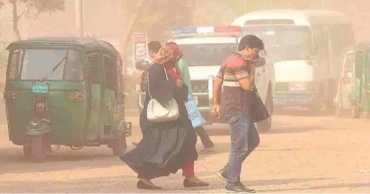
Dhaka ranks 13th among cities with worst air quality
Dhaka ranked 13th among the world’s cities with the worst air quality on Sunday morning, recording an Air Quality Index (AQI) score of 107 at 09:30am.
According to the AQI scale, the city's air quality was classified as “Unhealthy for Sensitive Groups”, poses health risks to children, older adults, and people with heart or lung diseases, while the general public is mostly unaffected.
Malaysia's Kuching topped the global pollution ranking with an AQI of 229, followed by Kuala Lumpur with 182 and Uganda's Kampala with 154.
An AQI reading of 101 to 150 is considered ‘unhealthy for sensitive groups’, while 151 to 200 is classified as ‘unhealthy’. A reading between 201 and 300 is considered ‘very unhealthy’, and anything above 301 is categorized as ‘hazardous’, posing serious health risks.
The AQI provides a daily indication of air quality by measuring the level of pollution and its potential impact on human health.
In Bangladesh, the AQI is calculated based on five major pollutants — particulate matter (PM10 and PM2.5), nitrogen dioxide (NO2), carbon monoxide (CO), sulfur dioxide (SO2) and ozone.
Dhaka has long faced serious air pollution problems, with air quality generally deteriorating during the winter months and improving during the monsoon season.
The World Health Organization estimates that air pollution contributes to around 7 million deaths worldwide every year, mainly from stroke, heart disease, chronic obstructive pulmonary disease, lung cancer and acute respiratory infections.
6 days ago

Dhaka's air quality turns ‘moderate’
Dhaka ranked 15th among the world's most polluted cities on Saturday morning, recording an Air Quality Index (AQI) score of 88 at 9:03 am.
According to the AQI ranking, the capital's air quality was classified as ‘moderate’.
Malaysia’s Kuching, Indonesia’s Jakarta and China’s Chengdu occupied the first three spots on the list with AQI scores of 267, 161 and 152, respectively.
Under the AQI scale, a reading between 50 and 100 is considered ‘moderate’, indicating generally acceptable air quality. However, unusually sensitive individuals may experience minor health concerns and are advised to limit prolonged outdoor exertion.
An AQI reading between 101 and 150 is considered ‘unhealthy for sensitive groups’, while 151–200 is categorised as ‘unhealthy’. Readings between 201 and 300 are regarded as ‘very unhealthy’, and levels above 301 are considered ‘hazardous’, posing serious health risks to the population.
The AQI is an index used to report daily air quality and inform people about how clean or polluted the air is, as well as the potential health effects associated with pollution levels.
In Bangladesh, the AQI is calculated based on five major pollutants: particulate matter (PM10 and PM2.5), nitrogen dioxide (NO2), carbon monoxide (CO), sulphur dioxide (SO2), and ozone.
Dhaka has long struggled with air pollution. Air quality typically worsens during the winter months and improves with the arrival of the monsoon season.
According to the World Health Organization (WHO), air pollution causes around seven million deaths worldwide each year, mainly due to stroke, heart disease, chronic obstructive pulmonary disease (COPD), lung cancer and acute respiratory infections.
7 days ago
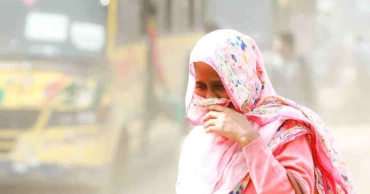
Dhaka ranks 6th in global air quality index
Dhaka ranked 6th among the world’s cities with the worst air quality on Friday morning, recording an Air Quality Index (AQI) score of 132 at 09:45 am.
According to the AQI scale, the city's air quality was classified as “Unhealthy for Sensitive Groups”, poses health risks to children, older adults, and people with heart or lung diseases, while the general public is mostly unaffected.
Kuching in Malaysia topped the global pollution list with an AQI of 316, followed by Kampala in Uganda with 178 and Jakarta in Indonesia with 158.
An AQI reading of 101 to 150 is considered ‘unhealthy for sensitive groups’, while 151 to 200 is classified as ‘unhealthy’. A reading between 201 and 300 is considered ‘very unhealthy’, and anything above 301 is categorized as ‘hazardous’, posing serious health risks.
The AQI provides a daily indication of air quality by measuring the level of pollution and its potential impact on human health.
In Bangladesh, the AQI is calculated based on five major pollutants — particulate matter (PM10 and PM2.5), nitrogen dioxide (NO2), carbon monoxide (CO), sulfur dioxide (SO2) and ozone.
Dhaka has long faced serious air pollution problems, with air quality generally deteriorating during the winter months and improving during the monsoon season.
The World Health Organization estimates that air pollution contributes to around 7 million deaths worldwide every year, mainly from stroke, heart disease, chronic obstructive pulmonary disease, lung cancer and acute respiratory infections.
8 days ago