Local-Business

Flour, aromatic rice prices spike as edible oil crisis persists in Dhaka
Prices of flour, refined flour (maida) and aromatic rice have risen sharply in Dhaka kitchen markets, adding to pressure on bakeries, biryani businesses and middle-income households amid a continued shortage of soybean oil.
A visit to markets in Shantinagar, Rampura, Badda and Shahjadpur on Friday found loose flour selling at Tk 50 per kg, up from Tk 45 last week, while the maida price climbed to Tk 80-85 per kg from Tk 70-75.
Aromatic rice prices jumped by Tk 20 per kg even after the Ministry of Commerce halved the export quota for the variety. Quality loose aromatic rice is now selling at Tk 200 per kg, up from Tk 180 a week earlier, while packaged aromatic rice ranges between Tk 220 and Tk 240 per kg. Buyers said the same rice cost only Tk 150-160 per kg a month ago.
More than a week after soybean oil prices were raised, supply has yet to return to normal. Most shops are out of bottled one-litre soybean oil, forcing many buyers to purchase costlier rice bran or sunflower oil instead.
Retailers said repeated requests to oil companies and dealers for supply have gone unanswered, adding that their per-litre commission has been cut.
They also alleged several companies are withholding soybean oil unless retailers place orders for other products alongside it.
Bakery and biryani businesses warned they will be forced to raise prices further if the trend continues.
Anwar, manager of Maa Biriyani in Badda, said they used to sell chicken polao at Tk 120 per packet but now charge Tk 150, adding that even the new price may soon become difficult to sustain amid the continued rise in costs.
Adib Rahman, owner of Adib Live Bakery in Rampura, said bakery associations have asked members to raise prices of all maida-based products by 20 percent, noting that not raising prices erodes profit while raising them drives away customers.
Buyers blamed both global volatility and a lack of government market monitoring for the price spikes, saying reduced oil supply and indiscriminate flour price hikes cannot be justified.
"There is no point in market monitoring for show. Why are not big corporate companies supplying oil to the market? They must be held accountable, otherwise consumer interest will remain ignored while companies protect only their own," said Afsana, a consumer at Rampura market.
Another buyer, Imdad, said grocery bills are rising every month due to price hikes across the board, compounding pressure from higher electricity costs on middle-income families like his.
According to the Bangladesh Bureau of Statistics (BBS), overall inflation stood at 8.26 percent in August, with food inflation at 7.02 percent. Though overall inflation eased compared to July, buyers say the relief is not visible in the market.
1 day ago

Gold prices revised downward again
The Bangladesh Jeweller’s Association (BAJUS) has cut gold prices again, reducing the rate of 22-carat gold by Tk 2,158 per bhori to Tk 2,31,880, including VAT.
The new prices came into effect at 10:00am on Friday, according to a notice issued by the association.
BAJUS said the latest adjustment was made in line with a decline in the price of pure gold (tejabi gold) in the local market.
Under the revised rates, a bhori (11.664 grams) of 21-carat gold will cost Tk 2,21,441, 18-carat gold Tk 1,90,123 and traditional gold Tk 1,55,306, all including VAT.
The association said the new rates will remain effective until further notice, while making charges will vary depending on the design of the jewellery.
As VAT is already included in the sale prices of gold and silver ornaments, it cannot be collected separately from customers.
Existing rules for the exchange and purchase of ornaments will remain unchanged, apart from applicable VAT, making charges and stone costs.
BAJUS last adjusted gold prices on September 9, cutting the rate by Tk 1,108 per bhori and setting the price of 22-carat gold at Tk 2,34,038.
So far this year, gold prices have been adjusted 114 times in the local market -- increased 56 times, decreased 57 times and revised once for VAT.
Silver prices were also cut, with the rate of 22-carat silver reduced by Tk 116 per bhori to Tk 5,016, including VAT.
The price of 21-carat silver was set at Tk 4,782, 18-carat at Tk 4,082 and traditional silver at Tk 3,091 per bhori.
Silver prices have been adjusted 69 times so far this year -- 35 increases and 34 decreases -- compared with 13 adjustments in 2025, when prices were increased 10 times and decreased only three times.
1 day ago
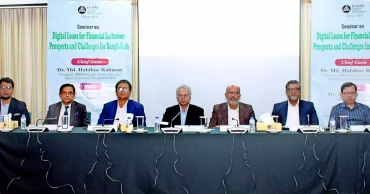
Digital lending can expand financial inclusion in Bangladesh, say speakers at BIBM seminar
Digital lending can play a significant role in expanding financial inclusion in Bangladesh by making formal credit more accessible, affordable, and convenient for underserved segments of the population, experts and financial sector leaders said at a seminar on Wednesday.
The seminar, titled “Digital Loans for Financial Inclusion: Prospects and Challenges for Bangladesh,” was organized by the Bangladesh Institute of Bank Management (BIBM) at its auditorium in Mirpur. A research team presented a keynote study examining the prospects, challenges, and future directions of digital lending in the country.
The keynote paper was presented by Md. Nehal Ahmed, Selection Grade Professor at BIBM. The research team also included Dr. Md. Shahid Ullah, Associate Professor at BIBM; Ms. Rexona Yesmin, Assistant Professor at BIBM; Md. Emon Arefin, Lecturer at BIBM; and Abrar Shahriar, Head of eLending, Products, Acquisitions & Bancassurance at City Bank PLC.
According to the study, digital lending can make small-ticket loans commercially viable by cutting transaction costs, overcoming geographical barriers, and using digital and alternative data to assess borrowers lacking conventional credit histories. The paper noted that operating costs of digital lending can be less than 1 to 2 percent of the costs associated with traditional lending.
Although digital lending accounts for a substantial share of retail loan disbursements and accounts, its share of the total outstanding loan portfolio remains relatively small. The study revealed that the default or classification ratio of digital loans stands at around 3 to 4 percent. Rural borrowers represent approximately 30 to 40 percent of observed digital borrowers, repeat borrowers account for 45 to 60 percent, and female participation ranges from 3 to 25 percent across institutions.
The report highlighted that digital lending could particularly benefit underserved households, microentrepreneurs, farmers, women, and micro, small, and medium-sized enterprises (MSMEs).
However, the researchers cautioned that genuine financial inclusion should be evaluated by credit quality, affordability, sustainability, and responsible use, rather than loan volume alone.
Attending as the Chief Guest, Dr. Md. Habibur Rahman, Chairman of the BIBM Executive Committee and Deputy Governor of Bangladesh Bank, emphasized that digital lending can reduce barriers to accessing formal credit for small borrowers and underserved groups.
He stressed the need for responsible and sustainable expansion to prevent new financial risks.
Chairing the seminar, Dr. Md. Ezazul Islam, Director General of BIBM, noted that technology can shorten turnaround times and lower costs, but warned that rapid expansion could amplify risks such as over-borrowing, credit risk, data misuse, fraud, and consumer harm.
“The way forward is not to choose between innovation and regulation, but to make the two reinforce one another,” Dr. Ezazul Islam said, calling for proportionate regulation, real-time credit information systems, AI governance, robust cybersecurity, and digital-literacy initiatives.
The event opened with a welcome address by Mr. Md. Shihab Uddin Khan, Professor and Director at BIBM. Designated discussants included Md. Ali Hossain Prodhania, Supernumerary Professor at BIBM; Debdulal Roy, Executive Director of Bangladesh Bank and Senior Faculty at BIBM; Mr. Ahmed Rashid Joy, Additional Managing Director and Chief Risk Officer at BRAC Bank PLC; and Mr. Md. Ashanur Rahman, Deputy Managing Director and Chief Economist at City Bank PLC.
3 days ago
Now is the right time to develop Bangladesh's bond market: DSE MD
Dhaka Stock Exchange (DSE) Managing Director Nuzhat Anwar on Wednesday said though discussions on building an effective bond market in Bangladesh have been ongoing for a long time, the current commission and relevant stakeholders' initiatives have created fresh opportunities for progress in this sector.
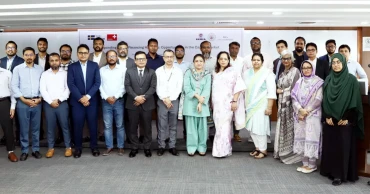
"The capital market must not remain confined to IPOs or the equity market alone; opportunities for various forms of financing, including bonds, need to be expanded," she said while speaking at a workshop titled "Expanding RMG's Financing Horizons: Opportunities in the Capital Market," jointly organised by DSE and Swisscontact at the DSE Training Academy.
Nuzhat noted that the capital market is not merely an investment vehicle but a crucial source of long-term financing for the country's economic growth and private sector expansion.
She said it is essential to bridge the existing gap between the financing needs of the private sector and the capital market's financing capacity. At the same time, existing policy and regulatory constraints related to financing need to be reviewed as required.
The DSE MD said particular attention could be given to making the use of funds raised through IPOs, as well as refinancing opportunities, more effective.
She said the main objective of such discussions is to identify existing limitations in the capital market based on entrepreneurs' needs and real-life experiences, and to take effective steps to address them.
Nuzhat said DSE is working to build an effective, transparent, and business-friendly capital market by giving due importance to the opinions and expectations of relevant stakeholders.
Team Leader of Swisscontact's PROGRESS project Farzana Amin said the organisation has been supporting the development of the RMG sector for nearly two decades. Alongside bank loans, the potential of capital market-based financing also needs to be seriously considered.
She added that there are plans to provide end-to-end support in the future to RMG enterprises interested in participating in the capital market. "The goal is to develop a few enterprises as role models within the next year, so that their success encourages other enterprises to pursue capital market-based financing."
Md Harunur Rashid, deputy secretary of Bangladesh Garment Manufacturers and Exporters Association, said the country's industrial enterprises are still primarily bank-dependent for financing. “As a result, many enterprises cannot capitalise on business expansion opportunities due to a lack of adequate financing. In this situation, the capital market could serve as an effective alternative source of long-term financing.”
He said listing good and promising enterprises on the capital market will not only facilitate business expansion but also create new employment opportunities and accelerate overall economic growth.
However, Harunur added, ensuring sustainable business growth of listed companies even after listing is essential to maintain investor confidence.
3 days ago
Exports begin from BEPZA Economic Zone-2 with $50,000 machinery shipment to Indonesia
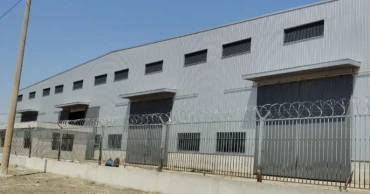
Dhaka, Sept 9 (UNB) – BEPZA Economic Zone-2, established in Mirsharai of Chattogram by the Bangladesh Export Processing Zones Authority (BEPZA), has officially entered the operational phase with its maiden export shipment.
With the launch of this economic zone, the total number of operational industrial zones under BEPZA has risen to 10, including eight Export Processing Zones (EPZs) and two Economic Zones.
Liz Tobacco Machinery Company Limited became the first enterprise in BEPZA Economic Zone-2 to obtain an export permit on September 3, 2026. Following the permit, the company exported tobacco machinery valued at $50,000 to Indonesia on September 8, marking the inaugural export from the zone.
The United Arab Emirates and Singapore-owned company signed a land lease agreement with BEPZA on 3 February 2025. Its total investment now stands at US$3.72 million, and it currently employs 29 officers, staff and workers.
Of the 18 enterprises that have been allotted industrial plots in BEPZA Economic Zone-2, Lee's Tobacco Machinery Company Ltd is the first to begin commercial operations.
Three more companies are expected to start production and export activities soon, while the remaining 14 enterprises are still under construction.
Commenting on the development, Md Whaheduzzaman, executive director of BEPZA Economic Zone-2, said the first export shipment to Indonesia opens up fresh possibilities for expanding trade between the two countries.
"The volume of exports from Bangladesh to Indonesia is comparatively low. In this context, the commencement of exports from BEPZA Economic Zone-2 to Indonesia is expected to contribute positively to expanding Bangladesh's export market and diversifying its export destinations," he said.
BEPZA Economic Zone was originally established on 1,138.55 acres of land in Mirsharai, Chattogram. To ensure smoother administrative and operational management, the large industrial zone was subsequently divided into two separate zones – BEPZA Economic Zone-1 and BEPZA Economic Zone-2 – both of which have already been officially declared as distinct economic zones by the government.
3 days ago

US Cotton Warehouse to launch in Chattogram mid-November
A privately operated US cotton warehouse is set to open in Anowara, Chattogram, in mid-November, as part of a strategic roadmap to significantly expand bilateral trade between the United States and Bangladesh.
AmeriBangla Corporation, led by 32-year-old Bangladeshi-American entrepreneur Aswar Rahman, unveiled the multi-phase initiative aimed at elevating US-Bangladesh bilateral trade from under $10 billion to $100 billion by 2045.
Speaking to journalists at a hotel in Dhaka, Rahman (CEO AmeriBangla Corporation) detailed a series of interconnected supply-chain, design, and logistics programs launching this autumn. The rollout began with initial shipments of raw US cotton to Bangladeshi textile manufacturers alongside the official launch of ‘CottonPort,’ a digital marketplace for floating auctions of raw US cotton that went live on August 27.
The warehouse model aims to provide Bangladeshi apparel manufacturers direct access to raw US cotton at prices lower than standard import channels. By sourcing directly from US farmers and ginners, AmeriBangla expects to sell cotton at approximately $0.10 less per pound than current market rates, where imported cotton averages around $0.85 per pound upon reaching Chattogram Port.
Mahmud Hasan Khan Babu, President of the Bangladesh Garment Manufacturers and Exporters Association (BGMEA), welcomed the initiative, noting that a local, privately operated cotton warehouse will substantially benefit domestic apparel entrepreneurs.
The framework gains momentum following a bilateral trade agreement granting duty exemptions to garments made with US cotton when exported to the American market. Industry insiders project that Bangladeshi imports of US cotton could rise to $2 billion annually. In fiscal year 2024–25, Bangladesh imported $346 million worth of US cotton—accounting for roughly 10 percent of its total cotton imports—up from $278 million in FY2023-24.
Key components of the roadmap set for October include:
All American Cotton Certification Program: Debuting in Manhattan on October 8, this initiative serves as the sole certification aligned with pending US Customs tariff exemptions and the proposed Buy American Cotton Act. Utilizing industrial reporting, third-party auditing, and state university isotropic testing, it offers garment buyers a 10–19% duty reduction and an 18% transferable tax credit on raw US cotton content, providing local manufacturers a competitive edge in US markets.
AmeriBangla Cotton Lab: Launching in New York City, this incubator will select up to 10 emerging fashion designers to manufacture their apparel lines in Bangladesh using certified US cotton, yarn, and fabric.
To secure the logistics pipeline, the AmeriBangla US Cotton Warehouse will open in Chattogram on November 18. Operating initially with an inventory of 80 to 100 metric tons at a leased facility, the company plans to transition into a permanent facility in the Anwara Free Trade Zone with backing from US federal entities, including the USDA, the US State Department, and the US EXIM Bank.
Regarding operational risks, Rahman cited bureaucratic delays and tax regime uncertainties as primary challenges, though he expressed confidence in market stability as Bangladeshi cotton prices track US cotton futures.
4 days ago
PRI, World Bank workshop advocates trade policy reform
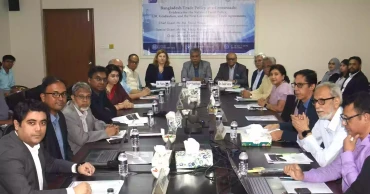
Policy Research Institute (PRI) Chairman Zaidi Sattar on Tuesday said Bangladesh's trade policy is at a crossroads, warning that deep tariff protection continues to punish exporters outside the readymade garment (RMG) sector while economy-wide reforms would ultimately pay for themselves without lasting revenue loss.
Speaking at a workshop jointly organised by PRI and the World Bank at the PRI office in Banani, Sattar said the country's high tariff and protection regime has made selling in the domestic market far more profitable than exporting for non-RMG industries, a divergence he described as significant rather than marginal, the "anti-export bias" that PRI has long highlighted in policy circles.
He said the widely-used import-weighted tariff measure understates the true scale of protection, since restrictive tariffs suppress the imports being measured in the first place.
Citing PRI's three-decade repository of disaggregated tariff data, he put Bangladesh's ex-ante average Nominal Protection Rate (NPR) for FY2027 at 28 percent, half of it stemming from para-tariffs, with average trade taxes at 55 percent.
Sattar said proposed measures under the Special Trade System (STS) and the FY2027 budget fall short of commitments made under the National Tariff Policy (NTP) 2023, a term he noted he had coined a decade ago while serving on the Tariff Rationalization Committee set up by the Prime Minister's Office.
He questioned why NTP implementation, a key part of preparations for Bangladesh's Least Developed Country (LDC) graduation, remains stuck at the proposal stage.
On tariff rationalization, he cautioned that cutting tariffs on intermediate goods alone, a measure the World Bank has said would improve competitiveness, could actually raise effective protection and intensify anti-export bias for non-RMG exporters unless matched by commensurate cuts in output tariffs.
He said the approach does not apply to RMG exporters, who already operate under a duty-free import regime.
On rationalizing exemptions, Sattar argued that end-user tariff concessions across numerous industrial sub-sectors should be eliminated first, with capital machinery as the only exception, noting protective MFN output tariffs average 42 percent against MFN input tariffs of 17 percent, a gap wide enough to already ensure significant protection.
Laying out a phased reform roadmap, he said Regulatory Duty (RD) and Supplementary Duty (SD) must be gradually eliminated before Customs Duty (CD) is touched, noting the effective top CD is actually 28 percent once the 3 percent RD is included.
In the first round, he proposed removing RD entirely and scrapping all SD above 20 percent, except on automobiles, firearms and tobacco. By 2029, in a second round, he proposed bringing CD down to 15 percent and SD down to 10 percent while making it fully trade-neutral.
He said protection remains concentrated in consumer goods industries, keeping domestic prices of durables and non-durables well above international levels, while non-RMG exporters are often forced to sell below domestic prices at world market rates.
TRIST (Tariff Reform Impact Simulation Tool) and GTAP (Global Trade Analysis Project) models, he added, remain the most useful tools for simulating reform scenarios, and he cited the 1990s tariff reforms as evidence that deep cuts need not erode customs revenue.
On World Trade Organization (WTO) reporting, Sattar said comparative assessments based on Bangladesh's WTO tariff policy reviews can be misleading, since notifications often omit distortive measures and para-tariffs are largely overlooked in such reviews.
He also warned that Bangladesh's current tariff structure rules out free trade agreements (FTAs), leaving only Economic Partnership and Comprehensive Economic Partnership Agreements within reach.
With Vietnam's FTA with the European Union already in effect and India's set to take effect by early 2027, he said Bangladesh risks falling behind regional competitors if it cannot pursue similar deals.
"Doing nothing will be costly, and reform will pay for itself," he said, though Sattar added the open question remains whether deeper trade agreements are feasible for Bangladesh at all.
4 days ago
DSE chairman vows to elevate capital market, seeks stakeholders’ support
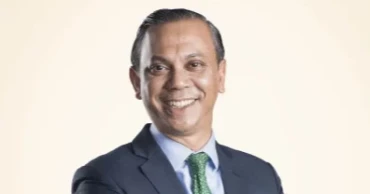
Dhaka Stock Exchange (DSE) Chairman Mominul Islam on Tuesday said Bangladesh's capital market could reach new heights within the next five years if all stakeholders fulfil their respective responsibilities with sincerity, as the bourse held an emergency virtual meeting with DSE Brokers Association (DBA) members to review the market's current situation and ease ongoing volatility.
The meeting discussed the market's recent condition and measures needed to ensure normal and stable trading, with participants exchanging views on the DSE's and member firms' roles in maintaining stability.
Opening the discussion, DBA President Saiful Islam said such an exchange of views was timely, as concerns and confusion have built up among investors and market stakeholders over the current situation.
He said most brokers and market-related institutions are currently facing challenges, and called for coordinated efforts among the DSE, regulators and all stakeholders to preserve market confidence and normal operations.
The goal, Saiful added, is not to suppress the market but to transform it into a compliant, vibrant, efficient and growing capital market.
DSE Chairman Mominul Islam said important steps have been taken regarding the Investor Protection Fund (IPF) following discussions with the Bangladesh Securities and Exchange Commission (BSEC) to safeguard investors' interests.
Calling the expansion of new IPOs and financial products a key DSE priority, he said the prolonged absence of new IPOs and limited presence of fixed income securities are among the market's major weaknesses.
To address this, the listing fee for new bonds has been reduced, and the DSE has decided to waive 50 percent of the first-year listing fee for companies applying for IPOs or direct listing until March 2027.
On concerns over excessive interference in brokerage houses, the DSE chairman said the board does not interfere in the day-to-day activities of the Regulatory Affairs Department but provides policy-level guidance. “Investigations or inquiries will be conducted only when specific information about irregularities is received.”
He urged member firms to promptly resolve, on their own initiative, any shortfalls in CC accounts, shares or other assets, noting that such shortfalls damage not only the institution's operations but also the reputation of the entire market ecosystem.
"To make the market more disciplined, transparent and internationally standard, all parties must properly fulfil their respective responsibilities. Through collective effort, it is possible to take Bangladesh's capital market to a new height within the next five years," the DSE chairman said.
He urged member firms to bring their problems, concerns, suggestions and new ideas to the DSE, saying the bourse wants to steer market development and future activities more effectively based on members' real experiences and opinions.
Speakers also noted that some compliance and surveillance-related inspections from 2025 remained unresolved and needed to be settled through report submissions to the BSEC, adding that recent inspections at brokerage houses were part of the continuation of that process.
They stressed the need to set clear and specific criteria for identifying abnormal transactions, saying high-volume share trading during a particular period should not automatically be treated as irregular.
Instead, the speakers said, such matters should be assessed by considering the nature of the transaction, price impact, investor capacity and instructions involved.
END/UNB/MM/AM
4 days ago

BGMEA, BKMEA object to withdrawal of bond facility on yarn imports
Two leading trade bodies representing the country’s readymade garment (RMG) sector have strongly objected to the National Board of Revenue’s (NBR) decision to withdraw bonded warehouse facilities on the import of 10–30 count cotton yarn.
Bangladesh Garment Manufacturers and Exporters Association (BGMEA) and Bangladesh Knitwear Manufacturers and Exporters Association (BKMEA) sent a joint letter to the Commerce Minister on Tuesday, urging an immediate revocation of the decision.
Copies of the letter were also sent to the Commerce Secretary and the NBR Chairman.
According to an NBR order issued on September 7 under Section 266 of the Customs Act, 2023, bonded warehouse facilities were withdrawn for 10–30 count cotton yarn.
Under the new directive, genuine exporters holding bonded warehouse licenses are required to import this yarn against an unconditional and continuous bank guarantee equal to the applicable duties and taxes.
The bank guarantee will only be released upon verification of full export compliance by the licensing authority.
In the joint letter, signed by BGMEA President Mahmud Hasan Khan and BKMEA President Mohammad Hatem, they expressed surprise, stating that the withdrawal of bond facilities was never discussed during the inter-ministerial committee meeting held on August 20 under the chairmanship of the Commerce Minister.
They noted that the inclusion of this decision as Clause 5(a)—withdrawing bond facilities—and Clause 5(b)—mandating local spinning mills to supply at least 50% of export-oriented yarn—in the meeting minutes was ungrounded and contradictory to the actual discussions.
Terming the decision "unrealistic and self-defeating," the apparel leaders warned that its implementation would plunge the export-oriented RMG sector into a severe crisis.
"The ready-made garment industry has developed relying on the long-standing bonded warehouse system. A sudden withdrawal of this facility will send a negative signal to international buyers and erode the global competitiveness of our export sector at a time when competing nations are expanding such benefits," the letter stated.
Addressing current domestic market dynamics, the trade bodies highlighted that yarn prices in the local market continue to rise despite lower overall demand due to reduced export orders. They questioned whether vested interests are attempting to establish a local monopoly.
The leaders further pointed out that local spinning mills are currently operating at under 50% capacity due to an ongoing energy crisis, making it impossible for local suppliers alone to meet the total yarn demand of the export-oriented garment industry.
Calling for the urgent cancellation of Clauses 5(a) and 5(b), BGMEA and BKMEA proposed a tripartite meeting involving BGMEA, BKMEA, and the Bangladesh Textile Mills Association (BTMA) to resolve the issue constructively.
4 days ago

BAPA 11th Expo on food processing, packaging technology begins on Thursday
The 11th edition of the three-day "BAPA FoodPro International Expo 2026," will begin on Thursday at the International Convention City Vasundhara (ICCB) in the capital.
The expo will run until Saturday (September 12), featuring over 200 brands from 27 countries.
Entrepreneurs from more than 150 foreign investment institutions are expected to attend. Alongside product displays, the event will host technical sessions, seminars, and practical demonstrations with industry leaders, experts, and tech representatives.
Organizers disclosed the details at a press conference on Tuesday at the Bangladesh Agro-Processors' Association (BAPA) office in Sobhanbag, Dhaka.
BAPA President Mahbub Anam, General Secretary Syed Muhammad Shoaib Hasan, Chairman of the Expo Organizing Committee and Chairman and CEO of PRAN-RFL Group Ahsan Khan Chowdhury, and BAPA Treasurer Minhaj Ahmed, among others, were present.
BAPA and Rainbow Exhibition and Event Management Services Ltd (REEMS) are jointly organising the event.
The exhibition will remain open to all from 10 am to 7 pm on September 10 and 11, and from 10 am to 6:30 pm on September 12. Organizers expect over 24,000 visitors across the three days.
Participating companies will display advanced technologies in processing, filling, packaging, coding and marking, labeling, quality inspection, warehousing, cold chain, and logistics. Over 4,000 technology and machinery solutions will be presented, with a special emphasis on AI-driven automation, machine vision, robotics, smart factories, Industrial IoT, processing machinery, and sustainable packaging materials and designs.
Foreign participants include entities from Algeria, Australia, China, France, Germany, Hong Kong, India, Indonesia, Iran, Italy, Japan, Malaysia, the Netherlands, Pakistan, Poland, Singapore, South Korea, Sri Lanka, Switzerland, Taiwan, Thailand, Turkey, Spain, Sweden, the UK, and the USA.
Speaking at the press conference, BAPA President Mahbub Anam highlighted the role of modern technology in advancing the country's agriculture and food processing sectors. He noted that the exhibition will help introduce new technologies to local entrepreneurs while boosting investment, production, and exports.
He added that BAPA aims to demonstrate its capacity for food safety and highlight the sector's potential to a global audience.
Concurrently, the "Food Ingredients Bangladesh Expo 2026" will take place at the same venue, showcasing functional food and beverages, nutraceuticals, alternative proteins, plant-based formulations, and sustainable food ingredients.
Other highlights of the event include a Session Stage, FP Gourmet, DrinkSphere, Global Food Security and Technology Forum, and a Creative Design Village.
Details regarding participation and visitor registration are available at foodpro.com.bd.
4 days ago