World-Business

Ningxia's Yanchi targets middle east halal market through e-commerce
Yanchi County in northwest China's Ningxia Hui Autonomous Region is stepping up efforts to take its halal and specialty food products into overseas markets, with the Middle East emerging as a key target for its e-commerce expansion.
The initiative was highlighted at the fifth Western E-Commerce and Cultural Tourism Consumption Promotion Series and the Minning Cooperation and Exchange activities, which opened in Yanchi on September 4.
The three-day event brought together more than 100 representatives from e-commerce platforms, supply-chain companies, industry organizations and businesses.
Discussions focused on cross-border logistics, digital transformation and strategies for reaching overseas consumers.
Reaching Overseas Consumers
A major focus was helping local businesses, particularly producers of halal and specialty foods, develop new routes into international markets.
Representatives from TikTok, Facebook, YouTube and Middle Eastern e-commerce platform Noon presented their platform policies and discussed opportunities in emerging markets, including the Middle East.
Cross-border service providers also shared approaches to market operations and brand development for companies seeking to expand abroad.The event marked the start of construction of the Ningxia-Yanchi Silk Road E-Commerce Comprehensive Service Center.
It also featured the signing of an agreement to establish an overseas warehouse network under the Silk Road E-Commerce initiative, while a digital exhibition hall developed under the Fujian-Ningxia cooperation program was launched.
An exhibition area featured agricultural and specialty products, medical devices, industrial materials, halal foods and cultural products, including Tan sheep leather crafts.
Yanchi is particularly known for its Tan sheep industry, making halal meat and related products a natural part of its overseas market strategy.
Yanchi has been designated as one of China's national demonstration counties for rural e-commerce.
The county has cultivated 182 e-commerce businesses and created more than 6,800 jobs. Its "Shicheng Zhenxuan" platform, which is a core digital hub and public-service platform for eastern Ningxia to connect e-commerce resources from the southeast coast and link up with Silk Road cross-border markets, has brought together more than 700 suppliers and offers more than 3,000 products.
5 days ago
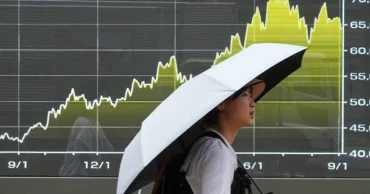
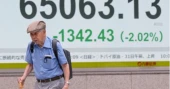
Asian markets trade mixed after Wall Street rally led by tech stocks
Asian markets were mixed Friday after a rally in US technology stocks lifted Wall Street a day earlier.
Japan’s Nikkei 225 rose 1.3% to close at 65,020.94, while South Korea’s Kospi gained 1.7% to 6,690.72. Hong Kong’s Hang Seng jumped 1.8% to 25,658.73.
Australia’s S&P/ASX 200, however, fell 0.2% to 9,005.90, while the Shanghai Composite dropped 0.5% to 3,921.40.
On Wall Street, stocks finished higher Thursday as a recent rise in bond yields eased and major technology companies posted gains. The S&P 500 climbed 1.1%, the Dow Jones Industrial Average rose 1.2% and the Nasdaq composite advanced 1.4%.
Technology and communication services companies led much of the rally. Microsoft gained 2.7%, Apple rose 1% and Meta jumped 3%. Nvidia, the leading maker of advanced chips used in artificial intelligence systems, added 1.8% after announcing a $13 billion deal to acquire AI platform Hugging Face.
In energy markets, US benchmark crude rose 21 cents to $91.51 a barrel, while Brent crude slipped 2 cents to $95.50.
Energy prices have risen sharply amid the six-month US war with Iran, which has intensified in recent days. The Strait of Hormuz is particularly important because many countries rely on the route to bring Middle Eastern oil to global markets.
Iran fired on Kuwait on Thursday in retaliation for US airstrikes earlier in the week.
The yield on the 10-year US Treasury note, which affects mortgage and other borrowing costs, eased to 4.77% from 4.79% late Wednesday. The yield has climbed steadily this year after starting 2026 at around 4.20%.
Investors are also assessing the Federal Reserve’s next interest-rate decision. Recent comments by Fed Governor Christopher Waller have raised expectations that the central bank may keep its benchmark rate unchanged at its meeting in two weeks if upcoming data shows inflation is slowing.
Waller said he would be inclined to leave rates unchanged if inflation cools but could support a rate hike if the figures show prices are rising faster than expected.
Markets are also watching the Bank of Japan, which is due to meet later this month. Some analysts expect the central bank to raise its benchmark rate, although the size of any increase remains uncertain. A higher rate could also help support the Japanese yen.
In currency trading, the US dollar rose slightly to 156.18 yen from 155.84 yen. The euro was trading at $1.1632, little changed from $1.1631.
8 days ago
Oil prices ease as Asian shares rise, following Wall Street gains
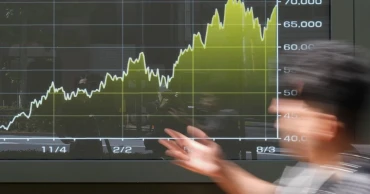
Oil prices edged lower on Thursday after rising sharply earlier in the week amid renewed fighting between the United States and Iran, while Asian stock markets mostly gained, tracking an upbeat performance on Wall Street.
Brent crude, the international benchmark, fell 0.4% to $95.26 a barrel. U.S. crude slipped 0.1% to $90.84 per barrel.
U.S. futures also moved slightly higher.
Oil prices had surged earlier this week as renewed conflict between the U.S. and Iran raised concerns over possible disruptions to energy supplies. President Donald Trump said Wednesday that he did not expect the U.S. bombing campaign to continue for “much longer.”
In Asian trading, Japan’s Nikkei 225 rose 0.2% to 64,455.83. SoftBank Group gained 2.9%, while Kioxia Holdings added 0.6% and Tokyo Electron rose 0.8%.
South Korea’s Kospi jumped 1.4% to 6,656.81, with Samsung Electronics gaining 1.3% and SK Hynix rising 1.4%.
Hong Kong’s Hang Seng index edged up 0.1%, while the Shanghai Composite gained 0.4%. Australia’s S&P/ASX 200 rose 0.5%, Taiwan’s Taiex gained 0.6%, and India’s Sensex added 0.3%.
The gains followed a positive session on Wall Street, where the S&P 500 rose 0.5% on Wednesday. The Dow Jones Industrial Average gained 0.6%, while the Nasdaq composite added 0.5%.
Investors were encouraged by positive signs of continued demand for artificial intelligence, which has been a major force behind this year’s stock market rally.
Dell Technologies surged 15.8% after reporting strong quarterly earnings. Nvidia gained 3.2%, Meta Platforms rose 2.5%, and Micron Technology added 2.4%.
In the bond market, the yield on the 10-year U.S. Treasury fell to 4.77% from above 4.81% early Wednesday. Global bond markets had come under pressure amid concerns over inflation, rising energy prices linked to the Iran conflict and growing U.S. government debt.
Investors are now awaiting the U.S. employment report for August, due Friday.
In currency trading, the Japanese yen strengthened against the U.S. dollar. The dollar fell to 157.78 yen from 158.71 yen late Wednesday after climbing above 160 yen earlier in the week, fueling expectations that Japanese authorities could intervene to support the currency.
The euro rose slightly to $1.1598 from $1.1588.
9 days ago
Asian stocks fall as global bond sell-off deepens
Asian stock markets fell sharply on Wednesday, following losses on Wall Street and a growing global sell-off in government bonds. U.S. futures also moved lower.
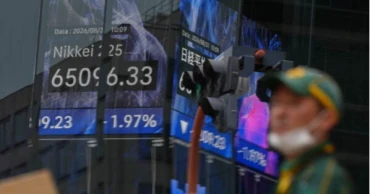
Japan's Nikkei 225 dropped 3% to 64,278.95, while shares of SoftBank Group fell 6.3%.
South Korea's Kospi lost 3.6%, with Samsung Electronics down 3.3% and memory chipmaker SK Hynix falling 3.5%.
Hong Kong's Hang Seng Index slipped 0.8%, while China's Shanghai Composite fell 0.9%. Australia's S&P/ASX 200 dropped 1.1%, and Taiwan's Taiex lost 1.5%.
The decline followed a weak session on Wall Street on Tuesday. The S&P 500 fell 0.7%, the Dow Jones Industrial Average dropped 0.8%, and the Nasdaq composite lost 1%.
Major technology companies were among the biggest losers, with Nvidia falling 1.5%, Amazon down 1.9% and Advanced Micro Devices, or AMD, dropping 2.4%.
Meanwhile, oil prices continued to rise after the United States launched another round of military strikes on Iran, which responded by firing missiles and drones across the region.
The conflict between the two countries has now entered its sixth month, increasing concerns over global energy supplies. The Strait of Hormuz, a key route for global oil shipments, remains largely closed.
Brent crude, the international benchmark, rose 1% to $95.56 a barrel. U.S. benchmark crude gained 0.7% to $90.88 a barrel.
The global bond sell-off also intensified as concerns grew over persistent inflation and rising government debt, particularly in the United States.
Bond yields rise when bond prices fall. Investors are demanding higher returns as they become more concerned about inflation, government borrowing and other risks.
The yield on the benchmark 10-year U.S. Treasury rose to around 4.80%, up from 4.75% on Monday. It had been as low as 4.20% in January.
The yield on the two-year Treasury, which is more closely linked to expectations for U.S. interest rates, climbed to about 4.40% from 4.34%.
In Japan, the yield on the 10-year government bond rose to around 3.02%, its highest level since 1996.
In currency trading, the U.S. dollar edged up to 160.27 Japanese yen from 160.17 yen. The euro slipped to $1.1578 from $1.1593.
10 days ago
Oil prices rise, Asian stocks mixed amid renewed Middle East violence
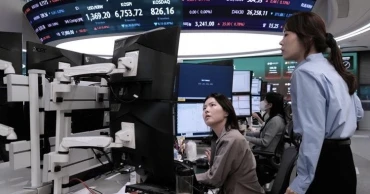
Oil prices rose further and Asian stock markets moved in different directions Tuesday as renewed violence in the Middle East increased uncertainty over the future of the conflict.
The latest escalation came after more than a month without major fighting in the Iran war, raising concerns about possible disruptions to oil supplies and global markets.
Shares of online fast-fashion company Shein fell sharply after beginning trading in Hong Kong on Tuesday. The stock dropped as much as 10% before recovering slightly to trade about 5% lower by midday.
Brent crude, the international oil benchmark, rose 0.8% to $91.23 a barrel. It had gained 2.7% on Monday after the United States struck rocket launchers on an Iranian island, saying they were preparing to place mines in the Strait of Hormuz.
Iran responded by firing missiles at US positions in Jordan, all of which were intercepted, according to US officials.
The conflict has already reduced shipping through the Strait of Hormuz, a key global oil route that previously carried about one-fifth of the world’s oil shipments.
The disruption has kept oil prices elevated and increased costs for consumers, from fuel to goods transported by sea.
US benchmark crude rose 1% to $86.62 a barrel.
Asian markets were mixed. Hong Kong’s Hang Seng index fell 0.9% to 25,332.10, while Shanghai’s Composite index was almost unchanged at 3,985.93.
Tokyo’s Nikkei 225 gained 0.2% to 66,420.26, while South Korea’s Kospi rose more than 0.2% to 6,835.51.
Australia’s S&P/ASX 200 slipped 0.1% to 9,066.40. Taiwan’s Taiex added 0.2%, while India’s Sensex gained 0.3%.
US stock futures were up 0.1%.
Wall Street ends August lowerUS stocks finished August on a weaker note Monday, with the S&P 500 falling 0.3%. The Dow Jones Industrial Average dropped 0.7%, while the Nasdaq composite declined 0.1%.
Most sectors of the S&P 500 ended lower.
Edison International fell 23.1% and PG&E dropped 20.1%, the two biggest declines in the index. The losses followed reports about proposed California wildfire legislation that could allow insurers to seek compensation from utility companies over wildfire-related claims.
Energy companies, however, benefited from higher oil prices. Exxon Mobil gained 2.7%, while Chevron rose 2.1%.
Higher energy costs are also adding to inflation, which remains above the Federal Reserve’s 2% target.
Persistent inflation has put pressure on household budgets and consumer confidence while making the central bank’s decisions on interest rates more difficult.
The yield on the two-year US Treasury note remained at 4.34% Monday. It has risen considerably from around 3.50% at the start of 2026.
The yield on the 10-year Treasury note increased to 4.75% from 4.73% late Friday.
Investors are also watching the US jobs market closely. The government is expected to release August employment figures later this week.
The US job market unexpectedly weakened in July, with employers cutting 23,000 jobs. Government revisions also showed 103,000 fewer jobs were added in May and June than previously reported.
The Federal Reserve faces a difficult balance: raising interest rates could help control inflation, but higher borrowing costs could also weaken the job market.
In early Tuesday trading, the US dollar rose to 159.94 Japanese yen from 159.74 yen. The euro fell slightly to $1.1604 from $1.1619.
11 days ago
World shares mixed as oil prices jump after US strike on Iranian launchers
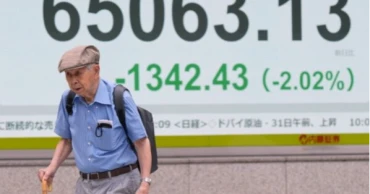
Global markets were mixed Monday, while oil prices surged after US forces struck Iranian rocket launchers near the Strait of Hormuz, reviving concerns over renewed conflict in the Middle East.
In early European trading, Germany's DAX fell 0.9% to 26,339.04, while France's CAC 40 slipped 0.1% to 8,390.43. British markets were closed for a bank holiday. US futures for the S&P 500 and Dow Jones Industrial Average each fell 0.2%.
Brent crude jumped 3.8% to $91.40 a barrel, while US benchmark crude gained 3.8% to $86.58.
Asian markets were mixed after Federal Reserve Chairman Kevin Warsh's comments reinforced expectations that the central bank could raise interest rates to control inflation. Tokyo's Nikkei 225 slipped 0.1%, while South Korea's Kospi gained 0.5%. Hong Kong's Hang Seng fell 0.1%, while Shanghai's Composite Index rose 0.9%.
An official survey showed China's factory activity remained in contraction for a second straight month in August, despite slight improvements in production and new export orders.
Australia's S&P/ASX 200 fell 0.2%, while Taiwan's Taiex and India's Sensex each declined 0.4%.
On Friday, Wall Street ended lower, with the S&P 500 down 0.2%, the Dow slightly lower and the Nasdaq falling 0.5%.
The two-year US Treasury yield rose to 4.35% from 4.22% before Warsh's Jackson Hole speech. The dollar fell against the yen, while the euro gained against the US currency.
12 days ago

Asian Shares Mixed as US Steps Up Pressure on Iran
Asian stock markets were mixed Tuesday, while oil prices remained largely steady as investors watched for major economic developments later this week.
Regional markets moved within a narrow range, while US stock futures were little changed.
Oil prices were also broadly stable after US Treasury Secretary Scott Bessent announced new sanctions against Iran and warned that countries continuing to do business with Tehran could face penalties.
Japan's Nikkei 225 rose 0.4% to 65,811.19, while South Korea's Kospi fell 0.4% to 6,675.88.
Hong Kong's Hang Seng dropped 0.3% to 25,453.19 and the Shanghai Composite edged down 0.1% to 3,878.38. Australia's S&P/ASX 200 gained 0.6% to 9,158.70.
Taiwan's Taiex slipped less than 0.1%, while India's Sensex declined 0.3%.
Wall Street mixed
US stocks ended mixed Monday as some pressure in the bond market eased.
The S&P 500 fell 0.3%, moving further away from the record high it reached earlier this month. The Dow Jones Industrial Average gained 0.3%, while the Nasdaq composite lost 0.8%.
Technology stocks led the decline as investors remained concerned that the sharp rise in AI-related shares may have pushed valuations too high. There are also concerns that demand for AI chips could weaken if the technology fails to generate enough profits.
Nvidia, one of the biggest winners of the AI boom, will release its quarterly earnings report Wednesday. The results could influence the next major move in AI-related stocks.
Nvidia shares fell 2.9% Monday, making the chipmaker the biggest drag on the S&P 500. Micron Technology dropped 5.8% and Broadcom declined 2.6%.
Bond market in focus
The yield on the 10-year US Treasury note fell to 4.71% from 4.74% late Friday.
The decline came after the US Treasury Department announced plans to increase the size of its Treasury buybacks, a move that helped ease some pressure on longer-term borrowing costs.
However, analysts said the buybacks are relatively small and are unlikely to solve broader concerns over high US government debt and elevated oil prices.
Higher Treasury yields can increase borrowing costs across the economy, including mortgage rates, putting additional pressure on the housing market.
“The latest discussion about using Treasury General Account cash to help finance purchases of longer-dated bonds gave the market something to chew on Monday,” said Stephen Innes of SPI Asset Management.
“But there is a difference between forcing the bond market to blink for an afternoon and solving the underlying problem,” he said.
Fed chief's speech awaited
Federal Reserve Chairman Kevin Warsh is scheduled to speak Friday at the annual economic symposium in Jackson Hole, Wyoming.
Investors will closely watch his comments for clues about inflation and the Federal Reserve's approach to monetary policy.
Oil prices remain a major concern for markets because higher energy costs can push inflation higher.
Brent crude, the international benchmark, has remained above the $72-a-barrel level recorded before the war with Iran began in late February.
Early Tuesday, Brent crude was almost unchanged at $90.51 a barrel, while US benchmark crude rose less than 0.1% to $85.10 a barrel.
Brent prices moved between $72 and $102 a barrel last month as hopes of a US-Iran deal rose and fell. Such an agreement could allow oil tankers to move freely out of the Persian Gulf.
The latest US sanctions announced Monday also pushed Iran's currency, the rial, to a record low against the US dollar.
18 days ago
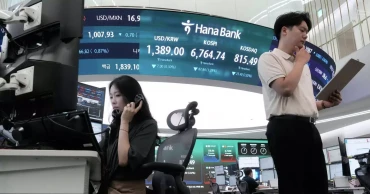
Asian shares mostly fall as bond market pressure intensifies
Asian shares mostly declined and oil prices slipped Monday as investors remained cautious ahead of a key gathering of top US economic officials at Jackson Hole later this week.
US stock futures also edged lower.
Japan’s Nikkei 225 fell 0.5% to 65,678.45, while South Korea’s Kospi dropped 3.5% to 6,664.36. Hong Kong’s Hang Seng Index declined 2.1% to 25,465.23 and the Shanghai Composite lost 0.7% to 3,877.30.
Australia’s S&P/ASX 200 bucked the regional trend, rising 0.5% to 9,107.40. Taiwan’s Taiex fell 0.5%.
Markets are awaiting the US inflation report for July, due Wednesday. The personal consumption expenditures (PCE) price index is the Federal Reserve’s preferred inflation gauge and, like the consumer price index, has indicated that inflation remains above 3%.
The Fed has struggled to bring inflation back to its 2% target. Inflation had moved closer to the goal in early 2025 before rising again following the introduction of broad US tariffs. It increased further in early 2026 after the Iran war disrupted oil shipments through the Strait of Hormuz.
Bond markets have also remained under pressure. Last week, rising Treasury yields prompted an unusual intervention by the US Treasury Department and raised concerns that higher borrowing costs could weaken consumer spending.
Treasury Secretary Scott Bessent announced that the government would double its purchases of longer-term bonds in an effort to reduce yields and mortgage costs. However, the 10-year Treasury yield climbed back to 4.73% Friday, its highest level in more than a year, and stood at 4.71% early Monday.
The 30-year Treasury yield also rose and remained close to its highest level since 2007.
Higher bond yields can weigh on economic activity and reduce the value of various investments.
Investors will closely watch Federal Reserve Gov. Kevin Warsh’s speech at the annual Jackson Hole gathering later this week for clues about interest rates and other policies.
On Friday, the S&P 500 gained 0.4%, marking only its second rise in six sessions after reaching a record high last week. The Dow Jones Industrial Average advanced 1%, while the Nasdaq composite rose 0.4%.
Strong corporate earnings have helped support US stocks, with most companies reporting better-than-expected spring profits.
Uncertainty over when oil tankers will again be able to move freely out of the Persian Gulf has also unsettled markets, pushing oil prices higher and raising inflation concerns.
The situation remained uncertain Monday after Iran’s new top security official warned that Tehran would regard support for fresh US economic measures against Iran as an “act of war.” Iran’s president, meanwhile, defended a memorandum of understanding with the United States as the best way to resolve the stalled conflict.
Brent crude fell 1.4% to $93.10 a barrel early Monday, while US benchmark crude dropped 1.6% to $85.63.
Bitcoin, which often benefits from lower interest rates and increased liquidity, was trading near $77,000 early Monday, according to CoinDesk.
In currency trading, the US dollar bought 158.89 Japanese yen, down from 158.94 yen late Friday. The euro was unchanged at $1.1678.
19 days ago
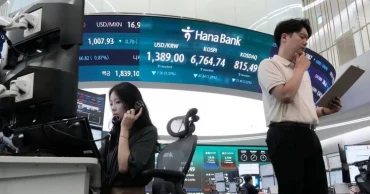
Asian stocks mixed as treasury move fails to calm markets
Asian shares were mixed Friday after Wall Street suffered losses, as a US Treasury Department plan to increase purchases of government debt offered only limited relief to financial markets.
US stock futures edged higher in early trading.
Japan’s Nikkei 225 fell 0.2% to 66,080.25, while South Korea’s Kospi rose 0.9% to 6,914.09. Hong Kong’s Hang Seng gained 0.7% to 25,888.36, while the Shanghai Composite was little changed at 3,903.81.
Australia’s S&P/ASX 200 dropped 0.3% to 9,053.90. Taiwan’s Taiex gained 0.4%, while India’s Sensex slipped 0.1%.
The Treasury Department said Wednesday it would at least double planned purchases of longer-term government bonds. Treasury Secretary Scott Bessent said Thursday that the buyback programme could be expanded further.
The announcement briefly pushed bond yields lower. Yields had risen amid concerns over high inflation, partly linked to the war in Iran, and growing US government debt. Higher yields can increase borrowing costs and put pressure on economic growth and stock prices.
However, analysts said the impact was likely to be short-lived. The yield on the 10-year US Treasury note stood at around 4.71% early Friday, up from nearly 4.64% Thursday and back near its level before the Treasury announcement.
The 30-year Treasury yield also rose to about 5.26%, from 5.18% Thursday.
Bond yields in Asia also moved higher. Japan’s 10-year government bond yield rose to 2.88% from around 2.83% Thursday, after recently reaching levels not seen in about 30 years.
Rising bond yields have put pressure on stocks. On Thursday, the S&P 500 fell 0.9%, the Dow Jones Industrial Average dropped 1.3% and the tech-heavy Nasdaq Composite lost 1%.
Oil prices edged lower early Friday despite increased US economic pressure on Iran and limited progress in reducing tensions between Washington and Tehran.
Brent crude, the international benchmark, fell 0.2% to $93.64 a barrel. It was trading at around $72 before the war began. US benchmark crude fell 0.3% to $86.59 a barrel.
The US dollar slipped to 159.01 Japanese yen from 159.05 yen. The euro rose to $1.1694 from $1.1678.
22 days ago
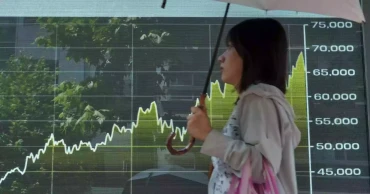
Asian shares rise, South Korea’s Kospi jumps 6% after US expands debt buybacks
Asian shares rose Thursday, following gains on Wall Street, while South Korea’s benchmark Kospi jumped more than 6% after the US Treasury announced plans to significantly increase its purchases of longer-term government debt.
US stock futures also edged higher after the Treasury said it would at least double the size of its planned buybacks of longer-term government bonds.
The move could reduce pressure on stock markets from rising bond yields. Increased government bond purchases can push bond prices higher and, in turn, lower yields.
South Korea’s Kospi surged 6.1% to 6,858.91 after falling 5.8% on Wednesday as investors sold shares linked to artificial intelligence.
Samsung Electronics rose 9.7%, while SK Hynix, a major memory chipmaker, gained 14.1% after announcing a large share buyback programme.
Japan’s Nikkei 225 climbed 1.3% to 66,178.26, recovering from losses earlier in the week. Japan reported a trade deficit for the third consecutive month in July, with both imports and exports reaching record levels.
SoftBank Group, which has invested in OpenAI, gained 3.8%.
Hong Kong’s Hang Seng Index rose 1.1% to 25,786.32, while the Shanghai Composite gained 0.3% to 3,905.23.
Australia’s S&P/ASX 200 increased 0.3% to 9,066.40. Taiwan’s Taiex was little changed, while India’s Sensex gained 0.7%.
US government bond yields fell after the Treasury announced its expanded buyback plans. Bond prices and yields generally move in opposite directions.
The announcement appeared to ease investor concerns about rising borrowing costs. On Wednesday, the S&P 500 rose 0.2%, ending a three-day losing streak. The Dow Jones Industrial Average and Nasdaq composite each also gained 0.2%.
US bond yields have climbed in recent months amid concerns about inflation linked to the prolonged war in Iran, rising government debt and other economic pressures.
The yield on the 10-year US Treasury note fell to about 4.64%, down from 4.71% on Tuesday. However, it remains significantly higher than before the war in Iran began. The 30-year Treasury yield also declined to 5.18% from 5.28%.
Bond yields in Asia also eased following the US Treasury announcement. Japan’s 10-year government bond yield dropped to about 2.83% from above 2.89% on Wednesday. It had recently reached its highest level in about 30 years.
Oil prices edged higher Thursday as negotiations between the US and Iran showed little progress.
Brent crude, the international benchmark, rose 0.3% to $91.90 a barrel. It was trading at around $72 before the war began.
US benchmark crude gained 0.2% to $84.57 a barrel.
The US dollar rose to 158.60 Japanese yen from 158.16 yen. The euro was trading at $1.1676, slightly.
23 days ago