Latin-America
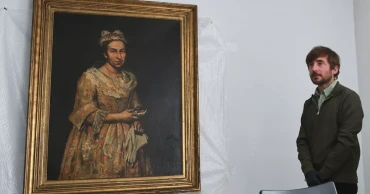
Argentina court clears return of Nazi-looted portrait to Jewish heir
An Argentine court on Friday approved an agreement clearing the way for the return of an 18th-century portrait looted from a prominent Jewish art dealer during World War II to his surviving heir.
The agreement allows Patricia Kadgien, daughter of a former senior Nazi official, and her husband, Juan Carlos Cortegoso, to give up their claim to the painting in exchange for avoiding a criminal trial and remaining under court supervision for two years.
The work, known as “Portrait of a Lady,” will be returned to Marei von Saher, the sole surviving heir of Dutch-Jewish art dealer Jacques Goudstikker.
Goudstikker's extensive art collection was forcibly sold to Nazi officials after Germany invaded the Netherlands in 1940. The couple had been charged with aggravated cover-up last year after authorities alleged they concealed the painting despite knowing that investigators were searching for it.
Under the court-approved deal, the couple must remain under judicial supervision for two years, make payments to a hospital in Mar del Plata, where they live, and regularly report their whereabouts to authorities.
The painting was rediscovered after Dutch journalists investigating Friedrich Kadgien, a former Nazi financial official who fled to Argentina after the war, spotted it in an online property listing for his daughter's home in Mar del Plata in August 2025.
The listing was removed shortly after a Dutch newspaper published the discovery. Argentine police searched the property several times without finding the artwork before Kadgien's lawyer eventually handed it over to authorities.
The portrait had long been attributed to Italian Baroque painter Giuseppe Vittore Ghislandi. However, an examination ordered by the court and conducted by Argentina's National Academy of Fine Arts attributed it to Italian painter Giacomo Antonio Melchiorre Ceruti.
Experts confirmed that the painting had belonged to Goudstikker's collection and estimated its value at about 250,000 euros ($290,000).
Goudstikker was among Europe's leading art dealers before World War II and owned works by renowned painters including Rembrandt and Vermeer. He died in a shipwreck while fleeing the Netherlands with his family as German forces invaded in May 1940.
About 1,100 works from his collection were illegally sold to Hermann Göring, one of Adolf Hitler's most powerful associates and a major collector of looted art.
It remains unclear how the portrait later came into the possession of Friedrich Kadgien, who served as Göring's financial adviser and was involved in handling foreign currency, precious metals and confiscated property for the Nazi regime.
Kadgien escaped Europe after the war, eventually settling in Argentina, where he died in 1978 without being arrested or prosecuted for war crimes.
Von Saher, who lives in Greenwich, Connecticut, has spent decades seeking the return of artworks stolen from her family. Her lawyers said she has agreed to have the portrait exhibited in Argentina before it is returned to her.
Argentine authorities also recovered two 19th-century paintings, along with prints and engravings, during searches last year of properties belonging to Kadgien and her sister in Mar del Plata. Investigators are examining whether any of those works were also looted during World War II.
7 days ago
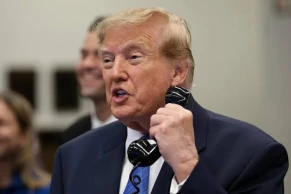
Trump says US reaches deal giving access to Venezuela’s 65 billion barrels of oil reserves
President Donald Trump said Friday that the United States has reached a major agreement with Venezuela that could give an American-backed private company access to the South American nation's vast oil reserves.
Trump described the agreement as the “biggest oil deal in world history”, saying it was negotiated by Secretary of State Marco Rubio, Defense Secretary Pete Hegseth and Venezuela's acting President Delcy Rodríguez.
Rodríguez's government said the agreement covers the development of 17 oil fields with proven potential of 65 billion barrels. It estimated that the deal could attract around $100 billion in investment and generate more than $209 billion in tax revenue for Venezuela.
Under the agreement, the United States would partner with an unnamed private operator to establish a new company to develop the oil fields, according to a U.S. official familiar with the deal.
The official, who spoke on condition of anonymity because he was not authorized to discuss the agreement publicly, said Rodríguez had granted the company rights to develop the fields for 100 years.
The company would give the United States an effective 55% share of its output, including an ownership stake and the right to purchase oil at cost, the official said. If realized, the company would become the world's second-largest corporate holder of proven oil reserves after Saudi Aramco.
Trump under pressure over high fuel prices
The announcement comes as Trump faces pressure to reduce high fuel prices in the United States amid the ongoing war in Iran and disruptions to global energy supplies.
The U.S. government has been drawing from its strategic petroleum reserves, which fell below 300 million barrels in early August, more than 100 million barrels lower than at the beginning of 2026.
The conflict involving the United States, Israel and Iran has sharply reduced the flow of Gulf oil through the Strait of Hormuz, a major global energy route that previously carried about 20% of the world's petroleum.
The average U.S. gasoline price was around $4.09 per gallon on Friday, compared with $3.21 a year earlier, according to AAA.
However, experts said the Venezuelan agreement is unlikely to bring immediate relief at the gas pump. Increasing Venezuela's oil production substantially would require years of investment to repair and expand its badly damaged infrastructure.
Major U.S. oil companies could also be reluctant to return because of Venezuela's political uncertainty and their previous experiences operating in the country.
After Maduro's removal, Trump met oil executives at the White House and urged them to return to Venezuela. Although executives showed interest, some remained cautious. ExxonMobil CEO Darren Woods had previously described Venezuela as an “un-investable” market.
Trump has maintained that his administration has helped bring greater stability to Venezuela. He has also accused the country of taking U.S. oil after former President Hugo Chávez nationalized hundreds of foreign-owned assets, including those belonging to American oil companies.
Venezuela opens oil sector to private investment
Rodríguez moved to open Venezuela's oil industry to greater private investment after taking power, reversing a key policy of the socialist movement that has governed the country for more than two decades.
Rubio said the new agreement would bring billions of dollars in private investment to Venezuela while helping reduce fuel prices in the United States.
The U.S. official said oil purchased from the new company would be used to replenish the American strategic petroleum reserve and for military purposes.
Venezuela possesses the world's largest proven crude oil reserves, estimated at around 303 billion barrels, or approximately 17% of global reserves, according to the U.S. Energy Information Administration.
Most of the country's oil deposits have already been identified, but aging infrastructure has severely limited production. Venezuela currently accounts for only about 1% of global oil output.
Former Venezuelan President Nicolás Maduro remains jailed in the United States. He has pleaded not guilty to federal narcoterrorism and drug trafficking charges.
14 days ago
23 killed as minibus, truck collide in southern Brazil
At least 23 people were killed and five others injured when a minibus and a truck collided head-on in Brazil’s southern Parana state early Wednesday, police said.
The crash occurred around 3:30 a.m. on a highway near Ipiranga, a city about 560 kilometers (350 miles) south of Sao Paulo, according to traffic police.
Preliminary investigations suggest the truck, which was empty at the time, crossed into the opposite lane and struck the minibus head-on.
The minibus was traveling from nearby Imbituva, while the truck was registered in Erechim city in the neighboring state of Rio Grande do Sul.
The minibus was carrying healthcare workers, patients and several family members, authorities said. Among the dead were 13 women, eight men and two children, according to the company operating toll facilities on the highway.
Three of the five injured people were in serious condition and were being taken to hospitals, police said.
Emergency personnel and police remained at the scene for several hours following the crash. The highway was closed for about seven hours as rescue and recovery operations continued.
Television footage showed the badly damaged minibus and the truck lying beside the road, with broken glass and passengers’ belongings scattered around the crash site.
The accident was the deadliest in the region since 2021, when 19 people were killed after a bus crashed near Curitiba.
Parana Gov. Ratinho Júnior declared three days of mourning following the tragedy.
24 days ago
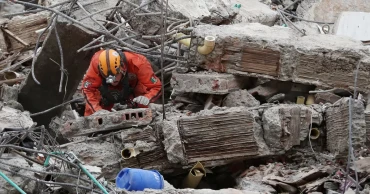
Earthquake response tests Colombia’s new government as rescuers race to find survivors
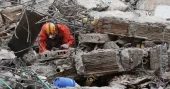
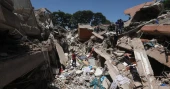
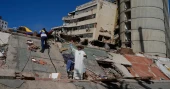
Aid from regional partners began arriving in Colombia on Wednesday as rescue teams intensified their search for survivors in the rubble left by a powerful earthquake that destroyed buildings, damaged roads and crushed vehicles.
The disaster has put pressure on Colombia’s new President Abelardo de la Espriella and his government as they work to coordinate the emergency response, while civil society groups are also mobilizing assistance for the hardest-hit communities.
De la Espriella said Wednesday evening that at least 265 people had been killed in Monday’s magnitude 7.4 earthquake that struck western Colombia. Nearly 500 people were officially reported missing, although civilian-run databases put the number at more than 4,100. More than 25,800 families have been affected, the president said.
“Our efforts are focused on the disappeared,” he told reporters in the capital, Bogotá.
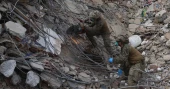
Rescue teams continued searching through collapsed structures in the worst-hit cities of Cali, Pereira, Manizales and Quibdo as the chances of finding survivors alive diminished with each passing hour. Aid agencies say the first 48 to 72 hours are especially critical for rescue operations, although people trapped under rubble can sometimes survive longer if they have access to food and water.
Alejandro Eder, the mayor of Cali, said Wednesday afternoon that rescue workers were still finding indications that people remained alive beneath the rubble.
“The next 20 hours are the most critical to find and rescue people alive,” he said. “Every minute is vital.”
Survivors pulled from rubble
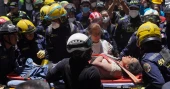
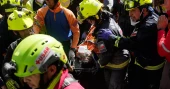
In Pereira, rescuers pulled Daniela Largo alive from the debris late Tuesday after a difficult 12-hour operation. Crews created a small opening to free her trapped arm, while a doctor administered intravenous fluids to stabilize her. Wrapped in a blue blanket, the young woman was carried to an ambulance as firefighters embraced and residents cheered.
In another rescue operation in the same city, however, a man was pulled from a damaged building dead and covered with a white blanket.
Authorities across the coffee-growing region, one of the areas hardest hit by the earthquake, have turned sports arenas, schools and other public buildings into temporary shelters for thousands of displaced people.
Ebert Jonathan Morales, a resident of Cali, said his family had lost everything.
“My house was completely destroyed. We can't live there,” Morales said. “It collapsed. The floor collapsed, the walls cracked. The roof came down.”
In Pereira and Cali, many families have been sleeping in parks, either because they fear aftershocks and further collapses or because they no longer have homes to return to.
Colombia’s geological service has recorded 130 aftershocks since the main earthquake.
“We have the most important things: a roof over our heads, food, water and, in my case, medical care,” said Edith Penagos, 48, who was staying with her teenage son in a white tent in a Pereira park.
Rodrigo León Loya, a seismologist and geosciences professor at the University of the Andes, said the likelihood of another earthquake of similar strength occurring in the same area is low, but he cautioned that further seismic activity cannot be ruled out.
“Let's remember that Colombia is full of active fault lines,” he said. “The question isn't whether it can happen again. The question is rather when an earthquake of similar magnitude will occur at another of Colombia's seismic sources.”
Humanitarian crisis complicates responseThe official response has been particularly difficult in many parts of Choco, the region where the earthquake was centered. The area has long struggled with severe poverty and armed conflict that has displaced people for decades.
The full extent of the earthquake’s impact in the remote, jungle-covered northwest remains unclear because cellphone services have been disrupted and many affected communities can only be reached by river.
“This earthquake compounds an already severe humanitarian situation, and there is a need for increased support for the humanitarian response,” said Giovanni Rizzo, Colombia director for the Norwegian Refugee Council.
Several humanitarian organizations were already operating in Choco, supporting the 2016 peace agreement between the government and leftist rebels and responding to continued violence involving other armed groups.
Those organizations were able to quickly shift their operations toward earthquake relief, said María José Torres, the U.N. resident coordinator in Colombia.
“We have a presence on the ground. Therefore, our ability to be there, present with the people, I think, has increased exponentially,” Torres said in a statement Tuesday.
International aid arrives
Meanwhile, assistance from foreign governments and international organizations continued to arrive in Colombia.
The U.S. State Department said disaster response teams began arriving Monday. Washington has also offered more than $15 million in aid.
Mexico said it sent two military aircraft carrying 19.5 tons of nonperishable food and 19 members of its security forces to Pereira. It plans to send another 39 tons of aid in the coming days. Another 255 military specialists and 20 dogs are on standby to deploy to Colombia if needed.
El Salvador’s President Nayib Bukele offered to send two planes carrying 100 tons of humanitarian aid.
Pope Leo XIV on Wednesday expressed support for those involved in the recovery effort and said he was praying for those killed, injured and otherwise affected by the earthquake.
“I want to express my solidarity with my Colombian sisters and brothers who have suffered the effects of the recent earthquake,” he said.
30 days ago
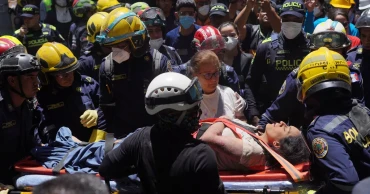
Colombia’s earthquake response strains new government as rescuers race to find survivors
The search for survivors trapped under the rubble of Colombia’s powerful earthquake became increasingly urgent Wednesday as rescue teams raced against time to find signs of life.
The disaster has put new President Abelardo de la Espriella and his government under pressure as they work to respond to the emergency, while civil society groups are trying to deliver assistance to vulnerable communities hardest hit by the quake.
By Tuesday, de la Espriella said the magnitude 7.4 earthquake had killed at least 181 people and injured 2,595 others in western Colombia. He said at least 195 people remained missing, although databases maintained by civilian groups put the number closer to 4,000.
Search teams worked through the night in the worst-affected cities of Cali, Pereira, Manizales and Quibdo, as the chances of finding victims alive diminished with each passing hour.
Aid organizations consider the first 48 to 72 hours after a disaster critical for rescuing survivors, although the period can be extended when victims have access to food and water.
There have been moments of hope amid the destruction, including rescuers pulling a dust-covered baby through a gap in a concrete wall and crowds cheering as a woman was carried from the rubble on a stretcher.
In many areas, the government’s disaster response has been complicated by long-standing poverty and decades of armed conflict that have displaced large numbers of people.
“This earthquake compounds an already severe humanitarian situation, and there is a need for increased support for the humanitarian response,” said Giovanni Rizzo, Colombia director for the Norwegian Refugee Council.
The 2016 peace agreement between the government and rebels, along with the country’s continuing armed conflict, could help humanitarian organizations distribute food and other emergency supplies more quickly, said María José Torres, the U.N. resident coordinator in Colombia.
Humanitarian organizations already have a presence in several conflict-affected areas as a result of the peace process, including Choco, which was at the epicenter of the earthquake.
“We have a presence on the ground. Therefore, our ability to be there, present with the people, I think, has increased exponentially,” Torres said in a statement Tuesday.
Meanwhile, international governments and nonprofit organizations continued sending assistance to Colombia.
The United States has pledged more than $15 million in aid, while Mexican President Claudia Sheinbaum said her country was ready to deploy hundreds of search-and-rescue and health workers, along with tons of medical supplies and other equipment.
On Tuesday afternoon, Salvadoran President Nayib Bukele said El Salvador would send two planes carrying 100 tons of humanitarian aid in the coming days.
“Our prayers are with the families of the victims, the wounded and all the Colombian people,” Bukele wrote on X.
1 month ago
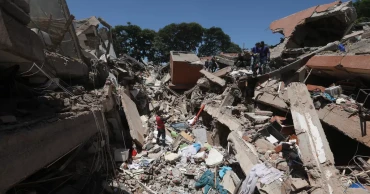
132 killed in Colombia's strongest earthquake in years
At least 132 people have been killed and more than 480 injured after one of Colombia's strongest earthquakes in years struck the country, prompting the government to declare a national disaster as rescue teams searched for people believed to be trapped beneath collapsed buildings.
The magnitude 7.4 earthquake struck at 7:34 am local time Monday at a depth of 103 kilometers (64 miles) in Chocó province, according to Colombia's geological service. The powerful tremor was felt across a vast area of western Colombia.
Many of the deaths were reported in Pereira, a city in the country's coffee-growing region, while surrounding areas and the Valle del Cauca region also suffered significant damage.
The epicenter was near the village of San José del Palmar in Chocó province. Despite damage to roads leading in and out of the village, local mayor León Fabio Marín Moncada said there were no reported deaths or injuries there.
Colombia's Association of Capital Cities said more than 480 people had been injured in the earthquake.
Pereira, about 55 kilometers (34 miles) from the epicenter, was among the hardest-hit cities. Videos verified by the BBC showed at least one building collapsing in Plaza Bolívar, the city's main square, leaving debris and clouds of dust scattered across the area.
Local authorities reported at least 40 deaths in Pereira's metropolitan area and said 65 buildings had collapsed. People were believed to be trapped inside 15 of those structures.
A curfew was imposed in parts of Pereira until 5am Tuesday.
In Cali, about 160 kilometers south of Pereira and roughly 200 kilometers from the epicenter, 32 buildings collapsed.
Dan Cutler, 29, a London resident who has been traveling in Colombia with his partner for about two months, was in Cali when the earthquake struck.
"I've never experienced anything like it," he told the BBC, saying they ran outside in their pajamas after being awakened by the tremor.
He said their hotel suffered no major structural damage, although there were cracks in the walls and some paint and plaster had fallen away.
Deaths were also reported in Manizales, Quibdó and Medellín, as well as in the Chocó and Valle del Cauca regions. At least two people were killed in Manizales.
Angélica Ávila, who was staying at a hotel in Manizales, said cracks appeared in the walls as the earthquake struck.
"Everyone was screaming," she told BBC World Service, adding that she saw dust coming from neighboring buildings and bricks falling from walls.
Journalist and meteorologist Luis Felipe Molina, who was at home in Manizales, about 150 kilometers from the epicenter, said the city has strict seismic-resistant building regulations because of previous earthquakes.
He said his building withstood the impact, although most of the books on his shelves fell and there were sounds of breaking glass and people screaming.
Colombia's aviation authority reported damage at several regional airports, including those in Pereira, Manizales, Quibdó, Armenia, Cartago and Buenaventura.
In the capital Bogotá, trees and traffic lights shook violently, and some buildings developed cracks, but there were no immediate reports of serious damage to major infrastructure.
Tremors were also felt in neighboring Venezuela, Ecuador and Panama.
The earthquake struck less than two months after twin earthquakes devastated northern Venezuela, killing more than 6,300 people.
President Abelardo de la Espriella declared a national disaster situation, giving authorities special powers to respond to the emergency and reallocate funds. The president, who took office only Friday, said more than 1,500 homes had been damaged.
As the scale of the destruction became clearer, several countries offered support. U.S. Secretary of State Marco Rubio said Washington was closely monitoring the situation and was ready to assist. European Commission President Ursula von der Leyen said the EU's Copernicus satellite system was being used to support rescue efforts.
El Salvador's President Nayib Bukele expressed solidarity with Colombia and offered personnel and equipment to help with rescue operations.
The U.S. Geological Survey estimated that about 1.5 million people experienced shaking close to magnitude 7.
The agency said deep earthquakes such as Monday's are generally less dangerous than those occurring closer to the Earth's surface. However, they can still release energy capable of damaging buildings and may produce fewer but potentially stronger aftershocks. #From BBC
1 month ago
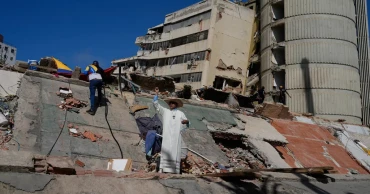
Venezuela earthquake death toll surpasses 5,000
The death toll from the two powerful earthquakes that struck Venezuela last month has climbed to 5,069 as recovery and debris removal operations continue, authorities said on Friday.
In a statement, the interim government of President Delcy Rodriguez said the number of injured remained unchanged at 16,740, the same figure reported over the past 11 days.
Officials said the higher death toll resulted from ongoing search and recovery efforts, particularly in the coastal state of La Guaira, which suffered the worst damage from the June 24 earthquakes near the Caribbean Sea.
Authorities have recorded 1,331 aftershocks since the twin earthquakes, measuring magnitudes 7.2 and 7.5.
According to the government, the quakes damaged 856 buildings, while 190 structures collapsed completely. Hundreds of other facilities, including bridges and roads, also sustained varying degrees of damage.
Rescue, recovery and damage assessment operations are continuing in the affected areas, officials said.
1 month ago
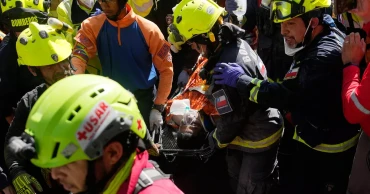
Security guard rescued alive from collapsed building 8 days after Venezuela earthquakes
Rescue workers on Thursday pulled a 43-year-old security guard alive from the basement of a collapsed shopping centre in Venezuela, eight days after powerful twin earthquakes devastated parts of the country.
Hernán Alberto Gil Flores had been trapped beneath the rubble of the Galerías Playa Grande shopping centre in the coastal state of La Guaira since the earthquakes struck on June 24. Rescue teams first established contact with him several days after the disaster.
Gil Flores was carried from the wreckage on a stretcher wearing an oxygen mask before being taken by ambulance to receive medical treatment, as rescuers from several countries celebrated the successful operation.
The dramatic rescue offered a rare moment of hope after the twin earthquakes, measuring 7.2 and 7.5 in magnitude, killed more than 2,200 people, injured over 11,000 and caused widespread destruction across northern Venezuela.
According to rescuers, Gil Flores survived because he was inside a small security booth in the building's basement when the earthquakes struck. Although the surrounding structure collapsed, the booth remained largely intact, creating an air pocket that protected him from the falling debris.
International rescue teams managed to keep him alive by supplying water and liquid nutrients through a narrow opening while carefully removing concrete and debris from the unstable structure.
Minyar Collado of the Costa Rican Red Cross said Gil Flores initially asked rescuers not to inform his wife that he had been found alive until they were certain they could save him.
His wife, Gusbimar González, said learning that rescuers had made contact with her husband after days of uncertainty renewed her hope. The couple have two children.
The rescue operation was led by Chilean urban search and rescue firefighters, with assistance from teams from the United States, Portugal, Mexico, Costa Rica, El Salvador and Venezuela. Crews worked around the clock despite aftershocks, heavy rain and the risk of further collapse.
Rescuers also used a telescopic camera to maintain contact with Gil Flores throughout the operation, while Chilean firefighter María Paz Campos provided reassurance and instructions during the final stages of the rescue.
La Guaira was among the areas worst affected by the devastating earthquakes, which destroyed or damaged tens of thousands of buildings across northern Venezuela.
2 months ago
Death toll nears 2,000 as questions mount over Venezuela's quake response
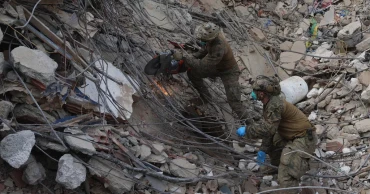
Venezuela's devastating twin earthquakes have killed at least 1,943 people and injured more than 10,500, while thousands remain missing, according to official figures, as survivors increasingly accuse the government of a slow and poorly coordinated rescue effort.
More than a week after the 7.2- and 7.5-magnitude earthquakes struck northern Venezuela on June 24, families continue searching for loved ones trapped beneath collapsed buildings in La Guaira state, Caracas and surrounding areas, with many saying civilian volunteers and foreign rescue teams have carried out much of the search and recovery work.
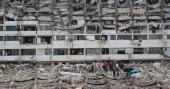
Among them is Angelica Mundrain, who has spent six days waiting outside the ruins of her beachfront apartment building in La Guaira, hoping heavy machinery will arrive to recover the bodies of her son, niece and nephew buried beneath concrete and twisted steel.
"We've been abandoned," Mundrain said, describing what she called a lack of organization, compassion and urgency in the government's response.
The disaster has exposed significant weaknesses in Venezuela's emergency response system under acting President Delcy Rodriguez, with residents saying the first 72 hours after the earthquakes were marked by confusion and inadequate coordination.
According to survivors, police and security forces were largely deployed to manage traffic while local residents, often assisted by foreign rescue teams equipped with thermal cameras, sound detection devices and trained search dogs, searched through the rubble. Ambulances reportedly faced long traffic delays, and hospitals struggled with shortages of personnel and medical supplies.
David Smilde, a Venezuela expert at Tulane University, said the government's response reflects longstanding institutional problems, including the loss of experienced public-sector workers due to low wages and corruption. He said an effective disaster response requires trained personnel, established emergency protocols and clearly defined responsibilities.
Residents also alleged that access to rescue equipment depended in some cases on wealth or political connections. Survivors said specialized machinery, including telescopic cranes, was deployed more quickly to buildings where military officers or politically connected individuals were believed to live, while other sites continued waiting for assistance.
Public frustration has occasionally led to confrontations with equipment operators. At one collapsed public housing complex, residents reportedly blocked an excavator from leaving the site, insisting rescue operations continue.
Rescue crews continued searching for survivors on Tuesday despite diminishing hopes of finding more people alive. Emergency experts say the first 48 to 72 hours after a major earthquake are generally the most critical for saving lives, although survival can be extended if trapped victims have access to food and water.
Electrician Daniel Castillo, who rescued his mother and son from a collapsed public housing building shortly after the earthquakes, said his brother's body was recovered a day later.
While collecting emergency hygiene supplies from a military distribution point, Castillo criticized the authorities' response, saying ordinary citizens and foreign rescue workers had shouldered much of the rescue effort while many security personnel remained largely uninvolved.
He contrasted the dust-covered volunteers searching through debris with members of the National Guard whose uniforms, he said, remained spotless throughout the operation.
2 months ago
Search for Venezuela earthquake survivors continues as humanitarian crisis deepens
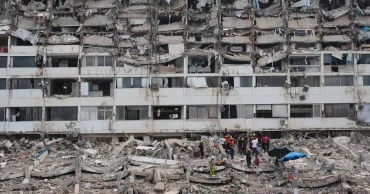
Rescue teams and volunteers continued searching through the rubble of collapsed buildings in Venezuela on Monday as hopes of finding more survivors from last week's devastating twin earthquakes diminished and concerns mounted over a prolonged humanitarian crisis.
Five days after the disaster, relief agencies warned that the critical window for rescuing survivors was rapidly closing, although people trapped beneath the debris could still survive if they had access to food and water.
The earthquakes have left thousands homeless, raising questions over whether the cash-strapped government can effectively coordinate long-term relief and recovery efforts.
The official death toll has surpassed 1,700, according to government figures.
Meanwhile, a magnitude 4.6 aftershock struck the northern state of La Guaira on Monday, adding to the anxiety of residents and rescue workers. Authorities said there were no immediate reports of additional damage.
Government officials, facing criticism over the pace of the response, highlighted ongoing rescue and relief efforts. Police and military personnel distributed food to displaced residents, while authorities said electricity had been restored to 90 percent of La Guaira, one of the worst-hit regions.
Jorge Rodríguez, head of the National Assembly, said engineers were assessing structurally damaged buildings and that 15 temporary camps had been established to shelter displaced families.
Acting President Delcy Rodríguez also praised emergency responders after rescue workers pulled a survivor from the rubble following a 43-hour operation, describing every successful rescue as "a victory for hope."
Despite occasional rescue successes, many families remained waiting near collapsed buildings for news of missing relatives.
Residents were again shaken after Monday's aftershock, one of more than 600 recorded since the twin earthquakes struck last Wednesday. The tremor was felt in Caracas, where many people rushed out of buildings in fear.
Rescue and recovery operations are continuing as authorities and humanitarian agencies race against time to assist survivors and address the growing needs of those displaced by one of the country's deadliest natural disasters.
2 months ago