Tech-News
Apple unveils iPhone 18 lineup, foldable Duo
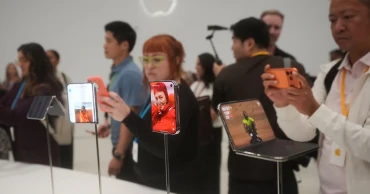
Apple on Wednesday unveiled its latest iPhone lineup, including the much-anticipated foldable iPhone Duo, as new CEO John Ternus made his debut at the company’s annual product launch.
Ternus, who succeeded Tim Cook as Apple CEO on Sept. 1, presented the new devices at Apple’s headquarters in Cupertino, California.
After highlighting updates to the iPhone, Apple Watch and AirPods, Ternus told the audience at the Steve Jobs Theater that “actually there is one more thing,” echoing the trademark phrase associated with Apple co-founder Steve Jobs.
The foldable Duo features the largest display ever offered on an iPhone while remaining pocket-sized, Ternus said.
When unfolded, the device has a 7.6-inch display, which is 80 percent larger than that of the new iPhone 18 Pro. It also supports the Apple Pencil, a feature previously available only on iPads.
Ternus said the Duo would “redefine the experience of using a foldable phone.”
The device allows users to split the screen between two different apps or open two windows of the same website, such as when comparing products while shopping online.
Starting at $1,999, the Duo is the most expensive iPhone Apple has introduced.
Ben Wood, chief analyst at CCS Insight, said the foldable device was always expected to overshadow the other announcements at the event.
The Duo brings a distinctive design to the iPhone lineup and marks Apple’s entry into the niche foldable smartphone market, he said.
Although demand for the Duo is expected, Wood noted that foldable phones still account for less than 5 percent of the global smartphone market.
New iPhone 18 models
The iPhone 18 Pro and iPhone 18 Pro Max come with improvements to battery life, cameras and overall performance, Ternus said.
The two models will start at $1,199 and $1,299, respectively. Preorders will begin Sept. 12, with the phones becoming available Sept. 18. The Duo will go on sale Oct. 23.
The new models offer up to 45 hours of video playback on the Pro Max and support faster charging.
Apple has also introduced new camera features, including what it calls “cinematic effects” for regular video, enhanced manual controls and “smart focus tracking,” which allows users to keep a moving subject in focus, such as a child playing soccer.
The company is also highlighting new artificial intelligence capabilities for Siri, with an emphasis on privacy and security as Apple seeks to narrow the gap with rivals in AI.
Samsung, Motorola and Google are among the major competitors that have already introduced foldable smartphones. Analysts said Apple’s entry reflects its traditional approach of waiting for emerging technologies to mature before entering a new category.
“The foldable launch is straight out of Apple’s playbook,” said Forrester analyst Dipanjan Chatterjee, adding that Apple typically waits for products to overcome their initial shortcomings before entering and shaping a market.
The key question, he said, is whether Apple can expand demand for what remains a niche product category.
The iPhone 18 lineup is about $100 more expensive than earlier generations, partly because of a global shortage of memory chips. The iPhone 17 ranged from $799 to $1,999, depending on the model.
Earlier this year, Apple announced advances in artificial intelligence, including upgrades to Siri, while emphasizing privacy and practical everyday applications as it works to catch up with competitors.
Ternus takes center stage
The launch event also provided Ternus with an opportunity to outline his vision for Apple’s future, Chatterjee said.
Ternus inherits one of the most successful consumer technology companies in modern history, presenting both an advantage and a challenge, he said.
Chatterjee said Ternus would need to build on Cook’s execution, scale and ability to monetize Apple’s products while preparing the company for a future in which smartphones may no longer be consumers’ primary gateway to the world.
Wood, meanwhile, said the attention surrounding the Duo made Ternus’ formal arrival as CEO less prominent than expected.
The event represented a smooth transition from Cook, and its timing alongside the launch of the iPhone Duo was likely deliberate, Wood said.
Despite the intense interest in the foldable phone, he said Apple’s broader ecosystem of hardware, software and services would remain the main driver of the company’s future growth.
2 days ago

Musk launches steering-wheel-free taxi service in bet riders lose 'no control' fears and hop inside
Elon Musk sent dozens of self-driving Cybercabs without steering wheels or brake pedals onto the streets of Austin, Texas, on Thursday, betting that Americans will overcome their fears of rides with “no control” and hop inside.
The rollout of the gold-colored Teslas, which give passengers no way to take control in an emergency, comes as the company prepares to launch the service in other cities. Tesla shares have suffered amid a slump in vehicle sales, but they rose more than 5% Thursday on hopes that the futuristic-looking taxis will catch on quickly.
“No steering wheel, no pedals,” Tesla teased on X before the launch. Musk followed with a post showing a giant Cybercab floating above the Austin skyline and later wrote, “A Storm of Cybercabs.”
An invitation-only launch event was expected to be held later Thursday.
It is unclear how soon Musk intends to roll out the Cybercab service, but he needs to move quickly.
Tesla trails self-driving taxi leader Waymo in the number of cabs deployed and trips completed. To catch up, it must demonstrate that its camera-only system can safely navigate streets and avoid pedestrians. By contrast, Waymo and another rival, Amazon’s Zoox, supplement cameras with radar and a laser-based technology called lidar.
Even if the technology works well, Americans still need to be convinced.
A Pew Research Center survey conducted in February found that seven in 10 U.S. adults were “not too” or “not at all” comfortable riding in a driverless car.
Tesla stock was battered last year after Musk took over President Donald Trump’s government cost-cutting campaign, dubbed DOGE, and embraced extreme-right political candidates, sparking protests at Tesla showrooms and boycotts by car buyers in several countries.
Tesla posted a second consecutive annual decline in vehicle sales last year. Its profits plunged, and it lost its crown as the world’s bestselling electric vehicle maker to China’s BYD.
Austin has had a self-driving Tesla “robotaxi” service since June last year, but those cars are equipped with steering wheels and brake pedals. The service, which has since expanded to five other cities in Texas and Florida, initially carried passengers with safety drivers aboard to take over in case of problems.
Tesla has more than 200 “unsupervised” robotaxis in those cities, meaning they operate without safety drivers aboard, according to the monitoring site RobotaxiTracker. Waymo has more than 4,000 such vehicles in 14 cities.
In the Pew survey, 16% of U.S. adults said they would be “somewhat” comfortable riding in a driverless car, while 7% said they would be “extremely” or “very” comfortable.
Separate Gallup polling conducted in 2025 found that skepticism about the safety of driverless cars had risen over the previous several years. More Americans said all or mostly human-operated cars were the safest option than in a 2018 poll.
It is unclear whether Musk is the right person to coax people into cars with no human controls. Another Pew poll conducted in January found that nearly six in 10 U.S. adults had a “very” or “mostly” unfavorable view of him.
Musk eventually hopes to send full self-driving software to hundreds of thousands of Teslas through a software update. That would allow Tesla owners to turn their cars into taxis for hire when they are not using them.
But regulators in the U.S. and overseas have signaled that he still has some convincing to do.
Tesla has not received approval for drivers to use even its partial self-driving software in most European Union countries. In the U.S., where the software has been downloaded and used, regulators have opened several investigations into its safety.
One probe is examining the software’s role in several Tesla crashes in fog, sun glare and other low-visibility conditions, including one in which a pedestrian was killed. Another is investigating dozens of incidents in which Teslas using partial self-driving software ran red lights or drove on the wrong side of the road, sometimes crashing into other vehicles and causing injuries. A third is examining why Tesla apparently violated regulatory requirements by failing to report crashes promptly.
8 days ago
Judge orders changes to Google's digital ads business but spares it from breakup
A federal judge on Wednesday ordered Google to make changes to the system underpinning its monopoly in digital advertising, but stopped short of ordering the breakup sought by the US government.
The initial two-page ruling by US District Judge Leonie Brinkema in Virginia marks the second time in a year that Google has avoided a Justice Department proposal aimed at dismantling parts of its internet business. Meanwhile, practices that courts have found to be anti-competitive have helped enrich Google's parent company, Alphabet Inc., which has a market value of $4.11 trillion.
Brinkema's full opinion, including details of the remedies, will remain sealed for 14 days to allow both sides to review it and suggest any necessary redactions.
“We're very pleased the Court rejected the DOJ's proposal to break apart tools that help small businesses reach new customers and grow,” said Lee-Anne Mulholland, Google's vice president for regulatory affairs.
After a judge ruled in 2024 that Google's widely used search engine constituted an illegal monopoly, the Justice Department sought remedies that would have required the company to sell its popular Chrome web browser. That proposal was rejected last September by another federal judge overseeing the case.
Brinkema has now similarly rejected the government's argument that Google should be required to sell parts of the technology behind a complex advertising system that generates a significant share of the company's nearly $400 billion in annual advertising revenue.
Critics of major technology companies condemned the decision.
“It takes an Olympic level of mental gymnastics to find that Google is operating an illegal monopoly and then decide to do nothing about it,” said Sacha Haworth, executive director of The Tech Oversight Project.
“With Big Tech continuing to suffocate new and innovative businesses from gaining traction, Judge Brinkema, like (US District Judge Amit) Mehta before her, is sending the wrong message at the wrong time,” Haworth said.
Brinkema's approach contrasts with the position strongly opposed by the Justice Department last November, when she heard closing arguments in the trial's remedies phase.
The ad-tech case began with the government's antitrust lawsuit filed in 2023, which resulted last year in a ruling that Google had illegally maintained a monopoly.
Justice Department lawyers warned Brinkema in court filings that allowing Google to retain all of its advertising technology would still enable the company to “manipulate computer algorithms that are the engine of its monopolies in ways too difficult to detect.”
Google argued in response that breaking up the complex network would be unnecessarily harsh. The system distributes advertisements that online publishers rely on to help finance digital services used by millions of consumers.
The advertising exchange technology at the center of the case processes an estimated 55 million requests per second, according to figures submitted by Google in court filings.
“This is technology that absolutely has to keep working for consumers,” Google said ahead of Brinkema's ruling.
In her decision, Brinkema said she had agreed to most of the remedies proposed by both sides.
Although the changes could potentially reduce Google's revenue or slow its future growth, the ruling is likely to be viewed by many investors as little more than a speed bump for a company that has recently benefited from the rapid growth of artificial intelligence technology.
A similar investor reaction followed the penalties imposed by US District Judge Amit Mehta in the search monopoly case. Since Mehta's ruling in Washington, D.C., Alphabet's stock price has climbed 45%, creating an additional $1.3 trillion in shareholder wealth.
9 days ago
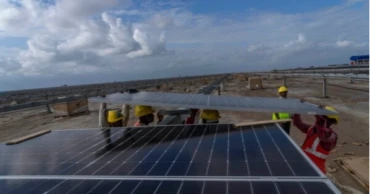
India's rising power demand exposes challenges in using solar energy
India is rapidly expanding its renewable energy capacity, but a growing amount of solar power is going unused because the country's electricity grid and storage systems are struggling to keep pace.
Over the past 15 months, India curtailed nearly 11 terawatt-hours of solar power — enough electricity to supply around 10 million homes — according to government data and research by energy think tank Ember.
The unused solar power comes at a time when India's electricity demand is rising sharply, driven by extreme heat, increased use of air conditioners, irrigation needs and the growing electrification of transport and other sectors.
India now has more than 300 gigawatts of clean energy capacity, accounting for over half of its total installed electricity capacity. However, coal still generates most of the country's electricity.
One major problem is known as curtailment, which happens when solar or wind farms are forced to reduce or stop generating electricity because the grid cannot safely absorb the available power.
Solar generation usually peaks in the afternoon, but coal-fired power plants cannot always reduce their output quickly enough to make room for renewable electricity.
“We're in a stage where some of the biggest hurdles in renewables are starting to hit us,” said Neshwin Rodrigues, an energy analyst at Ember.
Another challenge is the concentration of solar projects in western India. Gujarat and Rajasthan together account for nearly half of the country's solar capacity, putting heavy pressure on transmission lines in the region.
Experts say India needs to expand its power transmission network, develop more battery storage and make its electricity system more flexible.
“Without enough storage, India risks keeping coal plants running even when cheap renewable power is available,” said Vibhuti Garg, South Asia director at the Institute for Energy Economics and Financial Analysis.
Building new solar and wind projects can take around two years, but major transmission lines often require at least three years to complete. India has achieved about 80% of its annual transmission construction targets over the past five years, according to Ember.
India aims to reach 500 gigawatts of clean electricity capacity by 2030 and expects non-fossil sources to account for nearly 70% of its installed power capacity by 2036.
Energy experts say battery storage could help address the problem by storing excess solar power generated during the day and supplying it during the evening, when electricity demand remains high.
India currently has about 3 gigawatts of battery storage and 7.4 gigawatts of operational pumped-storage capacity. The government expects the country's storage requirement to reach around 74 gigawatts by 2032.
“If we try to increase the solar installations without solving for energy storage, it is only going to lead to curtailment,” said Ankit Mittal, CEO of battery storage company Ingro Energy.
Industry experts say the rapid growth in electricity demand has caught many by surprise as transport, industries and other sectors increasingly shift to electricity and more data centres are built.
The challenge for India now is not only to add more renewable energy projects, but also to build the transmission and storage systems needed to ensure that clean electricity can be used when and where it is needed.
10 days ago
Social media companies step up efforts to identify child users
Social media and technology companies are increasing their efforts to identify which of their users are children, as pressure from governments, regulators and the public grows over online safety.
The issue has become a key part of Meta’s recently announced $18 billion legal settlement over allegations that its Facebook and Instagram platforms harmed children’s mental health by deliberately designing features that kept young users engaged.
The settlement, involving 48 US states, the District of Columbia and US territories, places strong emphasis on improving age assurance — the process of determining whether a user is a child or an adult.
The challenge is simple but difficult: safety measures designed for children are of limited use if online platforms cannot accurately identify which users are underage.
Other major technology companies, including Google, TikTok and Roblox, are also strengthening their systems for identifying younger users.
Under the settlement, Meta will have one year to improve its age-checking system using its own technology as well as third-party tools. The company will also face regular independent audits to assess how effectively the system works.
AI increasingly used to estimate users' agesIn the physical world, people often use government-issued identification cards to prove their age. Online, however, many users are uncomfortable sharing documents such as passports or driving licences with large technology companies.
Meta currently accepts identification documents for age checks and says it deletes them within 30 days. But companies are increasingly turning to artificial intelligence to estimate a user's age.
Unlike traditional age verification, AI cannot confirm a person's actual date of birth. Instead, it examines different clues to estimate whether someone is likely to be a child or an adult.
Google began using an AI-based age assurance system for YouTube last year, analysing users' viewing behaviour to help distinguish adults from minors. Meta also uses AI to identify potentially underage accounts.
On Instagram, the technology can analyse clues such as posts about birthdays or school, the type of content users like or comment on, their online activity, friendships and the times of day they use the platform.
Meta has also said its AI can examine photos for general visual clues, such as physical features that may help estimate a person's age. The company says it does not use the system to identify the specific person in an image.
Under the settlement, Meta has also agreed to set targets to reduce cases where minors are incorrectly identified as adults. If an account is found to belong to a child under 13 and is removed, Meta will also review the ages of the user's friends.
Face scans also being usedSome technology companies are using video selfies and facial analysis to estimate users' ages.
Identity verification firms such as Yoti and Persona provide such technology to companies including Meta and Roblox.
Roblox, which allows children under 13 to use its platform, asks users to submit a video selfie if they want to access certain chat features. The company says the videos are deleted after the age-checking process is completed.
However, facial age estimation has raised concerns over accuracy. Some users have reported incorrect results, while experts have questioned whether the technology works equally well across different groups, including women and people from different racial or ethnic backgrounds.
Roblox has said its system can generally estimate the ages of users between about 5 and 25 within one or two years.
Debate continues over who should verify users' agesMeta and some other companies have argued that app store operators, such as Apple and Google, should be responsible for verifying users' ages before allowing them to download apps.
Apple and Google have opposed the idea, arguing that such a system could fail to cover people using desktop computers, shared family devices or apps already installed on a device.
Privacy remains a major concernWhile age checks are intended to protect children from harmful or inappropriate online content, critics warn that widespread age verification could threaten users' privacy and anonymity.
Digital rights groups have raised concerns that people may eventually have to prove their age to access a wide range of online services, including news websites, health information, entertainment platforms and other forms of online content.
Critics also argue that collecting identity documents, facial scans or other personal information could create security risks if such data is leaked, hacked or misused.
The debate highlights a growing challenge for technology companies and governments: how to better protect children online without creating a system that requires everyone to give up large amounts of personal information to use the internet.
11 days ago

Japanese automakers Nissan and Honda join forces on car software
Japanese automakers Nissan and Honda have agreed to jointly develop computer components and software for vehicles expected to enter the market in fiscal 2029, the companies said Monday.
Under the agreement, Yokohama-based Nissan and Tokyo-based Honda will share standardized components for core electronic control units, or ECUs, as well as software.
The two companies began discussions in 2024 on cooperation in electric vehicles and automotive intelligence technology. Their latest agreement focuses on software-defined vehicles, whose functions and features can be controlled and updated through software rather than hardware. The announcement did not mention specific vehicle models or electric vehicles.
The global auto industry is increasingly shifting toward technologies such as automated driving, electrification and zero-emission vehicles, making cars more dependent on electronic systems and software.
The companies said sharing components and jointly conducting research could reduce costs, speed up development and create greater efficiency through large-scale production.
European automakers Volkswagen, BMW, Mercedes-Benz and Stellantis are also cooperating on software development and shared operating systems.
Nissan and Honda, both smaller than industry leader Toyota Motor Corp. in Japan, believe closer cooperation could strengthen their competitiveness.
The companies said they would also explore cooperation in areas including zero-emission technology and reducing traffic deaths.
Both stressed that faster development, efficient investment, electrification and intelligent vehicle technology would remain key priorities of their strategic partnership.
12 days ago
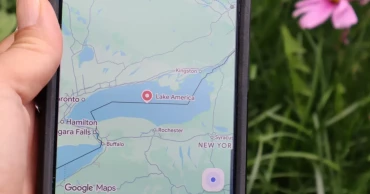
Google Maps renames Lake Ontario as 'Lake America' for US users following Trump order
Google has renamed Lake Ontario as "Lake America" for U.S. users on Google Maps to reflect a recent order by President Donald Trump.
The update comes days after Trump’s directive amid a trade war with Canada involving billions of dollars in mutual tariffs. The decision mirrors a 2025 order renaming the Gulf of Mexico as the Gulf of America. Google explained in a blog post Saturday that it uses designations assigned by the U.S. Geographic Names Information System, also known as GNIS.
U.S. users will see "Lake America," Canadian users will see "Lake Ontario" and users elsewhere will see both.
Trump’s Thursday decision was met with mockery. On Saturday, Ontario Premier Doug Ford placed a billboard on the Canadian shore reading, "Lake Ontario. Now and forever."
The White House, Canadian Prime Minister Mark Carney’s office and Ford's office did not comment Sunday.
Mountain View-based Google, owned by Alphabet Inc., runs a leading search engine and digital advertising network.
12 days ago
Artemis II astronauts receive top US space honor after moonshot
The four Artemis II astronauts who flew around the moon earlier this year received the United States’ highest space honor Friday for their historic mission.
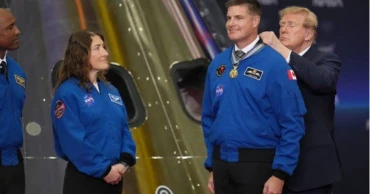
President Donald Trump presented the Congressional Space Medal of Honor to US astronauts Reid Wiseman, Victor Glover and Christina Koch, and Canadian astronaut Jeremy Hansen at a packed ceremony at NASA’s Johnson Space Center in Houston.
Orion capsule from Artemis II mission returns to Florida After historic spaceflight
The April lunar flyby brought the crew within 4,067 miles (6,545 km) of the moon and set a new human distance record. They became the first astronauts to travel to the moon in more than 50 years and the first to launch aboard NASA’s new 30-story moon rocket and Orion capsule.
NASA Administrator Jared Isaacman and other dignitaries attended the ceremony. Trump also announced plans to establish a US Space Academy for the Space Force, NASA and the commercial space sector.
The astronauts helped pave the way for Artemis III’s planned orbital docking rehearsal next year. Artemis IV could carry two astronauts to the lunar south pole as early as 2028. Trump said Americans will return to the moon before his term ends, with Mars to follow “very shortly.”
Isaacman praised the four as “intrepid space heroes,” while stressing that many others contributed to the mission.
Only 30 astronauts had received the prestigious medal before Artemis II. Neil Armstrong was its first recipient. Other honorees included Alan Shepard, John Glenn, Frank Borman, and SpaceX astronauts Doug Hurley and Bob Behnken.
Dozens of astronauts attended Friday’s ceremony, including 91-year-old Apollo 17 moonwalker Harrison Schmitt and the Artemis III crew.
NASA plans to establish a sustainable lunar base near the south pole, where permanently shadowed craters may contain frozen water that could be used for drinking water and rocket fuel. China is also targeting the region, prompting NASA Deputy Administrator Matthew Anderson to say, “The second space race has begun.”
At the end of the ceremony, the Artemis II crew gave Trump a blue flight jacket with space patches, fulfilling a promise made after their mission.
Trump later went to Mission Control and spoke with three US astronauts aboard the International Space Station, telling them about the new academy and briefly handing the phone to two of their spouses.
13 days ago
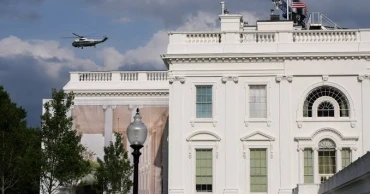
Former White House teleprompter operator ordered to surrender profits, pay fine over insider trading
A former White House teleprompter operator accused of using confidential information to place bets on prediction market Kalshi has agreed to hand over more than $100,000 in profits and pay a $65,000 fine under a settlement with US federal authorities.
The Commodity Futures Trading Commission announced the settlement on Friday. It also barred Gabriel Perez from trading for three years.
Perez was placed on unpaid leave from his White House job after reports emerged that he allegedly used advance knowledge of President Donald Trump's speeches to bet on the words and phrases he would use.
The White House did not immediately comment on the settlement. A White House official said in July that Perez was no longer working in his previous position but did not clarify whether he had been fired or resigned.
According to the commission, Perez earned $107,500 by placing bets on prediction markets involving words and phrases that would appear in Trump's speeches between December 2025 and February 2026.
The CFTC said Perez had access to presidential speeches before they were delivered and improperly used that nonpublic information for personal financial gain, violating his duty of trust and confidence.
Under the settlement, Perez must repay the full $107,500 in profits and pay a $65,000 civil penalty. The commission said the fine was reduced because of his “exemplary cooperation” with the investigation.
After the allegations became public on July 16, White House press secretary Karoline Leavitt described the matter as “unfortunate” and “a disgrace.”
14 days ago
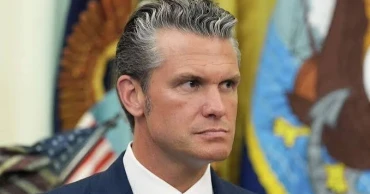
Judge rules Pentagon's actions against Anthropic were illegal and baseless
A US federal judge has ruled in favour of artificial intelligence company Anthropic in its legal battle with the Pentagon, saying the government acted illegally when it labeled the company a supply chain risk.
US District Judge Rita Lin issued the ruling on Thursday, finding that the Pentagon had punished Anthropic over its criticism of the government's approach to the use of artificial intelligence.
The dispute began in February when President Donald Trump and Defense Secretary Pete Hegseth accused Anthropic of posing a threat to national security and designated the company a supply chain risk.
Anthropic CEO Dario Amodei had objected to unrestricted military use of the company's AI technology, raising concerns that its products could be used for mass surveillance and autonomous weapons, including armed drones.
In her written ruling, Lin said the government's actions appeared to be aimed at making a public example of Anthropic because of its criticism of the administration, rather than being based on evidence that the company posed a genuine security risk.
Anthropic welcomed the ruling, saying it remained committed to working with the government to use AI technology in ways that strengthen national security.
The White House did not immediately comment on the decision.
In the 59-page ruling, Lin said neither the Constitution nor the federal law cited by the government allowed authorities to impose broad penalties mainly because Anthropic disagreed with the administration's views.
Anthropic sued the Pentagon in March, calling the supply chain risk designation an unlawful act of retaliation after the company refused to allow unrestricted military use of its technology.
The case has drawn attention to the growing debate over the use of artificial intelligence in warfare, surveillance and national security.
Earlier in the case, Lin temporarily blocked the Pentagon from enforcing the supply chain risk designation. She also stopped the enforcement of Trump's directive ordering federal agencies to stop using Anthropic and its AI chatbot, Claude.
During a hearing on July 30, Lin said the government's position raised serious concerns and appeared to conflict with First Amendment protections.
Justice Department lawyers argued that AI systems are extremely complex and difficult to assess in the same way as traditional physical equipment.
Anthropic lawyer Michael Mongan argued that the government's actions had seriously harmed the company and could also discourage open debate on the important issue of how AI should be used.
Anthropic has also filed a separate and narrower legal challenge, which is still pending before a federal appeals court in Washington, DC. That case concerns another rule the Pentagon is seeking to use to classify the company as a supply chain risk.
15 days ago