PMO
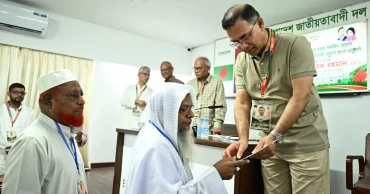
PM provides financial assistance to religious institutions in Dhaka-17
Prime Minister Tarique Rahman on Friday provided financial assistance to various religious institutions in Dhaka-17 constituency, including mosques, madrasas and Hindu temples.
The Prime Minister handed over cheques to representatives of the respective mosques and temples at the BNP Chairperson’s Office in Gulshan in the afternoon.
A total of 28 mosques in Dhaka-17 received Tk 247,000 each. Besides, 10 temples received Tk 300,000 each, totalling Tk 30 lakh, ahead of the Sharadiya Durga Puja.
The financial assistance was provided to support the activities of the religious institutions and help ensure smooth arrangements for the Durga Puja celebrations.
1 day ago
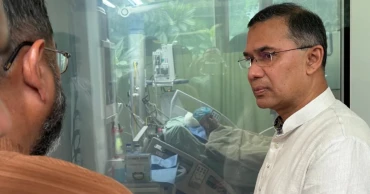
Hathazari accident: PM visits injured Army officer at CMH
Prime Minister Tarique Rahman visited an Army officer, who was seriously injured in an accident during a field firing exercise in Hathazari of Chattogram, at the Combined Military Hospital (CMH) in Dhaka on Friday.
The Prime Minister went to the CMH around noon and inquired after the physical condition of the injured officer, who is undergoing treatment there.
He wished the officer a speedy and full recovery and directed the authorities concerned to ensure necessary treatment for him.
Tarique Rahman also spoke to the injured officer and his family members, and offered them courage and consolation, creating an emotional atmosphere.
1 day ago
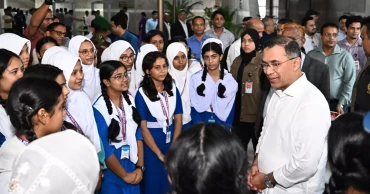
PM urges students to love, care for animals
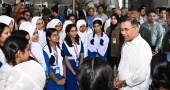
Prime Minister Tarique Rahman on Thursday urged students to love and care for all animals while protecting nature and the environment.
He said it is the responsibility of human beings, as the best of creation, to take care of plants and animals and called on the students to show compassion towards animals and never harm them.
The Prime Minister made the remarks when some students from Puthia Girls’ High School in Rajshahi, Savar Girls’ High School in Dhaka, Tejgaon Women’s College and Safiuddin Sarker Academy and College in Tongi met him at the Jatiya Sangsad Bhaban.
He urged the students to plant more trees and keep their surroundings clean and free from pollution.
2 days ago
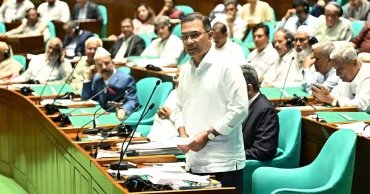
Freedom of speech should not cross limits of civility: PM
Prime Minister Tarique Rahman on Thursday called upon all to unite against the culture of abusive language, stressing the need for responsible behaviour in public discourse.
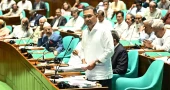
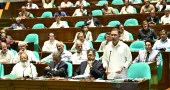
He made the call while delivering his concluding speech at the third session of the 13th Jatiya Sangsad.
“The fascist regime had taken away all democratic rights of the people, including freedom of speech. At present, there is a democratic environment in the country and freedom of speech is unrestricted. But we must remember that freedom of speech should not cross the limits of civility,” Tarique Rahman said.
He said no one wants the people of the country to be subjected to a fascist, authoritarian regime again.
“Likewise, no conscious person or patriotic politician will want our political culture to turn into a culture of abusive language. That is why all of us, irrespective of party affiliation, must play a responsible role,” the Prime Minister said.
He questioned why words that people will not feel comfortable using in a family environment should be used in the public domain. “Why should we use such words in public life? Why cannot we refrain from using such words in the public sphere? Through you, Mr Speaker, I want to leave this question before all members of this House and all conscious citizens of the country,” he said.
“If we are genuinely united on this issue, let us all play a united role against the culture of abusive language,” Tarique Rahman said.
Members of Parliament repeatedly thumped their desks in support of the Prime Minister’s remarks.
Conflict, division may revive fascist forces
Prime Minister Tarique Rahman also called for unity among democratic forces, warning that conflict and division could create a path for the ousted fascist forces to return.
He called on members of both the ruling and opposition benches to work together to build a welfare-oriented state.
“My appeal to the people and to the forces of democracy is this: let us not forget that divisions and conflicts among the pro-democracy forces may ultimately revive the ousted fascist evil forces and perhaps pave the way for them,” Tarique Rahman said.
He said everyone must continue working together to rebuild the state for the sake of future generations and as part of their duty to the martyrs.
The Prime Minister said differences of opinion and political competition are natural in a democratic system, as such differences exist around the world and political competition is also part of democratic practice.
“But we must remain vigilant so that differences of opinion do not turn into hostility,” he said.
Tarique Rahman said people sacrificed their lives at different times during the movements for protecting the country’s independence and sovereignty and restoring democracy.
He said people were also killed “like birds” during the anti-fascist mass uprising in 2024.
The Prime Minister said establishing justice and good governance is a sacred duty and a way of repaying the debt owed to the martyrs.
He said the people have entrusted one party with running the state and another with playing the role of the opposition, and urged both sides to work together to build a welfare-oriented state.
Tarique Rahman reiterated his message: “Bangladesh first, Bangladesh for all.”
He said people had repeatedly entrusted the BNP with running the state whenever they had the opportunity to cast their votes freely and fairly.
Referring to the 1991 election held after the anti-autocracy movement of 1990, the Prime Minister said the people had entrusted the BNP with running the country, while the party received support from Bangladesh Jamaat-e-Islami at the time.
He said the government led by then Prime Minister Khaleda Zia had expanded education, brought about a revolution in female education and created greater opportunities for women to participate in the labour market alongside men.
Around 2 crore people were also able to come out of poverty during that period, Tarique Rahman said, attributing the achievement to the BNP government.
He said after the 2001 election, the BNP was again entrusted with running the country to bring the state back on the right track and establish good governance.
The Prime Minister said Bangladesh had previously been placed at the top of global corruption rankings under the government that came to power in 2009, and that the BNP government subsequently worked to free the country from the stigma of corruption.
He said the country had later been burdened with huge loans due to mismanagement, corruption, looting and money laundering during the subsequent regime.
Tarique Rahman said the BNP government now has the responsibility of freeing Bangladesh from the burden of defaulted loans.
He said the actual volume of defaulted loans has been much higher than the figure shown during the previous regime.
The Prime Minister said the amount of defaulted loans, which had been shown at around 11 percent in 2024, was found to be 35.5 percent after a forensic audit conducted during the interim government in 2025.
He said the ratio has now declined to 32.6 percent following various measures taken by the BNP government, compared to 35.5 percent after the previous election, describing the decline as an indication that the situation has started to improve.
Tarique Rahman said the BNP government will work to free Bangladesh from the stigma of loan default that it inherited in 2026.
He said the government inherited a country heavily burdened with foreign debt, while many of those responsible for creating the debt burden left the country.
“Those who burdened Bangladesh with debt have fled the country, but Bangladesh still has to repay those loans,” the Prime Minister said.
He said the government has paid a record $2.0476 billion in principal and interest on foreign loans during the past five months.
Tarique Rahman said Bangladesh still has to bear a huge foreign debt burden due to the looting and money laundering committed under the previous regime.
He also agreed with the opposition leader that the country has inherited a fragile situation in various sectors, including education, health, banking, insurance, financial institutions, administration and law enforcement.
The Prime Minister said some of the problems still persist in specific areas and that the erosion of religious, social and family values in the state and society is also visible.
Parliament to be centre of all activities
Tarique Rahman said the government wants the current Parliament to become the centre of all activities, expressing confidence that both the ruling and opposition sides have demonstrated their commitment to working in the interests of the country and its people.
He said he has no doubt that both sides have discussed issues and tried to take effective initiatives in the national and public interest during the session.
The Prime Minister thanked all MPs present for keeping Parliament effective and vibrant.
He said people expect Parliament to discuss their problems and ease their sufferings to some extent, while bringing peace and prosperity to their lives.
The final sitting of the third session began at 3:00pm with Deputy Speaker Kayser Kamal in the chair. After Maghrib prayers, Speaker Hafiz Uddin Ahmad read out the President’s order proroguing the session.
As per parliamentary tradition, Leader of the Opposition Shafiqul Rahman spoke first, followed by Leader of the House and Prime Minister Tarique Rahman, who began his speech at 7:44pm and concluded it at 8:17pm.
The third session of the 13th Jatiya Sangsad began on August 27.
2 days ago
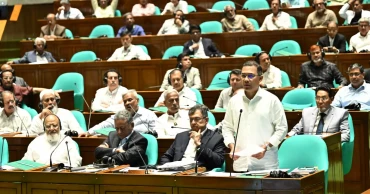
PM assures people of gradually resolving gas, power crisis
Prime Minister Tarique Rahman on Thursday assured the people that the government will gradually resolve the ongoing gas and electricity crisis, urging the opposition to present the actual situation to the people instead of resorting to provocative behaviour.
“We are firmly hopeful that, Insha-Allah, we will be able to resolve the problems of gas and electricity over time and take the country and its people out of this crisis,” he said.
The Prime Minister made the remarks while delivering his winding-up speech at the third session of the 13th Jatiya Sangsad.
He said the government is now working on longer-term solutions. “The measures and initiatives the government is going to take, I firmly believe, will enable us, if we can successfully implement the solar power generation plan, to become not only consumers but also producers of solar power. We have that capability.”
2 days ago
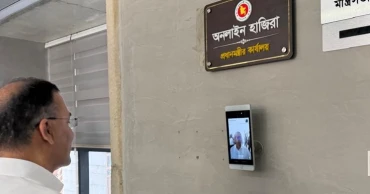
PM begins implementing ‘Honourable-free' official protocol
Prime Minister Tarique Rahman has started implementing the government’s decision to drop "Honourable" and other honorifics before his title in official communications and documents from his own office.
The Prime Minister’s Office began the process on Thursday of removing the word "Honourable" from files, documents and other official communications relating to the Prime Minister, a Cabinet Division official said, wishing to remain anonymous.
The Cabinet Division issued a circular on Wednesday directing that no honorific such as "Honourable", "His Excellency" or any other form of respectful address be used before the titles of the President, Prime Minister, ministers, state ministers and deputy ministers in official communications, documents and summaries.
Officials concerned said the Prime Minister has started implementing the directive in his own office instead of leaving it confined to the circular.
They said officials have been instructed to use only "Prime Minister" instead of "Honourable Prime Minister" in files and other official documents submitted to Tarique Rahman.
They also said the decision to drop the honorific reflects the Prime Minister’s approach of giving greater importance to public service and accountability than to formal descriptions of office.
The officials said the Prime Minister is also setting an example by following office procedures.
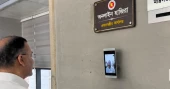
He regularly uses the online attendance system like other officials and employees when entering his office.
Tarique Rahman also records his departure through the prescribed system when leaving the office at the end of the day, the officials said.
They said the practice is intended to send a message to government officials and employees that administrative rules should apply equally, regardless of rank.
Since taking office, Tarique Rahman has taken several steps to reduce excessive protocol and personal prominence in state affairs.
These include not using his photograph in government activities and publicity, reducing the number of vehicles in his motorcade, and not stopping traffic signals for ordinary people during his movement.
The Prime Minister also does not use a flag-bearing vehicle in the country or abroad except for state occasions and official programmes where such protocol is required.
2 days ago
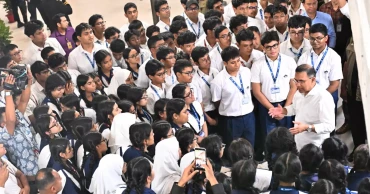
PM seeks students’ support to build clean, green Bangladesh
Prime Minister Tarique Rahman on Wednesday called upon students to play an active role in protecting the environment, keeping their surroundings clean and preventing dengue, saying small acts of responsibility can help bring positive changes to society and the country.
He made the call while meeting students of Sunnydale School at the Prime Minister’s Office in the Jatiya Sangsad Bhaban around 4:30pm during a recess in the parliamentary session.
The students visited Parliament to observe its proceedings and learn about its activities as part of an initiative to familiarise young people with the country’s parliamentary system.
During the meeting, Tarique Rahman asked the students about their studies, health and other matters. He also discussed their role in protecting the environment, maintaining cleanliness, promoting public health and preventing dengue.
Highlighting the government’s plan to plant 25 crore trees, he urged them to join the initiative.
“We have taken an initiative to plant 25 crore trees to make our country greener and improve the environment. You should also take part in this initiative,” he said.
The Prime Minister encouraged the students to develop the habit of planting trees around their homes, schools and relatives’ houses.
“You can also give trees to one another as gifts on birthdays or other special occasions. We should develop a culture of giving trees as gifts,” he said.
Referring to the clean environment in many foreign countries, Tarique Rahman urged the students to help keep Bangladesh clean.
“Those of you who have travelled abroad have certainly seen how clean the environment is there. We also have to keep our country clean,” he said.
The Prime Minister asked the students to discourage their friends and relatives from littering.
“If you see any of your friends or relatives making the environment dirty or throwing waste on the streets, you should stop them,” he said.
Sharing his experience of living in London, Tarique Rahman said citizens themselves play an important role in keeping the environment clean there.
“People there keep their environment clean themselves. If we keep our homes and surroundings clean, we can keep the whole country clean. Change has to begin at home,” he said.
The Prime Minister also urged the students to take preventive measures against dengue, particularly during the high-risk period from September through the following three months.
“Dengue risk is higher from September for the next three months. So, we have to take preventive measures in advance. You must keep your homes and surroundings clean and make sure that water does not remain stagnant anywhere,” he said.
Tarique Rahman also encouraged the students to undertake small initiatives that could contribute to positive changes in society.
“We should do small things that can contribute to positive changes in society and the country. You should also take part in such activities and help build a beautiful country,” he said.
The students expressed enthusiasm at meeting the Prime Minister and pledged to respond to his call to help build a clean and green Bangladesh and contribute to positive change in the country.
A total of 124 students and 14 teachers from Sunnydale School visited Parliament to observe the proceedings and gain an understanding of its activities.
3 days ago
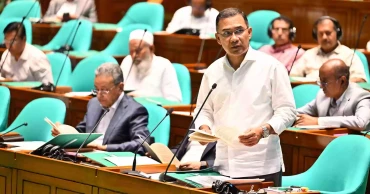
Govt taking steps based on white paper on past 17 years’ corruption: PM
Prime Minister Tarique Rahman on Wednesday said the government is taking necessary measures in phases based on the white paper prepared by the interim government on economic mismanagement and corruption over the past 17 years.
“The interim government formed a committee, and that committee published a white paper or such a report before the people of the country. Among various issues, the economy was a significant one. If you look at that paper, you will get a fairly clear picture,” he said.
“The current government is keeping that paper in front of us and, step by step, we are trying to take the measures that should be taken,” Tarique Rahman said.
He was replying to a supplementary question from Cumilla-10 MP Md Mobasher Alam Bhuiyan during the Prime Minister’s question-answer session in Parliament.
Measures to curb project delays, cost overruns
Replying to another question from Mobasher Alam on extensions of project timelines and increases in costs, the Prime Minister said such problems in government development projects were generally caused by multiple weaknesses rather than a single factor.
“Project delays and cost increases are the result of several weaknesses being interconnected at different stages, including project formulation, approval, land acquisition, financing, procurement and management,” he said.
Tarique Rahman said the government has identified a number of reasons behind the problem, including weak feasibility studies, inaccurate cost estimates, weaknesses in selecting project areas, delays in land acquisition and utility relocation, delays in procurement, failure to appoint project directors on time, weak monitoring and accountability, gaps between financing plans and budgets, and lack of inter-ministerial coordination.
He outlined a series of measures taken by the government to address the problems.
These include ensuring proper feasibility studies before taking up new projects and speeding up implementation preparations after project approval.
The government is also updating existing guidelines on project formulation, processing, approval and revision, while dashboards are being established in relevant ministries and divisions to strengthen monitoring of the implementation progress of ongoing projects, the Prime Minister said.
He said regular project reviews and closer field-level supervision are also being strengthened.
Tarique Rahman said coordination among relevant agencies is being strengthened to expedite land acquisition and utility relocation.
He said ministries have been instructed to review projects that had not been completed within their scheduled timeframe and determine the reasons for delays, irregularities, cost increases and revisions.
Necessary action will be taken under the rules against individuals and organisations responsible for delays, the Prime Minister said.
For projects with implementation progress of less than 30 percent, the relevant ministries and divisions will assess their utility and effectiveness and take appropriate measures to restructure them, change their scope or continue with implementation, he said, adding that the government has also instructed authorities to undertake cluster projects under integrated programmes instead of taking up projects separately.
Tarique Rahman said the government is expanding the use of e-GP in public procurement and will give the highest priority to professional qualifications, skills and practical experience in appointing project directors, while ensuring continuity in their responsibilities where necessary.
He said the government is also updating existing policies and encouraging the adoption of projects under the public-private partnership (PPP) model.
The Prime Minister said steps have been taken to update the Public Procurement Rules 2025 to make government procurement more competitive and accountable.
Plans to address gas shortages in industries
Responding to a question on the government’s plans to tackle gas shortages in the industrial sector during sudden or temporary crises, Tarique Rahman said the government has taken a number of measures to increase domestic gas supplies and expand LNG infrastructure.
He said the government plans to drill 150 wells by 2030-31 in line with its target.
The Prime Minister said the government also plans to conduct 4,500 line kilometres of 2D seismic surveys and 4,200 square kilometres of 3D seismic surveys to explore domestic gas resources.
For exploration and extraction of oil and gas in 26 offshore blocks, an international bidding round was invited on May 24, with the deadline for submission of bids set for November 2026, he said.
Tarique Rahman said the government is also working to formulate the Bangladesh Onshore Model PSC-2026 to attract international investment in onshore oil and gas exploration.
He said the country’s two existing floating LNG terminals could supply around 935 million cubic feet of gas a day on average.
To ensure that industries do not face major losses due to sudden gas shortages in the future, the Prime Minister said work is underway to establish a new floating LNG terminal at Kutubjom in Maheshkhali and a land-based LNG terminal at Matarbari.
According to the plan, the Kutubjom floating LNG terminal is expected to supply regasified LNG in 2028, while the land-based LNG terminal at Matarbari is expected to supply regasified LNG by December 2030, he said.
Tarique Rahman said the government is also conducting a feasibility study for setting up another floating LNG terminal at a suitable deep-sea location near the Payra or Mongla port areas or along the southwestern coast.
He said a feasibility assessment has also been initiated to bring gas from Bhola to the mainland in LNG form and supply it to interested industrial consumers.
Subject to gas availability, the government plans to supply gas to industries, giving priority to those located in planned industrial areas such as economic zones, EPZs and BSCIC industrial estates, the Prime Minister said.
Govt plans to use Bhola gas locally
Replying to a supplementary question from Sultana Ahmed, Tarique Rahman said bringing Bhola’s gas to the mainland through a pipeline will take at least seven years.
Instead, the government is considering whether industries can be established in Bhola itself using the locally available gas, he said.
Some industrial entrepreneurs are already trying to establish gas-based industries in the area, the Prime Minister said, adding that this will create employment and expand the local economy.
He said the government is also planning to establish a fertiliser factory and a 500MW power plant in Bhola to ensure proper use of the gas in the national interest.
The parliamentary session began at 3:30pm with Speaker Hafiz Uddin Ahmad in the chair. The first half-hour of the session was allocated for the Prime Minister’s question-answer session.
3 days ago
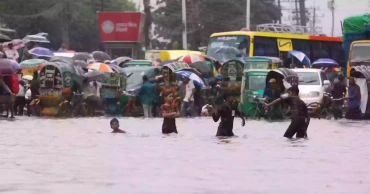
PM outlines steps to tackle Chattogram waterlogging, improve infrastructure
Prime Minister Tarique Rahman on Wednesday outlined a series of measures being taken by the government to address chronic waterlogging in Chattogram and improve the city’s overall infrastructure.
Baroi Para Canal Excavation Project was completed in full as part of efforts to tackle waterlogging in the port city, he said replying to a starred question from Chattogram-13 MP Sarwar Jamal Nizam during the Prime Minister’s question-answer session in Parliament.
He said cleaning and waste-removal work is underway in 25 canals and around 1,600 kilometres of service drains under Chattogram City Corporation.
“The removal of accumulated soil and waste from the drains is also underway. These activities will be completed before the next monsoon,” the Prime Minister said.
He also said waste and soil are also being removed from 32 other canals in different parts of the city.
Tarique said the government is also taking steps to ensure regular maintenance of the canals covered by the ongoing waterlogging mitigation project being implemented by Chattogram Development Authority (CDA).
A Development Project Proposal (DPP) is being prepared for the maintenance of 36 canals included in the project, he said.
“Besides, activities are underway to prepare a DPP for excavation and maintenance of another 21 canals outside the project,” the Prime Minister said.
Infrastructure development
Highlighting broader development initiatives in Chattogram City Corporation areas, Tarique said several infrastructure projects are being implemented including improvement of the Airport Road and other important roads.
He said 48 kilometres of roads, two culverts and six foot overbridges have already been constructed under projects aimed at improving roads and other important infrastructure in the city.
The government has also taken steps to improve recreational facilities, with the development of two playgrounds already completed and work on another six playgrounds currently underway, the Prime Minister said.
He said the government is attaching importance to coordinated development of Chattogram, particularly measures to improve drainage, ensure better water flow and upgrade urban infrastructure.
The parliamentary session began at 3:30pm with Speaker Hafiz Uddin Ahmed in the chair. The first half-hour of the session was allocated for the Prime Minister’s question-answer session.
3 days ago
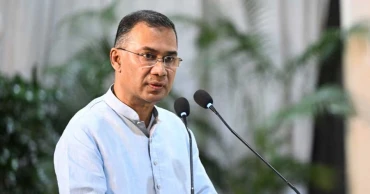
Govt reforming field administration to make it more citizen-friendly: PM
Prime Minister Tarique Rahman on Wednesday said the government is undertaking necessary reforms and modernisation of existing policies and management system to make field administration more citizen-friendly, transparent, service-oriented and accountable.
Replying to a question from Chapainawabganj-3 MP Md Nurul Islam during the Prime Minister’s question-answer session in Parliament, Tarique said the government is placing special emphasis on simplifying services, using digital technology, monitoring performance, handling complaints, inspections and supervision, public hearings, implementation of the Right to Information Act and improving the quality of citizen services.
“As part of this, the Service Simplification Guideline 2026, Government Office Website Guideline 2026 and District Commissioners’ Activities Evaluation Guideline have been formulated,” he said.
The Prime Minister said various digital initiatives, including D-Nothi, iBAS, e-Namjari, digital land management, e-GP, online GD, e-Return, e-Porcha and online collection of land development tax, have also been introduced.
He said helplines such as 999 and 333 were also helping improve access to public services.
Tarique Rahman said the Government Performance Monitoring System (GPMS) was introduced to make monitoring and evaluation of government performance more effective, while guidelines on government performance monitoring has been issued for the 2026-27 fiscal year.
He said monthly online meetings are also held with the Cabinet Division and different ministries and divisions to ensure greater transparency and accountability in field administration.
The Prime Minister said the government would continue reforming and modernising existing policies and systems by further simplifying service delivery, increasing the use of technology, ensuring transparency and disclosure of information, expediting complaint resolution and strengthening results-based performance monitoring.
The parliamentary session began at 3:30pm with Speaker Hafiz Uddin Ahmad in the chair.
The first half-hour was allocated for the Prime Minister’s question-answer session.
3 days ago