primary education
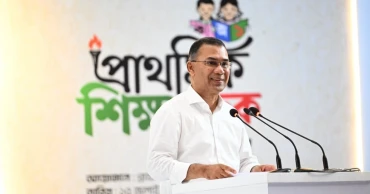
PM seeks teachers' support to build a “humane Bangladesh” through value-based primary education
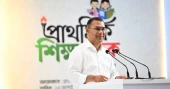
Prime Minister Tarique Rahman on Wednesday sought the support of primary school teachers in building a "humane Bangladesh", stressing that alongside academic learning, children must be taught moral values, compassion, culture and responsibility towards nature from an early age.
"If we want to build a humane Bangladesh, we must first raise our children as humane people. You (teachers) are the architects who are shaping those future citizens," he said while addressing a ceremony to distribute the Primary Education Medal-2026 at the Bangladesh-China Friendship Conference Centre in Agargaon.
The Prime Minister said the day's events, including the nationwide tree plantation campaign, exhibitions by schools from across the country and cultural performances by primary school students, convinced him that Bangladesh is nurturing the generation that will build the country's future. "It felt to me as if I entered a factory that produces the builders of tomorrow's Bangladesh," he said.
Earlier in the day, the Prime Minister inaugurated a nationwide tree plantation programme by planting a sapling at the venue under the Green School initiative.
Nearly 2 lakh saplings were planted simultaneously across the country through the participation of government primary schools.
2 months ago
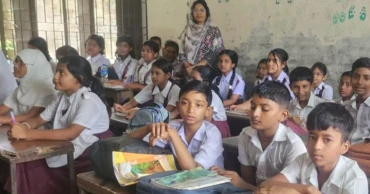
Over half of Narail’s primary schools run by acting head teachers, affecting teaching
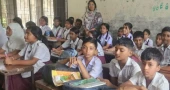
Over half of the government primary schools in Narail district are currently operating without permanent head teachers, forcing assistant teachers to shoulder additional administrative responsibilities and affecting classroom teaching.
According to the District Primary Education Office, 280 of the district’s 495 government primary schools – nearly 57 percent – are being run by acting headmasters.
DSB Government Primary School in Sheikhhati union of Sadar upazila is such a school. Established in 1954 and nationalised in 1974, the school currently has 132 students but has remained without a permanent head teacher for the past two years.
Assistant teacher Mahmuda Parvin, who is serving as the acting head teacher, said the dual responsibilities often interfere with classroom activities.
“As I am performing the duties of a head teacher, I frequently have to remain occupied with official work. As a result, classroom teaching is disrupted,” she said.
Another assistant teacher at the same school, Sonia Khanam, said administrative and official duties often require acting head teachers to stay outside the school premises.
“Teacher numbers are already limited. Managing both administrative responsibilities and regular teaching activities has become increasingly difficult,” she added.
The shortage is not limited to head teachers. Assistant teacher positions also remain vacant in many schools across the district, forcing them to conduct academic activities with insufficient staff.
Kripa Sikder, who has been serving as acting head teacher at Tularampur Government Primary School in Narail Sadar since 2018, expressed frustration over the situation.
“Although I am performing the responsibilities of a head teacher, I continue to receive the salary of an assistant teacher. We are also deprived of the second-class status and other benefits designated for head teachers,” she said.
Kripa Sikder noted that prolonged additional responsibilities without corresponding benefits have led to growing dissatisfaction among teachers.
Teachers said acting head teachers must simultaneously manage classroom instruction and a wide range of administrative tasks, including maintaining records, submitting government reports online, coordinating meetings and overseeing office management.
They said these responsibilities often leave insufficient time for teaching, particularly in schools already facing teacher shortages.
Guardians also voiced concern, saying the head teacher serves as the academic and administrative leader of a school. Prolonged vacancies in such positions weaken overall school management and place additional pressure on teachers, ultimately affecting the quality of education.
District Primary Education Officer Md Jahangir Alam acknowledged the challenges caused by teacher shortages.
“We are trying to address the situation through acting head teachers. The issue of vacant posts has been communicated to the Directorate of Primary Education,” he said.
Jahangir Alam attributed the prolonged vacancies largely to legal complications and expressed hope that the issue will be resolved soon.
3 months ago
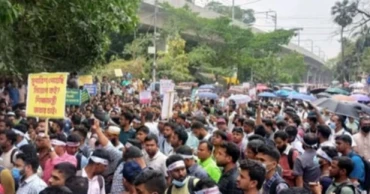
Recommended primary teacher candidates stage protest at Shahbagh
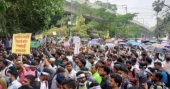
Recommended candidates of Primary Assistant Teacher Recruitment–2025 stage protests on Sunday morning in front of the National Museum at Shahbagh, demanding the immediate issuance of their appointment letters.
At the beginning of the demonstration, the protesters attempted to block the main intersection, said witnesses.
As police intervened, after which they staged a sit-in in front of the museum.
Later, a 10-member delegation went to the Ministry of Education for discussions.
The protesters said they will continue their sit-in until their demand is met and they receive appointment letters.
The final results published on February 8 recommended over 14,384 candidates for appointment with district-wise lists issued by the Directorate of Primary Education.
However, the candidates said that despite completing police verification, medical examinations, and other required procedures, appointment letters have not yet been issued even after more than two months.
A candidate from Sunamganj said, “We are feeling very uncertain and mentally stressed over the delay in appointment letters. If our demand is not met immediately, we may launch a tougher programme.”
State Minister for Primary and Mass Education Bobby Hajjaj wrote on his Facebook account that he has spoken with the delegation and assured that the matter will be addressed seriously.
4 months ago
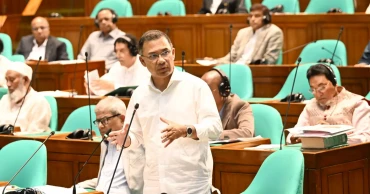
‘Fifth Primary Education Development Programme’ to begin July 1: PM
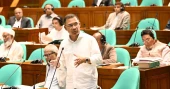
Prime Minister Tarique Rahman on Wednesday said the five-year ‘Fifth Primary Education Development Programme’ will begin on July 1, aiming to improve the quality of education and enhance teachers’ proficiency in English.
“You will be happy to know that the five-year Fifth Primary Education Development Programme is set to begin on July 1, 2026. Under this programme, there are plans to provide English language training to more teachers,” he said.
The Prime Minister made the remarks while replying to a starred question from Hummam Quader Chowdhury (Chattogram-7) during the question-answer session in Parliament.
He said the government’s election manifesto puts strong emphasis on bringing all primary school teachers under specialised training programmes to improve the quality and effectiveness of teaching.
The Prime Minister informed the House that there are currently 376,489 teachers in primary schools across the country.
Of them, around 130,000 have already received English language training under the ongoing ‘Fourth Primary Education Development Programme’.
In response to a supplementary question from Hummam Quader Chowdhury, he said the government has a policy in place for the operation of private schools.
The parliamentary session began in the morning with Speaker Hafiz Uddin Ahmed in the chair following a recess on April 10, with the Prime Minister’s question-answer session scheduled first on the day’s agenda.
Members of Parliament took part in the scheduled question-answer session at the start of the sitting.
5 months ago
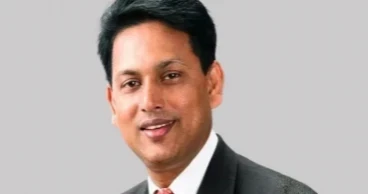
Education Minister vows tighter monitoring to boost quality of primary education
Education Minister ANM Ehsanul Hoque Milon on Wednesday announced closer monitoring and enhanced oversight to improve the quality of primary education, saying necessary steps will be taken to accelerate work and motivate all concerned.
“Education begins at the primary school level. So we must increase our focus right from the start. Without proper implementation of plans, it is not possible to achieve the desired outcomes,” Milon said while addressing a view-exchange meeting with officials at the Directorate of Primary Education.
Education Minister urges action from UGC to develop world-class universities
The minister said Prime Minister Tarique Rahman holds a weekly review meeting on education every Saturday, where progress of the week’s activities must be presented. “Ensuring dynamism and accountability in the education sector is now a demand of the time.”
Referring to various demands and grievances of officials and employees, Milon said, “There will always be demands, and it is not possible to fulfil all of them completely. The reasonable ones will be addressed in phases. No one will be deprived.”
Expressing optimism that the BNP government would increase budget allocation for primary education, the minister said the sector is likely to receive a higher budget this time. Initiatives will be taken to resolve justified complaints through detailed discussions and effective decisions.
Technical education must align with global labour market trends: Education Minister
The minister also stressed the need to strengthen activities up to the field level, saying greater dedication from all concerned would help improve education standards. “We need to focus on what we have done, what should be done and how we can further enhance the quality of education.”
He further noted that previous projects undertaken by the Education Ministry would be evaluated to assess how far their missions and visions were implemented. While earlier initiatives placed relatively more emphasis on infrastructure development, the focus will now shift to ensuring quality education.
The meeting was chaired by Director General of the Directorate of Primary Education Abu Noor Md Shamsuzzaman and attended by senior and field-level officials of the department.
6 months ago
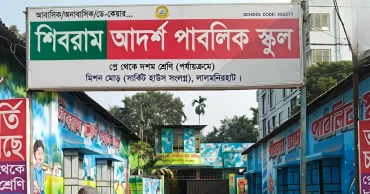
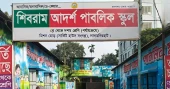
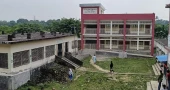
Excellence in Education: Shibram Ideal Public School shines in Lalmonirhat
Lalmonirhat’s Shibram Ideal Public School, located near the Circuit House at the heart of the district, has emerged as a bright example in the region’s education sector.
Established in 2015, the unique institution is modelled on the cadet college system, according to its founder and director, Rashedul Islam Rashed.
One of the school’s primary goals is to prepare its younger students for future admission into cadet colleges.
Read more: Dhaka to get state-of-the-art special needs school
A closer look reveals the school’s distinctive approach: students across all classes exhibit remarkably uniform handwriting, imbued with artistic flair.
This meticulous attention to penmanship has consistently amazed parents and visiting officials alike.
Alongside mother tongue education, the school places strong emphasis on English proficiency and provides tailored instruction in students’ respective religious teachings.
This year, the school has distributed copies of the Holy Quran to all 42 students, further strengthening its commitment to holistic learning.
4th International Symposium on Quality Assurance in Engineering Education concludes
The school has also been recognised at the Rangpur divisional level, securing first place in a handwriting competition. In addition, it has ranked among the top schools in the district in private scholarship examinations.
Shibram Ideal Public School attracts students not only from within Lalmonirhat but also from neighbouring districts. For these students, the school offers a child-friendly residential facility.
Local students attend regular daytime classes but often return in the afternoons or evenings to continue their studies in a stimulating and enjoyable environment.
The school’s residential programme provides distant students with nutritious meals, comfortable accommodation, and attentive guidance in academics and character-building.
Govt set to implement new project to digitise medical, nursing education
9 months ago

Leadership vacuum cripples primary education in Sonargaon
Academic and administrative activities at 63 out of 113 government-run primary schools in Sonargaon upazila of Narayanganj district are severely hampered, as more than half of these institutions have been running for years without permanent head teachers.
The leadership vacuum has led to a major crisis in primary education, deeply concerning parents and local communities about the quality of instruction for the country’s future generations.
Currently, locals said, assistant teachers are forced to operate as acting headmasters, struggling to balance critical administrative duties with their primary responsibility of classroom teaching.
They said this dual role is proving unsustainable and is directly disrupting regular education.
Morsheda Akhter, the acting head of Parameshwardi Government Primary School, shared the heavy burden. “At least 10 days every month I have to remain busy with official work at the upazila office, leaving classes seriously disrupted,” she said.
Echoing this frustration, Muslima Akhter, acting head of Amgaon Bargao Government Primary School, noted she is required to be at the upazila office from the third to the ninth of each month.
Consequently, she cannot conduct regular classes, which significantly harms students’ studies.
Adviser Bidhan Ranjan Roy emphasises urgent need to improve quality of primary education
Shah Alam, acting head of Ladhurchar Government Primary School, corroborated the sentiment, stating that the immense administrative workload leaves him with little time for classroom teaching.
The problem is not new for many schools.
At Tekpara Government Primary School, acting head teacher Saleha Akhter revealed that the school has been without a head teacher for a significant three years.
With a minimal staff of only four teachers, she explained, “it has become very difficult to run the school properly, and students’ learning is suffering.”
Parents are increasingly worried. Rabiul Islam, the father of a fifth grader, lamented that teachers are "Overstretched and one teacher often has to handle multiple classes at the same time. This situation is directly impacting the quality of education provided.”
According to the upazila primary education office, the root of the crisis lies in a centralised administrative bottleneck.
Law enacted to govern National Academy of Primary Education
Sonargaon Upazila Education Officer Shafiqul Islam Sarkar acknowledged the gravity of the situation, saying that the recruitment and promotion of head teachers is a national matter. “Unless promotions are cleared centrally, local vacancies cannot be filled. This has aggravated the crisis,” he added.
Guardians and local community members, expressing grave concern over the situation, have urgently called upon the authorities concerned to fill the vacant posts with qualified teachers soon to ensure smooth education and secure the future of the nation’s students.
11 months ago
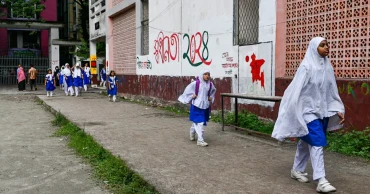
Primary schools reopen
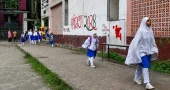
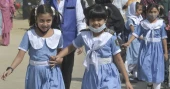
Primary schools across Bangladesh have reopened after around one month of closure.
Students were seen going to schools in the capital in the morning (August 14, 2024).
All government primary schools under eight city corporation areas of the country were declared closed for an indefinite period on July 17 amid tension over students’ demonstrations for quota reform.
August 15 public holiday canceled
2 years ago
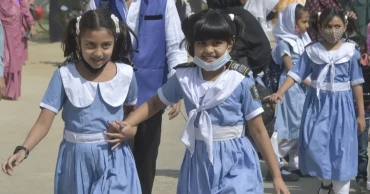
Guidelines issued for primary schools reopening tomorrow amid heatwave
As the country grapples with an intense heatwave, the government has announced the reopening of primary school academic activities starting Sunday, April 28.
The Primary and Mass Education Ministry, through a notification signed by Senior Information Officer Mahbubur Rahman Tuhin, outlined the operational adjustments to accommodate the sweltering conditions.
School hours will be limited to the cooler morning hours, from 8:00 am to 11:30 am. For schools operating in two shifts, the first shift will run from 8:00 am to 9:30 am and the second from 9:45 am to 11:30 am.
Cuet students’ road safety movement postponed, to resume classes
Despite these changes, pre-primary level classes will remain closed until further notice, and daily school assemblies will be suspended to avoid prolonged exposure to the heat.
The decision follows a similar action taken for secondary level schools and colleges, which are set to reopen on the same day, April 28.
The resumption comes after an extended closure initially planned until April 27 due to the prolonged hot weather following the Eid holidays. Outdoor activities and those requiring sun exposure at these institutions will continue to be limited.
To make up for educational disruptions caused by the heatwave and other interruptions, classes will also be conducted on Saturdays until further notice, according to the ministry's notification.
Secondary schools, colleges to reopen April 28 amid heat wave
The Bangladesh Meteorological Department has forecasted that the current heatwave conditions, which recorded a high of 42.7 degrees Celsius in Chuadanga on Friday, may persist for another 72 hours starting Thursday morning. The government's proactive measures aim to balance educational needs with health and safety concerns during this challenging climate period.
2 years ago

Chevron celebrates 13 years of partnership with Save the Children
Chevron Bangladesh and Save the Children have celebrated their long partnership to promote access and increase basic educational outcomes for marginalized children through SHIKHON program.
An event titled‘ Dissemination Program of SHIKHON Tracer Study and Celebrating 13 Years of Partnership’ was held at the Lakeshore Hotel, Gulshan, Dhaka recently.
Read:Chevron signs deal with Rock Energy to market its lube products in Bangladesh
According to a release of the Chevron, the SHIKHON project, a collaboration between Chevron and Save the Children since 2008, has reached more than 21,000 people and provided access to primary education to more than 4,000 at-risk, out-of-school children.
For the past 13 years, it has been a critical safety net and springboard to success for local children.
Under the project, dropped out and out of school children completed primary education (school readiness to Grade V) through Non-Formal Primary Education (NFPE) schools and transitioned to nearest high schools in Grade VI; and marginalized hard-to-reach children completed a pre-primary component and Grades I through III from Early Primary Education (EPE) centers or one-room schools and be equipped to transition into Bangladesh’s national education system from Grade IV and beyond.
At the event, the findings of the Tracer Study on the SHIKHON program were presented by Shah Shamim Ahmed, Associate Professor, Institute of Education and Research, Dhaka University.
The findings from the Tracer Study on the Chevron supported SHIKHON project revealed that the program resulted in increased access to cost-effective non-formal basic education for hardest to reach children in targeted communities, increased efficiency, and quality of non-formal basic education services using holistic approaches for children to succeed in school and increased collaboration between the formal and non-formal primary sectors to promote sharing and adoption of best practices.
The event was attended by Eric M. Walker, President of Chevron Bangladesh, Shahin Islam, Project Director, SHIKHON, Save the Children; Muhammad Imrul Kabir, Corporate Affairs Director, Chevron Bangladesh; Dr. Md. Abdul Halim, Director, Institute of Education and Research, Dhaka University; and Mr. Shah Shamim Ahmed, Associate Professor, Institute of Education and Research, Dhaka University, among others.
Chevron Bangladesh, the operator of three gas fields in Sylhet region in the country, invests in activities and programs that focus primarily on economic development, education and health care, reaching thousands of people in northeast Bangladesh.
Read: Chevron’s scholarship programme for local students continues
Under Chevron Bangladesh’s Quality Education Support initiative, a scholarship drive for high-achieving underprivileged students was launched in 2001. In 2021, scholarships were awarded to 783students in 23 schools.
It also included the remuneration support for additional teachers in selected schools, an endowment fund, sports equipment, school furniture, sanitation facilities and tube-wells to provide safe drinking water for selected schools, said the Chevron.
4 years ago