Bangladeshi workers to Malaysia
Govt to send 10,000 Bangladeshi workers to Malaysia at almost no cost: Tarique
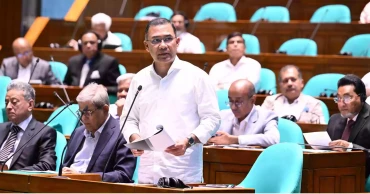
Prime Minister Tarique Rahman on Wednesday said the government was taking steps to send around 10,000 Bangladeshi workers to Malaysia at almost no cost, following a successful resolution of the manpower recruitment issue through discussions with the country.
He said the workers would include around 1,000 people from families affected by enforced disappearances and killings during the previous authoritarian regime, as well as those who were killed or injured during the 2024 mass uprising.
The Prime Minister made the remarks while responding to a supplementary question from Mymensingh-6 MP Md Quamrul Hassan during the question-and-answer session in Parliament.
He also informed Parliament that the government had managed to reopen the Malaysian labour market for Bangladeshi workers through negotiations and had largely ensured that the total migration cost for each worker would not exceed Tk 2 lakh.
Tarique said the government was also working to keep migration costs at a reasonable level for workers going to other Middle East countries.
He said several countries had virtually stopped recruiting workers from Bangladesh or slowed down the process due to syndicates and widespread irregularities during the Awami League regime.
Referring to Malaysia, the Prime Minister said the government had successfully resolved the issue through negotiations, paving the way for sending nearly 10,000 workers with only a small amount of money required from each worker.
He said discussions were also underway with several Middle East countries, some of which had expressed interest in recruiting Bangladeshi workers for different jobs, including driving.
Tarique said the government was working to identify and bring to justice those involved in syndicates that cheat migrant workers and embezzle their money.
Earlier, Quamrul raised concerns over the high costs of overseas employment, fraud by middlemen and the exploitation of workers, citing recent incidents of Bangladeshi migrants going missing in the Mediterranean Sea.
He urged the government to intervene directly in the recruitment process, fix reasonable migration costs and announce country-specific recruitment opportunities publicly so that ordinary people, including the children of rickshaw pullers, could afford to go abroad for work.
Responding to the proposal for incentives or financial assistance for migrant workers, Tarique said he was not sure about the source of funding for such support.
“If the honourable MP can explain where the money for such incentives would come from, the government may consider taking an initiative in this regard,” he said.
Earlier, in response to a question from Chattogram-12 MP Mohammed Enamul Hoque, the Prime Minister said remittances sent by expatriate Bangladeshis were one of the country's major sources of foreign exchange earnings.
He said the government had taken various policy initiatives to increase remittances through legal channels, prevent hundi, reduce transaction costs and ensure faster delivery of money to beneficiaries.
These included simplifying arrangements between scheduled banks in Bangladesh and foreign exchange houses and money transfer operators, expanding remittance channels and providing cash incentives against remittances sent through formal channels.
He also said Bangladesh Bank had issued a circular allowing remittances to be sent directly to customers' foreign currency accounts through exchange houses.
The day's sitting began at 4:15pm, with Deputy Speaker Barrister Kayser Kamal in the chair. The first 30 minutes of the day's proceedings were allocated for questions to the Prime Minister.
The fourth session of the 13th Jatiya Sangsad began on November 9.
The brief session was scheduled to conclude on Wednesday with the Prime Minister's concluding speech, in line with a decision of the Parliament's Business Advisory Committee.
26 minutes ago

No headway in sending Bangladeshi workers to Malaysia despite agreement
Four months into Malaysia opened its labour market for Bangladeshi workers the recruitment remains in a limbo.
A dispute between Dhaka and Kuala Lumpur on who will hire the workers and how has rendered ineffective the late last year’s agreement between the two governments.
Some Bangladeshi recruiting agencies, grouped in a so-called syndicate, are allegedly playing their part in stalling the operation of the agreement signed on December 19 last year opening the Malaysian market to Bangladesh after a four-year ban.
Malaysia, one of the largest destinations for Bangladeshi workers, currently employs about seven lakh expatriates from Bangladesh, according to business sources.
In 2018 the then Malaysian government of Mahathir Mohammad shut the door of his country’s labour market to workers from Bangladesh for alleged irregularities by hiring agencies in both countries.
At the centre of the latest dispute is that Malaysian government wants the recruitment to be done by a selected group of 25 Bangladeshi agencies. Dhaka rejects the idea as it will leave out many mostly smaller agencies (over1,500) out of the process and business.
Why did Malaysia stop taking workers from Bangladesh?
In 2009, Bangladesh for the first time was denied access to Malaysian labor market on allegation of irregularities in recruitment process.
It changed after on November 26, 2012 the two countries struck a MoU to send workers through G2G model. Following this model the immigration flow from Bangladesh increased as thousands of people joined Malaysian labor market officially.
But soon the government model failed leading to a surge in illegal immigration to Malaysia from Bangladesh.
Read: US investment to be welcomed for development of energy sector: Nasrul Hamid
In 2016, government again introduced G2G Plus model under which only 10 recruiting agencies could send workers privately to Malaysia. Following this model 2.45 lakh workers got jobs in Malaysia.
Soon allegations surfaced that these agencies started exploiting the job seekers charging unfairly high fees from them.
They at first fixed the immigration cost at Tk 36,000 and later increased it to Tk 1.60 Lakh. At one stage these private agencies even charged Tk 3.5 lakh to 4 lakh per head in immigration cost.
The corrupt practice soon grabbed attention of the Malaysian government, which cancelled the G2G Plus model in a big blow to Bangladeshi job seekers.
The hope raised by the latest MoU was quickly dashed after on January 14, Malaysian Minister for Human Resources M. Saravan sent a letter to Dhaka to hire workers through only 25 recruiting agencies, said the Ministry of Expatriates' Welfare and Overseas Employment.
In response, Bangladesh Minister for Expatriates' Welfare and Overseas Employment Imran Ahmed sent a letter to his Malaysian counterpart explaining Dhaka can’t accept it.
He cited International Labor Organization (ILO) Certificate and Bangladesh Competition Act, 2012 arguing that the government cannot allow the business to be monopolized by a select few.
He said,” According to Bangladesh laws the government is bound to provide equal opportunity to all the lawfully licensed recruiting agencies. Bangladesh wants transparent, irregularity free and safe immigration of workers to Malaysia.”
Imran also proposed a meeting of the joint working committees of the two countries to decide the procedure to send workers from Bangladesh. But three months after the letter was sent Kua Lumpur is yet to respond.
Ahmed Munirus Salehin, secretary of the Ministry of Expatriates' Welfare and Overseas Employment told UNB the talks are still ongoing regarding opening of Malaysian labour market to Bangladesh.
“Recently Malaysia sent us a date for holding the meeting of joint working committee online but we refused it as we had to coordinate with other ministries. Later we sent a date for the online meeting but unfortunately it was not held,” he said.
The Expatriates' Welfare and Overseas Employment secretary however said,” A decision may come in this regard in the meeting of the committee to be held on May 25.”
Why is the opposition against syndicate?
In 2016, during the failed and controversial G2G recruiting system Dato Nur Amin a Bangladesh origin Malaysian and Ruhul Amin Swapan, former secretary general of Bangladesh Association of International Recruiting Agencies (BAIRA) were in control of the ‘syndicate’ of 10 recruiting agencies.
Read: Despite taka depreciating, banks selling dollars at Tk3-4 extra
M Tipu Sultan, president of Recruiting Agency Unity Council said, “ Except one or two, almost all the earlier 10 recruiting agencies were listed in this new 25-agencies syndicate and they are being led by Ruhul Amin Swapan. We want a syndicate-free labor market access to Malaysia this time.”
“The 10-agencies syndicate increased the immigration cost many times and handing them the work will increase it again. Mahathir government banned recruitment from Bangladesh due to their corruption. Mainly due to malicious effort of this syndicate the Malaysian labor market opening for Bangladesh is being delayed,” said Abul Bashar organizer of the Anti-Syndicate Alliance and former president of BAIRA.
“There are 1,530 licensed recruiting agencies in Bangladesh and they have right to send workers to any labor market legally. Forming a syndicate will mean they can’t work and opportunity for corruption will be created,” said Shamim Ahmed Chowdhury organizer of the Anti-Syndicate Alliance and former secretary general of BAIRA.
Bangladesh Civil Society for Migrants (BCSM), a platform of 20 organizations working on immigration urged both the governments to not repeat the same factors including the syndicates system that led to the closure of the Malaysian labour market in the past.
Instead, the workers should be sent through an open and transparent system so that migrant workers are not harmed in any way, said a statement.
It also urged immediate opening of the market by allowing equal recruitment opportunities to all the registered agencies.
The alleged syndicate leader Ruhul Amin Swapan, owner of overseas recruiting agency Catharsis International, rejected the allegations brought against him as false.
”I have no involvement in the government to government discussion regarding opening Malaysia’s labour market. I am just a general businessman like other agency owners.”
He further said, “It Is Malaysian government’s decision that they want to recruit through a limited number of agencies. We have no say regarding the decision.”
About the increase of immigration cost Ruhul Amin said, “If the cost increased in recruitment through limited number of agencies I promise I’ll leave this business.”
4 years ago