US troop
NATO allies puzzled by Trump’s sudden shift on US troop plans in Europe
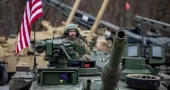
NATO allies and defense officials have expressed confusion after U.S. President Donald Trump abruptly announced he would send 5,000 American troops to Poland, just weeks after ordering the withdrawal of the same number of troops from Europe.
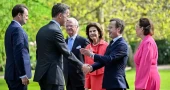
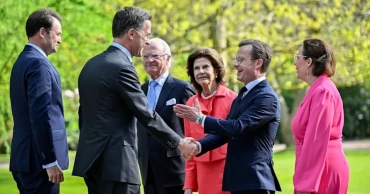
Swedish Foreign Minister Maria Malmer Stenergard said the situation was hard to follow and created uncertainty for allies. Speaking at a NATO meeting in Helsingborg, she said it was “confusing” and not easy to manage, as foreign ministers gathered with U.S. Secretary of State Marco Rubio.
Defense officials also admitted they were unsure about the decision. One U.S. official said they had spent two weeks responding to earlier plans to reduce troop levels and still did not fully understand the latest change.
In a post on Truth Social, Trump said the United States would send an additional 5,000 troops to Poland, pointing to his close ties with Polish President Karol Nawrocki, whom he supported during last year’s election.
The move marks a sharp reversal from recent signals from the Trump administration, which had suggested cutting the U.S. military presence in Europe rather than increasing it.
Officials within NATO said allies had been taken by surprise, even though Washington had earlier promised better coordination on troop movements. NATO military chief U.S. Lt. Gen. Alex Grynkewich said the alliance would continue working closely with partners to stay aligned on decisions.
Some European ministers, including those from the Netherlands and Norway, said they were not alarmed but stressed that any changes should follow a clear and structured process. Latvia’s Foreign Minister Baiba Braže said allies were aware that the U.S. was reviewing its troop posture, and that for now there appeared to be no major change.
Earlier this month, the Trump administration had announced plans to reduce its presence in Europe by about 5,000 troops. Around 4,000 troops were also reported to have been removed from planned deployment to Poland, while the transfer of some U.S. missile-trained personnel to Germany was paused.
Grynkewich said several hundred troops would be reassigned elsewhere but did not provide details. He also met defense chiefs from Estonia, Latvia, Lithuania and Poland at NATO headquarters to discuss options.
The policy shift comes amid tensions following comments by German Chancellor Friedrich Merz, who criticized U.S. strategy on Iran and suggested Washington was being disrespected by Tehran. Trump responded by saying troop cuts could go “far beyond 5,000” and also announced new tariffs on European cars.
About 80,000 U.S. troops are currently stationed in Europe. Under Pentagon rules, at least 76,000 troops and key equipment must remain unless allies are consulted and it is judged to be in U.S. interest to reduce that level.
Trump’s latest remarks suggest troop levels may remain largely unchanged, with forces rotating into Poland from Germany expected to continue. Polish Foreign Minister Radosław Sikorski welcomed the move, saying it would keep American troop presence in Poland at roughly current levels.
NATO Secretary-General Mark Rutte also supported continued coordination. He said Europe must take greater responsibility for its own security but stressed that existing consultation processes were working as normal.
The meeting in Helsingborg was held to prepare for a planned summit between Trump and NATO leaders in Turkey in July.
4 months ago
Rubio heads to NATO talks amid tensions over US troop plans and alliance differences
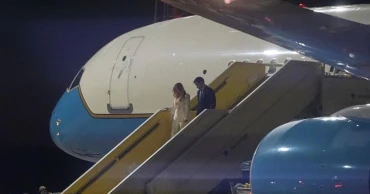
US Secretary of State Marco Rubio is heading to Europe on Thursday on a mission to reassure nervous US allies as uncertainty grows over Washington’s NATO policy, troop levels, and shifting positions on European defence.
Rubio will attend a NATO foreign ministers’ meeting in Sweden on Friday, while senior Pentagon officials are expected to brief the 32-member alliance in Brussels on US military commitments in Europe. The meetings come ahead of a NATO leaders’ summit in Turkey in July.
The diplomatic push comes at a time of growing global uncertainty, including the ongoing Iran war and stalled efforts to end the Russia-Ukraine conflict. Tensions have also risen in Europe over US President Donald Trump’s criticism of NATO allies and his interest in Greenland, a territory of NATO member Denmark.
Rubio has frequently been deployed by the Trump administration to ease concerns at international meetings, including earlier visits to the Munich Security Conference and Italy.
Confusion over US troop levels in Europe
Before leaving for Sweden, Rubio declined to clarify possible changes to US troop deployments in Europe, including under NATO’s defence planning framework.
Recent moves by the Trump administration have added to confusion. Plans to send thousands of US troops to Poland and Germany were paused or canceled, but Trump later announced on social media that 5,000 additional troops would be sent to Poland.
It remains unclear whether this means a resumption of previously halted deployments, an expansion of forces, or a broader reshaping of US troop levels across Europe. The Pentagon referred questions to the White House, which did not immediately respond.
Rubio, however, acknowledged frustration within the administration over NATO’s role, particularly in relation to the Iran conflict.
He said President Trump and other officials were “very disappointed” with the alliance.
While reaffirming that he supports NATO, Rubio questioned whether all members are contributing equally, citing disagreements over the Iran war response and access to US military facilities.
He criticised some allies, including Spain, for not allowing access to bases linked to US operations and said there had been limited European participation in efforts to secure key maritime routes such as the Strait of Hormuz.
“I know why NATO is good for Europe, but why is NATO good for America?” Rubio said, arguing that US bases abroad allow global military reach.
NATO defends planned adjustments
NATO officials have said changes in US troop levels were long planned and do not signal a sudden withdrawal. However, some allies say they were caught off guard by recent announcements.
NATO Secretary-General Mark Rutte said allies were informed a year ago that the US would gradually reduce some forces in Europe, and that European countries and Canada must take greater responsibility for the continent’s defence.
He said the US will remain committed to NATO but is expected to shift more focus to other global priorities over time.
US General Alexus Grynkewich said security in Europe would remain stable but warned allies should expect continued adjustments in US troop levels in the coming years.
The Trump administration has repeatedly said European countries must take greater responsibility for their own security, including support for Ukraine, as Washington reassesses its global military commitments.
4 months ago

NATO military chief sees no further US troop cuts beyond 5,000 withdrawal plan
NATO’s top military commander said Tuesday he does not expect additional US troop withdrawals from Europe in the near term beyond the 5,000 soldiers already announced by President Donald Trump.
US Lt. Gen. Alex Grynkewich made the remarks at NATO headquarters in Brussels during a meeting of senior military officials from the alliance’s 32 member states.
His comments follow Trump’s surprise decision earlier this month to scale back US military presence in Europe, a move made amid rising tensions with allies over the Iran war and broader policy disagreements.
“It will be 5,000 troops coming out of Europe. That’s all I’m expecting in the near term,” Grynkewich said.
The Pentagon has clarified that the reduction mainly involves cancelling planned deployments to Poland and Germany, rather than pulling out forces already stationed in Europe.
The move has sparked concern among US lawmakers from both parties, who argued it was made without proper consultation with Congress and could send the wrong signal to allies.
Pentagon spokesperson Sean Parnell said the military has reduced the number of brigade combat teams assigned to Europe from four to three, leading to a “temporary delay” in troop deployment to Poland, which he described as a key US ally.
He added that final decisions on troop placement will depend on further review of US strategic needs and the ability of European allies to contribute more to their own defense.
US Defense Secretary Pete Hegseth also spoke with Polish Defence Minister Władysław Kosiniak-Kamysz on Tuesday, with Washington assuring Warsaw that it will maintain a strong military presence in Poland.
Trump’s announcement had caught NATO allies off guard, despite earlier US commitments to coordinate closely on major military adjustments.
The plan includes halting the deployment of about 4,000 troops from the US Army’s 2nd Armored Brigade Combat Team, 1st Cavalry Division to Poland, as well as stopping the movement of long-range missile units to Germany.
In some cases, soldiers were informed shortly before departure that they would no longer be travelling to Europe, according to US military officials.
Grynkewich said he had also spoken with military leaders from Estonia, Latvia, Lithuania and Poland about possible adjustments to NATO’s eastern flank, which borders Russia.
Concerns have been raised in the Baltic states over the cancellation of troop rotations. Estonian officials described the move as a setback but said it would not undermine NATO’s overall deterrence in the region.
Lithuania said the issue appears to be technical and expressed hope that US troops will remain in the country as planned.
Despite the changes, Grynkewich stressed that European security would not be weakened, though he warned that further US troop adjustments are likely in the coming years as European allies take on more responsibility for their own defense.
He said the process will continue gradually but added that coordination with allies will remain close.
5 months ago
US troop plans, Trump stance loom over Rubio’s NATO visit in Sweden
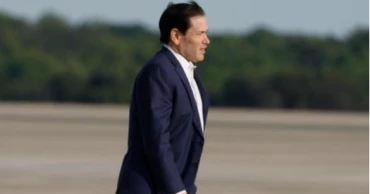
Marco Rubio, the US Secretary of State, is set to travel this week to a meeting of NATO foreign ministers in Sweden as European allies express growing concern over US troop levels in Europe and President Donald Trump’s shifting positions on the alliance, especially as the impact of the Iran war and rising energy prices continues to be felt.
The US State Department said on Tuesday that Rubio will attend the NATO gathering in Helsingborg on Friday. The meeting comes ahead of a major NATO summit in Ankara, Turkey, scheduled for July.
After Sweden, Rubio will travel to India for a multi-city visit covering Kolkata, Agra, Jaipur and New Delhi. He is expected to meet Indian officials and also join discussions with counterparts from Australia and Japan under the Indo-Pacific “Quad” grouping.
In Sweden, Rubio is expected to repeat US calls for NATO members to increase defense spending and share more of the alliance’s security burden, according to the State Department. He will also take part in discussions on Arctic security and economic interests with NATO’s northern members.
Although Greenland was not mentioned in the statement, tensions over the Danish territory have added to European unease. Donald Trump has repeatedly spoken about US interest in Greenland, which has drawn criticism in Europe. Trump’s special envoy for Greenland recently visited the island.
Greenland’s Prime Minister Jens-Frederik Nielsen said after meeting the envoy that the territory’s people are not for sale and that self-determination is non-negotiable.
Rubio’s presence at NATO meetings has often been welcomed by European allies, who see him as more steady compared to other US officials. He has also attended recent diplomatic missions, including the Munich Security Conference and meetings in Italy.
Ahead of the NATO talks, NATO’s top military officer said he does not expect further major reductions of US troops in Europe for now beyond an earlier announced cut of about 5,000 personnel.
US Lt. Gen. Alex Grynkewich said the situation remains stable following Trump’s announcement earlier this month.
The Pentagon later clarified that some planned troop deployments to Poland and Germany were being delayed rather than fully cancelled. Vice President JD Vance said the move should not be seen as a reduction, but part of normal rotation adjustments, adding that the focus is on strengthening European responsibility for its own defense.
Pentagon spokesperson Sean Parnell also described the change as a temporary delay, saying decisions on troop placement across Europe are still being reviewed.
Trump’s announcement had surprised NATO allies, coming amid earlier commitments by Washington to coordinate closely on security matters and avoid gaps in defense coverage.
Tensions were further heightened after Trump criticized Germany following comments by Chancellor Friedrich Merz over US policy on the Iran war.
5 months ago
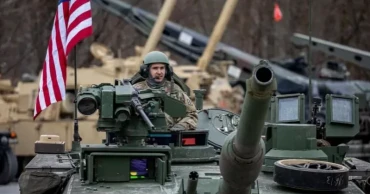
Germany calls US troop cut ‘expected’ as Trump signals deeper reductions
Germany’s defence minister said the United States’ decision to withdraw about 5,000 troops from the country was “foreseeable,” as NATO seeks more details from Washington amid concerns over the alliance’s future.
Speaking to DPA news agency, Defence Minister Boris Pistorius said the presence of US forces in Europe especially in Germany remains important for both sides. He added that Berlin still values close military cooperation with Washington.
NATO spokeswoman Allison Hart said the alliance is in talks with the US to better understand the scope and impact of the decision.
President Donald Trump indicated that more cuts could follow. Asked about the troop withdrawal, he said the US would reduce its forces “way down,” suggesting the number could be far higher than 5,000, though he gave no specifics.
The move comes after tensions between Trump and German Chancellor Friedrich Merz, who recently criticised the US over its handling of negotiations with Iran, saying Washington had been “humiliated.”
The US currently has more than 36,000 troops stationed in Germany — its largest military presence in Europe compared to about 12,000 in Italy and 10,000 in the United Kingdom. Trump has also floated the idea of reducing troop levels in Italy and Spain.
The decision follows earlier steps to scale back US forces in Romania, part of a broader strategy to shift military focus toward the Indo-Pacific region.
The latest move has raised concerns within the 32-member NATO alliance that reduced US presence could weaken collective security.
Polish Prime Minister Donald Tusk warned that internal divisions, rather than external threats, pose the greatest risk to the transatlantic alliance and urged members to act to reverse the trend.
In Washington, senior Republican lawmakers also voiced concern. Senator Roger Wicker and Representative Mike Rogers said maintaining a strong US military presence in Europe is vital for deterrence.
Pistorius said Europe must take on greater responsibility for its own security, noting that Germany has significantly increased defence spending in recent years.
Under the current government, Germany’s defence budget is expected to rise to €105.8 billion by 2027, pushing total defence-related spending to about 3.1% of GDP, including support for Ukraine.
Trump has long criticised NATO allies, including Germany, for not meeting defence spending targets, though Berlin has recently moved closer to those goals.
NATO officials say the US decision highlights the need for European countries to further boost defence investment and share more of the security burden.
The troop withdrawal is expected to be completed within six to twelve months, according to the Pentagon.
Tensions between Trump and allies have also grown over disagreements on military operations in the Strait of Hormuz, where Iran has restricted shipping following US and Israeli strikes earlier this year.
With inputs from BBC
5 months ago
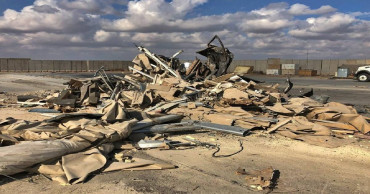
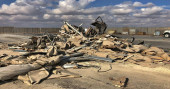
US troops clear rubble from Iraq base days after Iran strike
U.S. troops cleared rubble and debris from a military base housing American soldiers in western Iraq on Monday, days after it was struck by a barrage of Iranian ballistic missiles in a major escalation between the two longtime foes
6 years ago