child marriage
Bangladesh steps up efforts to end child marriage
With child marriage still affecting one in every two girls in Bangladesh (51%), the government is stepping up efforts to reverse this trend.
At the current slow pace of a 2% annual decline, it would take two centuries to end the practice.
Determined to accelerate progress, the government of Bangladesh has convened a high-level Inter-Ministerial Dialogue to define a unified roadmap for ending child marriage once and for all.
The dialogue, led by the Ministry of Women and Children Affairs (MOWCA), the Department of Women Affairs (DWA), and supported by the United Nations Population Fund (UNFPA), brought together Secretaries and senior officials from the Ministries of Education, Law and Justice, Information and Broadcasting, as well as the Local Government Division and the Cabinet Division, to translate data and commitments into concrete action.
“The acceleration we seek will only be achieved when these actions are taken in tandem, creating a web of protection so strong that no girl can fall through,” said Catherine Breen Kamkong, UNFPA Representative in Bangladesh.
“A girl kept in school is still at risk if she lacks legal protection, comprehensive life skills, and opportunities. A strong law is meaningless if enforcement fails. This is why today’s meeting represents a true whole-of-government response in action.”
The ministries agreed on a set of evidence-based, time-bound actions that together aim to create an environment where every girl can grow up free from coercion and with full control over her future.
Child marriage stopped by administration in Manikganj
The Ministry of Law and Justice was called to digitise the marriage registration system to prevent falsification of age and reforming the Child Marriage Restraint Act to close legal loopholes.
The Ministry of Education will aim at reinforcing school retention mechanisms and strengthening provision of comprehensive life skills education, including health and wellbeing, making schools safer for girls and recognising education as “the most effective vaccine against child marriage.”
The Ministry of Health and Family Welfare was invited to integrate a comprehensive and rights-based adolescent sexual and reproductive health package into the national Universal Health Coverage framework to reduce high adolescent pregnancy rates, as well as introduce a dedicated service package for married adolescent girls and first-time young parents.
The Local Government Division was invited to empower local government actors through performance-based funding and stronger accountability, while strictly enforcing universal birth and marriage registration for reliable age verification to effectively prevent child marriage at the grassroots level.
The Cabinet Division will explore ways to establish the prevention of child marriage as a core national and district-level priority by embedding it into national development plans, mandating the District Commissioners to create and and be accountable for fully costed action plans, and promoting inter-district collaboration on best practices.
Eradicating child marriage a cornerstone of our commitment to protect children’s rights: Simeen
The Ministries of Social Welfare and Information will tackle economic drivers and harmful gender norms, using both social protection schemes and large-scale norm change interventions to shift attitudes at the community level.
“While Bangladesh has made commendable progress for women and girls, child marriage remains a major challenge. It snatches away a girl's childhood, cuts short her education, and creates severe health risks, all of which hinder our national development,” said Mamtaz Ahmed, Senior Secretary of the Ministry of Women and Children Affairs.
“The government of Bangladesh is resolute in its commitment to ending this practice through multifaceted, coordinated action," he said.
The meeting concluded with an agreement to present the consolidated action points at the upcoming National Child Marriage Prevention Committee meeting for further endorsement and action.
MoWCA and UNFPA will be tracking implementation progress and providing technical assistance to ministries and local governments.
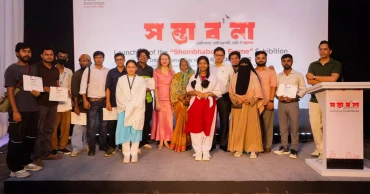
Earlier in the day, participants toured the “Shombhabonar Frame (Framing Possibilities)” photo exhibition, which vividly portrayed the lives and dreams of adolescent girls across Bangladesh.
The exhibition, featuring images and stories of resilience and hope, grounded the policy dialogue in real human experiences, underscoring the urgency of protecting girls from early marriage and promoting their education, health, and empowerment.
The event closed on a message of collective determination.
“We have the evidence. We have a plan. And now, we have the collective will to act,” concluded Ms. Breen Kamkong. “Together, we can build a Bangladesh where every girl’s childhood is protected, her choices respected, and her potential fully realised.”
11 months ago
Child marriage stopped by administration in Manikganj
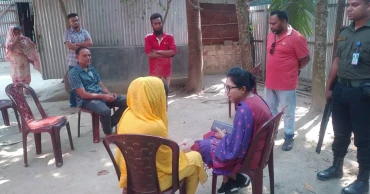
The Manikganj administration intervened and stopped a child marriage ceremony in Airmara village of Betila-Mitra union in Manikganj Sadar Upazila on Thursday afternoon.
Manikganj Upazila Nirbahi Officer Sheikh Mezbah Ul Saberin, who led the operation, said they took immediate action after learning about the underage marriage.
"We stopped the wedding ceremony as the girl is only 16 years old. Her parents have pledged not to marry her off until she turns 18 and have assured that she will continue her education," the UNO said.
Honey collection in Sundarbans to begin on April 7
Locals said the girl's family was preparing to marry off the 16-year-old class-10 student from the same village to Md Sujan Mia, son of Md Kalu Bepari.
The official added that they informed the family about the adverse effects and legal consequences of child marriage and warned them against attempting such actions in the future.
1 year ago

Around 34.5 mln women in Bangladesh were married before they turned 18: Unicef
In Bangladesh, 51 per cent of young women were married in childhood, according to a new report which used data from the Bangladesh 2019 Multiple Indicator Cluster Survey.
Bangladesh has the highest prevalence of child marriage in South Asia and the eighth highest prevalence in the world, according to a new analysis issued by UNICEF today.
Approximately 34.5 million women in Bangladesh were married before they turned 18 and over 13 million women were married before they turned 15.
“Children should not be married. Despite progress, the number of child brides in Bangladesh is staggering. Millions of girls are being robbed of their childhood, and denied their fundamental rights. We need urgent and concerted action to protect girls, to ensure that they stay in school, and have the opportunity to grow up to their fullest potential,” said Sheldon Yett, UNICEF Representative to Bangladesh.
Despite a steady decline in child marriage in the last decade, multiple crises including conflict, climate shocks, and the ongoing fallout from COVID-19 are threatening to reverse hard-earned gains, according to a new analysis issued by UNICEF today.
“The world is engulfed by crises on top of crises that are crushing the hopes and dreams of vulnerable children, especially girls who should be students, not brides,” said UNICEF Executive Director Catherine Russell.
“Health and economic crises, escalating armed conflicts, and the ravaging effects of climate change are forcing families to seek a false sense of refuge in child marriage. We need to do everything in our power to ensure that their rights to an education and empowered lives are secured.”
Worldwide, an estimated 640 million girls and women alive today were married in childhood, or 12 million girls per year, according to the latest global estimate included in the analysis.
The share of young women who married in childhood has declined from 21 per cent to 19 per cent since the last estimates were released five years ago.
However, in spite of this progress, global reductions would have to be 20 times faster to meet the Sustainable Development Goal of ending child marriage by 2030.
Meanwhile, South Asia continues to drive global reductions and is on pace to eliminate child marriage in about 55 years, the report notes.
However, the region remains home to nearly half (45 per cent) of the world's child brides. While India has recorded significant progress in recent decades, it still accounts for one-third of the global total.
Sub-Saharan Africa – which currently shoulders the second largest global share of child brides (20 per cent) – is over 200 years away from ending the practice at its current pace.
Rapid population growth, alongside ongoing crises, look set to increase the number of child brides, in contrast with the declines expected in the rest of the world.
Latin America and the Caribbean is also falling behind and on course to have the second-highest regional level of child marriage by 2030. After periods of steady progress, the Middle East and North Africa, and Eastern Europe and Central Asia have also stagnated.
Girls who marry in childhood face immediate and lifelong consequences.
They are less likely to remain in school, and face an increased risk of early pregnancy, in turn increasing the risk of child and maternal health complications and mortality.
The practice can also isolate girls from family and friends, and exclude them from participating in their communities, taking a heavy toll on their mental health and well-being.
Worldwide, conflict, climate-related disasters, and the ongoing impacts of COVID-19 – especially rising poverty, income shocks, and school dropout – are helping to increase the drivers of child marriage while also making it difficult for girls to access health care, education, social services and community support that protect them from child marriage.
As a result, girls living in fragile settings are twice as likely to become child brides as the average girl globally, the analysis notes.
For every ten-fold increase in conflict-related deaths, there is a 7 per cent increase in the number of child marriages. At the same time, extreme weather events driven by climate change increase a girl's risk, with every 10 per cent deviation in rainfall connected to around a 1 per cent increase in the prevalence of child marriage.
Precious gains to end child marriage in the past decade are also being threatened – or even reversed – by the ongoing impacts of COVID-19, the analysis warns. It is estimated that the pandemic has already cut the number of averted child marriages since 2020 by one-quarter.
"We’ve proven that progress to end child marriage is possible. It requires unwavering support for vulnerable girls and families,” added Russell. “We must focus on keeping girls in school and making sure they have economic opportunities."
3 years ago

Child marriage ban bill resurrected in West Virginia Senate
A bill to prohibit minors from getting married in West Virginia was resurrected in the state Senate on Thursday, a day after its defeat in a committee.
The about-face didn't necessarily give the bill a clear path to passage. Several senators gave impassioned speeches after the bill was brought back, some of whom defended the right of teenagers in love to marry.
The House of Delegates passed the bill last week. The Senate Judiciary Committee narrowly rejected it Wednesday night without debate. Republican Sen. Charles Trump of Morgan County, a committee member, made a motion that was adopted by the full Senate Thursday to withdraw the bill from the committee and give it a second reading. It will be up for a final reading Friday, and the Senate will have the right to amend the bill.
Currently, children can marry as young as 16 in West Virginia with parental consent. Anyone younger than that also must get a judge’s waiver.
The bill's main sponsor, Democratic Del. Kayla Young of Kanawha County, has said that since 2000 there have been more than 3,600 marriages in the state involving one or more children.
Cabell County Democratic Sen. Mike Woelfel, an attorney, said he represented a girl who got both married and divorced when she was in the eighth grade. Woelfel said he was concerned about older men who court young girls “and the next thing you know, some young girl has convinced her parents to let her get married.”
“What we have here is a good bill, because it does recognize that we aren’t in the 1950s or ’60s,” Woelfel said. “I think we’re moving into the modern era with this."
Both Kanawha County Republican Sen. Mike Stuart, a former federal prosecutor, said he supports the age of 16 to marry. Stuart said his parents 50 years later “are still giddy teenagers” who were married at age 16.
Putnam County Republican Sen. Eric Tarr said he got married in high school but understands problems need to be addressed in the bill.
"Knowing what it means to be two mature high school students in love and getting married and creating a life together, that's a family born and a family that stays together," Tarr said. “I think every one of us in this chamber values that and understands that.”
The bill would establish that 18 is the age of consent and remove the ability of a minor to obtain consent through their parents, legal guardians, or by court petition. Existing legal marriages, including those done in other states, would be unaffected.
According to the nonprofit group Unchained At Last, which seeks to end forced and child marriage, seven states have set the minimum age for marriage at 18, all since 2018. Supporters of such legislation say it reduces domestic violence, unwanted pregnancies and improves the lives of teens.
Although recent figures are unavailable, according to the Pew Research Center, West Virginia had the highest rate of child marriages among the states in 2014, when the state's five-year average was 7.1 marriages for every 1,000 children ages 15 to 17.
3 years ago

Child marriage: Bagerhat parents, kazi get 6-month imprisonment
Parents of two minors and a kazi – legally empowered to register Muslim marriages and divorces – were sentenced to six months imprisonment for their involvement in child marriages in Bagerhat.
Musabberul Islam, Bagerhat Sadar upazila nirbahi officer (UNO) and executive magistrate, conducted the mobile court Friday night at a kazi office in Nagerbazar.
Read: Three to die for raping girl in Feni
The mobile court handed down the punishment to Ataul Bari, a kazi, Kabir Sardar, father of a minor girl from the village Fatepur of Sadar upazila, and Sajib Howladar, father of a minor boy from the Gobardia area.
4 years ago
.jpg)
Pilot project on loans to prevent child marriage lunched in Bogura
Amal Foundation, a local NGO, has teamed up with IPDC, a leading NBFI, to prevent child marriage. The two firms are the implementers of a pilot project that seeks to prevent child marriage through loan provision.
This experimental Child Marriage Prevention Loan (CMPL) project has been launched in Bogura district in March.
CMPL is a conditional zero-interest microfinance loan that assists underprivileged parents in establishing long-term businesses if they match three criteria.
The first condition being, only parents of a 12- to 18-year-old girl child can apply for a loan. Secondly, a girl child cannot be married before she reaches the legal age. Finally, the girl child must be educated until high school, said a media release.
READ: Bad loans bite Bangladesh banks hard
Parents vow to marry their daughters off only when they have completed high school and are of legal marrying age.
After providing the loan Amal Foundation assists the parents in creating sustainable businesses. They also provide training in business management.
Both the organisations believe that the collective effort will result in delivering a long-term social change by ensuring education for young girls.
4 years ago

Kurigram witnesses significant decline in child marriage
One of the two categories of child marriage has declined significantly in Kurigram, one of the country's poorest districts, over the last five years. The other has also decreased, but not to the desired extent.
In 2017, the rate of child marriage for under-15s was 17 percent, and for under-18s was 65 percent in the northern district. It means the number of girls under the age of 15 getting married was 17 percent, and the number of girls under 18 getting married was 65 percent.
Now the rate has come down to 6 percent for under-15s, and 51 percent for under-18s, said Mohammad Rezaul Karim, Deputy Commissioner of Kurigram district on Saturday at Sheikh Russel Auditorium in Kurigram.
The findings were disclosed at the district level exit workshop organized by the Building Better Future for Girls (BBFG). The Deputy Commissioner of Kurigram presided over the workshop.
District action plan to prevent child and early forced marriage can be a powerful tool to make Bangladesh free of child marriage by 2041, he added.
Kurigram can be a role model for other districts in bringing down child marriage rate but a long- term action plan and more coordinated efforts are required to achieve the goal, said discussants during the project's closing workshop.
READ: Growing per capita income contributed to reduce child marriage: Planning Minister
Deputy Director of the Local Government department, Zilufa Sultana, Upazila Nirbahi Officer of Rajarhat Upazila Nura Tasnim, Upazila Nirbahi Officer of Fulbari Upazila Sumon Das, Upazila Nirbahi Officer of Kurigram Sadar Upazila Rasedul Hasan, Additional Superintendent of Police Sushant Chandra Roy, Director - Girls Rights Hub of Plan International Bangladesh Kashfia Firoz, and Nazrul Ghani, Head of Administration and General Service were present as special guests.
The Deputy Commissioner said that everyone in Kurigram now knows that child marriage is a crime. But they have to be more conscious and monitor the situation from their own place. “We must say No to child marriage”.
The BBFG project has been supporting the Kurigram district administration in implementing the district action plan to reduce the rate of child marriage under 15 years to zero, and to reduce the rate of child marriage under 18 years to one-third of what it was.
Under the leadership of Kurigram district administration, child marriage prevention committee, local government, Kazi, Matchmaker, Imam and Priests are working together. As a result, the district’s rate of child marriage has been reduced, he added.
Kashfia Feroz, director of Girls Rights Hub of Plan International Bangladesh said: "Despite the pandemic, the rate of child marriage in Kurigram under the age of 15 has come down to 6 percent from 17 percent. This is a great achievement for us. I urge everyone to hold on to the BBFG project’s success so that we can declare Kurigram a child marriage free district.”
As per the government's declaration, and following the guidelines of the Governance Innovation Unit (GIU) at the Prime Minister’s Office, 3 upazilas, 73 union parishads and 3 municipalities of Kurigram district have already been primarily declared as "child marriage-free" through the BBFG project.
The Building Better Future for Girls (BBFG) project, funded by the Embassy of Sweden in Bangladesh, has been implemented across the Kurigram district since 2017 with the support of Plan International Bangladesh and local partner RDRS Bangladesh. The project will end by March 31, 2022.
READ: Kurigram sets an example in reducing child marriage: Speakers
The BBFG project has taken various initiatives to stop child marriage including formation of youth forum in all unions of Kurigram, selection of champion fathers, strengthening and formation of child marriage prevention committee and developing action plan to stop child marriage at district, upazila and union and ward levels, and providing training to over 6000 kazis, imams, matchmakers and priests involved in the process to execute marriage.
4 years ago
.jpg)
Growing per capita income contributed to reduce child marriage: Planning Minister
Planning Minister MA Mannan on Tuesday said growing trends of per capita income will help to reduce child marriage in the country.
He said child marriage incident is happening due to various reasons such as the father being unable to meet the wedding expenses of his older daughters as his income is low.
The minister made the remarks while addressing the 20th session of the Child Parliament titled 'Progress of Digital Bangladesh and Child Protection', held in the city on Tuesday.
READ: Now is good time to invest in Bangladesh: Planning Minister
Children from 16 disadvantaged and marginalised areas in 15 districts participated in this session.
The planning minister said child marriage has taken place in many countries of the world while many countries have reduced it.
“Child marriage is still going on secretly in our cities and villages. We have to protest against it. I see many protests, when a child gets married, the child resists on his own. I salute them. The field administration is also working to prevent child marriage,” Mannan.
The minister said, “There are many in our society whose average monthly income is Tk 5000, again, there are many whose average income is Tk 5 crore.”
Reducing income discrimination and easy access to digital system for all would help eradication misconception regarding child marriage in the society, Mannan said.
"We are working on 5G internet," he said.
READ: Energy efficiency essential for industries: Planning Minister
“But reality is that many people in the country still use 2G internet. We will move forward to development highway of the prime minister with everyone,” he added.
4 years ago

Kurigram sets an example in reducing child marriage: Speakers
Kurigram can be a role model for other districts in bringing down child marriage rate but more coordinated efforts are required from all level of stakeholders, said discussants at a round table discussion on Saturday.
The round table titled “Child Marriage Free Kurigram, A Journey Towards A Dream” was organised at the conference room of Kurigram Deputy Commissioner in Kurigram.
The round table was organised by international development organisation Plan International Bangladesh and its local partner RDRS Bangladesh under the project “Building Better Future for Girls (BBFG)” with the support of Sweden Embassy in Bangladesh.
Also read: Child marriage was an epidemic within the pandemic in Bangladesh
Addressing the discussion as the Chief Guest, the Deputy Commissioner Md. Rezaul Karim said Kurigram’s District Action Plan implementation is an example for other districts of the country to reduce the curse of child marriage.
“To bring the child marriage rate to zero, we all are working together, and are committed to continue the effort in future. We have identified all the relevant stakeholders, engage them with the implementation process which is a big initiative. This made us able to reach to the community level. We are working to bring a positive change in the society through engaging different stakeholders, activating different committees, forming youth forums, strengthening cultural activities.”
Also read: Child marriage rates soar in Cox's Bazar in the shadow of pandemic
4 years ago
.jpg)
Zonta Club of Greater Dhaka launches 16-day activism campaign on child marriage, gender-based violence
The Zonta Club of Greater Dhaka has chalked out plans to celebrate 16 Days of Activism campaign from November 25 to December 10 with a goal to globally develop advocacy actions with a focus on preventing child marriage and gender based violence against woman.
During the 16 Days of Activism, the intention is to take local, national and international actions to influence the making and implementation of laws, as well as changing gender-based attitudes and behaviors to end violence against women, the club said in a press release.
Tehmina Enayet, President Elect, an entrepreneur and connoisseur of art, is a strong proponent of women’s empowerment and wholeheartedly believes in the cause of Zonta, ‘Stop Child Marriage’ and ‘Say No to Violence Against Women and Girl Child.’
Zonta Club of Greater Dhaka’s President Dr Simeen M Akhtar, and the Advocacy Chairperson Tootli Rahman and the club members have organised seven events to commemorate this occasion. These programs are focused to increase the awareness in society and for the community to take a stand ensuring all health precautions.
Read: Zonta Club awards 4 women for contributions to society during pandemic
4 years ago