BNP govt
Govt’s first 100 days deliver message of hope, positive change: PMO e-book
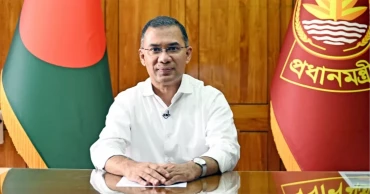
The first 100 days of the BNP government have delivered a message of hope and positive change to the nation through reforms, policy initiatives and citizen-focused governance efforts, according to an e-book published by the Prime Minister’s Press Wing.
Prime Minister’s Additional Press Secretary Atikur Rahman Rumon said the e-book – released on Wednesday marking the government’s first 100 days in office –presented in detail the activities of different ministries, key decisions and progress in implementing various programmes during the period under the leadership of Prime Minister Tarique Rahman.
“It is a document of the government’s first 100 days in office,” he said.
Rumon said the government believes its first 100 days have brought a message of hope and positive change to the nation.
“Different programmes and initiatives taken by the government have already started creating visible impacts on public life and society,” he added.
BNP Chairman Tarique Rahman assumed office as Prime Minister on February 17 after his party won the 13th parliamentary election held on February 12 by a landslide.
The PM’s Press Wing said the e-book will be updated regularly and made available online for reading and downloading.
According to the introduction to the e-book, leadership is judged not only by election promises but also by how quickly those promises are turned into practical action plans.
It also said in Bangladesh’s new political reality, Prime Minister Tarique Rahman’s election pledges and their rapid implementation have become a topic of national discussion.
According to the e-book, the government assumed office amid political instability, economic pressure, weak law and order, foreign currency reserve challenges and a slowdown in investment and employment.
Despite those challenges, the publication said, the government has demonstrated quick policy decisions, administrative discipline and signs of stability in economic management during its first 100 days.
The e-book also highlighted several personal and administrative decisions made by the Prime Minister that drew public attention.
It said Tarique Rahman’s decisions to limit VVIP protocol, use a private residence instead of an official one, travel in personal vehicles and bear his own fuel expenses reflected a culture of restraint, accountability and simplicity in public office.
The publication also highlighted his direct engagement with ordinary people during visits across the country, saying citizens from different age groups and professions gathered spontaneously to see and interact with him.
It described his open question-and-answer session with students at Dhaka University as an example of participatory political culture, where students discussed issues, including education, employment, technology and the future of Bangladesh, directly with the Prime Minister.
The e-book also said Tarique Rahman has frequently broken with traditional protocol to speak with children, receive gifts from them and interact with farmers, workers and labourers “as an ordinary citizen,” which, it claimed, strengthened his image as a people-oriented leader.
It also referred to several symbolic actions, including waiting at traffic signals, walking to office and participating in programmes among ordinary citizens after office hours, describing them as examples of participatory and citizen-focused leadership.
According to the publication, the government also introduced Saturday office activities as part of efforts to increase administrative continuity and service efficiency.
The e-book said the Prime Minister encouraged young innovators by using locally developed technologies and vehicles, describing it as support for domestic innovation and youth-led initiatives.
Summarising the government’s first 100 days, the publication said the administration prioritised social and economic support programmes, digital reforms in administration and the judiciary, and long-term infrastructure and economic planning despite challenges such as inflation, energy pressures, global instability and employment constraints.
It also acknowledged that controlling commodity prices, ensuring energy security, increasing investment and expanding employment remained major challenges.
The PM’s Press Wing said many programmes were still at the initial implementation stage, but added that the government has pledged to build a more technology-driven, accountable and service-oriented state.
The e-book concluded with a quote attributed to Prime Minister Tarique Rahman: “Ensuring service to the people is the sacred responsibility of this government.”
4 months ago
Govt marks 100 days with progress on election manifesto pledges
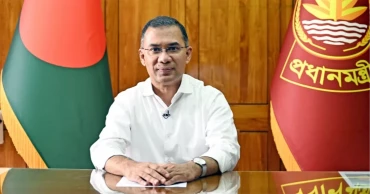
The BNP-led government has implemented a series of election manifesto pledges within its first 100 days in office, according to an e-book published by the Prime Minister’s Press Wing.
It said the government, which assumed office on February 17 following a major political transition after 17 years, spent the first 100 days addressing political instability, a fragile economy, weak law and order and deep social divisions.
The e-book, released by the PM’s Press Wing on Wednesday, said Prime Minister Tarique Rahman has been working with commitment to reach people directly and implement the public welfare-oriented promises.
It also said the government has already taken a series of initiatives across key sectors, bringing visible changes in public life.
Social protection and welfare
According to the publication, 53,096 families have received Family Cards, while 20,748 families have been issued Farmers’ Cards.
Besides, around 5.5 million families are receiving subsidised rice at Tk 15 per kg while senior citizens and persons with disabilities are receiving a 25 per cent fare discount on metro rail and train services.
The government has also arranged advanced medical treatment abroad for 152 injured persons from the July movement in countries including Russia and Singapore.
Economy and finance
The e-book said foreign exchange reserves rose to 34.38 billion US dollars as of May 20, while inflation declined to 8.71 per cent.
Besides, revenue collection increased by 13.6 per cent in the second quarter of the 2025–26 fiscal year.
It also said the government has managed the cooking oil market through subsidies amid pressure.
Agriculture, infrastructure and communication
Canal re-excavation work has begun on 666 canals across the country.
The final approval has been given for the “Padma Barrage” project, expected to directly benefit 37 per cent of the population.
Meanwhile, a deal has been signed to add 14 Boeing aircraft to expand the national carrier’s fleet while land services have also been fully digitised.
Education, health and employment
The e-book said over 20 million children have been vaccinated against measles, achieving near universal coverage.
Around 65,569 government primary schools have been brought under uninterrupted internet connectivity.
The government ensured payment of salaries, bonuses and allowances before Eid for all industrial workers.
Sports and religious affairs
A “Notun Kuri” Sports” programme for students aged 12–14 is ongoing, while sports equipment has been distributed to 550 educational institutions and clubs.
Monthly allowances are being provided to imams, muezzins and other religious leaders in nearly 6,000 institutions.
Training has also been given to more than 38,000 butchers on scientific meat processing ahead of Eid.
Defence, sovereignty and foreign affairs
A modern “Ground Master-400” radar system has been installed to monitor airspace up to 650 kilometres inland and 833 kilometres over the Bay of Bengal.
Besides, the government is also reintroducing the phrase “Except Israel” in Bangladeshi passports, which had been removed by the previous Awami League regime.
Anti-corruption and governance
The e-book said assets worth Tk 4,264 crore belonging to S Alam Group have been seized. “Agreements have been signed with three countries to recover laundered money, while negotiations with others are ongoing.”
It also said 10 cabinet meetings were held by May 24, taking 60 decisions, of which 37 have been implemented and 23 are in progress.
4 months ago

BNP to join talks with govt Saturday
The BNP will participate in the new phase of talks initiated by the Prof Muhammad Yunus-led interim government on Saturday to discuss reform issues and the current political situation.
BNP Secretary General Mirza Fakhrul Islam Alamgir will lead a party delegation in the talks scheduled to be held at the State House Jamuna, said BNP media cell member Sayrul Kabir Khan.
He said BNP senior leaders, including standing committee members, will be there in the party delegation.
Meanwhile, Chief Adviser's Press Secretary Shafiqul Alam at a press briefing on Thursday said the talks will begin at 2:30pm on Saturday.
He said the BNP and several other political parties have been invited to participate in the dialogue on the first day.
Earlier, on Wednesday, Shafiqul Alam said the Council of Advisers will begin a fresh phase of dialogue with major political parties on Saturday, as part of the ongoing consultations with stakeholders.
“The key purpose of the dialogue is to inform the political parties about progress over the six reform commissions’ work and discuss the law-and-order situation of the country and seek their suggestions,” he said.
There were two rounds of dialogue between the political parties and the Council of Advisers led by Prof Yunus after the formation of the interim government on August 8.
It is not decided yet how many days the dialogue with the political parties will continue.
The Press Secretary hoped that the six reform commissions will fully be formed with required members within the next two-three days.
The BNP formed six committees to determine the party's position on the interim government's state reform initiatives.
A BNP standing committee member said they will concentrate on the government's proposed roadmap for state reforms and the upcoming election during the talks with the government.
The BNP leader said they are worried about the slow pace of the government's efforts toward state reforms. “We’ll join the talks to understand their exact thoughts on the reforms and the election. We will also seek clarity on the interim government's reform initiatives, particularly regarding the roadmap and timeline for these reforms.”
He said many members of their Standing Committee believe that the government is unnecessarily delaying the reforms.
2 years ago